
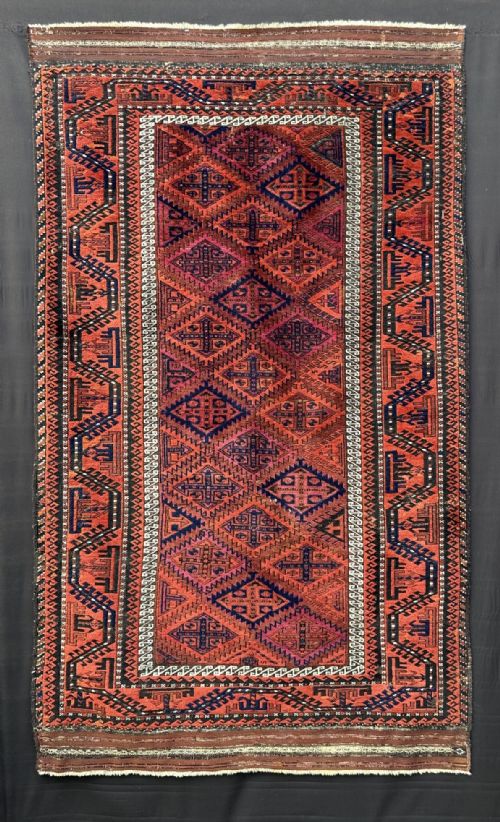
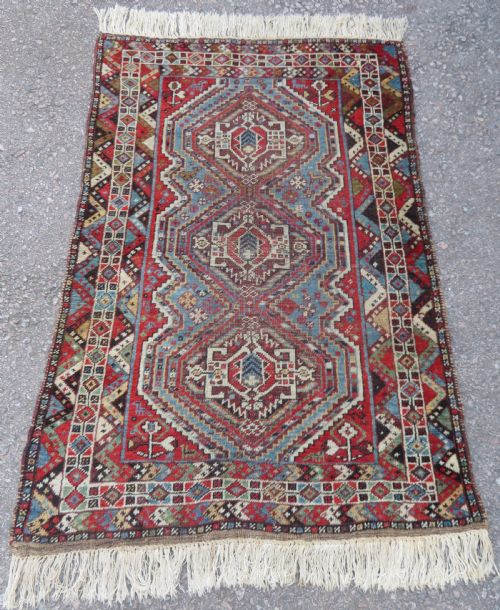
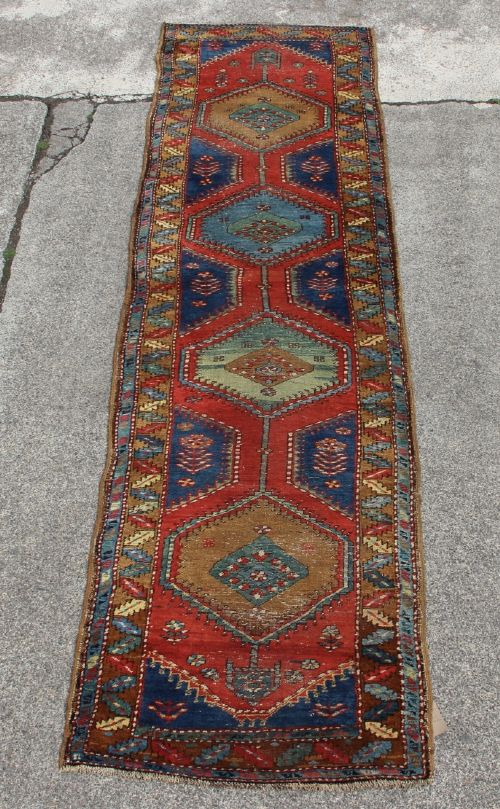
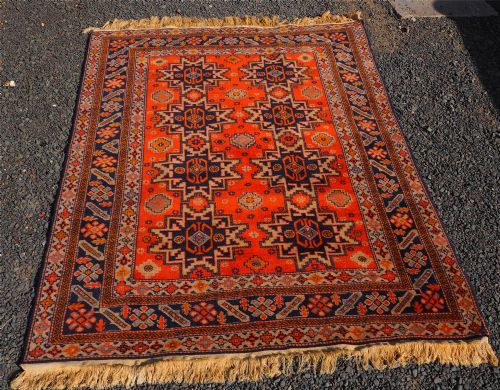

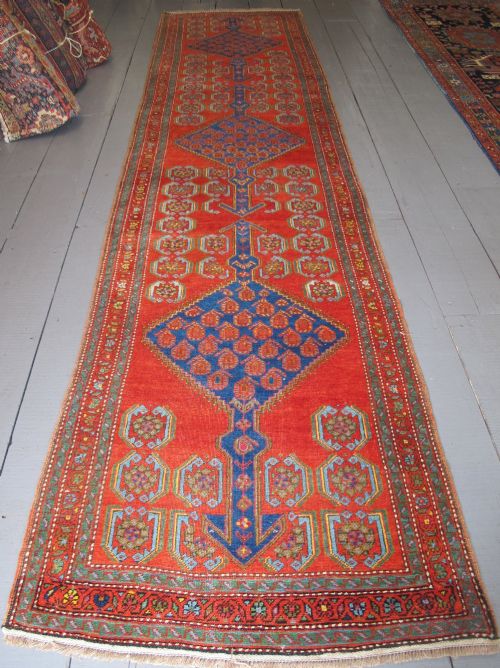


Terracotta and Blue Runner
These long floor coverings bring warmth and distinctive pattern to a corridor.
Terracotta and Blue Runner
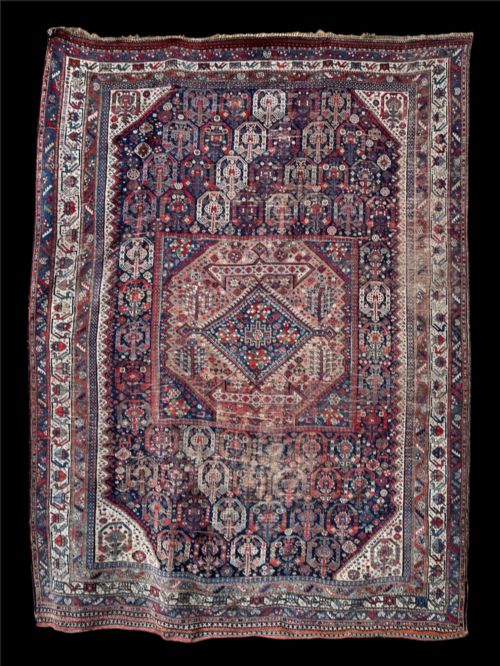
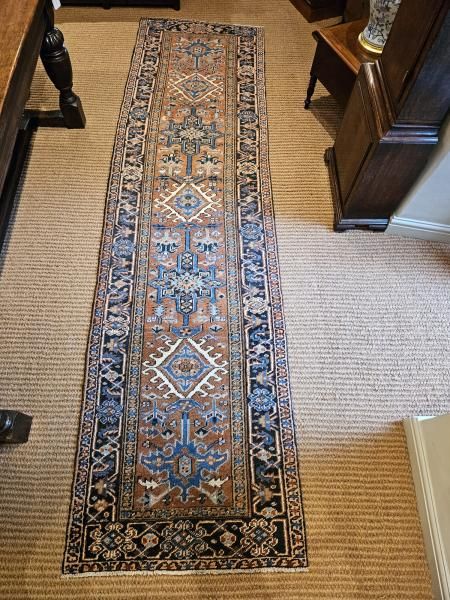
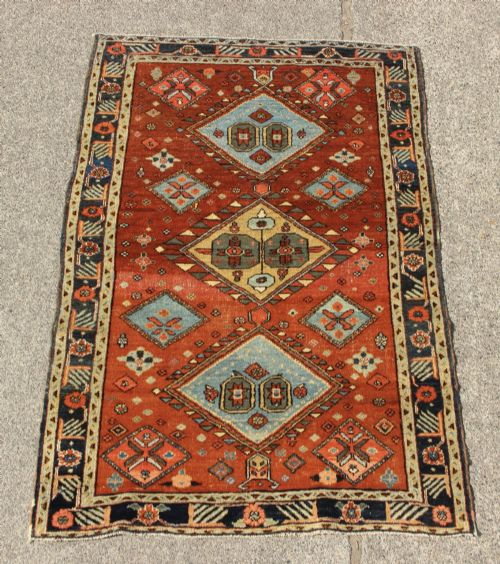
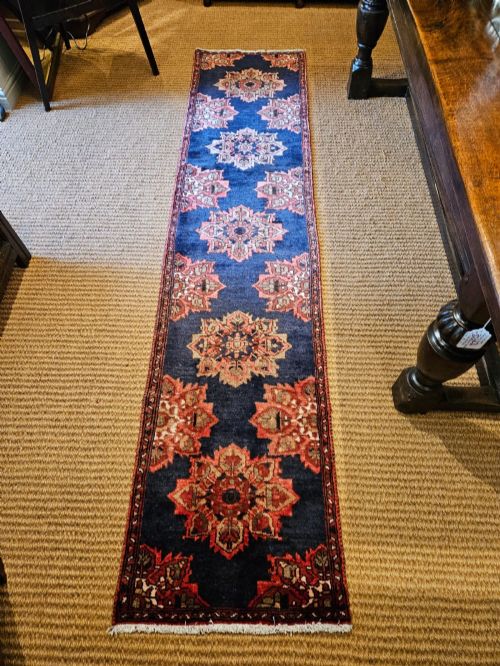
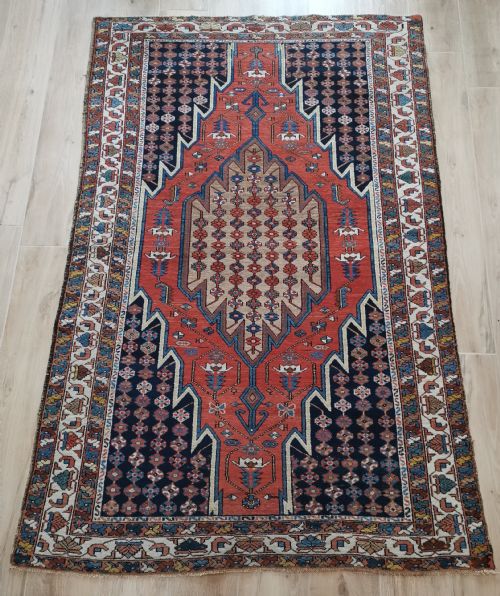
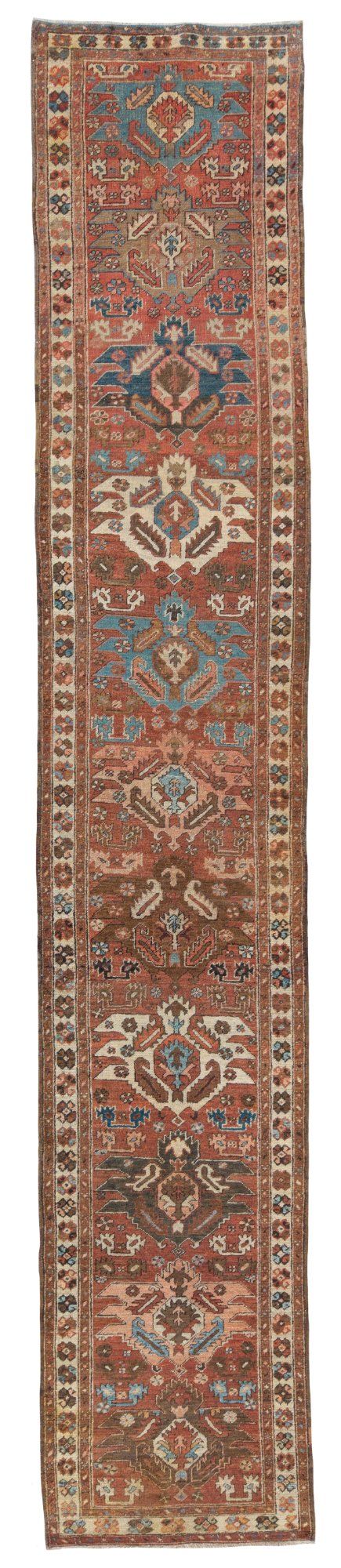
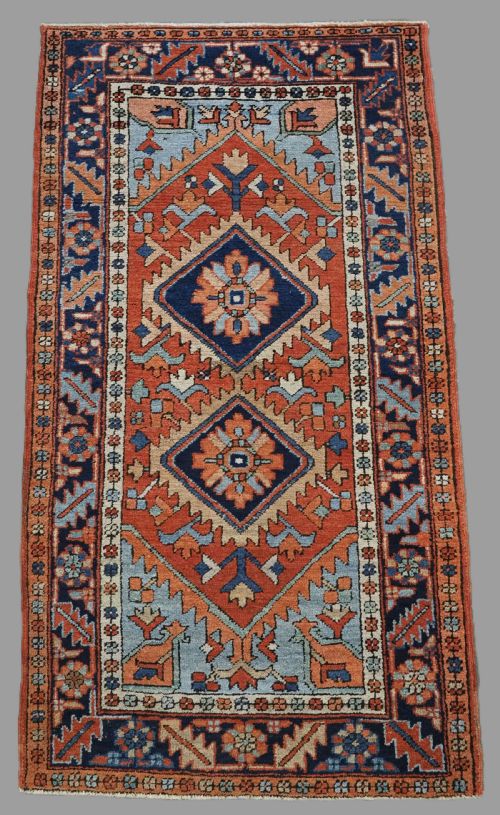
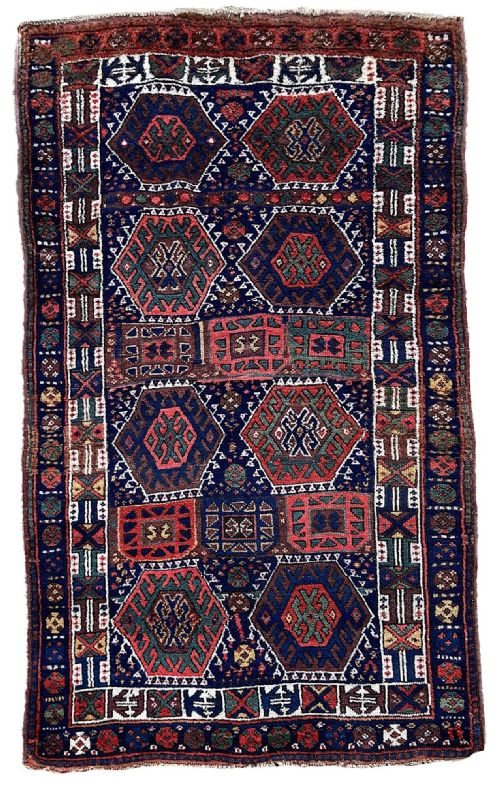
A terracotta and blue runner brings together earthy red-brown tones and cooler blue shades in a narrow format designed for hallways and galleries. These long floor coverings draw upon traditions from Persian, Caucasian, Turkish, and Kurdish weaving centres, spanning the nineteenth and early twentieth centuries.
The pieces listed here appear as rugs, carpets, and long narrow runners originating from regions such as Heriz, Ushak, Bakshaish, and Kurdistan. Buyers searching for a terracotta and blue runner will encounter antique and vintage room lengths displaying tribal motifs, geometric medallions, and floral fields woven with natural dyes.
Materials and construction
Makers utilised wool, cotton foundations, and occasionally goat hair to build these textiles, employing hand-spun fibres that absorb dyes unevenly to create subtle variations across the surface. Artisans tied pile knots or wove flat-weave kelims by hand, securing the structure with sturdy selvedges.
The palette relies upon natural dyes derived from plants and minerals, which produce the characteristic terracotta reds and indigo blues seen in these pieces. Over decades of use, these organic colourants soften gracefully into muted tones.
Listings span periods from the nineteenth century through the 1930s, featuring wool, cotton, and natural dyes across tribal and traditional styles.
Judging the weave
Quality rests in the handling of the wool, the clarity of the drawing, and the integrity of the foundation structure. Tighter knotting and resilient hand-spun wool separate robust village carpets from lighter commercial weaves.
The vibrancy and depth of the natural dye palette also determine distinction, as skilled dyers achieved complex terracotta and blue shades that retain character over generations. Preserved original edges and balanced proportions distinguish superior examples.
The Terracotta and Blue Runner Glossary
- Runner
- A long, narrow carpet format specifically proportioned for corridors, staircases, and narrow gallery spaces.
- Natural Dyes
- Colourants extracted from plants, insects, and minerals before the advent of synthetic aniline dyes in the nineteenth century. These materials age with a rich patina.
- Kelim
- A flat-woven textile produced without a pile, resulting in a lightweight rug with a crisp geometric design.
- Pile
- The upright yarn surface of a rug, formed by individual knots tied onto the warp threads and sheared to an even height.
- Medallion
- A large central ornamental design motif placed in the middle of the carpet field, common in Persian and Turkish weaving traditions.
Terracotta and Blue Runner: Frequently Asked Questions
Where should I place a runner?
These narrow floor coverings suit hallways, corridors, entryways, and bedside spaces where standard rectangular rugs are too wide.
Their elongated proportions guide movement through a home while protecting high-traffic wooden floors.
How do I care for antique wool?
Gentle regular vacuuming without a beater bar prevents dust accumulation in the wool pile.
Professional specialist cleaning is recommended to preserve the integrity of natural dyes and hand-spun fibres.
What indicates a natural dye?
Subtle tonal shifts within a single colour field, known as abrash, often point towards the use of traditional natural dye vats.
These variations occur naturally when dye batches change slightly during the hand-spinning and dyeing process.
How do I determine age?
Structural characteristics such as hand-spun wool, irregular knotting, and natural dye palettes help place pieces within the nineteenth and early twentieth centuries.
Comparative analysis of regional motifs from workshops like Heriz or Ushak further clarifies the period of origin.