


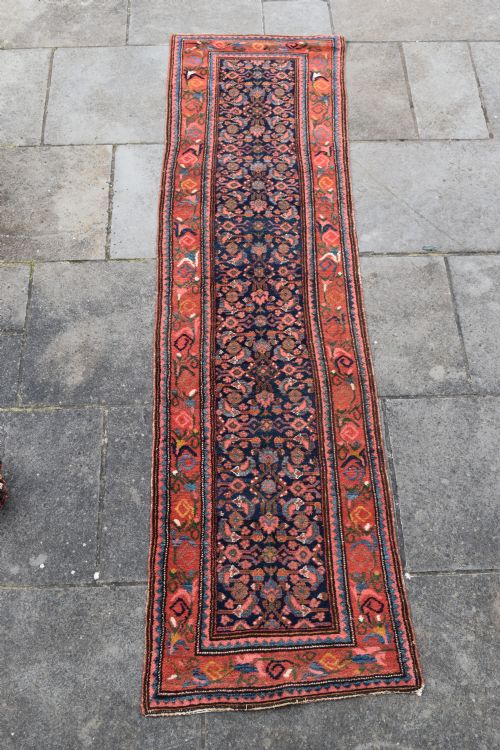

Traditional Narrow Hall Carpet
These traditional narrow hall carpets bring pattern and colour to lengthy corridors, using wool, cotton, and camel hair.
Traditional Narrow Hall Carpet
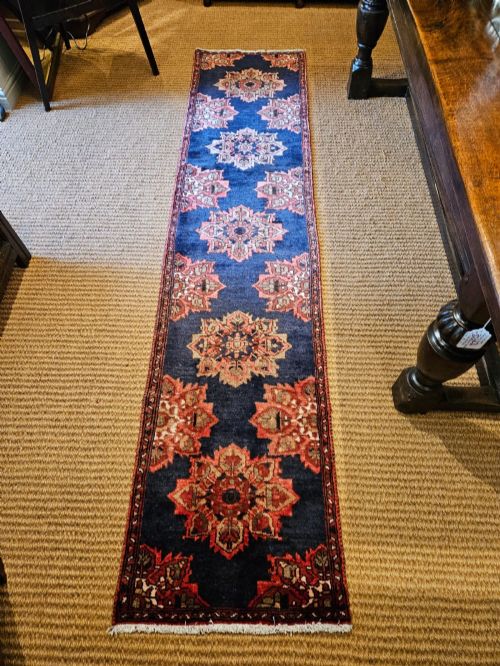
A traditional narrow hall carpet spans long, slender proportions designed specifically for corridors, landings, and hallways. These runner rugs and hallway runners arrive from periods ranging between the late nineteenth century and the mid twentieth century.
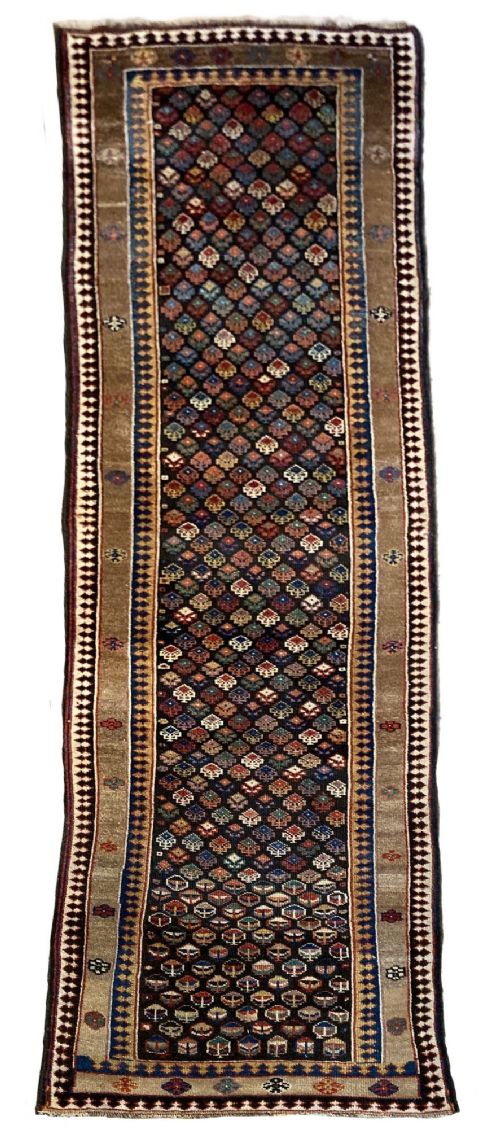
Most examples found here originate from Persian, Kurdish, Hamadan, Sarouk, and Caucasian traditions. They appear in styles including Persian tribal, Heriz Karaja, Bidjar, Shirvan, and Ottoman designs.
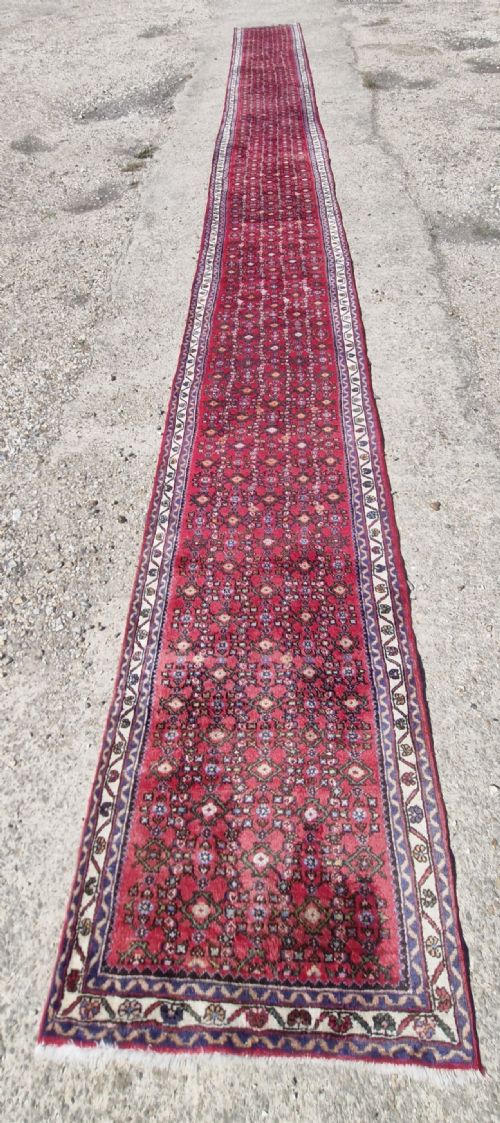
Makers utilised wool, cotton, and camel hair to weave these elongated floor coverings. Buyers encounter lengths stretching from modest spans up to impressive thirty-two foot proportions.
How they were made
Weavers constructed these long carpets using wool and cotton foundations, often incorporating camel hair for natural tones and durability. Hand-knotting techniques secured the dense pile required for heavy foot traffic in narrow spaces.
Dyers employed traditional vegetable and mineral agents to colour the wool before weaving intricate Persian tribal, Heriz, and Shirvan patterns. The resulting textiles combined resilient materials with precise regional knotting methods.
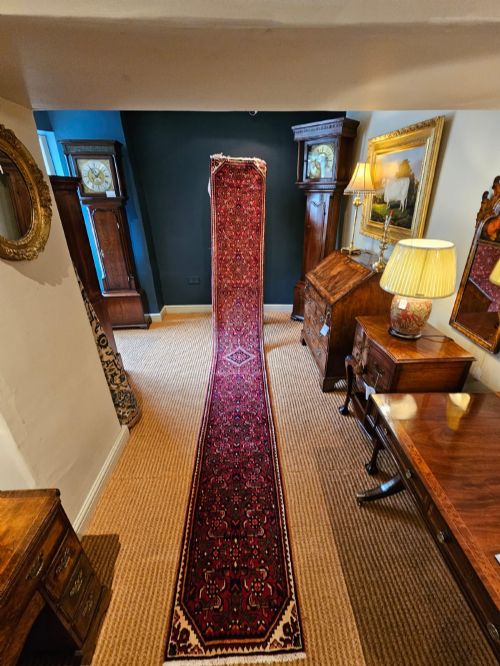
One extraordinary surviving hallway runner stretches an astonishing thirty-two feet in length.
What varies in quality
Quality rests in the density of the knotting and the stability of the wool foundation. Finer examples display crisp geometry in Mina Khana and traditional medallion motifs.
Durability depends upon the tightness of the weave and the grade of wool or camel hair utilised. Superior pieces maintain structural integrity along the narrow margins over decades of hallway use.
The Traditional Narrow Hall Carpet Glossary
- Runner
- A long, narrow carpet designed for corridors, hallways, and staircases. These pieces measure significantly longer than they are wide.
- Bidjar
- A durable Persian carpet type known for heavy construction and tightly packed wool foundations. Weavers in this region utilised rigorous beating combs during production.
- Hamadan
- A prolific weaving region in western Persia producing varied geometric and floral runners. These rugs frequently utilise camel hair and sturdy cotton foundations.
- Heriz Karaja
- A style originating from north-west Persia recognised for bold geometric medallion designs. These carpets employ robust wool suited to heavy domestic wear.
- Shirvan
- A Caucasian weaving tradition characterised by precise tribal motifs and crisp coloration. These runners display distinct regional geometry.
Traditional Narrow Hall Carpet: Frequently Asked Questions
Where do traditional narrow hall carpets work best?
These elongated floor coverings suit narrow corridors, landings, and entrance hallways where standard rectangular rugs fail to fit. Their slender proportions guide movement through domestic spaces.
Placing them in high traffic areas protects underlying floorboards while adding traditional Persian, Kurdish, or Caucasian patterns to otherwise plain walkways.
How do I measure for a hall runner?
Measure the clear floor space of your hallway, leaving an equal margin of exposed wood or stone on all sides. Account for door clearance before selecting length.
Take note of maximum lengths available in wool and camel hair to ensure the piece spans the required distance without bunching against skirting boards.
What materials are used in these carpets?
Traditional pieces rely primarily on wool piles knotted onto cotton foundations. Some examples incorporate camel hair for natural resilience and distinct un-dyed shades.
These natural fibres provide the durability necessary to withstand decades of foot traffic in busy residential hallways.
How do I distinguish regional Persian styles?
Regional styles reveal themselves through knotting density, palette, and geometric vocabulary. Hamadan and Kurdish pieces often display distinct tribal repeats.
Heriz and Sarouk variants demonstrate more structured medallion or all-over floral layouts created by regional weaving communities across the nineteenth and twentieth centuries.