

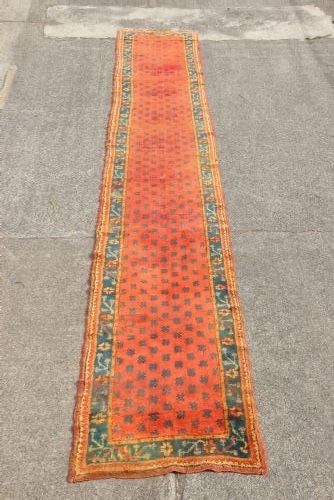
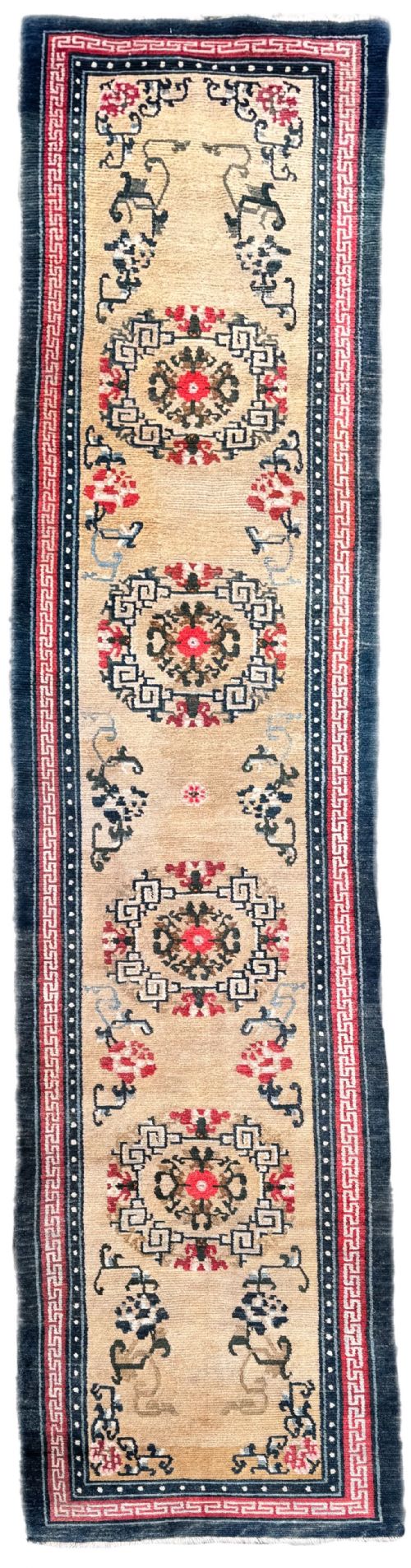

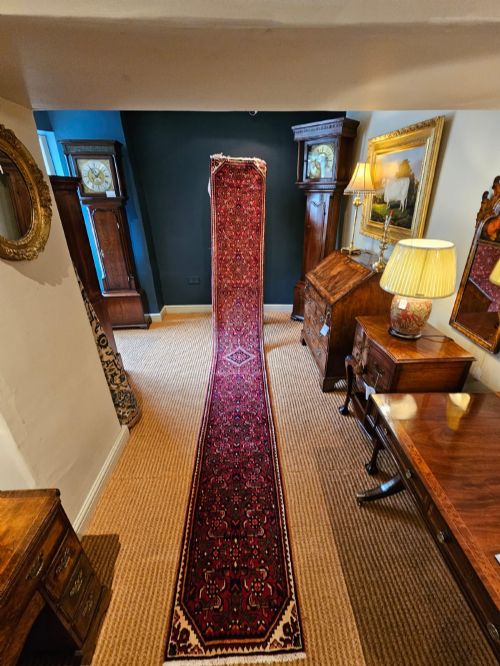
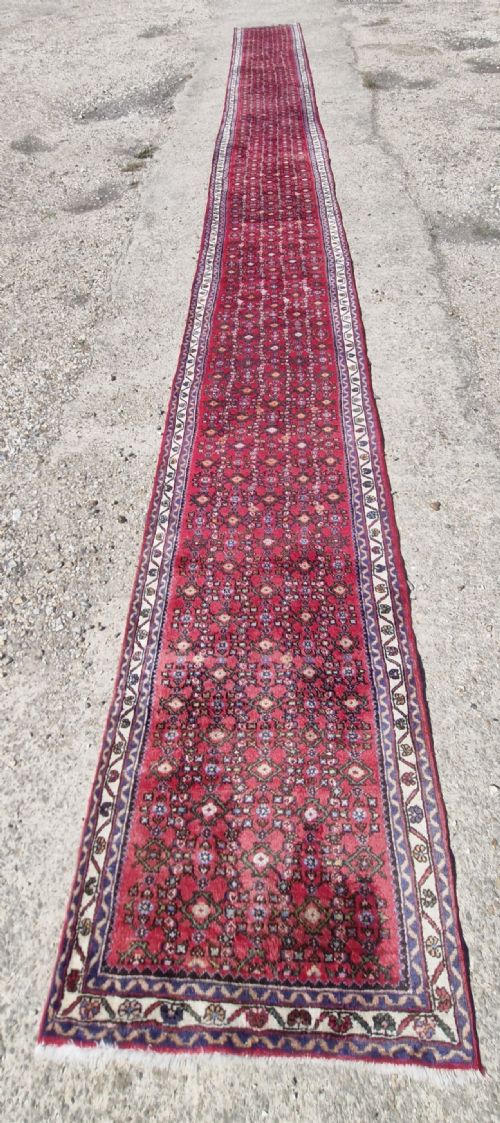
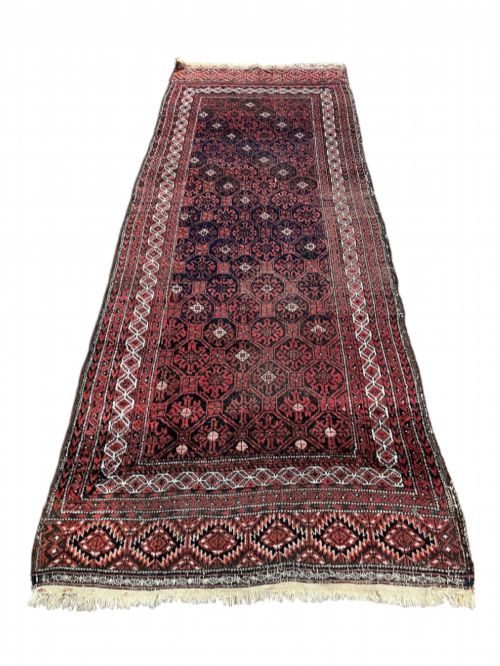
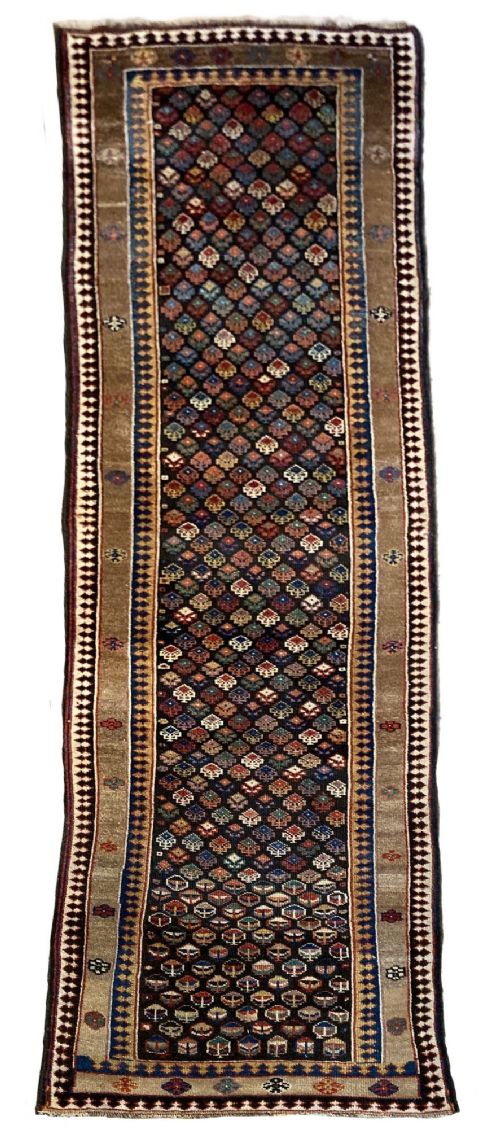


Long Narrow Hallway Carpet
A long narrow hallway carpet transforms a transit space into a warm gallery of historic textile craft.
Long Narrow Hallway Carpet
A long narrow hallway carpet serves as a functional floor covering designed specifically for corridors, landings, and extended passageways. The pieces found on this page primarily take the form of antique runners and long rugs originating from Persian, Turkish, Caucasian, and Moroccan traditions. These textiles span periods from the late nineteenth century through to the mid-twentieth century, offering traditional tribal and village designs.
The format typically involves a generous length paired with a restricted width, engineered to follow the linear geometry of domestic hallways. Buyers encounter regional village weaves such as Hamadan, Heriz, Kurdish, and Shirvan examples, alongside Moroccan Berber and Turkish Oushak productions. These pieces bring historical depth and structured pattern into domestic corridors.
Materials and construction methods
These floor coverings rely heavily on natural wool pile knotted onto cotton or wool foundation warps and wefts. Artisans utilised hand-spun wool in many traditional village and tribal pieces, yielding resilient textures suited to heavy foot traffic. Certain examples incorporate camel hair or employ flatweave kilim techniques without a raised pile.
Dyes derived from natural sources give these textiles their muted or rich palettes, ranging from deep indigos to earthy reds and olive greens. The hand-knotting process allows for intricate geometric, medallion, and all-over field patterns that define regional weaving styles.
Regional variations span Persian tribal pieces, Anatolian kilims, and Moroccan Berber floor coverings.
Distinctions in craftsmanship and materials
The fineness of the knot density and the crispness of the geometric or floral drawing separate standard village work from finer workshop productions. Tighter knotting supports greater longevity under the sustained friction of hallway use while maintaining sharp pattern definition.
The choice of wool and the depth of the initial material preparation influence how gracefully a piece ages in a high-traffic corridor. Superior handling of natural dyes results in richer secondary tones and an even patina as the textile absorbs light over decades.
The Long Narrow Hallway Carpet Glossary
- Runner
- A long, narrow carpet format intended primarily for corridors, hallways, and staircases. It directs movement through a space while protecting floorboards.
- Kilim
- A flatweave textile produced without a pile by tightly interweaving warp and weft strands. These pieces offer a thinner profile on the floor.
- Pile
- The vertical or inclined loop of yarn that forms the soft surface of a knotted carpet. Its density determines how the rug feels underfoot.
- Warp
- The stationary longitudinal threads stretched onto a loom upon which the knots are tied. They form the underlying structural skeleton of the rug.
- Weft
- The horizontal threads passed across the warp strands between rows of knots to bind the structure together. They keep the tension uniform across the width.
Long Narrow Hallway Carpet: Frequently Asked Questions
How do I choose the right length?
Measure your hallway while leaving a uniform border of exposed floorboards visible around the perimeter of the rug. Ensure doors can swing freely over the pile height without catching.
Account for any radiators, archways, or irregular structural jogs that might interrupt a straight run. A well-proportioned runner leaves clear space at both ends of the corridor.
Are these rugs durable enough for hallways?
Traditional hand-knotted wool runners are inherently resilient against heavy foot traffic because natural lanolin protects the fibres from dirt and wear. Regular rotation distributes the wear evenly across the length of the carpet.
Using a quality underlay prevents slipping and cushions the foundation against hard subfloors. This simple addition extends the working life of vintage wool floor coverings.
How do I identify a regional style?
Regional styles reveal themselves through specific medallion structures, border arrangements, and characteristic colour palettes. Heriz runners often display bold geometric centerpieces, whereas Hamadan pieces feature repeating overall motifs.
Kurdish and Caucasian weaves typically incorporate sharper, more angular tribal motifs compared to smoother workshop curves. Comparing knot direction and fringe finishing helps confirm the weaving origin.
How should I clean a vintage runner?
Gentle vacuuming without a rotating beater bar removes surface grit from the wool pile without damaging the antique foundation threads. Professional rug cleaning is recommended for deep washing to protect natural dyes.
Address accidental spills immediately by blotting with a clean damp cloth rather than rubbing. Keeping the carpet away from prolonged direct sunlight preserves the original dye saturation.