





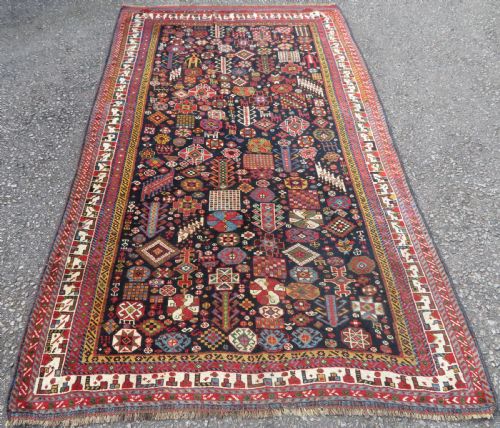


Dark Navy Persian Carpet
A dark navy persian carpet grounds a room with deep indigo wool and centuries of village and tribal artistry.
Dark Navy Persian Carpet
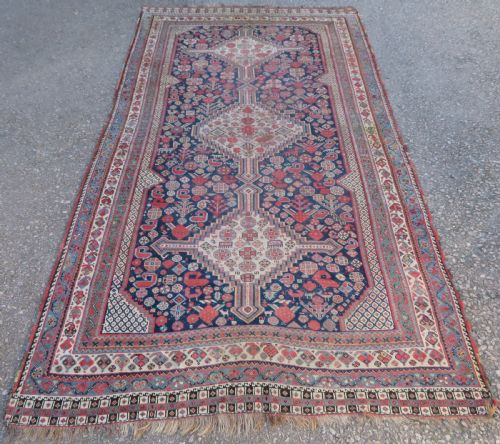
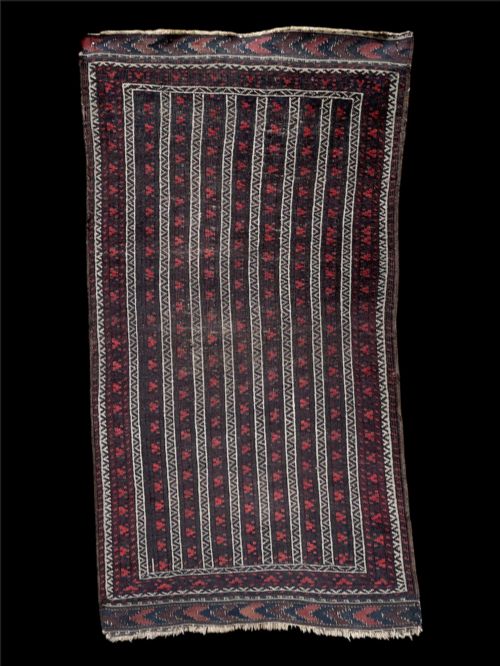
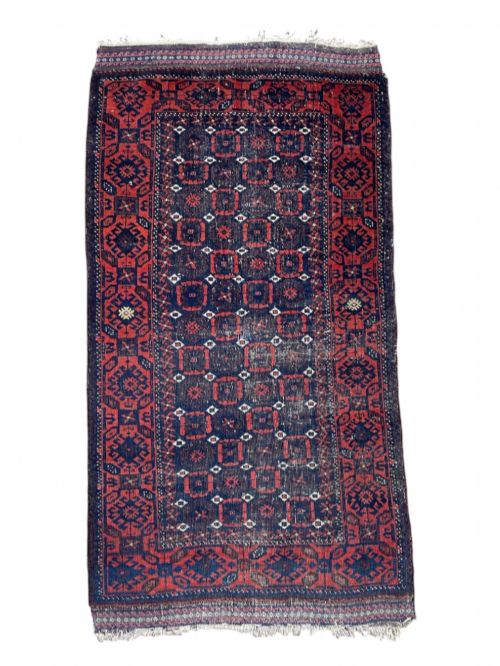
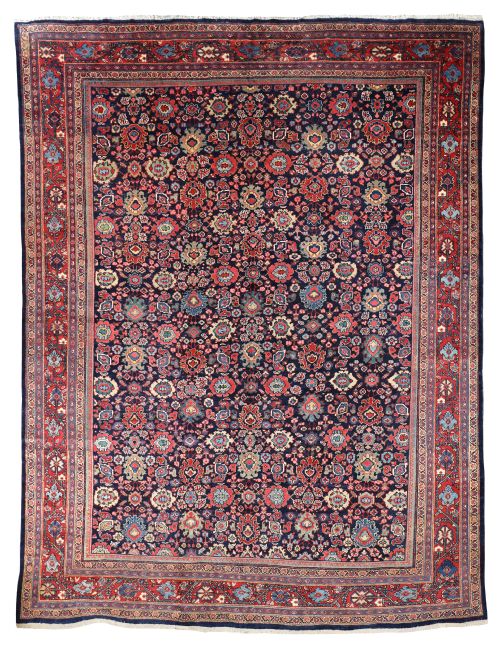
When searching for a dark navy persian carpet, collectors encounter hand-knotted room-size carpets alongside smaller village rugs, corridor runners, and tribal pieces. The selection spans the nineteenth and early twentieth centuries, capturing traditional weaving traditions from Khamseh, Malayer, Senneh, Baluch, and Kurdish makers.
The dominant forms include area rugs and elongated hallway runners displaying rich indigo grounds paired with intricate geometric, floral, and Herati motifs. Pieces range from room-scale Mahal and Ziegler carpets down to compact village formats woven by nomadic and settled communities alike.
Originating across Persian provinces such as Khorasan, Sistan, and Tabriz, these textiles reflect distinct regional aesthetics. Buyers find everything from nomadic Baluch prayer rugs to formal town carpets sharing that signature deep navy palette.
What varies in quality
The standard of a dark navy persian carpet depends heavily on the density of the knotting and the precision of the design execution. Tighter knots allow for sharper definition in complex motifs like the Herati or Mina Khani patterns.
Material selection also dictates overall grade, particularly the quality of the wool used for the pile and the stability of the cotton foundation. Finer examples exhibit supple drape, even wear, and a depth of colour achieved through superior dye absorption.
Look closely at the borders, where weavers occasionally inserted small rogue motifs into the symmetry just to outsmart evil spirits.
The Dark Navy Persian Carpet Glossary
- Herati
- A repeating ornamental pattern composed of a central rosette enclosed by a rectangle of leaves, flanked by curved acanthus leaves. This classic motif appears frequently across Persian carpets and village rugs.
- Kelleh
- A distinctive rectangular format traditionally longer than a standard rug but narrower than a full room-size carpet. These pieces were historically utilised in Persian domestic interiors.
- Mina Khani
- An all-over textile design featuring repeating geometric flowers connected by delicate lattice stems. It is a common layout found in classical Persian weaving.
- Prayer rug
- A small format textile featuring a distinctive mihrab or arch design at one end, indicating the direction of prayer. Nomadic weavers often produced these for personal devotional use.
- Runner
- An elongated narrow carpet designed specifically for hallways, corridors, and staircases. These pieces manage heavy foot traffic while framing linear architectural spaces.
Dark Navy Persian Carpet: Frequently Asked Questions
How do I care for an antique Persian carpet?
Vacuum gently without using a rotating beater brush to protect the delicate wool pile and cotton foundations. Professional cleaning by a specialist in antique textiles ensures the natural dyes remain stable.
Keep the carpet out of direct, intense sunlight to prevent the deep navy and secondary colours from fading over time. Rotating the piece occasionally also balances wear patterns in high-traffic areas.
Where were these carpets originally woven?
The pieces originate from various regions across Persia, including northern, western, and south-eastern provinces. Towns like Tabriz and Senneh, alongside rural tribal areas such as Khorasan and Luristan, each developed distinct weaving styles.
Nomadic groups and settled village communities alike contributed to this rich heritage, utilising local materials and traditional dyeing methods native to their specific landscapes.
What is the difference between a village rug and a town carpet?
Village rugs are typically produced by individual families or small communities using memory-based designs and coarser wool. They often display charming asymmetries and spontaneous geometric interpretations.
Town carpets, conversely, rely on pre-planned cartoon templates drawn by master designers. These city pieces usually feature finer knot counts, symmetrical floral layouts, and more refined cotton foundations.
How can I identify the age of an older carpet?
Dating relies on examining structural characteristics, wool consistency, and the chemical composition of the dyes used in the pile. Early twentieth-century and nineteenth-century pieces often display subtle variations in colour saturation due to traditional dyeing methods.
Wear patterns, edge finishes, and characteristic regional motifs also provide clear chronological markers for experienced collectors studying the weave.