
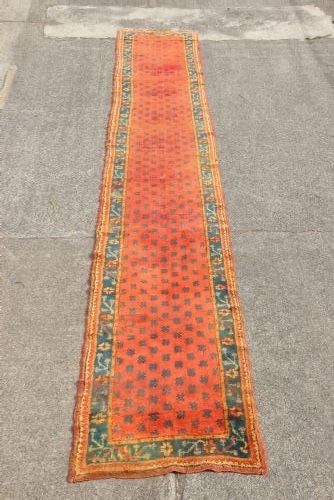

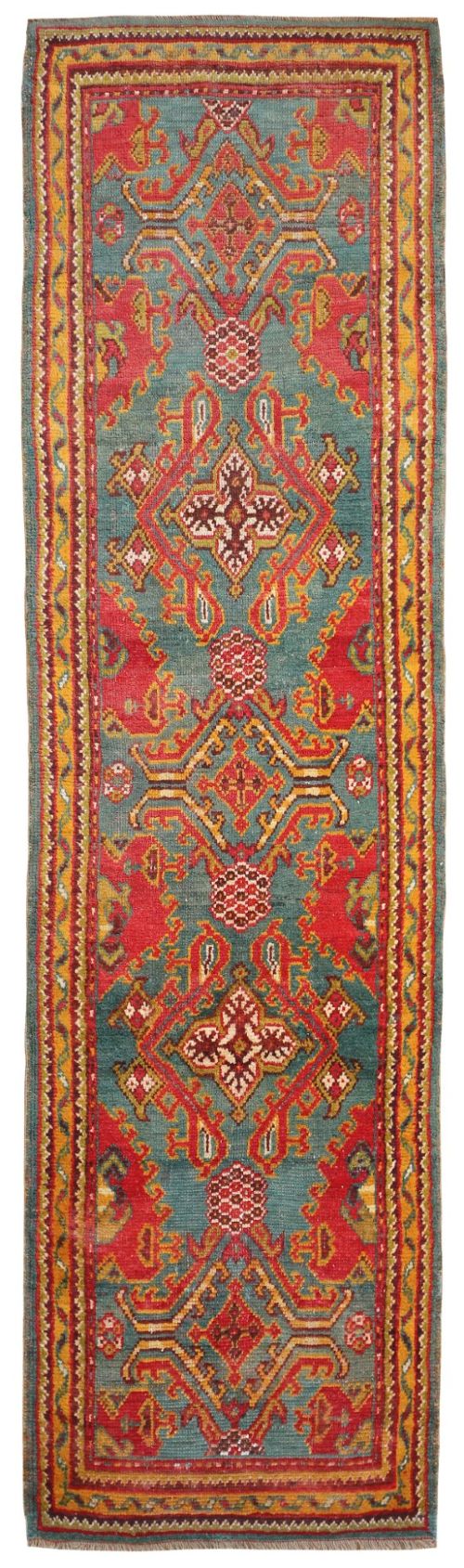

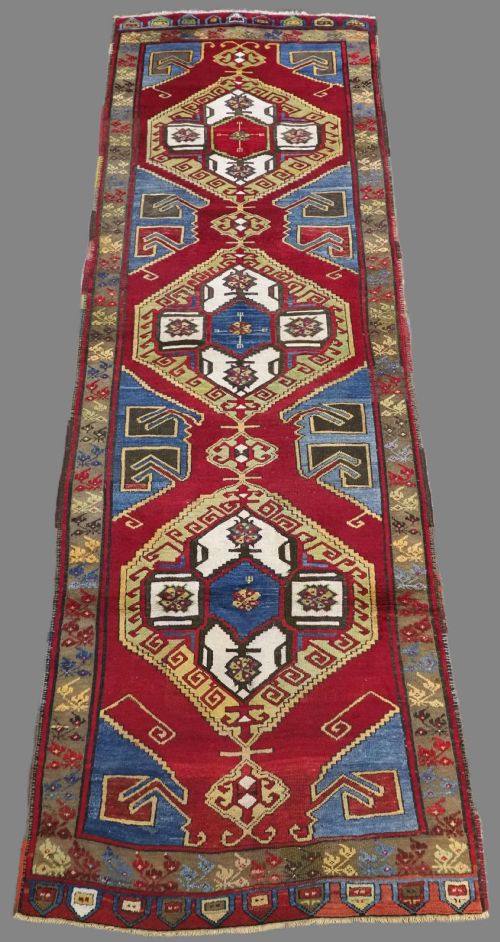


Turkish Hallway Carpet
A turkish hallway carpet brings genuine warmth and historical craft to a narrow space through weathered wool and traditional regional patterns.
Turkish Hallway Carpet
A turkish hallway carpet search leads you directly to long, narrow floor coverings designed specifically for corridors, landings and extended spaces. These pieces span the late nineteenth century and the early decades of the twentieth century, originating from weaving centres across Anatolia.
The format you will most frequently meet on this page is the runner rug, rendered in traditional regional styles including Oushak, Ushak, Konya, Taspinar, Yagcibedir, and Kirsehir. Such pieces serve practical foot traffic while displaying distinct tribal and classical Anatolian motifs.
Makers in these regions utilised local knowledge passed down through generations, combining utility with artistic expression. The resulting carpets range from large proportions down to narrow formats suited to specific architectural requirements.
What varies in quality
Quality in these carpets rests upon the precision of the knotting and the density of the weave, which dictate how well the structure withstands pressure. Finer knotting allows for sharper definition in geometric and floral motifs.
The depth and stability of the dyework further separate examples, as well-preserved natural pigments age gracefully. The integrity of the wool pile and the preservation of the original side cords and ends indicate the level of care a piece has received over the decades.
Materials across the inventory are consistently recorded as wool and cotton, reflecting standard regional construction methods.
Oushak weaving workshops·Konya tribal weavers
The Turkish Hallway Carpet Glossary
- Runner
- A long, narrow carpet format designed primarily for hallways, corridors and staircases. This shape accommodates confined floor plans while adding texture and pattern.
- Kilim
- A flatweave carpet produced without a pile by tightly interweaving warp and weft strands. These pieces offer a lighter weight and a distinct tactile profile compared to pile carpets.
- Oushak
- A regional style originating from a major weaving centre known for softer colour palettes and large-scale floral or geometric designs. These carpets often display generous proportions and relaxed medallions.
- Anatolian
- Pertaining to the geographic region of Asia Minor that constitutes modern Turkey, encompassing diverse weaving traditions and tribal aesthetics.
- Prayer rug
- A small carpet featuring a specific architectural niche design, historically oriented toward Mecca during daily devotions. These pieces combine compact formats with symbolic border and field motifs.
Turkish Hallway Carpet: Frequently Asked Questions
How do I choose the right length for a hallway?
Measure your corridor carefully while leaving a uniform border of bare floor around the edges of the carpet. This ensures the runner sits comfortably within the space without crowding doorways or skirting boards.
Consider the heavy traffic areas in your hallway and select a durable wool pile that can handle daily movement while protecting the underlying flooring.
Where should I place a runner in my home?
Runners suit narrow transitional spaces such as entrance halls, long corridors, and wide stair landings. Their elongated proportions guide the eye and soften sound in open architectural layouts.
Placing these pieces in lower-impact zones or securing them with an appropriate underlay helps preserve the antique pile against excessive wear.
How do I clean and maintain an antique carpet?
Regular gentle vacuuming without a rotating brush roll removes surface dust and grit from the wool pile. Avoid shaking or beating the carpet, as this strains the old cotton and wool foundation.
Professional specialist cleaning is recommended for deeper maintenance to protect natural dyes and fragile historical fibres from moisture damage.
How do I tell different regional styles apart?
Regional styles reveal themselves through distinct colour palettes, knotting densities, and recurring motif structures. Oushak designs tend toward expansive floral layouts, whereas tribal pieces often feature sharp geometric medallions.
Examining the weave on the reverse side provides further clues regarding the origin, materials, and specific weaving traditions employed.