
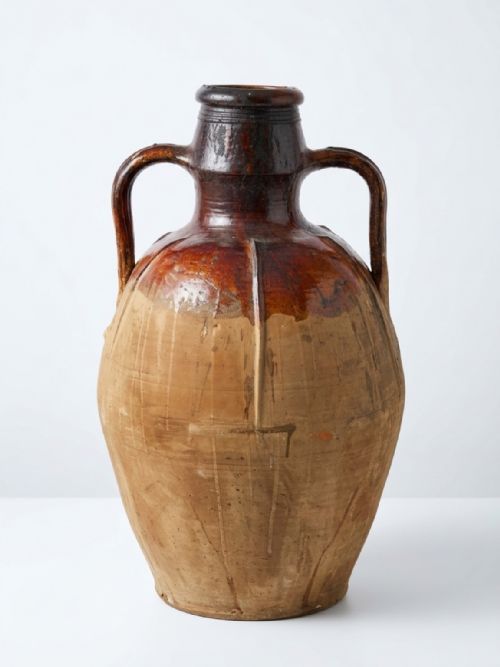
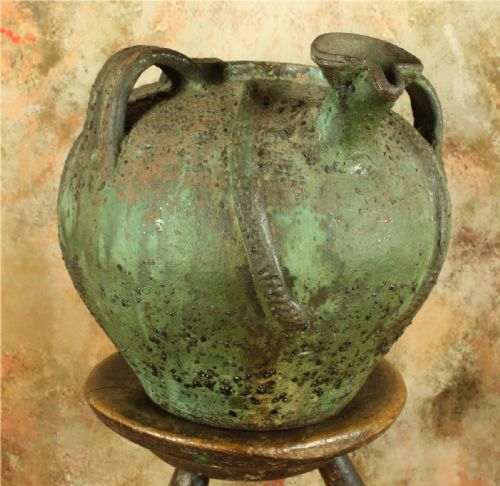


Terracotta Amphora Urn
These terracotta amphora urn vessels are substantial agricultural jars built to hold wine, oil, and water.
Terracotta Amphora Urn
A terracotta amphora urn is a heavy utility vessel designed for storage in Mediterranean agricultural settings. These pieces range from early Greek antiquities to nineteenth-century Italian, French, Turkish, and Portuguese examples.
Buyers encounter substantial oil jars, wine vessels, and olive pots shaped with distinct handles and generous bellies. Many pieces sit on wrought iron stands or display weathered lime wash surfaces from decades of rural use.
Materials and construction methods
Potters shaped these vessels from local clay and terracotta, often finishing the surfaces with a simple glaze or lime wash. The fundamental materials reflect the earthy, regional traditions of Mediterranean folk art.
Makers constructed these large storage jars by hand or wheel, producing durable earthenware designed to withstand daily agricultural demands. Wrought iron elements appear on certain stands paired with these vessels.
A Devon pottery workshop snuck into this sun-baked Mediterranean gathering, proving British soil can try its hand at amphora too.
What determines quality
Quality rests in the proportional balance of the vessel and the integrity of the original clay body. Superior examples maintain their structural form despite centuries of utilitarian service.
The character of the surface finish significantly affects the visual weight of each piece. Weathered lime wash and natural patination distinguish the most visually compelling rustic examples from plain utilitarian stock.
The Terracotta Amphora Urn Glossary
- Amphora
- A two-handled jar with a narrow neck used in ancient times for the storage and transport of oil or wine. These vessels often feature a tapered base designed for stability in sand or special stands.
- Terracotta
- Baked earth made from unglazed, brownish-red clay fired at relatively low temperatures. This porous material absorbs moisture and develops a characteristic weathered patina outdoors.
- Earthenware
- Pottery fired at lower temperatures that remains slightly porous unless glazed. It constitutes the primary ceramic body for heavy agricultural storage vessels.
- Lime wash
- A coating composed of slaked lime and water applied to exterior surfaces for protection and colour. Over time, this coating flakes and softens to create a distinct rustic texture.
Terracotta Amphora Urn: Frequently Asked Questions
How were these amphora urns originally used?
These large vessels served as functional agricultural containers for storing and transporting commodities such as olive oil, wine, and water across Mediterranean regions.
Their substantial weight and sturdy handles allowed workers to load them onto carts or sink them partially into cool cellar floors to maintain steady contents temperatures.
Can these terracotta vessels stay outside?
Many of these pieces function well as garden planters or decorative vessels in outdoor settings. Their durable terracotta and earthenware bodies withstand normal garden use.
Freezing winter temperatures can threaten porous clay bodies if moisture trapped inside expands, so freezing climates require indoor storage during cold months.
How do I identify the period of an oil jar?
Dating relies on observing manufacturing marks, the composition of the clay, and the characteristics of any surface glazes or lime wash. Eighteenth-century and nineteenth-century examples often display distinct hand-thrown ridges and regional potting traits.
Earlier antiquities from pre-sixteenth century contexts exhibit different forming techniques and raw material origins that separate them clearly from later country pottery.