


Vintage Olive Jar
A vintage olive jar brings the heavy, sun-baked textures of the Mediterranean directly into a room.
Vintage Olive Jar
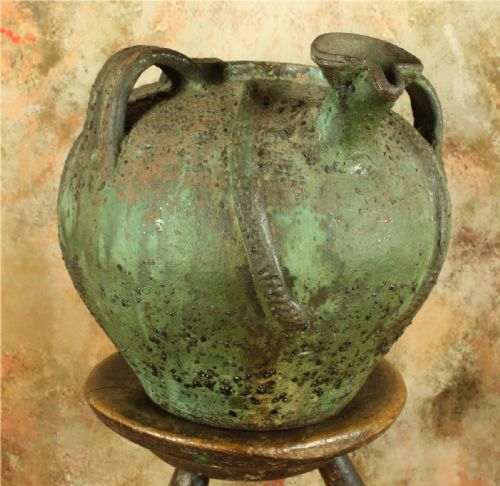
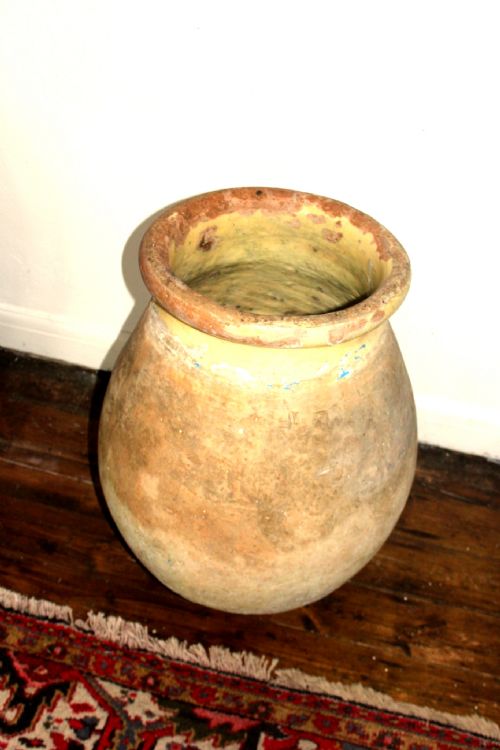
A vintage olive jar is a heavy, functional vessel historically used to store, transport, or ferment oil, water, and food across the Mediterranean. These pieces range from large 18th-century French utility vessels with multiple handles to smaller 19th-century glazed or painted variants from France, Portugal, and Anatolia. Buyers searching for a vintage olive jar will encounter robust earthen containers originally built for agrarian life.
The forms span simple terracotta oil jars, confit pots, and amphora vessels, often paired with wrought iron stands or finished in lime wash. Many survivors bear the marks of decades outdoors, showing aged patinas and weathered surfaces from French country and rustic Mediterranean settings. These sturdy forms function today primarily as garden urns, planters, and decorative floor vessels.
Materials and Construction
Makers shaped these vessels from local clay, terracotta, and earthenware, throwing or building them by hand to withstand heavy agricultural use. Some pieces feature targeted applications of green glaze or lime wash to seal the porous earthenware against liquids. Blown glass also appears among the storage vessels, particularly in pickling jars and carboys.
Structural elements such as wrought iron stands and multiple handles served practical purposes for lifting and stabilizing the heavy bodies. The natural firing processes in traditional kilns left variations in the terracotta colour and texture, creating the distinctive weathered surfaces seen today.
Regional styles on this page include French Country, Anatolian Folk, and Rustic Mediterranean forms.
Assessing Quality and Character
Quality in these utility vessels rests in the integrity of the clay body and the authenticity of the surface patina. Pieces with original lime wash, historical green glaze, or intact multi-handle structures show greater depth of character than plain, uniform examples. The balance of the thrown form and the weight of the terracotta indicate the skill of the original maker.
Condition plays a role, though historical wear, chips, and old repairs often add to the rustic appeal of an agrarian container. The presence of maker marks, specific regional potting traits, or associated wrought iron stands separates standard utility vessels from more distinctive folk art pieces.
The Vintage Olive Jar Glossary
- Terracotta
- A porous, unglazed or slip-coated fired earthenware clay that ranges in colour from pale buff to deep reddish-brown. This material forms the primary body of most garden pots and oil jugs.
- Confit Jar
- A traditional French earthenware pot featuring handles and often a glazed upper section. These vessels were originally used for preserving meat and food in fat.
- Amphora
- A two-handled ancient vessel style with a narrow neck, utilised historically for transport and storage. Later iterations retain this classic narrow-necked profile.
- Lime Wash
- A traditional coating made from slaked lime applied to exterior surfaces. It provides a chalky, breathable finish that weathers over time.
- Demi-John
- A large, narrow-necked glass or earthenware container enclosed in a bulky body. These were designed for holding liquids safely during transport.
Vintage Olive Jar: Frequently Asked Questions
How were old olive jars actually used?
These large vessels served as functional agricultural containers for storing, settling, and transporting olive oil, water, and grain across Mediterranean farms. Their thick terracotta walls kept contents cool in hot climates.
Over decades of use, many were sunk into dirt floors or housed in stone outbuildings for daily estate management before finding new life as decorative garden planters.
Can these pots stay outside in winter?
Terracotta and earthenware are porous materials that absorb moisture, meaning unglazed pots can crack if water freezes inside them during hard frosts. It is safest to lift them off the ground on pot feet or store them under cover during freezing weather.
Glazed vessels handle damp conditions slightly better, but proper drainage is essential to protect the historic clay body from weather damage.
How do I tell French and Mediterranean styles apart?
French country vessels often feature specific regional traits like green lead glazes, multiple lug handles, or lime-washed surfaces suited to provençal farmhouses. Anatolian and Portuguese variations show distinct local clay colours and simpler, utilitarian throwing lines.
Examining the specific type of earthenware and the style of the handles usually points toward the region of origin.
What is the best way to clean an antique jar?
Gentle brushing with warm water and a soft bristle brush removes surface dirt without harming the aged patina or delicate lime wash. Avoid harsh chemical cleaners or pressure washers, which can strip away centuries of historical wear.
Allow the porous terracotta to dry completely after cleaning to preserve the integrity of the clay.