


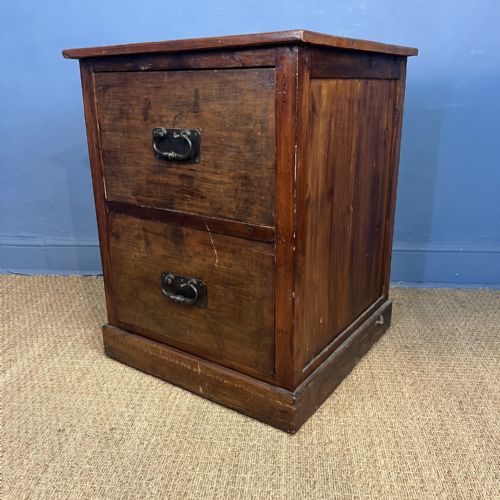



Teak Chest of Drawers
A teak chest of drawers is a robust, modular storage piece built for travel and colonial service.
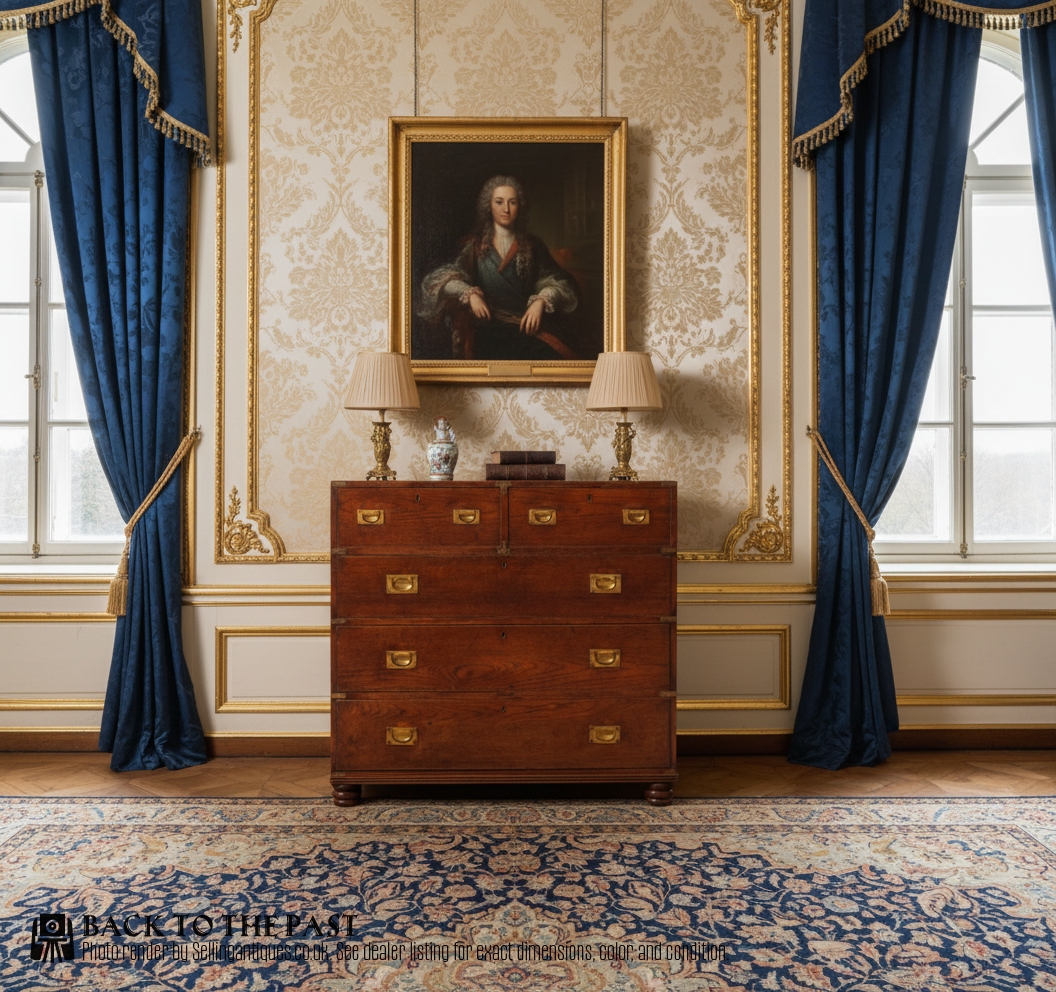
Teak Chest of Drawers
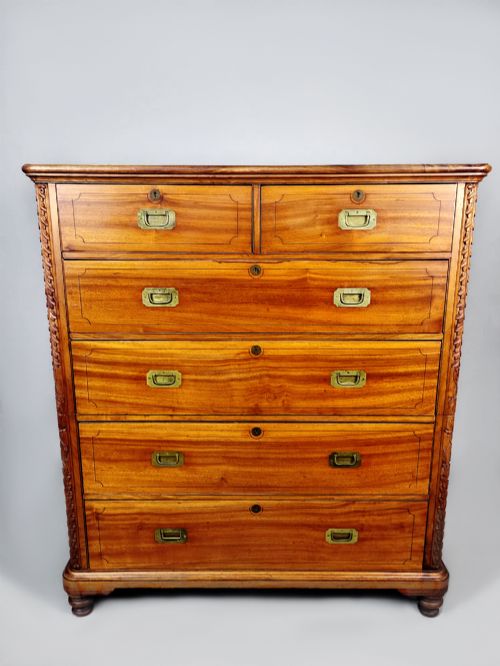
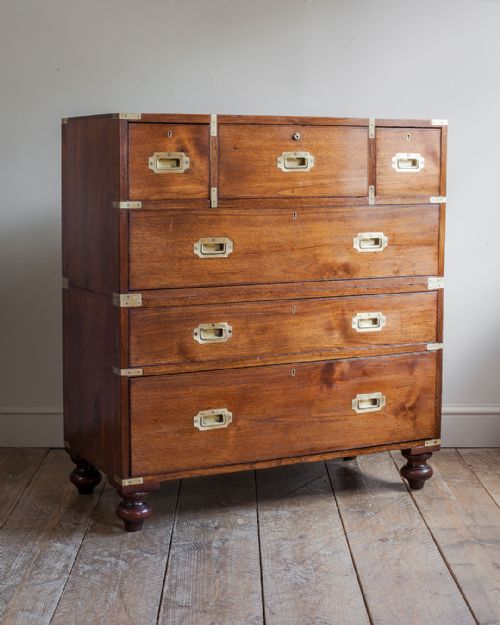
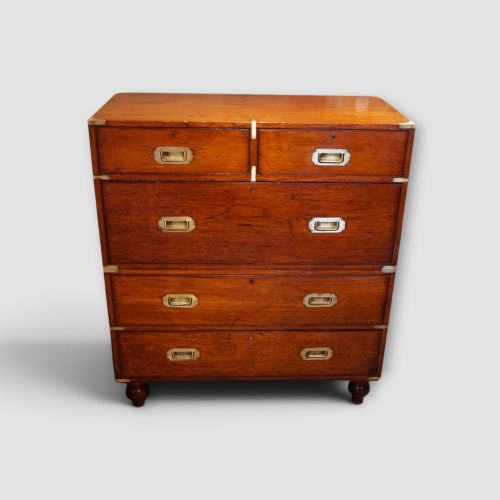
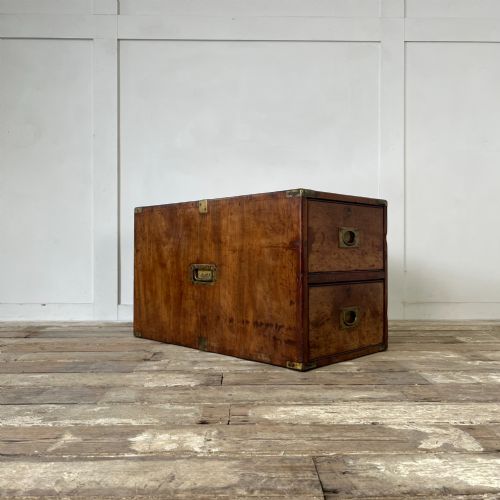
When searching for a teak chest of drawers, buyers encounter substantial pieces rooted in the Victorian military campaign tradition and Anglo-Indian colonial design. The majority of these survivors are built in two separate sections designed to lock together for transport by ship or wagon.
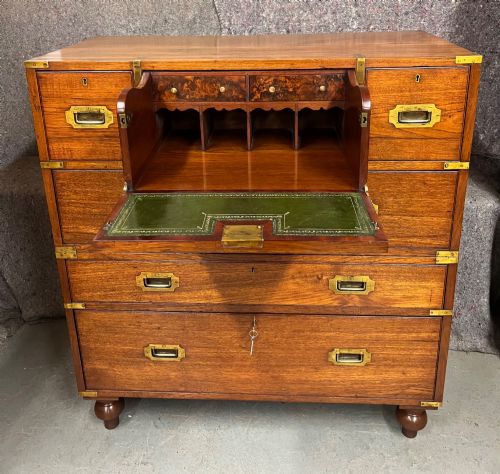
These items range from compact tabletop drawers and filing cabinets to large multi-drawer tallboys and fitted secretaire bureaus. Many examples feature recessed brass handles and corner brackets intended to withstand the knocks of heavy travel without catching on ropes or doorways.
How they were made
Joiners relied heavily on dense tropical hardwoods like solid teak, mahogany, and padouk, which resisted the humidity and pests of distant postings. Timber boards were selected for stability and often reinforced with internal framing to prevent warping in extreme climates.
Makers integrated brass binding and flush-fitting hardware screwed directly into the timber to protect vulnerable edges and corners. Drawers were typically constructed with tight dovetail joints and lined with secondary timbers such as cedar.
Teak Chest of Drawers Retail Price Guide 2026
Typical asking prices for teak chest of drawers among the pieces listed under this phrase on Sellingantiques today, from the lower quarter to the upper quarter. They describe what is for sale here now, not the wider market.
Listings feature teak, mahogany, and padouk woods alongside brass mounts and iron hardware dating from the Regency period into the early 20th century.
What varies in quality
The standard of a piece often rests on the precision of its brass fittings and whether the handles sit truly flush with the timber face. Superior examples display neat, hand-cut dovetails and well-fitted interior writing drawers that operate smoothly within their carcases.
Grain selection and timber thickness also mark the division between standard utilitarian storage and fine officer's quarters furniture. Solid back panels, cleanly inset corner straps, and original working locks distinguish high-grade workshops from simpler provincial builds.
Army & Navy·Ross & Co. Dublin
The Teak Chest of Drawers Glossary
- Campaign chest
- A modular set of drawers built in two or more sections with recessed hardware for military transit. These items split apart down the middle for ease of packing during relocation.
- Secretaire
- A cabinet or chest featuring a pull-out drawer with a hinged writing flap and internal pigeonholes. This compartment often conceals small secret drawers behind stationery slots.
- Brass bound
- The technique of reinforcing timber edges and corners with inset strips and plates of brass. This method protected the wood from impact during rough voyages.
- Two-part
- A cabinet constructed as two distinct modular boxes stacked vertically and secured with side latches or pins. This division reduced the weight and bulk for individual carriers.
Teak Chest of Drawers: Frequently Asked Questions
Why do these chests split into two parts?
Modular construction allowed officers and colonial administrators to pack heavy possessions into manageable sections for transport on mules, wagons, and ships.
Splitting the carcase prevented structural twisting on long journeys and made shifting bulky furniture through narrow ship cabins practical.
What is a secretaire chest?
A secretaire chest includes a dedicated writing drawer fitted with a drop-front panel, small drawers, and compartments for letters and ink.
This built-in desk allowed travelling officers to handle official correspondence without needing a separate writing table.
How do I identify campaign hardware?
Campaign hardware consists of flush-fitting brass handles, corner brackets, and straps that sit level with the wood surface rather than protruding outward.
Recessed pulls prevented items from snagging on ropes and allowed chests to be packed tightly against one another in storage holds.