



Tea Caddy on Pedestal
A tea caddy on pedestal is a stately container elevated on a central support, designed to keep precious tea leaves secure.
Tea Caddy on Pedestal
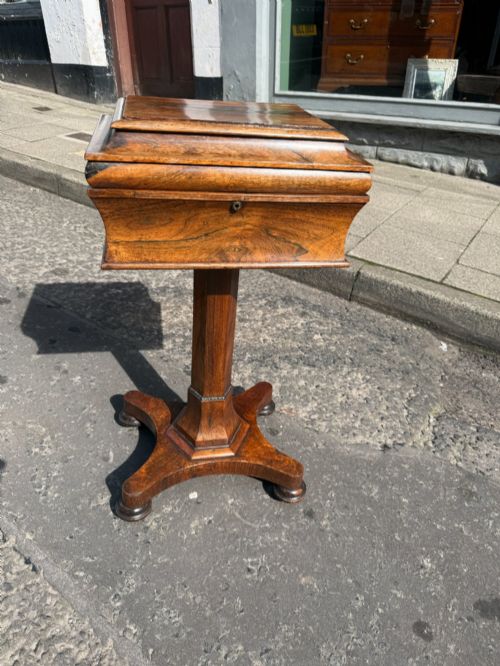
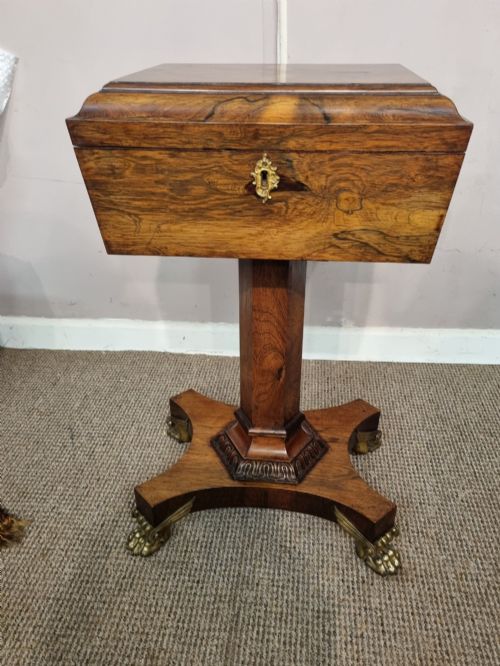
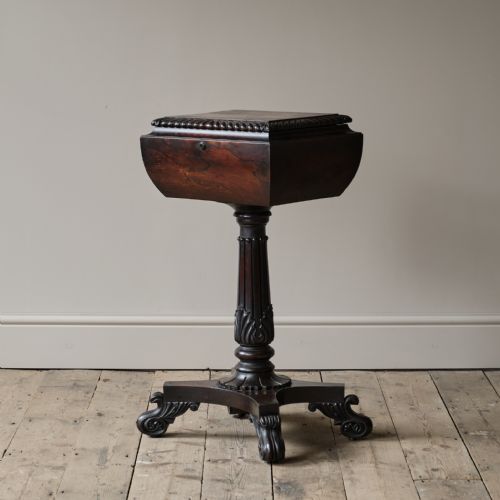
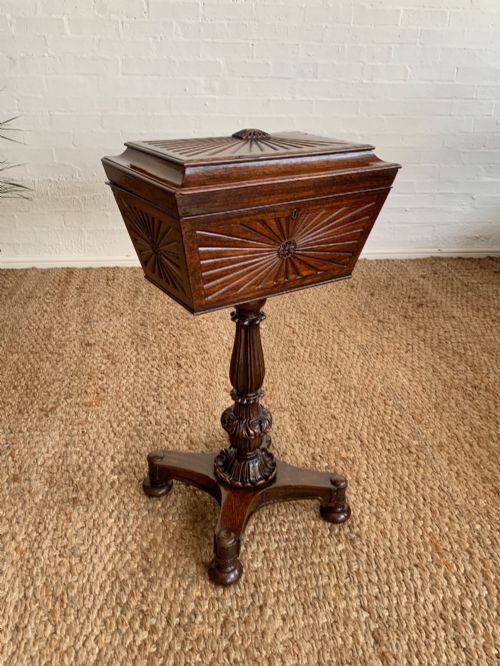
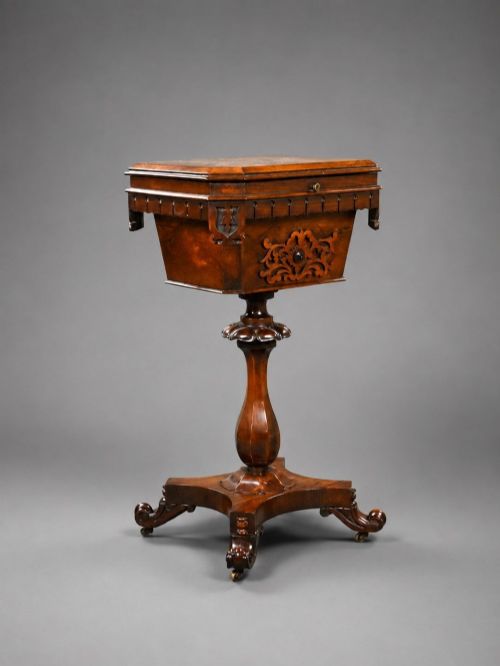
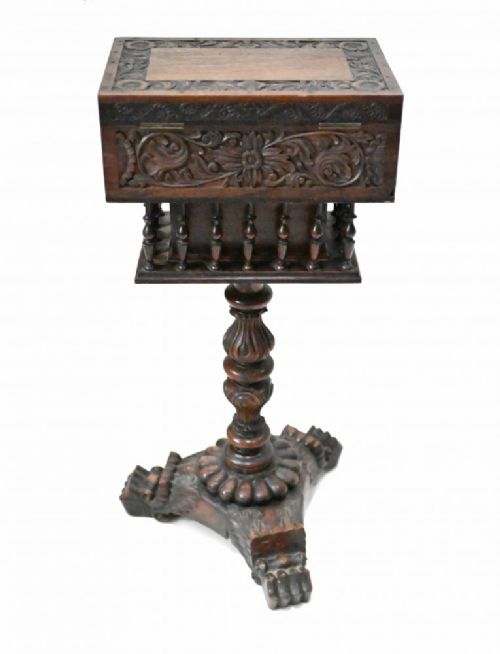
When you search for a tea caddy on pedestal, you encounter pieces that range from compact boxes on tall columns to elaborate multi-compartment tables designed for the parlour. The most common iteration met here is the rosewood or mahogany teapoy dating from the Regency and William IV periods, often featuring a sarcophagus-shaped box resting on a substantial pillar and carved feet.
Originating across the nineteenth century, these objects served to store high-value leaf tea safely under lock and key while entertaining guests. Many examples incorporate mixing bowls and internal canisters alongside the central pedestal structure, demonstrating the high social rituals surrounding tea consumption in Georgian and Victorian households.
How they were made
Cabinet makers constructed the bodies of these pieces using dense tropical hardwoods such as rosewood and flame mahogany, frequently embellished with contrasting brass inlay or intricate wood veneers. The central pedestals rely on solid turnery, often uniting with platform bases or carved feet to support the weight of the upper storage compartment.
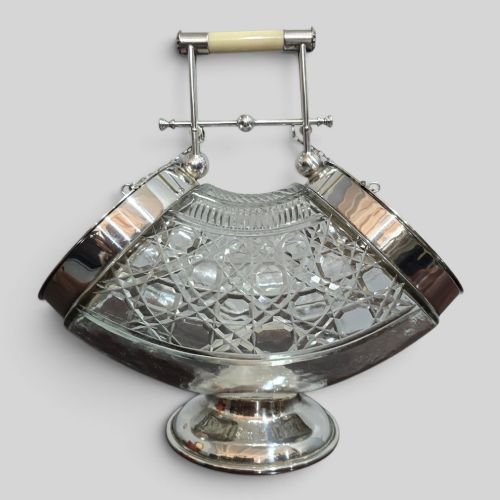
Internal components demand precise joinery to form the compartments for tea canisters and glass mixing bowls. Metal elements such as brass mounts, escutcheons and silver components provide structural reinforcement and functional security.
Tea Caddy on Pedestal Retail Price Guide 2026
Typical asking prices for tea caddy on pedestal among the pieces listed under this phrase on Sellingantiques today, from the lower quarter to the upper quarter. They describe what is for sale here now, not the wider market.
The listings here span the Regency, Georgian and Victorian eras, predominantly constructed from rosewood and mahogany with occasional silver or brass elements.
What varies in quality
The standard of timber selection dictates the visual impact of the piece, with choice cuts of burr walnut, flame mahogany and figured rosewood marking out superior examples. Cabinet work Gillows and similar leading workshops displays finer execution in the carving of the pedestal and the precision of the brass inlay.
Proportion and structural integrity define the higher tiers of these objects, where the pedestal meets the box without sagging and the internal fittings survive intact. Pieces retaining their original mixing bowls, mixing compartments and functioning locks command greater appreciation.
Gillows
The Tea Caddy on Pedestal Glossary
- Teapoy
- A pedestal table or box designed specifically for storing and preparing tea. This term encompasses both the tabletop variants and the lidded boxes on stands found across the nineteenth century.
- Sarcophagus
- A distinct coffin-like box shape with a domed or sloping lid used frequently in Regency furniture. This profile often characterises the upper compartment of a pedestal tea container.
- Escutcheon
- A protective plate surrounding a keyhole, usually made of brass or ivory. It prevents the wood around the lock from wearing down through repeated use.
- Padouk
- A heavy, durable exotic hardwood with a reddish hue utilised in colonial furniture making. Pieces constructed from this material often display distinct regional carving styles.
Tea Caddy on Pedestal: Frequently Asked Questions
What is a teapoy?
A teapoy is a lidded container or small table designed to hold tea leaves, often supported on a central pedestal. These pieces were central to the formal hospitality of the Georgian and Victorian eras.
Over time, the term expanded to describe various occasional tables and work boxes sharing the same pedestal form. They reflect the high value once placed on imported tea.
How were tea caddies used?
Tea caddies stored precious black and green teas under lock and key to prevent servants or guests from helping themselves. The host would measure out the leaves using small spoons into a mixing bowl.
Many examples feature internal compartments for different tea varieties and glass bowls for blending leaves with sugar. This happened in the presence of guests as a demonstration of social status.
How do I date a pedestal tea caddy?
Dating relies on observing the timber species, joinery methods and stylistic motifs present in the pedestal and base. Regency and William IV pieces often display rosewood, brass inlay and robust pillar supports.
Later Victorian versions incorporate oak, walnut or burr veneers with heavier carved feet. Cabinet stamps or hallmarks on silver components can also provide precise chronological markers.
Where should I place a teapoy at home?
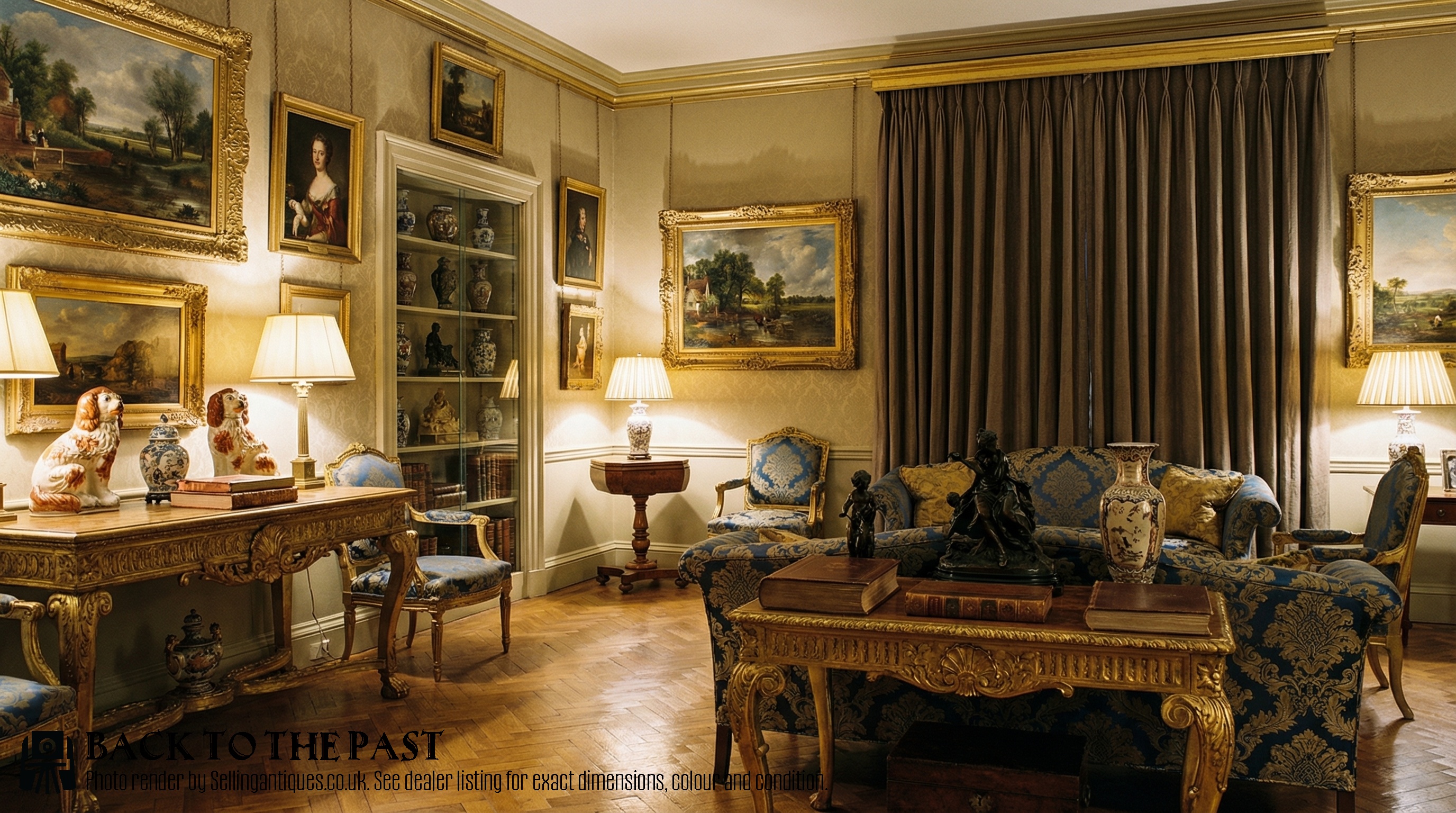
A pedestal teapoy functions well as an occasional table next to a sofa or armchair in a living space. Its compact footprint allows it to sit comfortably in a corner or hallway as a decorative display surface.
Keeping the piece away from direct sunlight and strong heat sources protects delicate wood veneers and historic finishes. The internal compartments remain useful for storing small modern items.