


Tavern Wall Clock
These tavern wall clock examples are robust public timepieces offering commanding presence and straightforward mechanical utility for domestic interiors.
Tavern Wall Clock
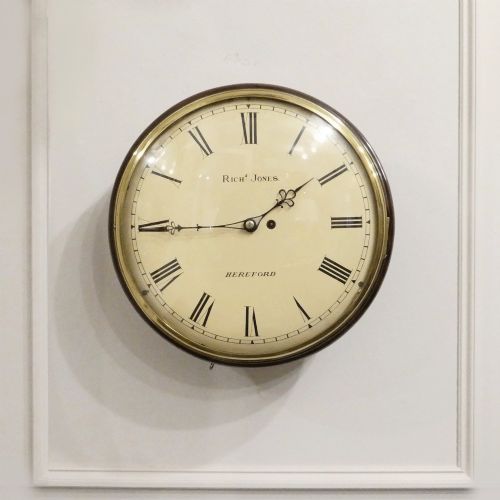
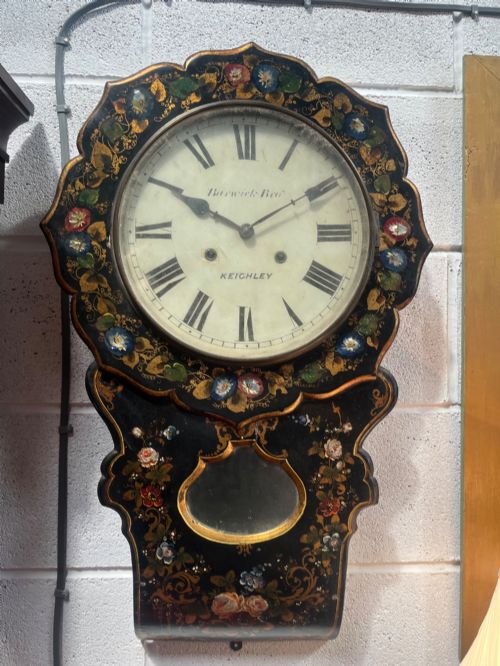
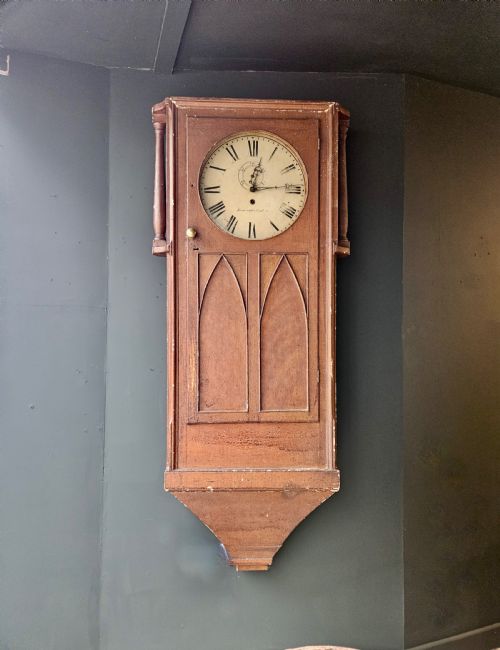
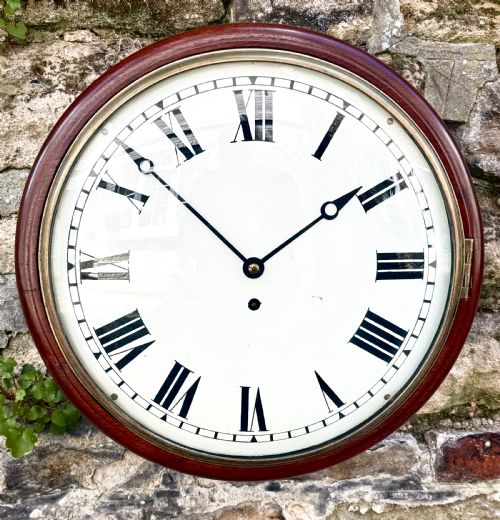
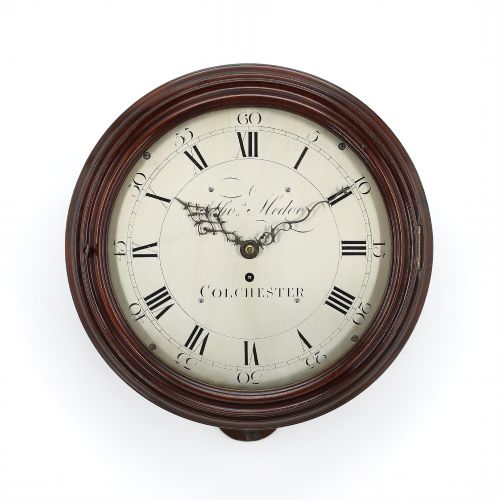
A tavern wall clock serves as a large and legible dial intended originally for communal spaces, coaching inns and public houses. The pieces on this page span the eighteenth century, the regency period and the nineteenth century, reflecting enduring utility.
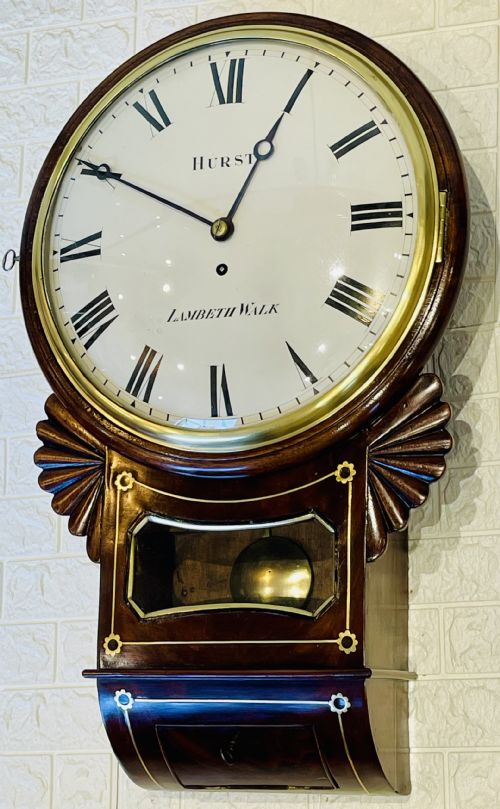
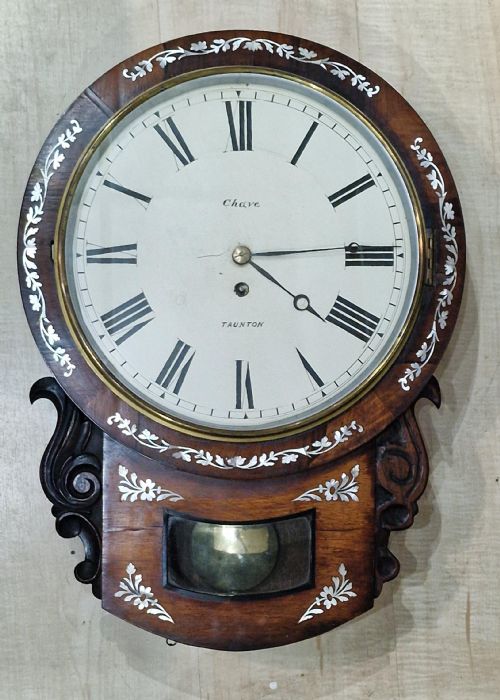
Most examples take the form of dial clocks or drop dial fusee timepieces, occasionally referred to as Act of Parliament clocks. The format prioritises a prominent face housed in wood with a lower access door for the pendulum.
How tavern wall clock pieces were made
Cases rely heavily on mahogany, oak and pine, sometimes featuring ebonised wood or painted decoration. Dial construction incorporates glass, brass and occasionally wooden faces to protect the movement and hands.
Movements utilise brass and steel components, driven by fusee or weight mechanisms. Master makers integrated verge escapements and striking trains to ensure reliable timekeeping across extended periods.
Some tavern clocks owe their massive dials to a clever eighteenth-century tax dodge rather than the landlord simply needing better eyesight.
What varies in quality
Quality rests in the crispness of the timber case, the integrity of the painted or wooden dial, and the sophistication of the movement inside. Finer examples retain original paint finishes, well-figured mahogany veneers and signed brass dial plates.
Proportion and dial legibility dictate visual success. Clocks with balanced proportions, clean sightlines and authentic maker signatures demonstrate superior workshop standards.
Richard Jones of Hereford·Thomas Hedge of Colchester·Samuel Chave Taunton·Robert Salmon·J. Beckett of London·Peter Debaufre·William Stevens of Cirencester·Smith & Sons
The Tavern Wall Clock Glossary
- Fusee
- A conical pulley used in clock movements to maintain even force on the gear train as the mainspring unwinds. This mechanism improves timekeeping accuracy across the power reserve.
- Drop dial
- A clock case design where the dial sits above an extended trunk housing the pendulum. This format accommodates the drop needed for the weights or pendulum swing.
- Verge escapement
- An early mechanical escapement regulating the speed of a clock through a crown wheel and pallet arrangement. It remains a hallmark of traditional horology.
- Act of Parliament clock
- A large dial timepiece dating from the late eighteenth century onwards. The name derives from a supposed tax levied on clocks and watches.
- Dial
- The visible face of the clock displaying the numerals and markers. These range from painted iron and brass to solid wood variants.
Tavern Wall Clock: Frequently Asked Questions
How do I wind a fusee wall clock?
Wind the clock using the designated key inserted into the dial aperture with steady, measured turns. Care ensures the fusee chain or cord engages smoothly without over-tensioning the movement.
Consult the specific requirements of the mechanism to avoid straining the interior components. Regular, gentle winding preserves the longevity of the gear train.
What is an Act of Parliament clock?
This term describes large dial wall clocks historically placed in public houses and coaching inns for communal viewing. Their generous proportions made them visible across large rooms.
They share the architectural layout of standard tavern wall clocks, featuring prominent faces and simple, durable cases built for heavy use.
Where should I hang a heavy wall clock?
Mount the clock directly into structural timber or masonry using fixings rated for the total weight of the case and movement. Stability prevents vibration from disrupting the pendulum.
Ensure the hanging position places the dial at a comfortable viewing height while remaining clear of high-traffic household doorways.
How do I identify the period of a dial clock?
Examine the timber species, case silhouette, dial material and fixing methods to determine the era of production. Georgian and Regency examples often display distinct mahogany veneers and hand-painted numerals.
Maker signatures inscribed on the dial or movement backplate provide definitive clues to the date and workshop origin.