
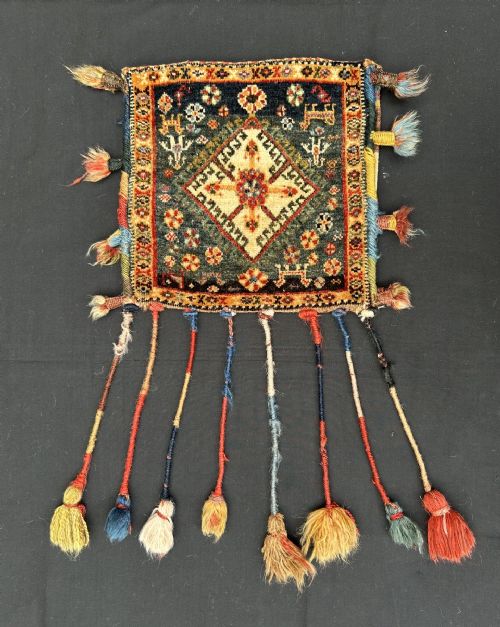
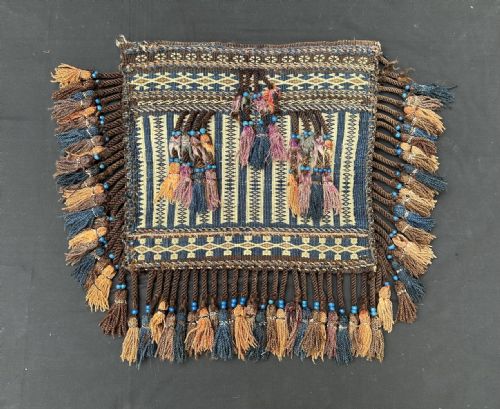
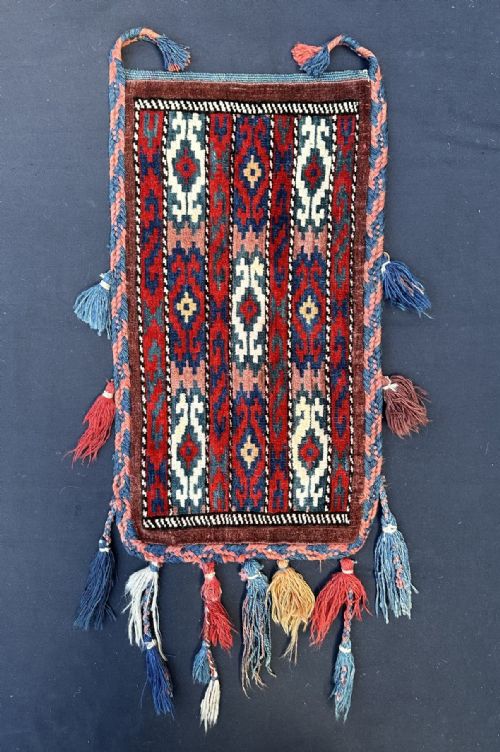
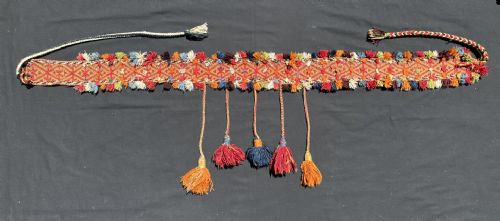

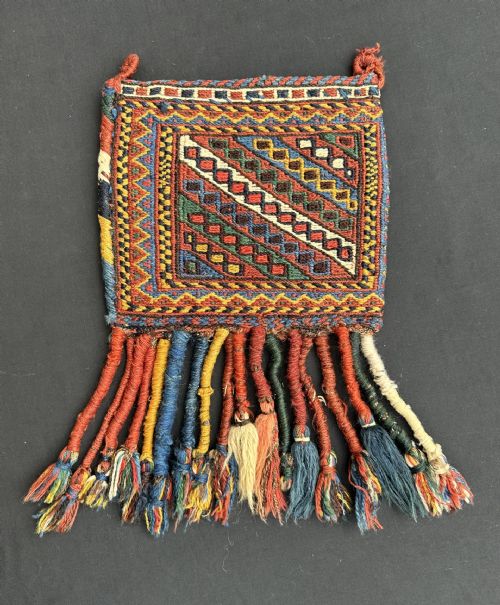

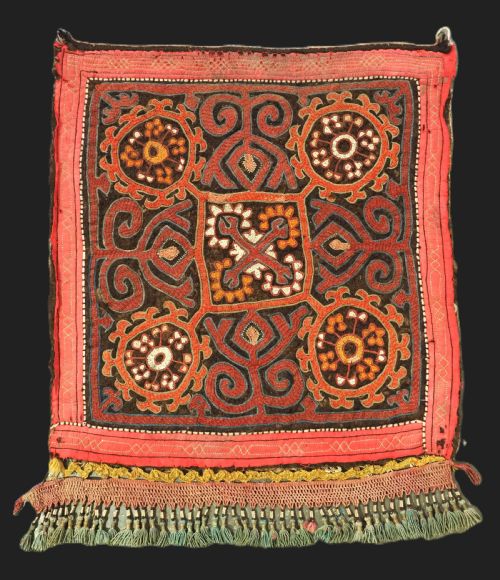


Tasselled Tribal Textile Hanging
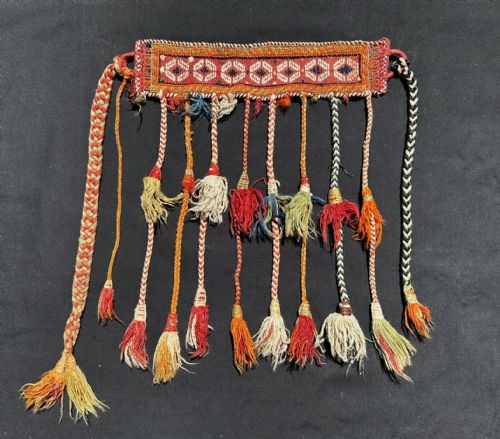
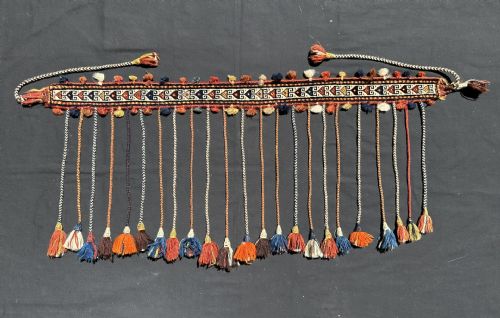
These pieces known as a tasselled tribal textile hanging bring hand-woven nomadic artistry and distinctive wool texture directly onto interior walls.
Tasselled Tribal Textile Hanging
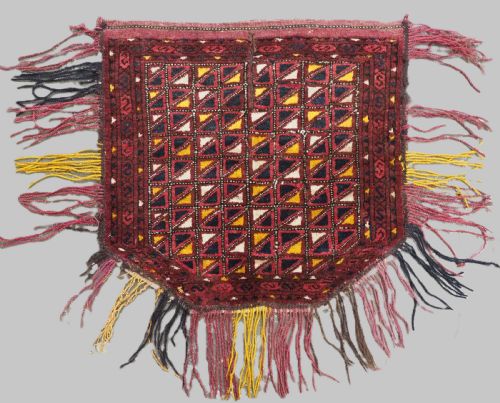
A tasselled tribal textile hanging encompasses nomadic utility items repurposed as decorative wall art, ranging from animal trappings and spindle bags to saddle covers and storage pouches. When you search for this phrase, you encounter authentic woven artefacts originating from Central Asian steppes and Persian tribal regions.
The objects displayed on this page date from the late nineteenth century up to the early decades of the twentieth century, reflecting the material culture of groups such as the Yomut, Qashqai, Baluch, and Lakai Uzbeks. These hanging textiles frequently incorporate original fringes, wool tassels, and horsehair details integral to their nomadic heritage.
How they were made
These woven items rely primarily on natural wool and cotton foundations, often enriched with silk embroidery threads, felt panels, and applied leather or glass bead elements. Artisans utilised traditional vegetable and natural dyes to colour the yarns, producing deep red grounds and varied geometric patterns.
Nomadic makers constructed these domestic items through flat weaves, pile knotting, and intricate needlework, finishing edges and hanging points with durable wool or horsehair tassels.
Listings feature items dated between 1870 and 1930, constructed from wool, cotton, silk, felt, leather, and glass beads.
What varies in quality
Quality in these textiles depends on the density of the weave, the complexity of the tribal iconography, and the survival of original structural components like borders and backing materials. Pieces that retain their complete wool tassels, fringes, and secondary animal hair attachments demonstrate superior preservation.
The vibrancy and depth of the natural dyes used across the wool and silk elements also distinguish finer examples, alongside the precision of the embroidery and the fineness of the foundational knotting or flat weaving.
The Tasselled Tribal Textile Hanging Glossary
- Asmalyk
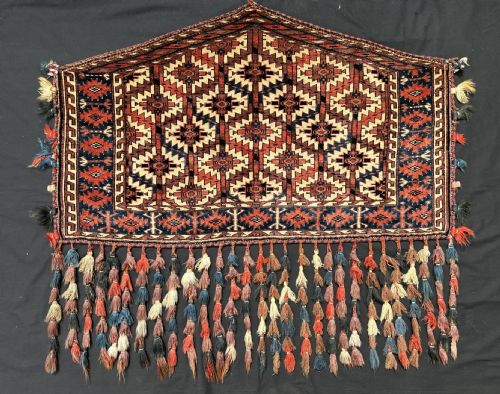
- A large, pentagonal camel trapping produced by Turkmen tribes, traditionally used during wedding processions.
- Torba
- A small, horizontal storage bag woven by nomadic groups for domestic use inside tents.
- Ok bash
- A specialist tent-pole bag designed to cover the ends of nomadic yurt spars.
- Kapunuk
- A decorative tent doorway hanging positioned over the entrance lintel of a nomadic dwelling.
Tasselled Tribal Textile Hanging: Frequently Asked Questions
How do I hang a tribal textile?
Mount these textiles using a padded wooden slat or custom fabric sleeve stitched to the reverse to distribute weight evenly across the wool foundation.
Avoid using direct pins or nails through the weave, as this damages the historical fibres and tassel attachments.
Where were these textiles made?
The pieces originate primarily from the Trans-Caspian steppes of Turkmenistan, various regions of Persia, and Uzbekistan.
Nomadic and tribal confederations such as the Yomut, Qashqai, and Lakai produced them for functional daily use and ceremonial events.
How do I clean an antique textile?
Gently vacuum the surface on a low suction setting through a mesh screen to remove loose dust without pulling on fragile wool tassels.
Consult a professional textile conservator for any deeper cleaning to prevent dye bleeding and shrinkage.
What is an asmalyk used for?
An asmalyk functioned as a decorative trapping hung on the flanks of a bridal camel during traditional Turkmen wedding ceremonies.
Collectors now prize these pentagonal pieces as vibrant wall hangings displaying rich tribal symbolism.