
Tapestry Upholstered Footstool
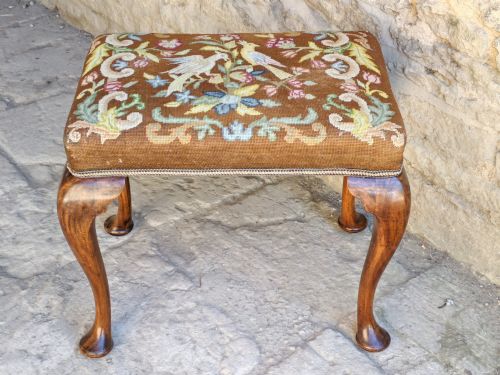
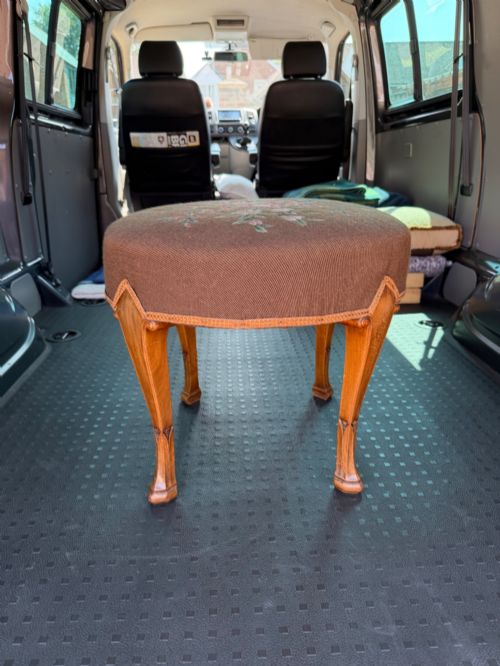
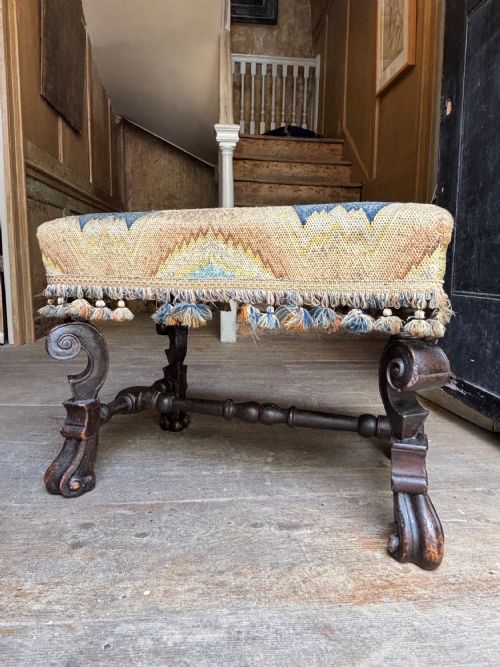
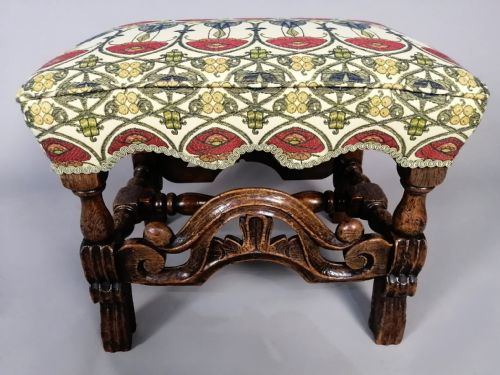
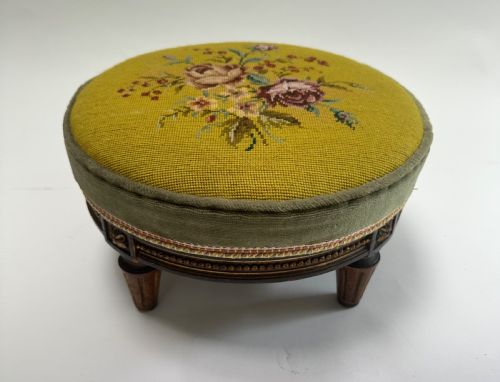
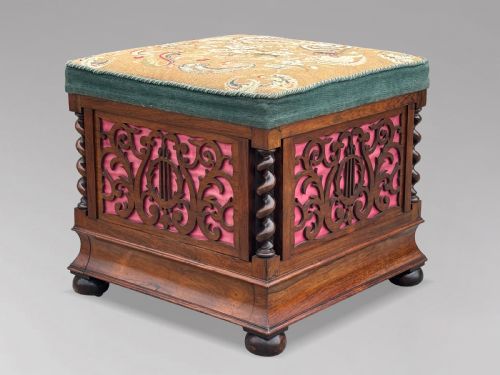
These tapestry upholstered footstool options bring tactile textile tops and sturdy timber frames together for fireside or dressing room use.
Tapestry Upholstered Footstool
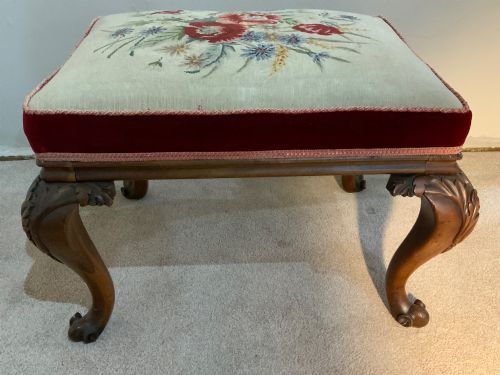
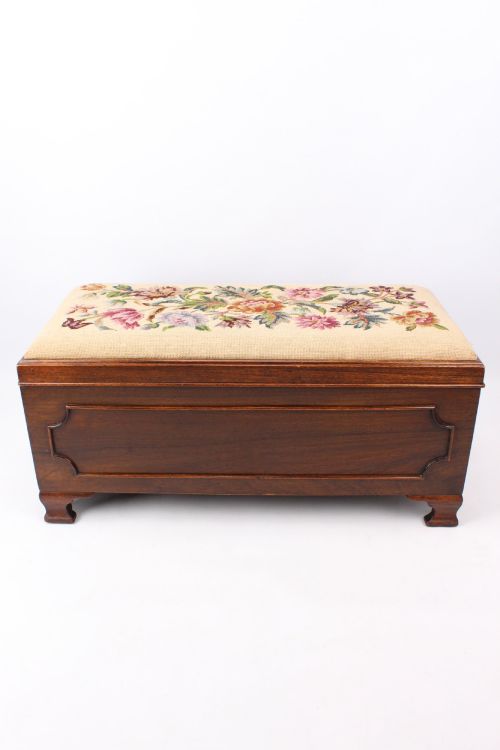
A tapestry upholstered footstool is a low seating piece designed for resting the feet or perching by a fireside, appearing in forms ranging from compact gout stools to large country house ottomans. The examples gathered under this search phrase span centuries of cabinetmaking, with particular strength in Victorian creations and revival styles.
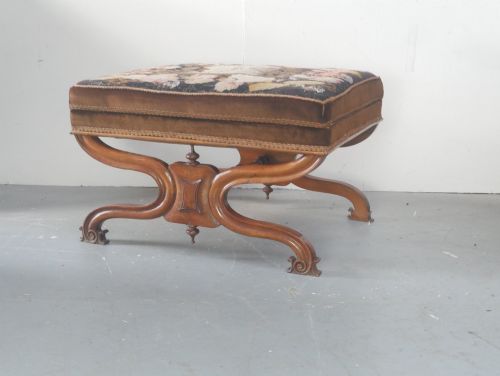
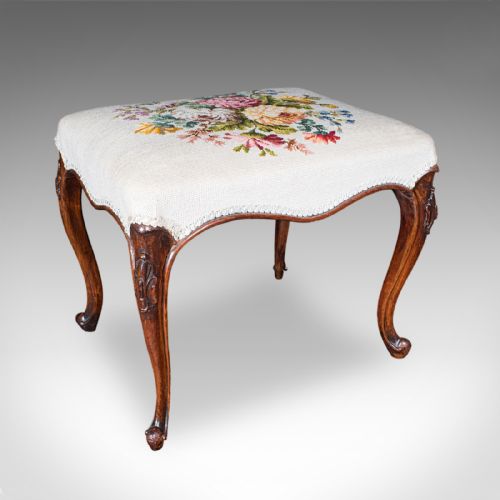
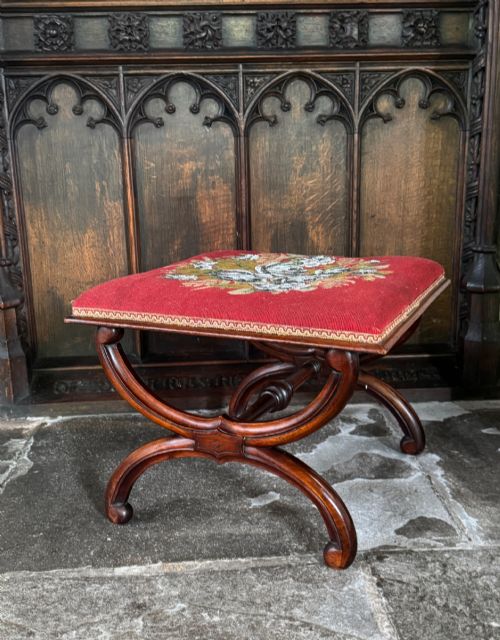
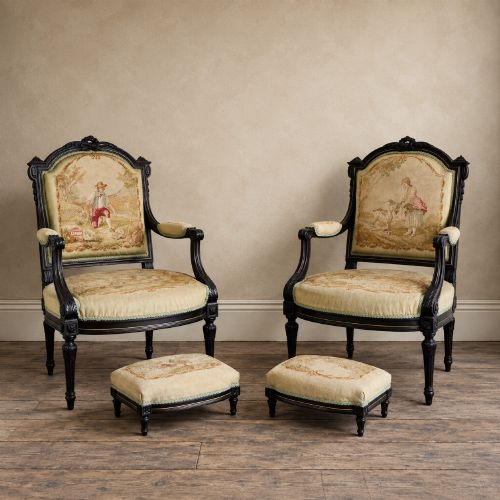
Most pieces encountered on this page date from the nineteenth century, including walnut and mahogany frames carved in the Victorian, Chippendale, and Louis revival manner. Alongside these standard fireside helpers, buyers find dressing table stools, window seats, and x-frame supports carrying needlepoint, petit point, and Kilim covers.
Materials and construction
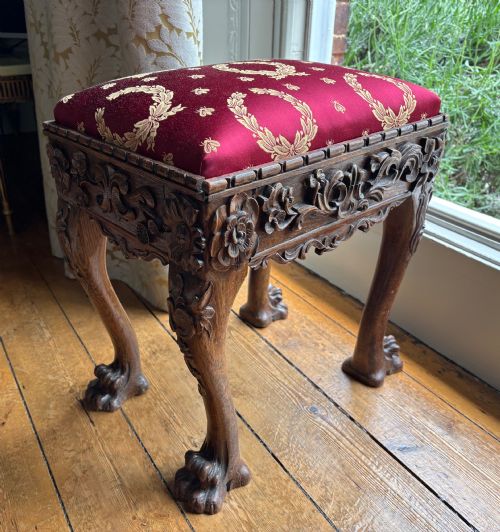
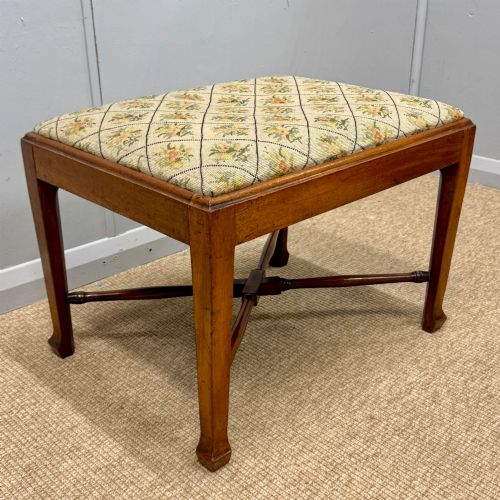
Frames rely primarily on dense hardwoods such as walnut, mahogany, and pitch pine, shaped with turned legs, cabriole supports, or intersecting stretchers. Cabinetmakers employed solid timber construction to bear weight, often finishing the wood with carved details or dark polish.
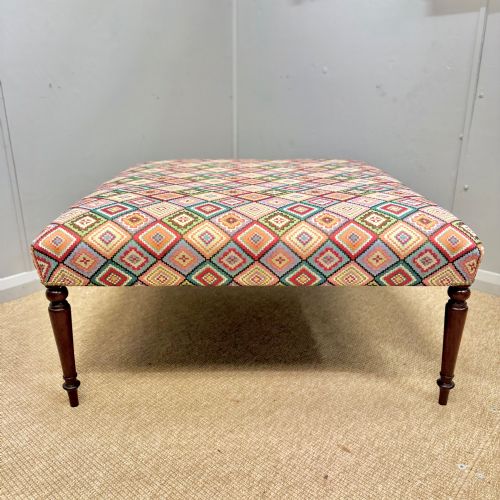
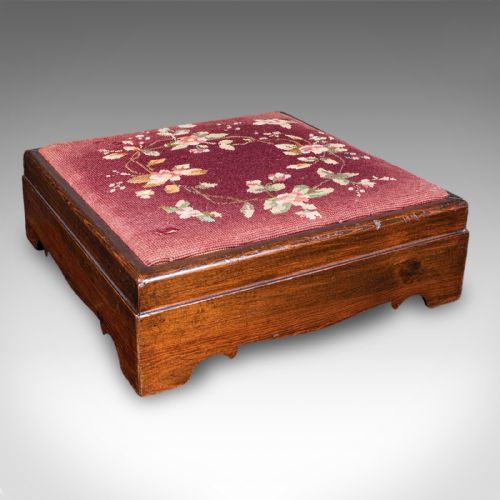
Upper surfaces display wool needlework, tapestry, and beadwork textiles stretched tight over padding. These decorative coverings utilise traditional hand-stitched needlepoint or woven tapestry techniques to display floral, geometric, or figurative motifs.
Some nineteenth-century occupants rested their aching joints on clever little gout stools with adjustable tilting tops.
Judging the pieces
Quality rests heavily on the crispness of timber carving and the density of the hardwood frame beneath the upholstery. Pieces featuring substantial walnut or finely turned mahogany display superior joinery compared to lighter pine variants.
The needlework itself dictates the visual standing of the object, where tight, finely detailed petit point or wool tapestry denotes greater workshop care than coarse commercial fabric. Original textile survivals sitting securely on period frames command deeper appreciation from collectors.
Hallett & Sons
The Tapestry Upholstered Footstool Glossary
- Gout stool
- A small low footstool, frequently fitted with an adjustable sloping top designed to elevate ailing feet. These compact pieces often feature needlepoint or tapestry upholstery.
- Needlepoint
- A form of counted thread embroidery stitched onto an open-weave canvas foundation. It forms the durable, patterned surface seen on many period footstool tops.
- Petit point
- A fine variety of needlepoint worked with small stitches on a high-count canvas. This technique permits intricate pictorial detail and subtle shading on antique textile seats.
- X-frame
- A structural furniture base formed of intersecting curved or straight timber members resembling the letter X. This form provides robust lateral support for dressing stools and window seats.
- Kilim
- A flatwoven textile originating from the Near East and Central Asia. These durable geometric cloths occasionally appear repurposed as upholstery on nineteenth-century British frames.
Tapestry Upholstered Footstool: Frequently Asked Questions
How were footstools used originally?
These low seats served primarily beside drawing room fires or in dressing rooms, keeping feet elevated above cold draughty floorboards. Larger versions functioned as window seats or occasional perches.
Compact gout stools offered specific ergonomic support for resting tired or aching limbs during long periods of sitting.
Are the tapestry covers original?
Many surviving pieces retain their period wool needlework or tapestry covers, though the lifespan of textiles often necessitates historical reupholstery. Close inspection of the tack holes and foundation webbing helps determine the age of the fabric relative to the timber frame.
Needlepoint worked in wool frequently endures for generations when kept away from direct sunlight and damp conditions.
How do I date a Victorian footstool?
Victorian examples generally show denser timbers like walnut or rosewood, combined with specific revival motifs such as cabriole legs or beadwork seats. Cabinetmakers of this era also utilised pitch pine on utilitarian domestic items.
Comparing the turning style and underframe construction against dated pieces provides the clearest indicator of origin decade.
What is the difference between an ottoman and a footstool?
Footstools are smaller portable items intended strictly for resting feet or low seating, whereas ottomans typically offer larger proportions and frequently incorporate internal storage space.
Country house ottomans provide substantial top surfaces covered in heavy tapestry or Kilim, contrasting with the intimate scale of a fireside stool.