
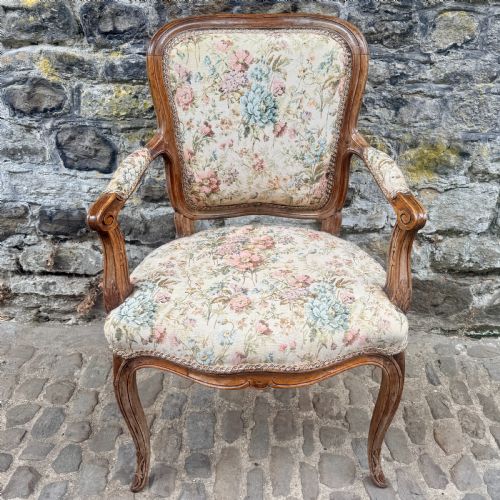
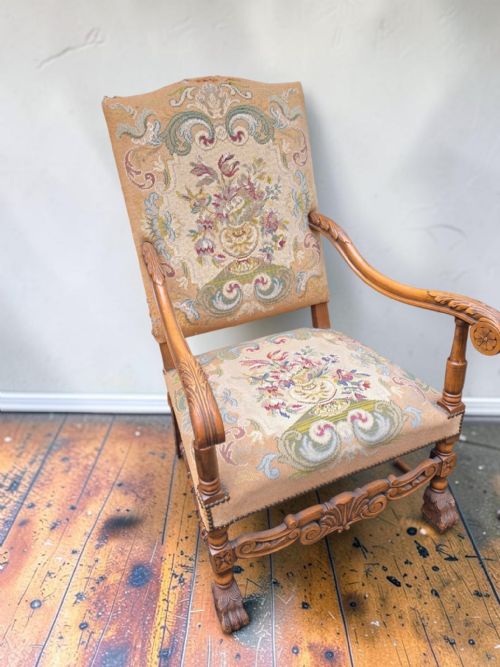
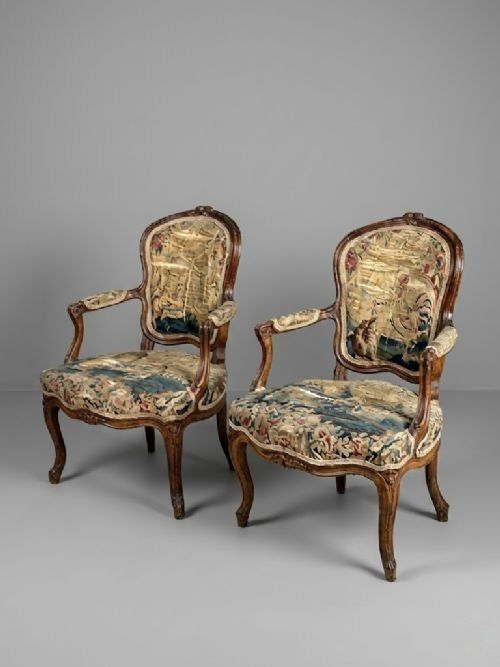
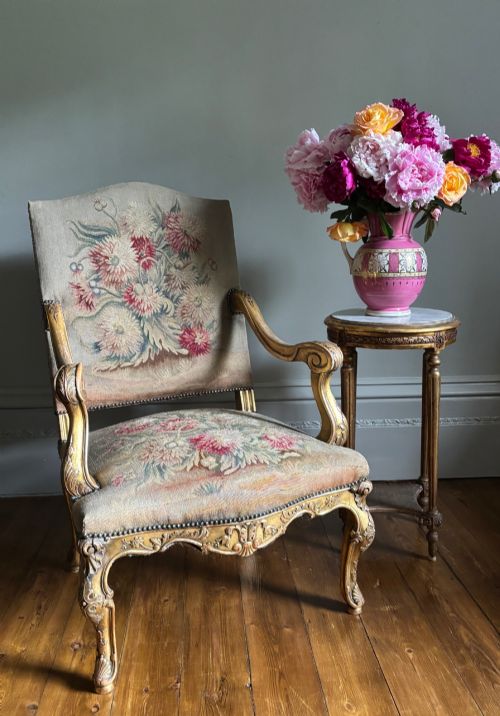
Tapestry Open Armchair
A tapestry open armchair brings together structural woodwork and textile art, offering a decorative seating choice for period interiors.
Tapestry Open Armchair
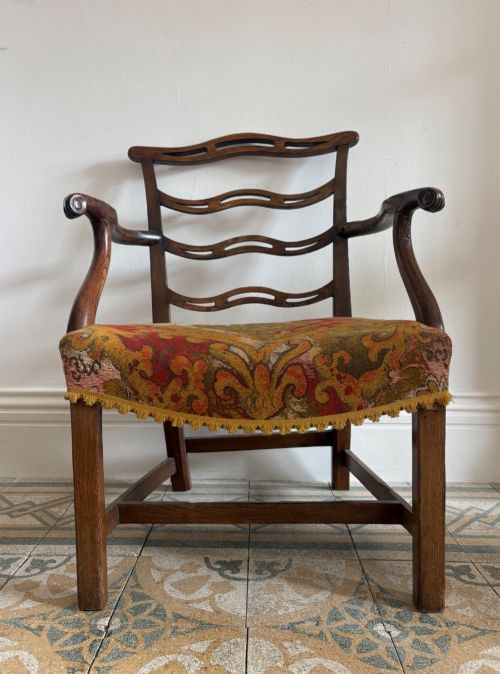
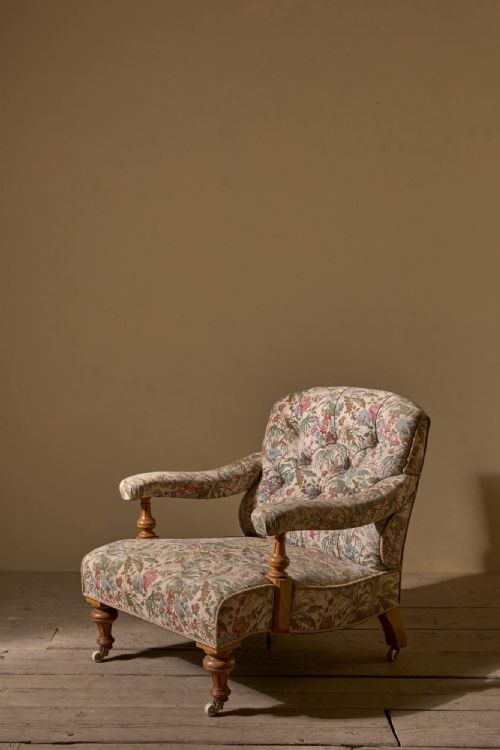
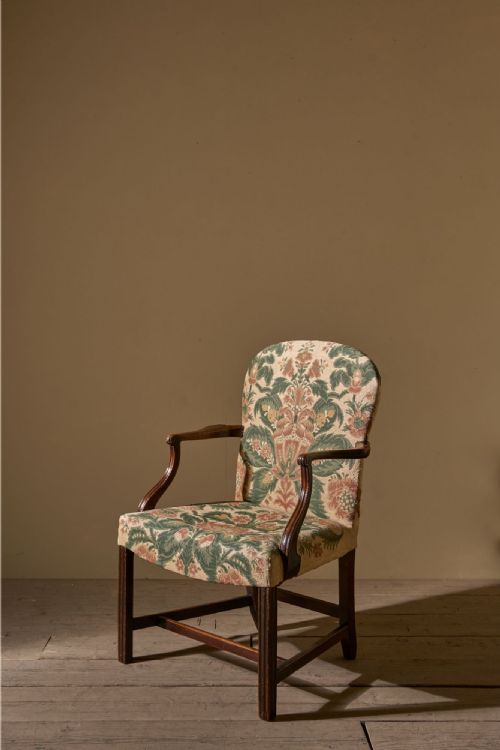
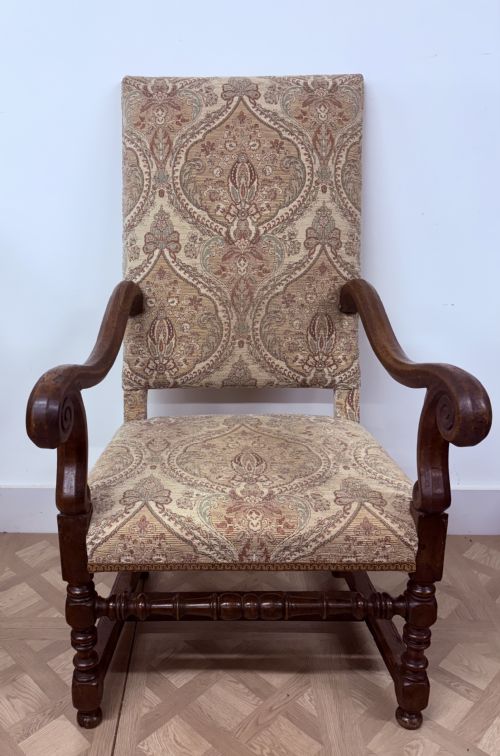
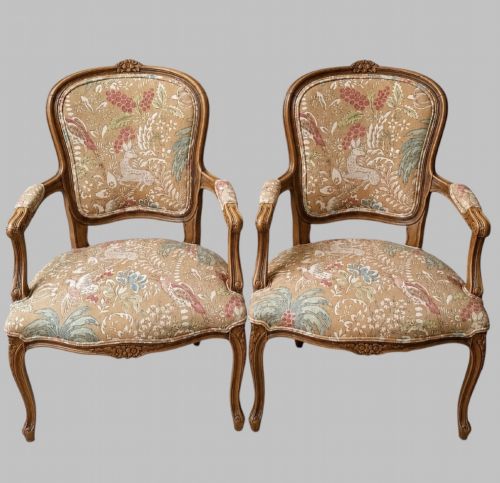
A tapestry open armchair combines a wooden frame with woven textile panels on the seat, back, or armrests. These seating pieces span several centuries of design, reflecting both British and continental European cabinet-making traditions.
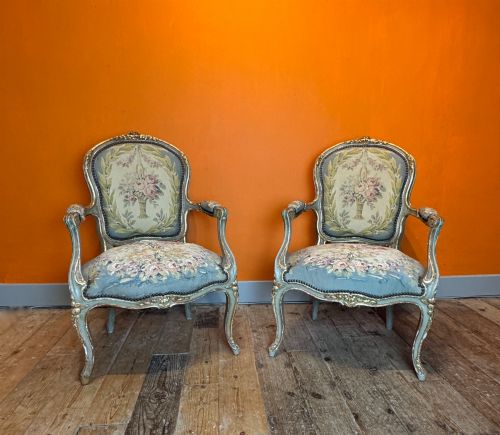
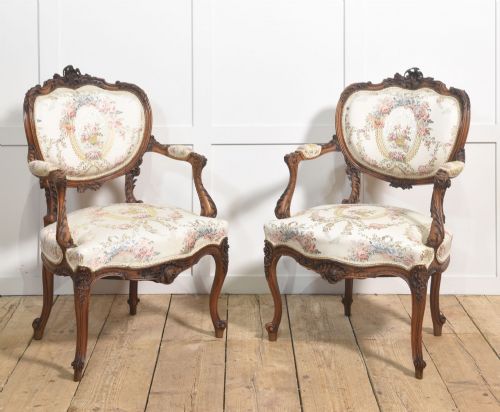
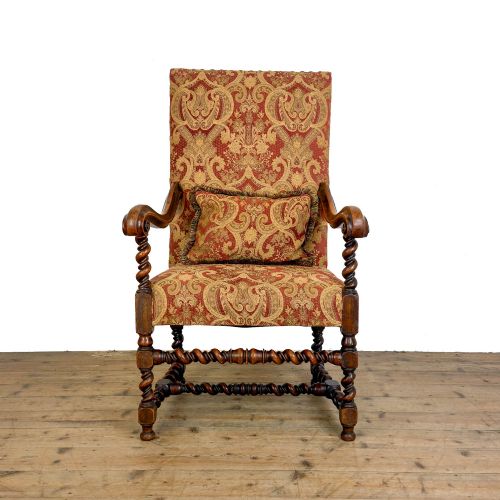
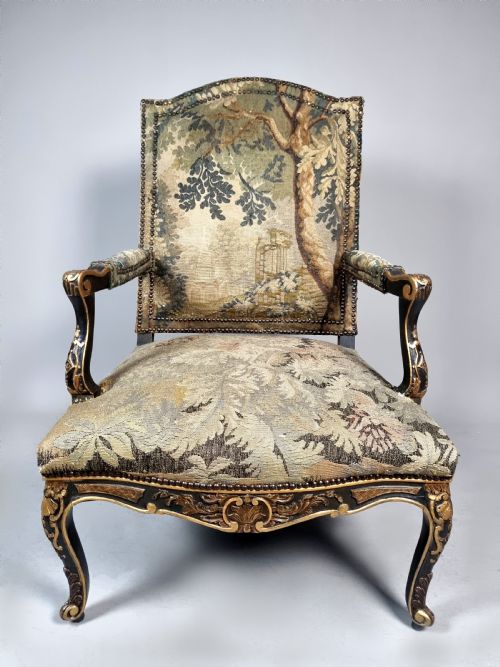
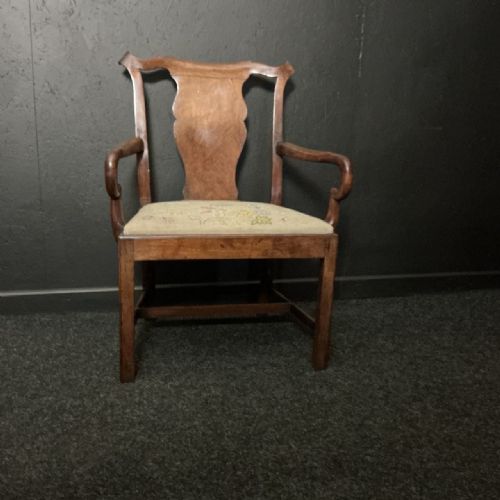
The most common examples encountered on this page date from the nineteenth century, though earlier eighteenth-century forms and Edwardian revivals also appear regularly. Forms range from heavy walnut and mahogany library chairs to lighter painted French salon models.
Makers and manufacturers produced these chairs for formal reception rooms, country houses, and domestic studies. Buyers seek them for their combination of functional seating and historic decorative textiles.
Materials and technique
The wooden frames utilise traditional timbers such as walnut, mahogany, oak, and beech, which were often carved, painted, or gilded depending on the prevailing style. Joinery methods relied on mortise and tenon construction to support the weight of the sitter.
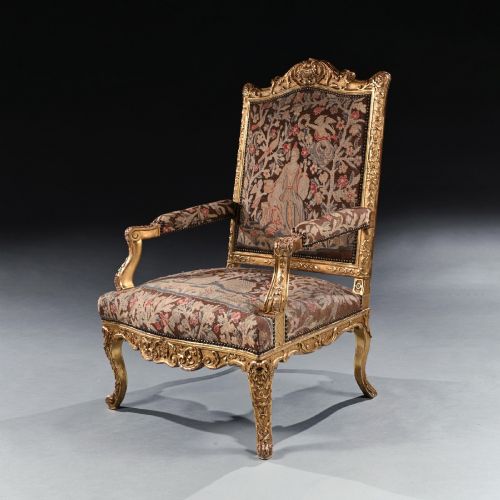
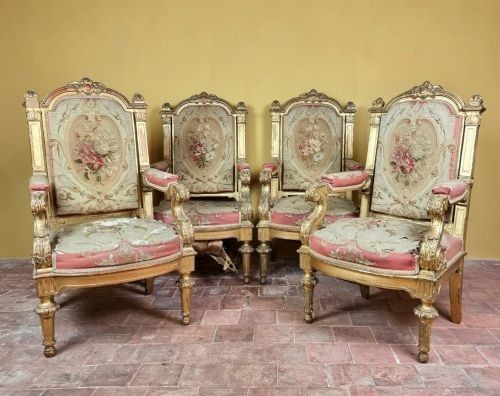
Upholstery techniques combined sturdy webbing and stuffing with hand-woven wool or silk covers. Needlepoint, petit point, and pictorial woven scenes such as Aubusson designs formed the decorative surfaces applied to the seats and backs.
Listings feature frames constructed from walnut, mahogany, and oak across Victorian, Edwardian, and eighteenth-century periods.
What varies in quality
Quality rests in the crispness of the timber carving and the architectural balance of the open arms and legs. Superior frames show refined proportions and harmonious integration between the woodwork and the textile cover.
The fineness of the tapestry work dictates the visual standard of the piece, with dense hand-stitched needlepoint or pictorial storytelling representing the upper tier of production. Original textiles preserved in stable condition elevate the historic integrity of the chair.
The Tapestry Open Armchair Glossary
- Gainsborough chair
- A wide, upholstered armchair with open padded arms, originating in mid-eighteenth-century England. These chairs were designed primarily for writing desks and libraries.
- Needlepoint
- A type of canvas work embroidery executed with a yarn in a counted thread stitch. It provides the detailed pictorial panels seen on many historic chair backs.
- Giltwood
- Timber treated with a thin layer of gold leaf applied over a prepared gesso surface. This finish was common on formal nineteenth-century and eighteenth-century continental salon chairs.
Tapestry Open Armchair: Frequently Asked Questions
How do I care for historic tapestry upholstery?
Protect the woven textile panels from direct sunlight to prevent fading of the wool and silk threads. Regular gentle vacuuming through a mesh screen helps remove dust without disturbing fragile antique fibres.
Avoid using liquid cleaners on the needlepoint panels. Professional textile conservators should handle any deep cleaning or structural stabilisation required for the cover.
Were these chairs used at desks?
Certain forms, particularly mahogany Georgian styles and designated desk chairs, served a functional purpose in libraries and studies. The open arm design accommodated the bulky clothing of past centuries.
Other lighter French salon models functioned primarily as occasional seating in reception rooms rather than working chairs.
How can I tell an eighteenth-century frame from a later revival?
Examine the timber underneath the chair for tool marks, seasoning cracks, and the colour of the wood grain. Eighteenth-century frames show hand-tooling consistent with period joinery techniques.
Revival pieces from the Victorian or Edwardian eras often display machine-sawn timber elements and standard construction methods typical of later manufacturing.
Are tapestry covers usually original to the chair?
Many surviving chairs have undergone reupholstery over their long lifespans to replace worn textiles. Period-appropriate needlepoint is frequently installed during restoration to match the age of the wooden frame.
Listings specify whether the needlework is contemporary to the manufacture of the timber structure or represents a later period addition.