

Giltwood Accent Armchair
A giltwood accent armchair brings sculptural presence and golden warmth to a room, drawing the eye with carved detail and upholstered comfort.
Giltwood Accent Armchair
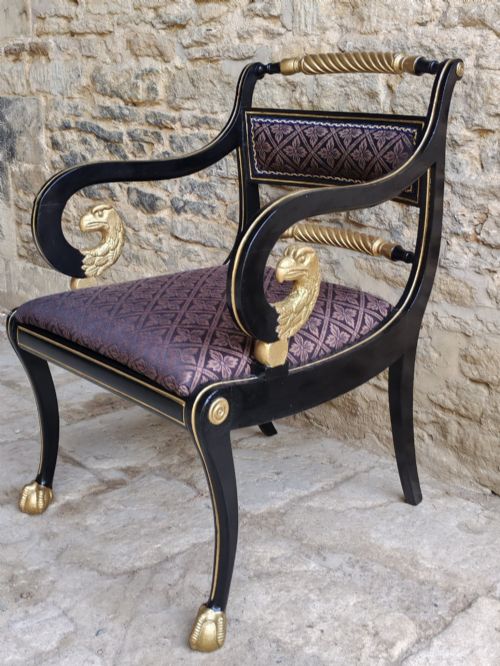
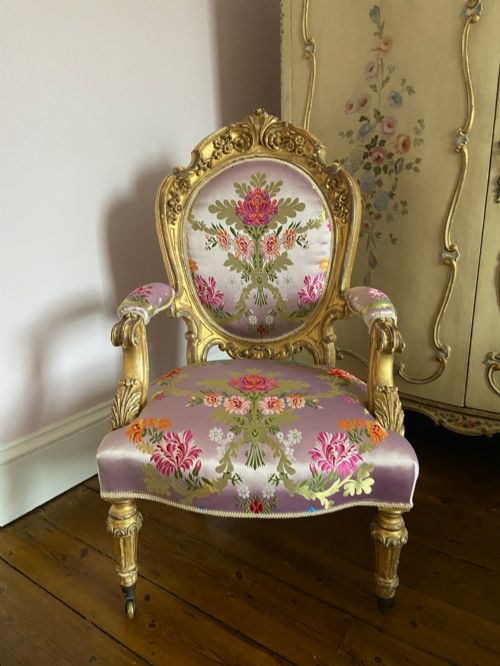
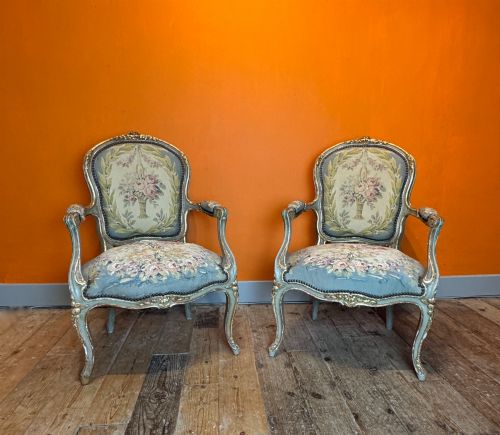
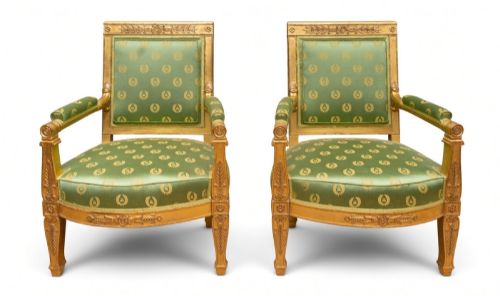
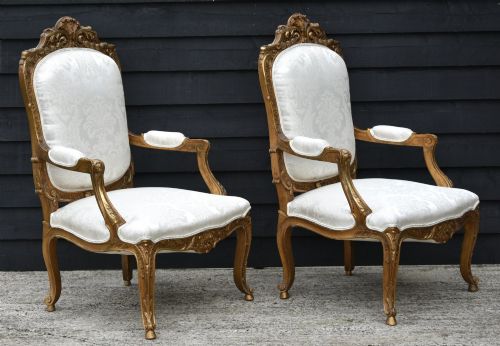
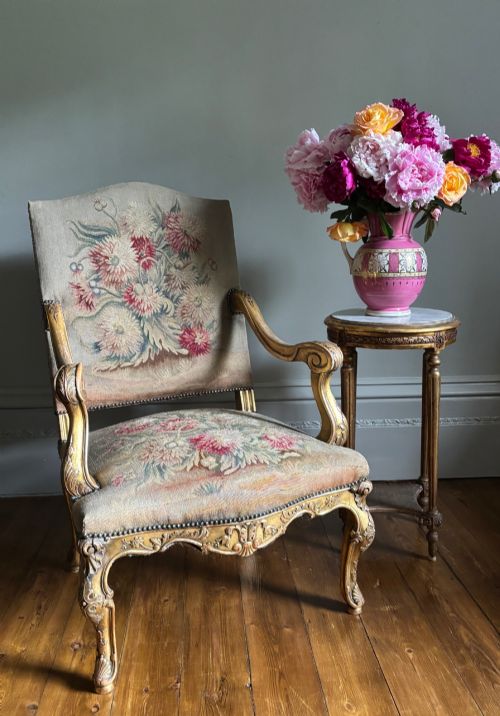
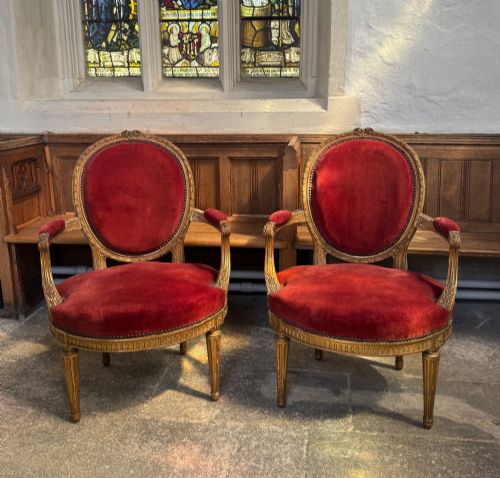
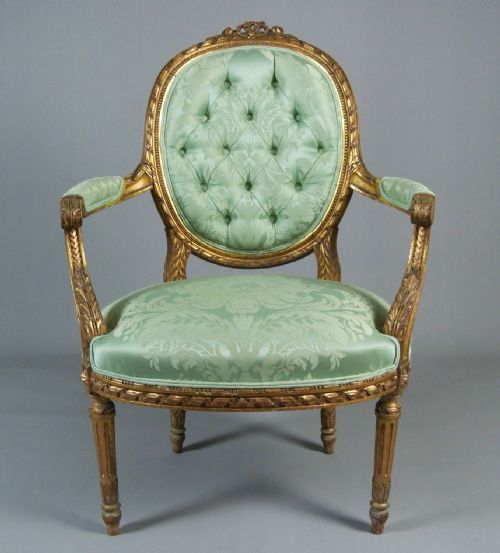
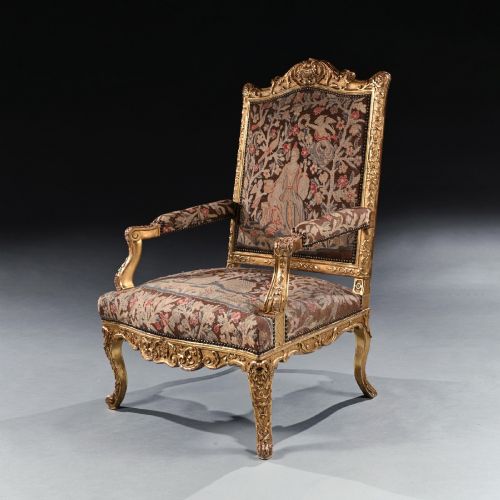
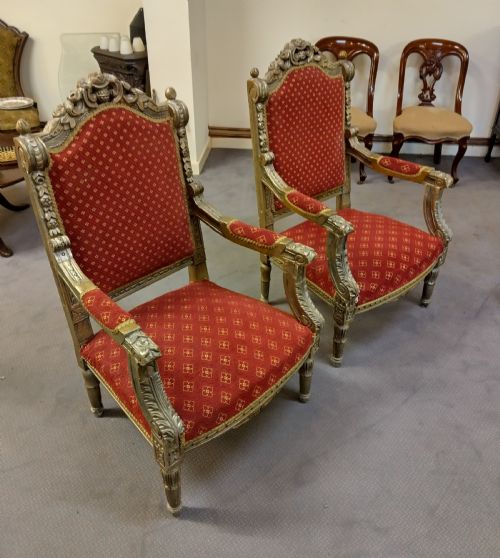
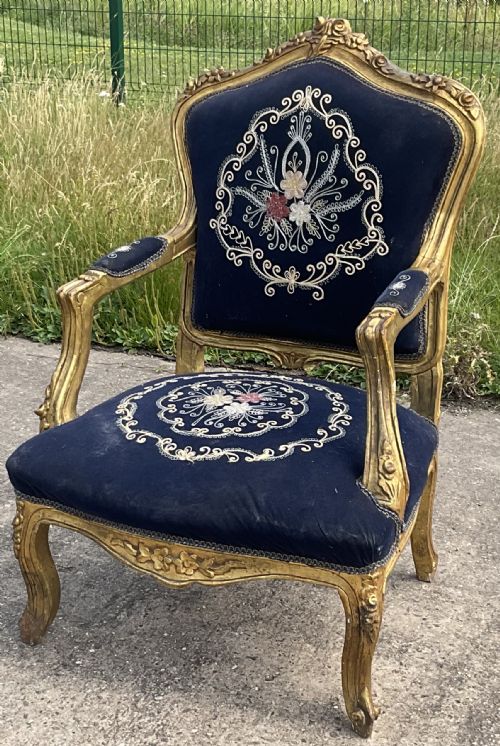
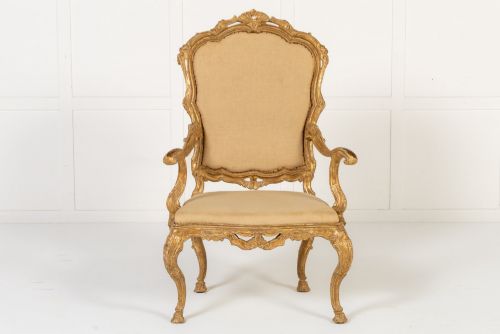
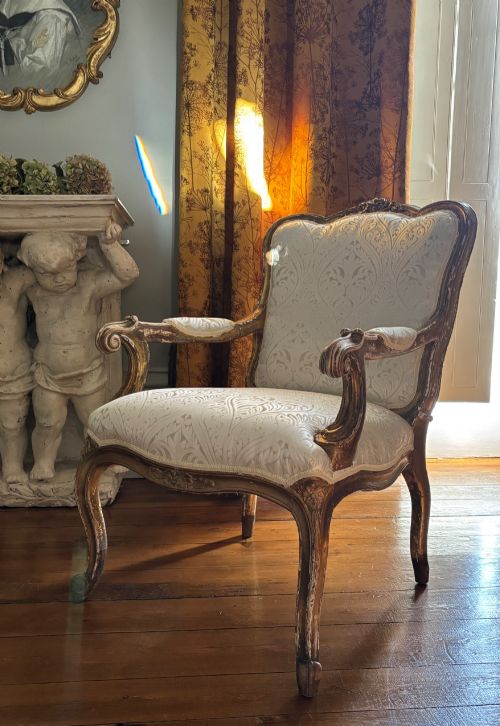
A giltwood accent armchair is a seated piece combining a wooden structural frame coated in gold leaf or gilt finish with upholstered armrests, seat, and back. When searching for a giltwood accent armchair, you encounter French salon chairs, bergères, and revival armchairs spanning the eighteenth, nineteenth, and early twentieth centuries.
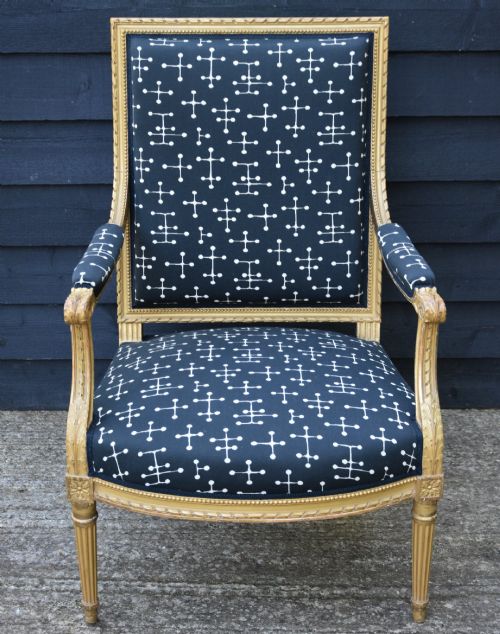
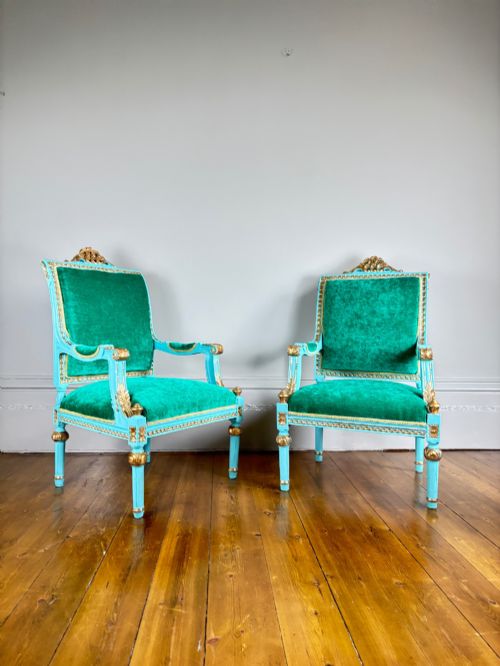
The most common examples on this page are nineteenth-century French armchairs following Louis XVI style, featuring neoclassical lines, fluted legs, and carved floral motifs. Alongside these sit eighteenth-century Italian and French originals, alongside later twentieth-century revivals.
Makers and workshops across Europe produced these seating forms for salons, libraries, and drawing rooms, utilising beech and timber frames shaped into open armchair or fauteuil silhouettes.
How they were made
Carpenters carved structural frames primarily from beech or timber, building open armchairs and bergères with mortise and tenon joints. Artisans applied thin layers of gold leaf to a prepared gesso and bole ground over the wood, or used silver gilt and painted finishes.
Upholstery completed the chairs, incorporating traditional stuffing and webbing covered in silk, velvet, tapestry, or modern fabric replacements. Carvers worked by hand to create scroll arms, floral crests, and detailed mouldings across the frame.
Silk parrot designs occasionally perch upon nineteenth-century salon upholstery.
What varies in quality
The crispness and depth of the wood carving separate standard production from superior examples, with hand-tooled details showing clean edges rather than softened profiles. Original gilding surfaces aged with a warm patina hold greater distinction than coarse repainting.
Structural integrity of the beech frame and the quality of the upholstery textiles, whether historical tapestry or fresh silk, dictate the functional longevity and visual balance of the seating.
Jacob Desmalter·Thomas Chippendale·Blaise Maucuy
The Giltwood Accent Armchair Glossary
- Giltwood
- Wood coated with gold leaf or a gold-coloured finish. This surface treatment reflects light and defines ornate carved furniture.
- Fauteuil
- An open-framed upholstered armchair with wooden armrests. Originating in France, it provides a light-scale seating option for salons.
- Bergère
- An enclosed upholstered armchair with solid upholstered sides. This form offers deeper comfort and prominent cushioning.
- Louis XVI Style
- A neoclassical design movement characterised by straight tapered legs and geometric symmetry. It draws upon classical Greek and Roman motifs.
Giltwood Accent Armchair: Frequently Asked Questions
What is a giltwood accent armchair?
A giltwood accent armchair is a decorative seating piece constructed with a wooden frame finished in gold leaf and upholstered in fabric, silk, or velvet.
These chairs function primarily as statement furniture in formal rooms, combining carved woodwork with comfortable padded seating.
How do I identify Louis XVI style?
Louis XVI style pieces feature straight fluted legs, rectangular or oval backs, and restrained neoclassical ornamentation rather than curving rococo asymmetry.
Craftsmen working in this manner utilised symmetry, urn motifs, and ribbon twists derived from classical antiquity.
Where were these armchairs used historically?
Historically, these chairs furnished grand salons, drawing rooms, libraries, and bedchambers in French chateaux and English townhouses.
They served as occasional seating for entertaining guests or reading in formal residential settings.
Are eighteenth and nineteenth century chairs different?
Eighteenth-century examples represent period craftsmanship from eras such as the Regency or Louis XVI reign, showing authentic period wear and construction.
Nineteenth-century pieces often revive these earlier aesthetics, utilising historical proportions while employing manufacturing methods of the Victorian or Napoleon III periods.