

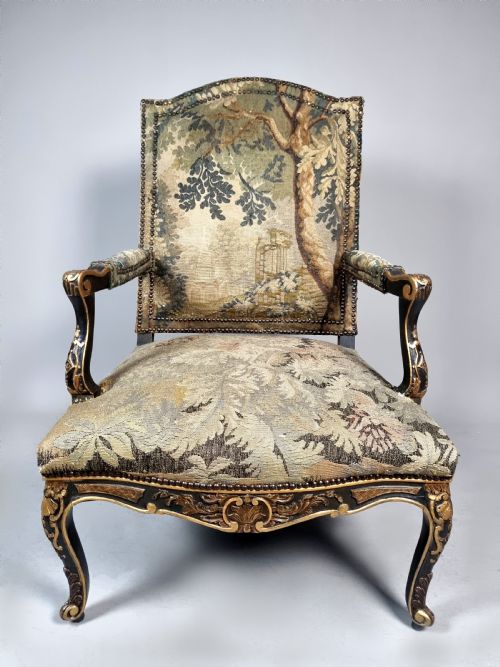


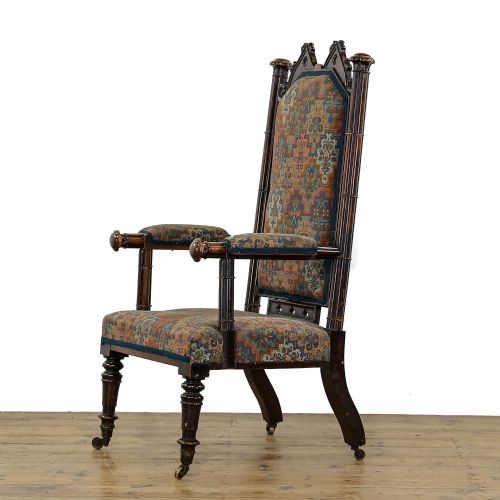
Tapestry Library Chair
A tapestry library chair brings tactile warmth and period gravitas to a room, offering sturdy comfort wrapped in historic textile art.
Tapestry Library Chair
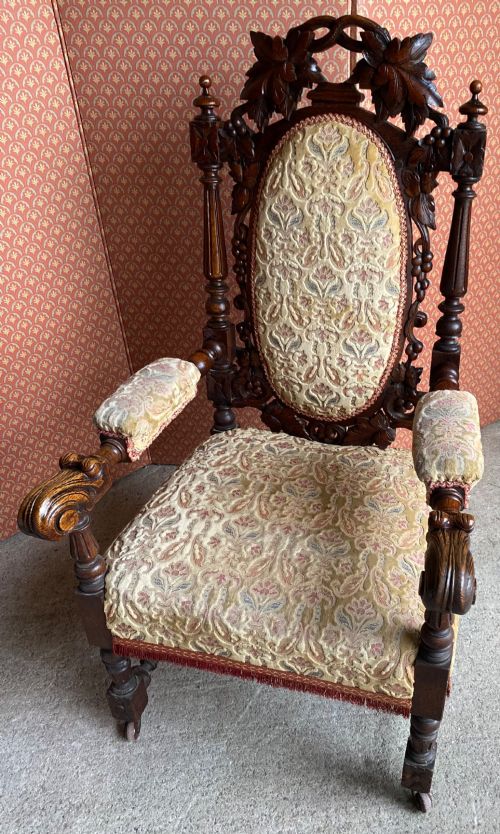
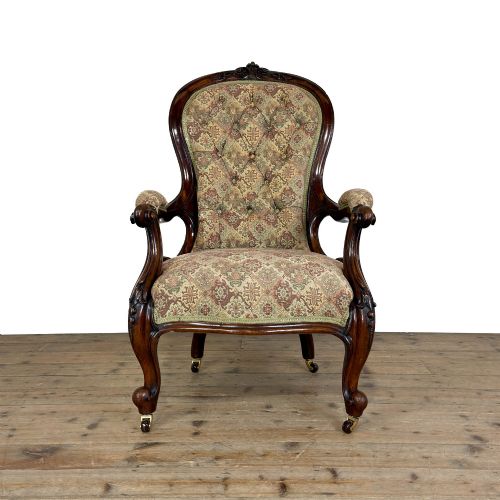
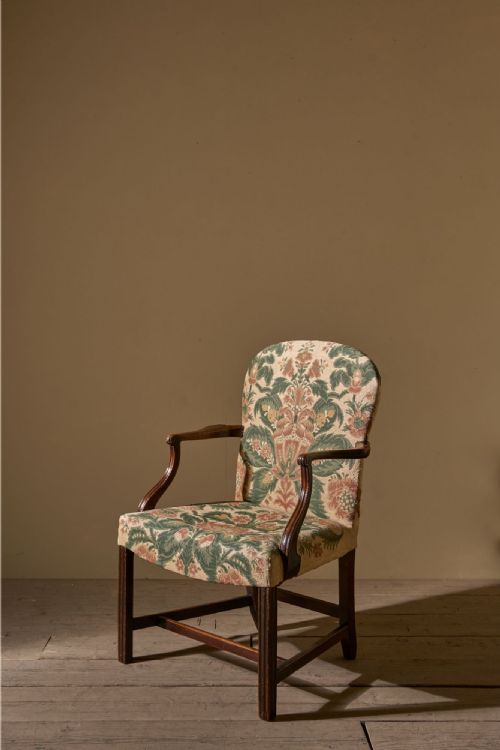
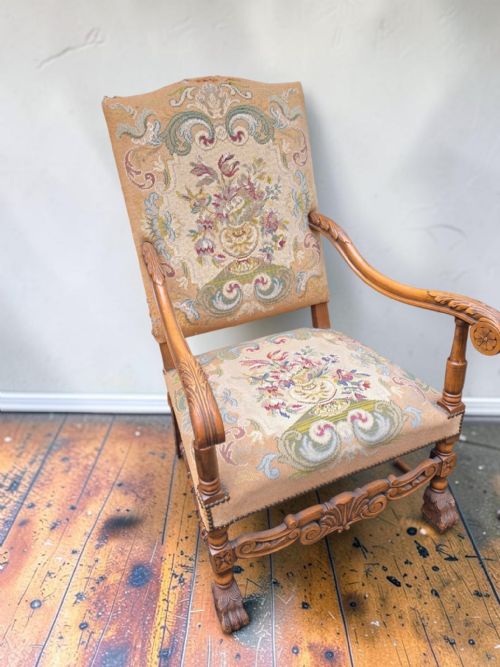
A tapestry library chair combines substantial timber framing with upholstered needlepoint or woven textile panels, designed for prolonged reading and study. These seats span centuries of British craftsmanship, running from Georgian and Victorian iterations through to early twentieth century revivals.
The pieces listed here appear primarily as armchairs, desk chairs, and wingback library chairs. Walnut, mahogany, and oak form the structural backbone of these furnishings, often paired with brass detailing.
Victorian and nineteenth century examples dominate the selection, frequently displaying revivalist influences such as Gothic, Queen Anne, or Jacobean styles. Buyers also encounter George III designs alongside later twentieth century iterations.
Materials and Construction
Makers utilised dense hardwoods including mahogany, walnut, oak, and rosewood to construct robust frames capable of supporting heavy upholstery. Joinery techniques relied on traditional framing methods, sometimes enhanced by bobbin turning or elaborate armorial and floral carving.
Upholstery involved stretching durable tapestry fabric over padded seat foundations and backs. Brass tacks frequently secured the textiles to the wooden structure, while additional metalwork appeared in castors or decorative hardware.
Tapestry Library Chair Retail Price Guide 2026
Typical asking prices for tapestry library chair among the pieces listed under this phrase on Sellingantiques today, from the lower quarter to the upper quarter. They describe what is for sale here now, not the wider market.
Listings feature timber frames in walnut, mahogany, and oak, paired with tapestry fabric and brass hardware across multiple centuries.
Factors of Quality
Quality rests upon the integrity of the timber frame and the precision of its carving. Crisp execution in carved walnut or mahogany separates standard utility seating from masterworks.
The condition and fineness of the tapestry upholstery dictate much of the piece's standing. Hand-stitched needlepoint textiles retain greater visual depth and historical value than machine-woven substitutes.
White, Allom & Co.
The Tapestry Library Chair Glossary
- Gothic Revival
- A nineteenth-century design movement drawing inspiration from medieval architecture. Pieces often feature pointed arches and heavy timber framing.
- Wingback
- An armchair featuring protective side panels designed to shield the sitter from draughts. These panels extend upward from the arms to join the headrest.
- Bobbin turned
- A method of woodturning that produces a series of spherical or cylindrical shapes resembling spools of thread along a spindle. This technique appears frequently on nineteenth-century chair legs and stretchers.
- Gainsborough chair
- A wide-seated, open-armed armchair originating in the eighteenth century, typically upholstered in fabric and raised on square legs. These seats were originally intended for writing desks or libraries.
- Needlepoint
- A type of canvas work embroidery executed with a yarn threaded through a stiff open-weave mesh. It forms the dense decorative surface seen on many antique chair coverings.
Tapestry Library Chair: Frequently Asked Questions
How do I care for antique tapestry upholstery?
Vacuum the fabric gently using a low suction setting with a soft brush attachment to remove dust without damaging the threads.
Keep the chair out of direct sunlight to prevent the coloured wools and silks from fading over time.
Are these chairs suitable for daily desk use?
Many examples function well as desk chairs, particularly Georgian and Victorian models designed with sturdy wooden frames and supportive upright backs.
Check the seat height and arm clearance to ensure compatibility with modern desk dimensions before regular daily use.
How can I tell a Victorian copy from an 18th-century original?
Examine the timber underneath for tool marks, seasoning cracks, and signs of age that match the recorded period of manufacture.
Construction methods and secondary woods often reveal whether a piece dates to the Georgian era or belongs to a later nineteenth-century revival.
What is the difference between a library chair and a fireside chair?
Library chairs typically feature supportive open arms and upright postures suited for reading at a table or desk.
Fireside chairs often incorporate higher wingbacks and deeper padding intended for relaxation near a hearth.