
Tapestry Dining Chairs
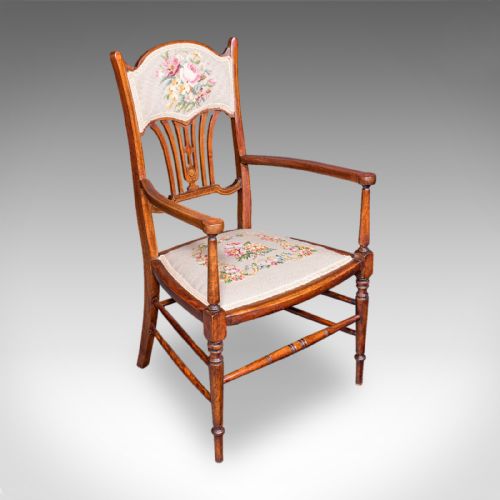
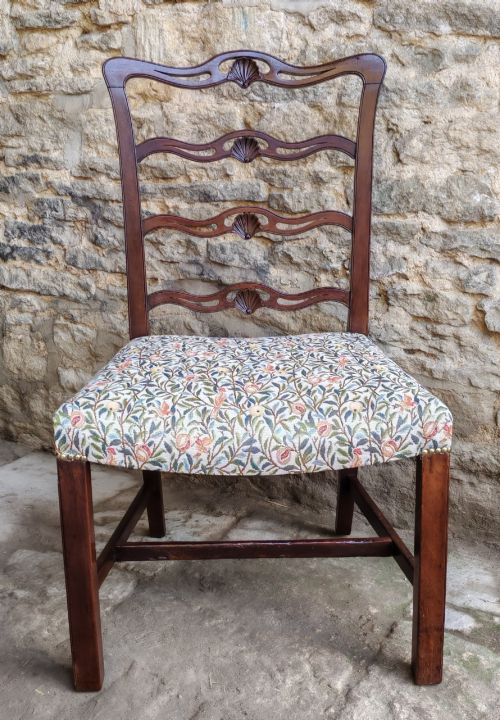
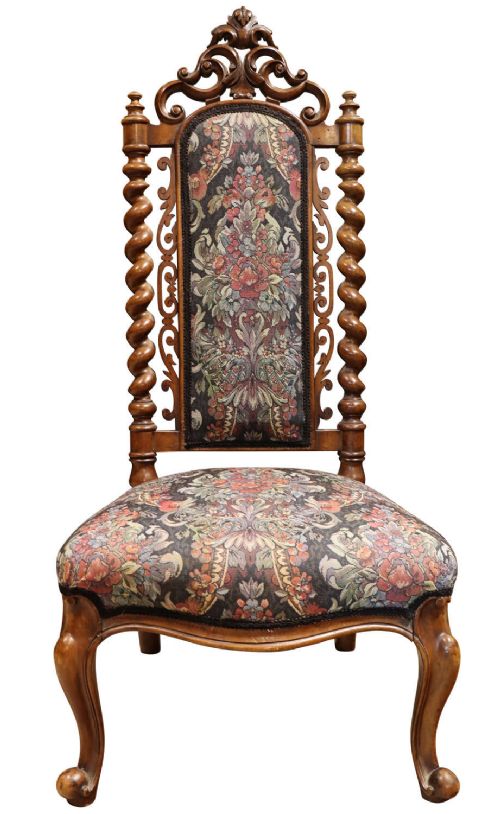
Tapestry dining chairs combine robust timber framing with woven needlepoint textile seat covers, bringing centuries of texture to a dining table.
Tapestry Dining Chairs
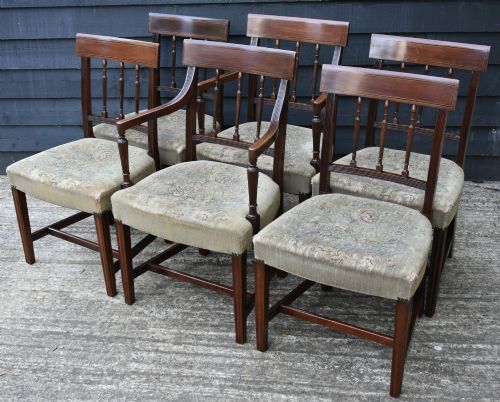
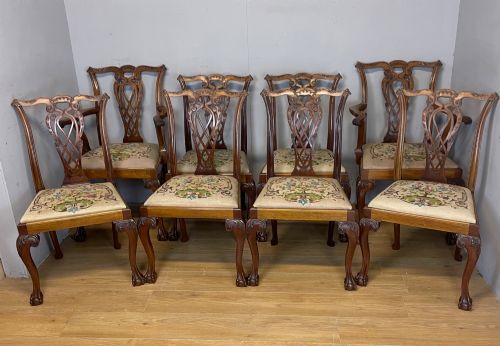
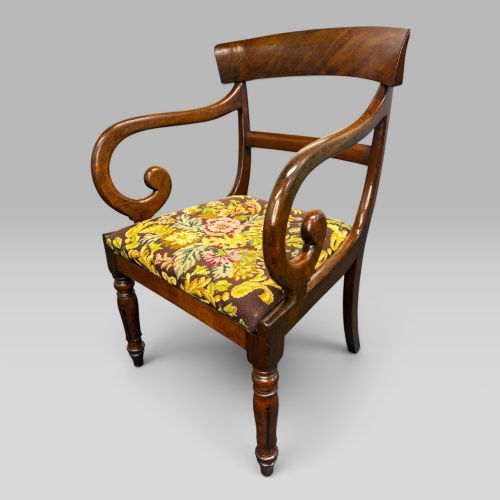
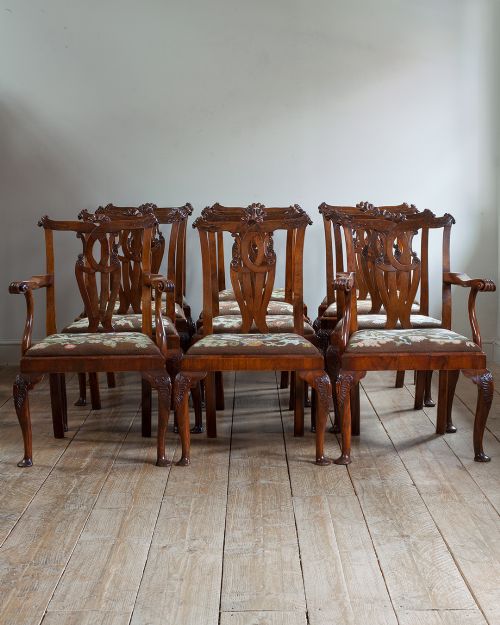
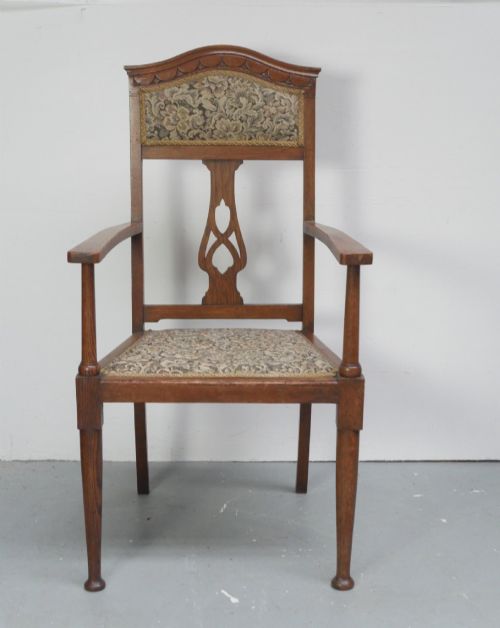
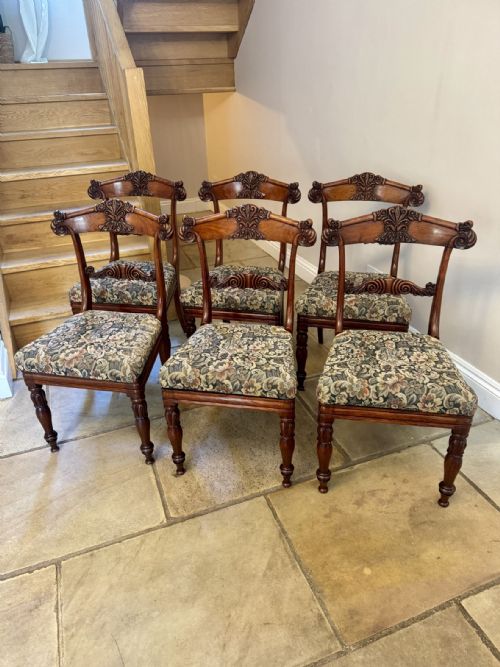
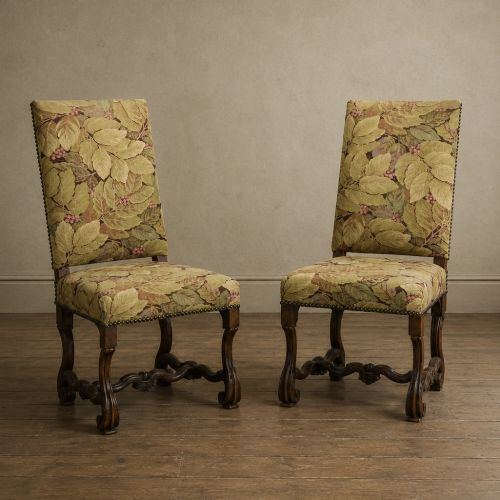
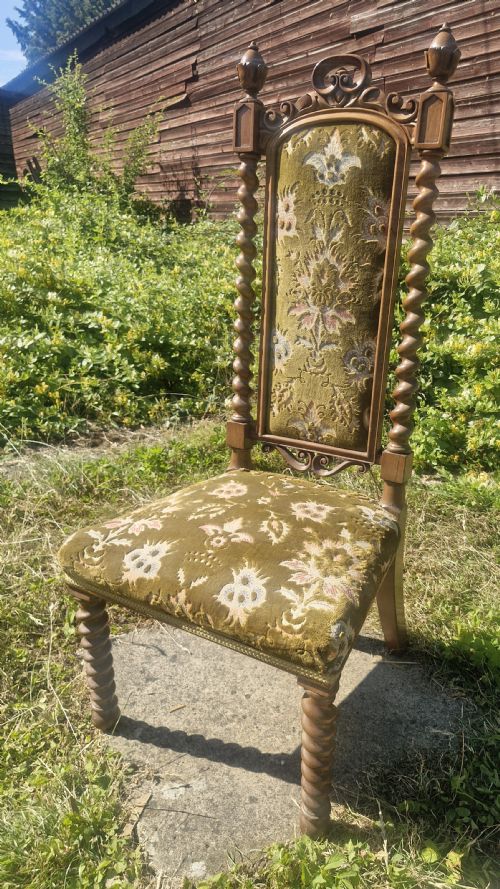
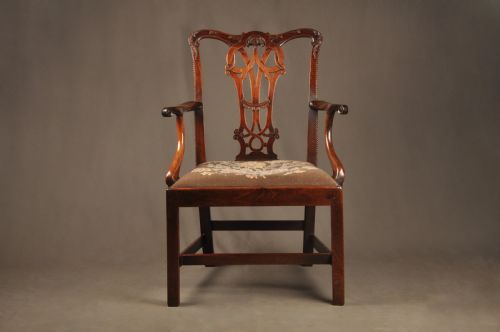
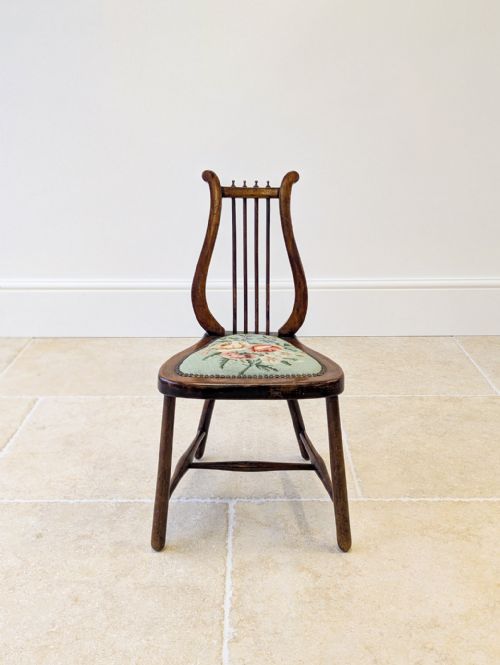
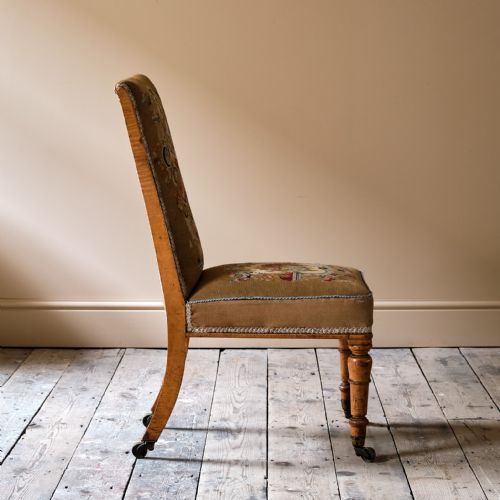
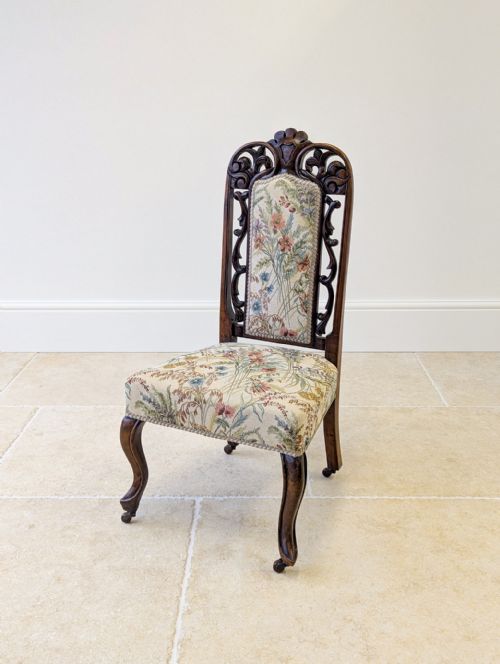
When you search for tapestry dining chairs, you encounter seating constructed across multiple eras, ranging from 18th century walnut and Georgian mahogany frames to Victorian and Edwardian iterations. Side chairs and carvers appear frequently in sets, alongside occasional pairs and individual armchairs.
The prevailing examples on this page balance formal timber architecture with textile or wool upholstery. Designs span vernacular country seating in fruitwood and elm alongside urban cabinet-maker productions in rosewood, mahogany, and walnut.
Materials and Construction
Frames rely on dense hardwoods such as mahogany, walnut, rosewood, and oak, shaped through turning, carving, and joinery techniques appropriate to each century. Seat platforms support woven tapestry, needlepoint, wool, and textile covers fixed with traditional tacking methods.
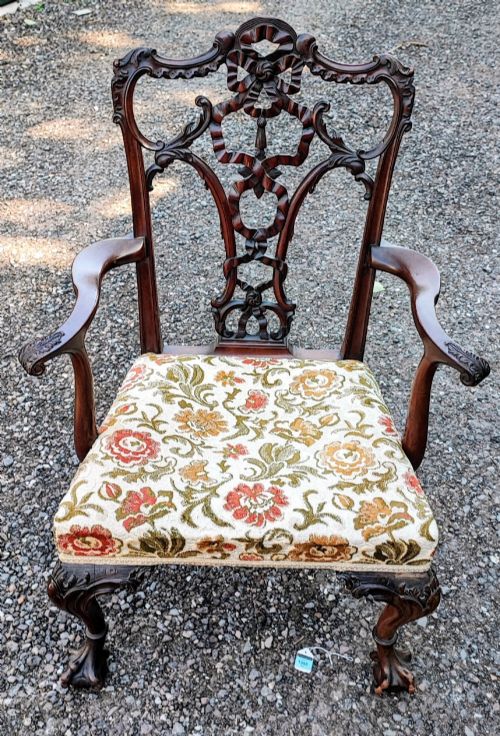
Carved details like ladderbacks, ribbon backs, and pierced splats integrate with textile elements, utilising brass accents where appropriate. The assembly of chair rails and legs depends on sturdy mortise and tenon joints designed to withstand daily use.
Several tapestry covers depict whimsical animals, including dedicated Lady and the Unicorn scenes.
Assessing Craftsmanship
Quality reveals itself in the density of the timber framing and the crispness of any hand-carved ornamentation on the crest rails and legs. Superior sets maintain structural rigidity and uniform wood grain across every chair in the group.
The tightness of the textile weave and the complexity of the needlepoint design distinguish standard production from finer work. Complete sets sharing matching upholstery and original frames hold greater cohesion than assembled groups.
Warings·Liberty and Co
The Tapestry Dining Chairs Glossary
- Carver
- An armchair designed with elbow supports, traditionally placed at the head of a dining table. These companions match the smaller side chairs in a larger dining set.
- Needlepoint
- A form of counted thread embroidery stitched onto an open-weave canvas foundation. This technique produces the durable pictorial and floral panels seen on many historic seat covers.
- Splat
- The vertical wooden strip down the centre of a chair back. Elaborate designs like the interlaced ribbon or pierced ladder define specific revival styles.
- Back Stool
- An early form of seating without arms, predating the standard dining chair. These heavy oak pieces date back to the seventeenth century.
Tapestry Dining Chairs: Frequently Asked Questions
How do I clean tapestry seats?
Vacuum textile surfaces gently using a low suction brush attachment to remove dust without disturbing the wool threads. Avoid liquid cleaners unless handled by a professional textile conservator.
Spot treatment on antique needlepoint risks rings and fading. Regular dry brushing preserves the structural integrity of older wool and cotton weaves.
Are these chairs comfortable for daily use?
Historic dining seating offers firm support reflecting the domestic habits of past centuries. Frame heights and upright backs encourage an attentive posture during meals rather than lounging.
Many examples feature webbed foundations beneath the tapestry covers. Adding discreet modern squabs can increase comfort without altering the historic frames.
How can I date a mahogany dining chair?
Examine the timber colour, grain depth, and the hand-tool marks visible underneath the seat frame. Cabinet-making styles shift from Georgian cabriole legs to Victorian carved walnut and Edwardian satinwood inlay.
Secondary woods inside the frame often provide clues to regional English or continental workshops. Construction methods evolved from pegged joints to machine-cut screws by the late nineteenth century.
Can I mix side chairs and carvers?
Pairing armchairs at the table ends with side chairs along the sides follows traditional dining arrangements. Matching wood tones and upholstery styles ensure visual harmony across mixed sets.
Confirming consistent seat heights matters when combining chairs from different origins. Matching the tapestry palette ties disparate timber frames together effectively.