
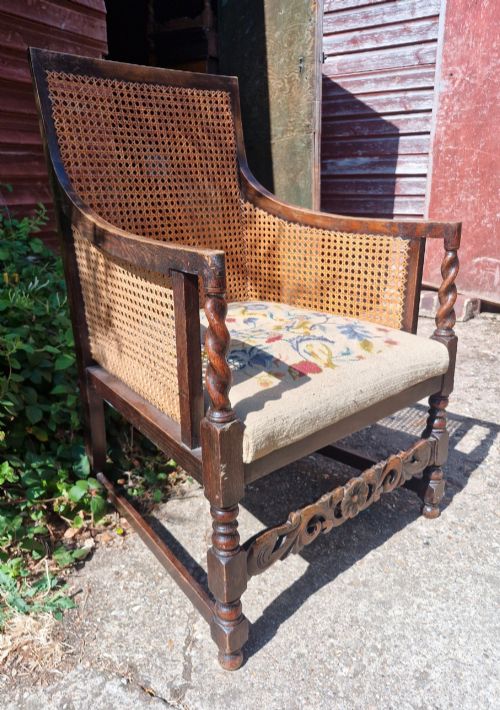
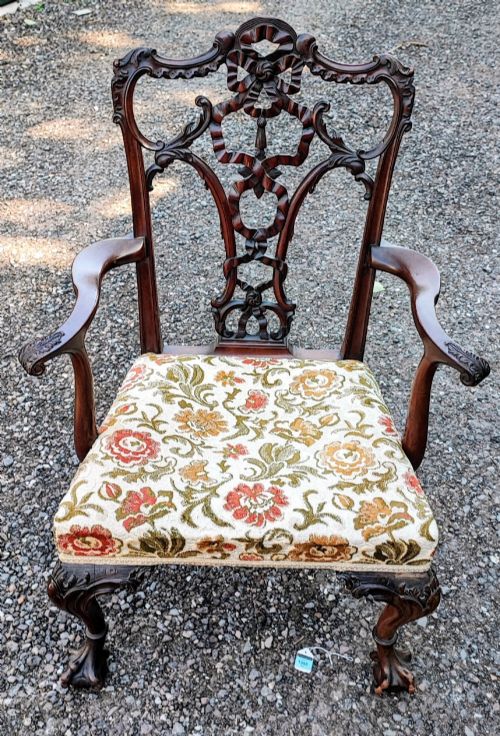
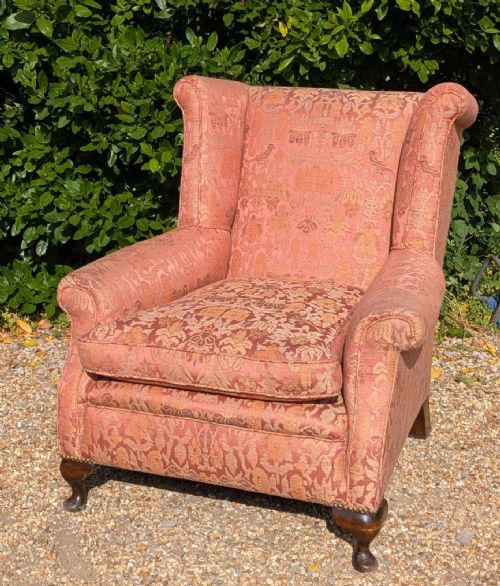
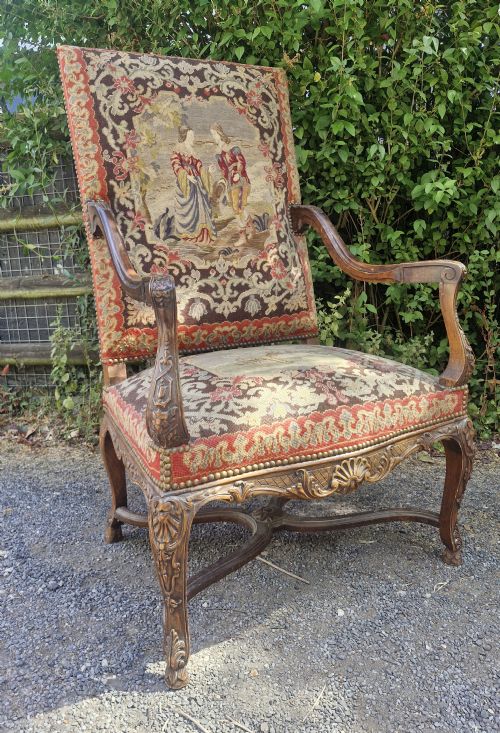
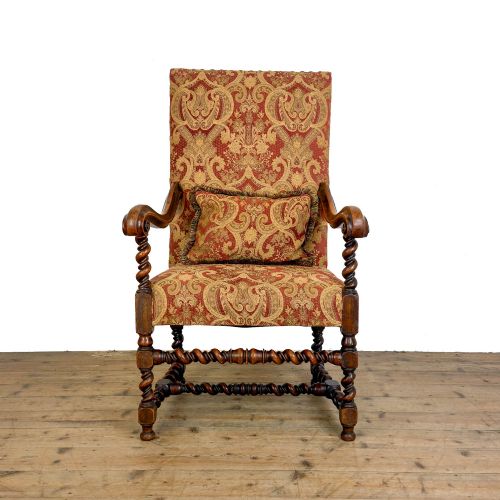
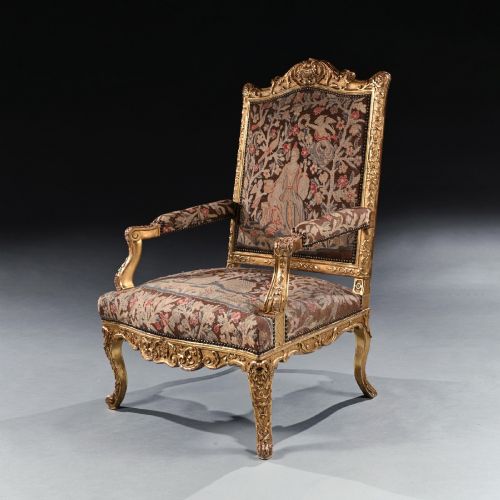
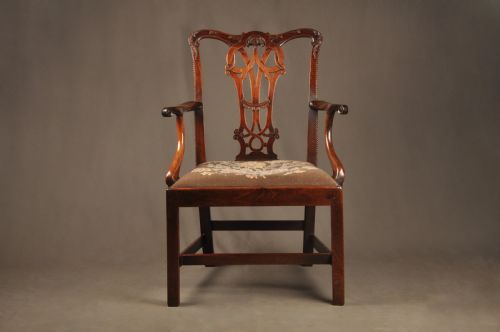
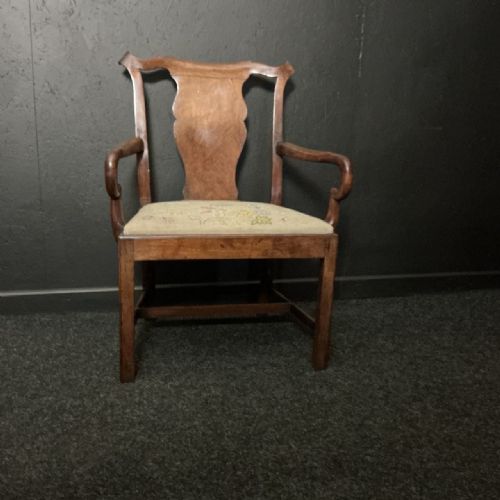

Tapestry Back Armchairs
These tapestry back armchairs bring substantial textile panels and timber frames together, offering rich historical character for a traditional interior.
Tapestry Back Armchairs
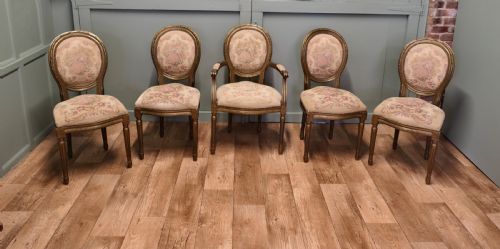
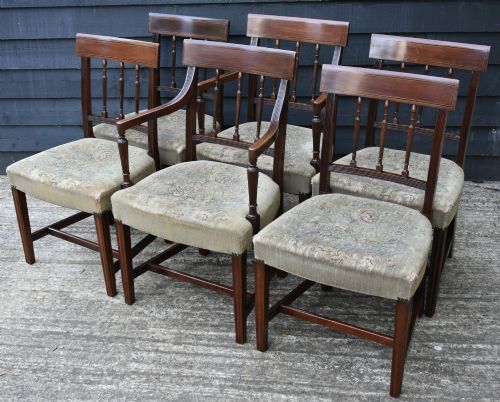
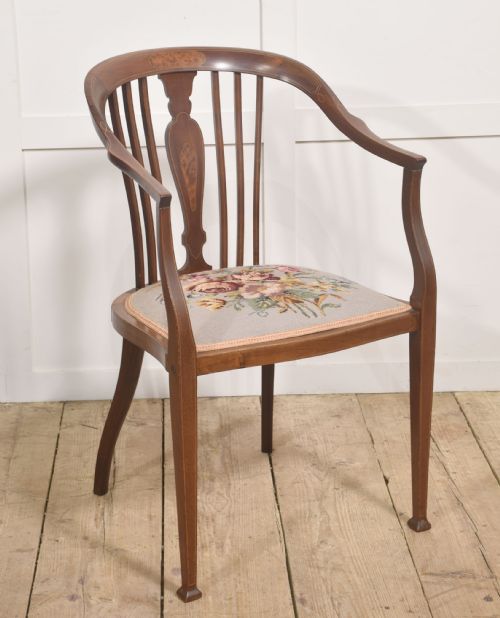
These tapestry back armchairs combine structural wood framing with woven textile covers, ranging across various historical periods and regional designs. When exploring tapestry back armchairs on this page, a buyer encounters pieces from the 18th century, 19th century, and early 20th century, including Edwardian and Victorian examples.
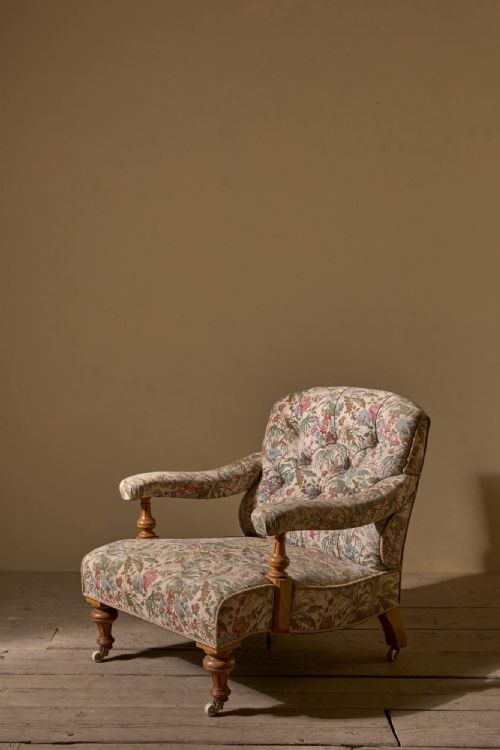
The selection encompasses diverse forms such as open armchairs, wing library armchairs, and French style throne or salon chairs. Walnut and mahogany frames frequently appear alongside oak, providing the sturdy armature necessary to support substantial textile upholstery.
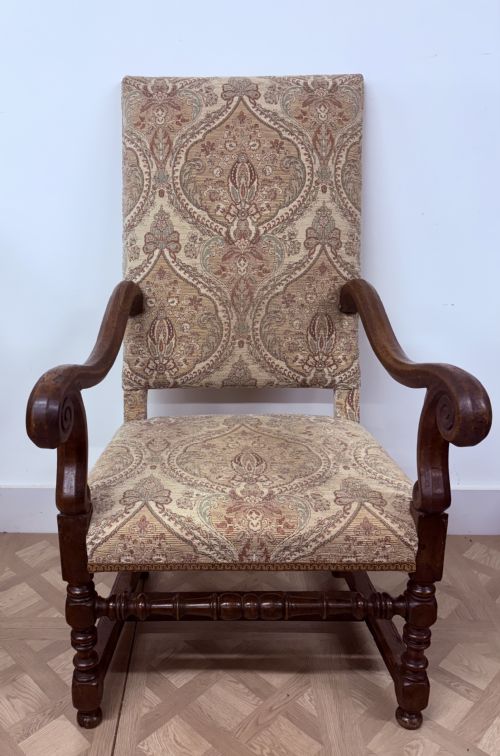
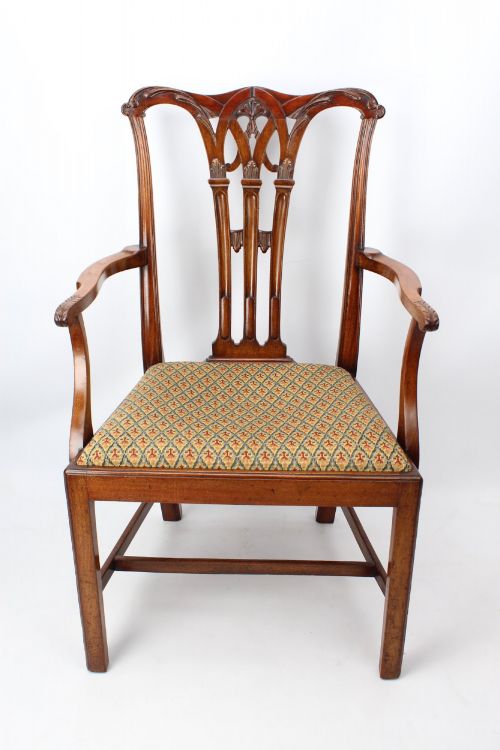
Stylistic influences span from Louis XV and Louis XVI French designs to Jacobean Revival and Chippendale interpretations. These seating options serve different interior functions, from formal parlor arrangements to library or fireside placement.
Materials and construction
Makers built these frames using traditional timbers like walnut, mahogany, and oak, often incorporating carved details, turned elements, or brass accents. The structural woodwork relies on joinery techniques suited to the period, supporting the weight of upholstered bodies.
Upholstery involves textile panels, needlework, and tapestry fabric fixed directly to the frames or integrated into open arm structures. Feather filling and traditional stuffing methods provide the internal support for the seat bases and backrests.
Listings feature tapestry back armchairs spanning the 18th century, 19th century, and early 20th century, utilising walnut, mahogany, and oak frames.
Distinctions in quality
The refinement of the timber carving and the complexity of the wood framing set different examples apart. Chairs with detailed craftsmanship in mahogany or walnut demonstrate higher levels of period joinery.
The intricacy and preservation of the tapestry panels or needlepoint work heavily influence the standard of the piece. Fine petit point panels and well-preserved historical textiles elevate the overall integrity and visual depth of the seating.
The Tapestry Back Armchairs Glossary
- Bergere
- An enclosed upholstered armchair with wooden framing showing around the sides and back. These French-inspired seats often feature cane or upholstered panels.
- Fauteuil
- An open-arm armchair originating in France with exposed wooden armrests and upholstered back and seat. The frames typically showcase carved details and polished wood finishes.
- Needlepoint
- A type of canvas work embroidery used for upholstery panels. It creates durable, detailed pictorial or floral designs on chair backs.
- Knowle
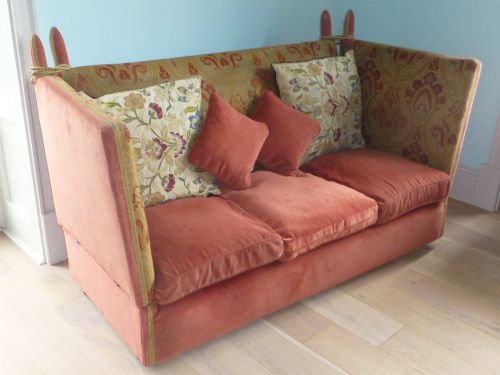
- A style of sofa or armchair featuring adjustable or hinged drop arms. Originating in the 17th century, these pieces use substantial upholstery and decorative braids.
- Wing armchair
- A high-backed chair with side panels designed to shield the occupant from drafts. They frequently appear in period settings with heavy textile covers.
Tapestry Back Armchairs: Frequently Asked Questions
Were these chairs used in dining rooms?
While most tapestry back armchairs function as occasional, library, or salon seating, some heavier framed pieces relate to larger dining suites. Armchairs often accompanied sets of matching side chairs for head-of-table use.
Their substantial upholstery prioritised comfort for reading and relaxation rather than formal dining utility.
How should I care for antique tapestry upholstery?
Protect the woven textile panels from direct sunlight to prevent fading of the wool and silk threads. Gentle vacuuming through a mesh screen helps remove dust without damaging fragile stitches.
Professional textile conservation is recommended for older needlepoint or petit point panels requiring deep cleaning or structural reinforcement.
What is the difference between French and English styles?
French styles like Louis XV or Regence typically feature lighter, curvaceous frames with giltwood or walnut finishes and ornate carved flourishes. English designs such as Chippendale or Jacobean Revival lean toward heavier mahogany or oak construction with formal proportions.
Both traditions incorporate tapestry panels, but the underlying cabinetmaking reflects distinct regional aesthetics.