

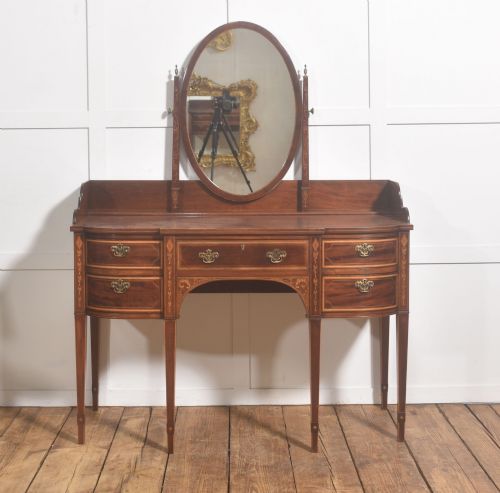
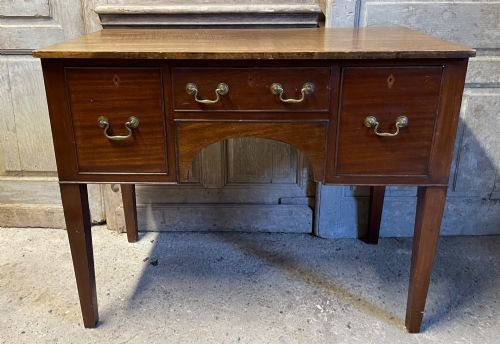
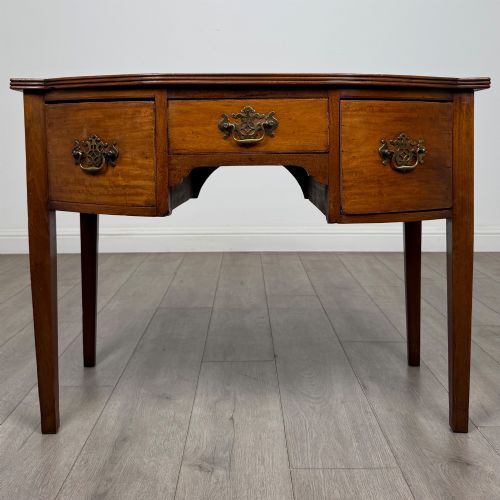

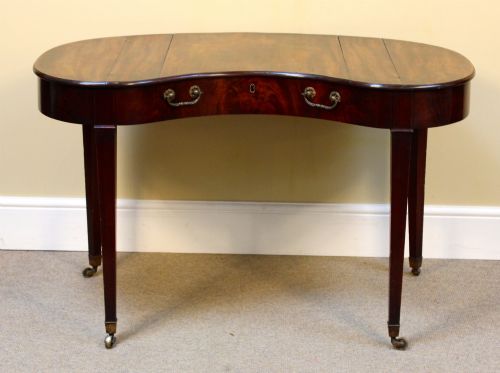


Tapered Leg Vanity Table
These tapered leg vanity table pieces are refined wooden dressing surfaces and desks designed for personal grooming or correspondence, bringing historical elegance into modern rooms.
Tapered Leg Vanity Table
A tapered leg vanity table search brings up dressing tables, lowboys, writing desks, and stools spanning the eighteenth, nineteenth, and early twentieth centuries. These forms trace back through Georgian, Regency, Edwardian, and Sheraton Revival periods, reflecting changing domestic habits.
The versions most commonly met on this page are mahogany dressing tables and writing desks, often detailed with satinwood inlay or bow-front shapes. Pieces range from simple writing desks to elaborate ladies writing tables and lowboys.
What varies in quality
Quality separates pieces through the precision of the inlay work, the crispness of the carved or turned details, and the selection of figured timber veneers. Superior examples display seamless matching of wood grain across curved bow-fronts and serpentine outlines.
The integrity of the structural joints and the retention of original brass fittings or glass components elevate a piece from standard cabinetmaking to high craftsmanship. Finer iterations balance structural utility with intricate decorative details like marquetry and painted satinwood.
Tapered Leg Vanity Table Retail Price Guide 2026
Typical asking prices for tapered leg vanity table among the pieces listed under this phrase on Sellingantiques today, from the lower quarter to the upper quarter. They describe what is for sale here now, not the wider market.
The selection includes mahogany, satinwood, and brass elements across Georgian, Regency, and Edwardian periods.
The Tapered Leg Vanity Table Glossary
- Lowboy
- A small oak or mahogany table with drawers, resembling a low chest of drawers on legs, typically used as a dressing or side table.
- Bow-front
- A convex, curved front on a cabinet, desk, or dressing table that projects outward in a smooth arc.
- Marquetry
- Decorative veneer work where pieces of various woods are fitted together to form pictorial or geometric designs.
- Bonheur Du Jour
- A light lady's writing desk featuring a small cabinet or set of drawers on the upper surface.
- Serpentine
- A furniture front or edge that curves inward in the centre and outward at the ends, creating a wavy profile.
Tapered Leg Vanity Table: Frequently Asked Questions
What is a tapered leg vanity table?
These items are period desks and dressing tables characterised by slender, tapering supports that lift the writing or grooming surface off the floor. They combine practical storage with decorative cabinetwork.
Most examples date from the eighteenth to the early twentieth centuries, reflecting classic British and revival design movements.
How were lowboys used historically?
Lowboys served as versatile side tables or small dressing surfaces in bedchambers and parlours, holding grooming items or writing materials.
Their compact scale allowed them to fit easily against walls or beneath windows while providing accessible drawer storage.
Where should I place a writing desk?
These desks suit studies, bedrooms, or living spaces where a compact writing surface is needed without dominating the room.
Positioning them near natural light enhances both their practical utility and the visibility of their wood grain and inlay.
How do I identify Georgian furniture?
Georgian pieces are recognised by their use of dense mahogany, symmetrical proportions, and restrained classical ornamentation.
Details such as bracket feet, subtle string inlay, and solid brass hardware help distinguish this period from later Victorian revivals.