

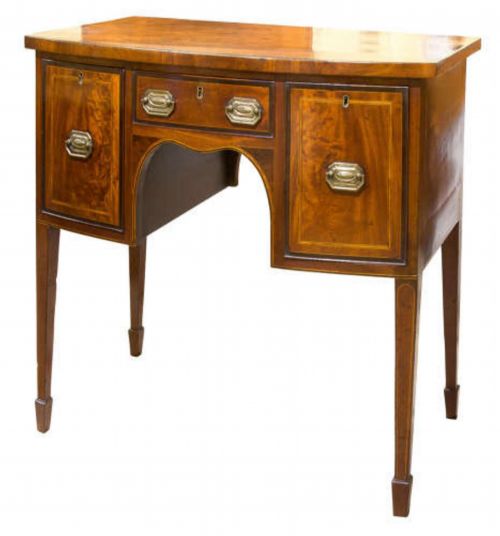


Bow Front Dressing Table
A bow front dressing table brings a graceful, curved silhouette to a bedroom, combining practical drawer space with refined period craftsmanship.
Bow Front Dressing Table
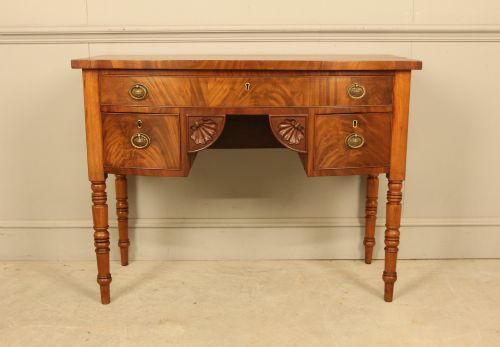
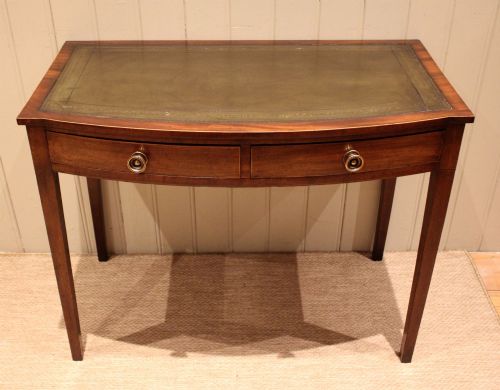
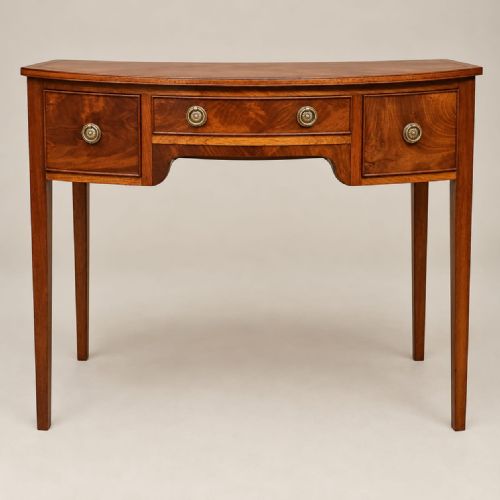
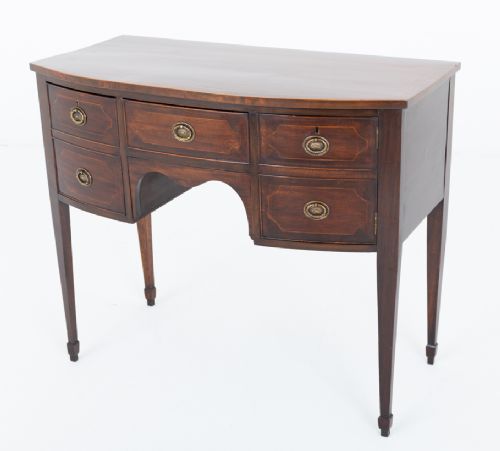
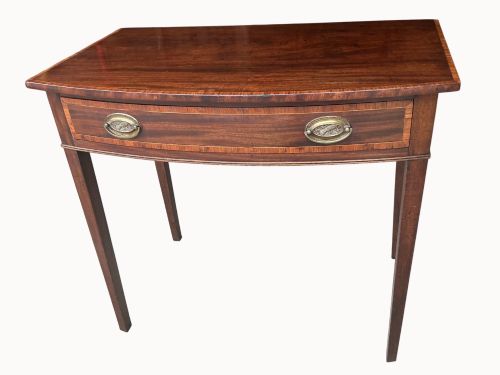
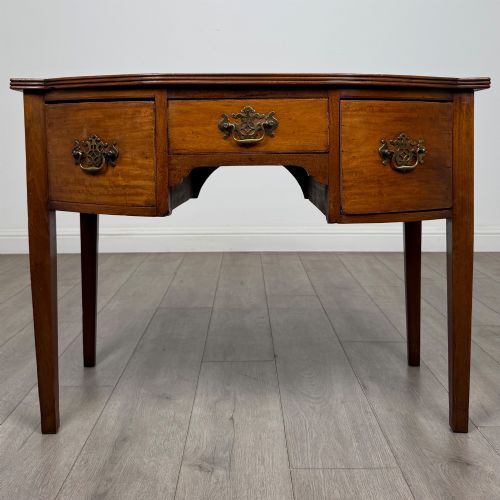
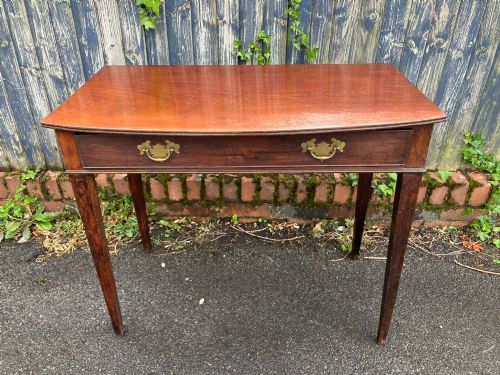
A bow front dressing table provides a distinctive outward-curving front that softens the linear feel of a traditional room while offering useful surface space. These pieces span several centuries, with particular emphasis on Georgian and Regency designs alongside later Edwardian and 1920s interpretations.
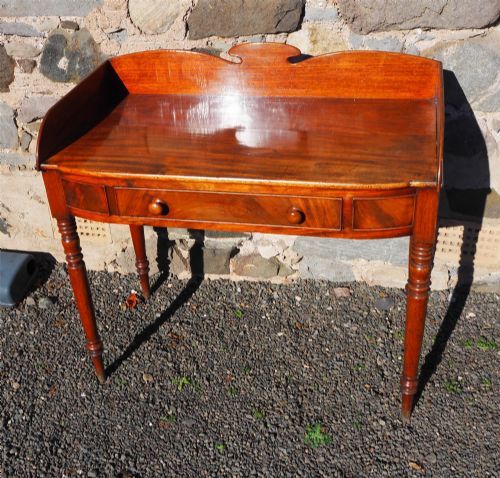
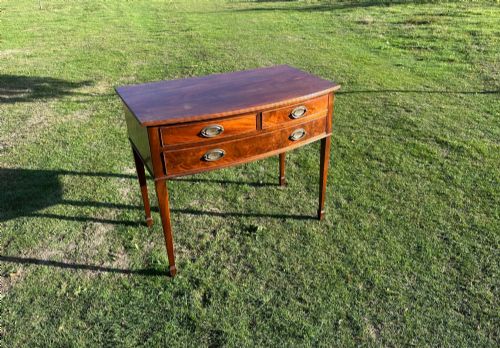
Most examples found in daily trade feature rich mahogany, sometimes highlighted by flame veneers, wood inlay or purpleheart banding. The form frequently merges with writing tables and side tables, reflecting an era when bedroom furniture served multiple domestic purposes.
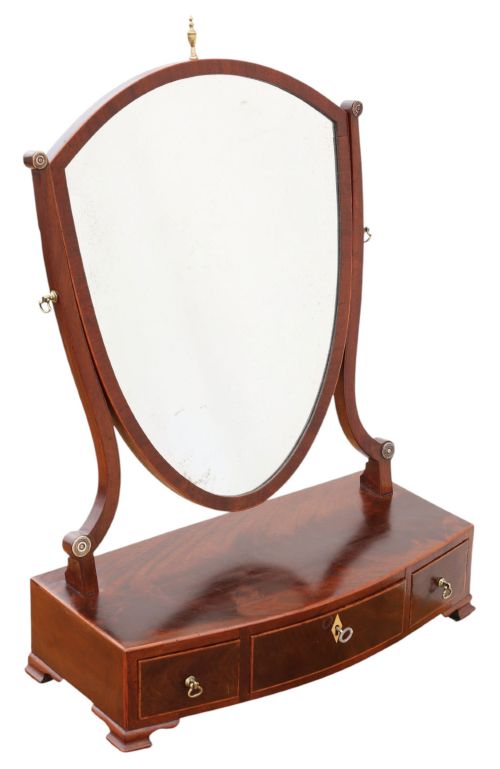
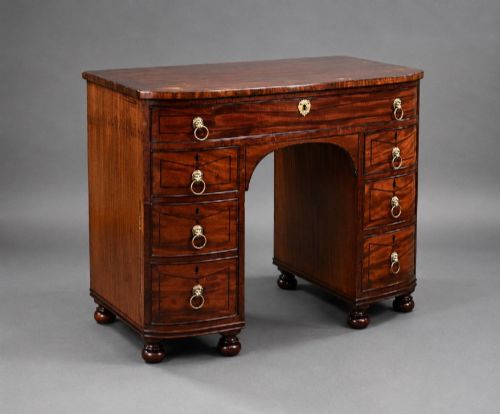
Makers ranged from provincial cabinet makers to notable firms, producing variations that include compact kneehole configurations, multi-drawer setups, and partner pieces paired with matching swing mirrors.
Materials and construction
Cabinet makers relied heavily on solid mahogany and carefully selected mahogany veneers, often applying figural flame patterns to the curved drawer fronts. Secondary timbers like oak appeared consistently in drawer linings and internal framing.
Inlay work added geometric precision through contrasting woods, whilst later pieces utilised burr walnut and satinwood to achieve distinct surface textures and lighter tones.
Structural integrity depended on precise joinery to maintain the outward curve without warping, alongside hand-cut dovetails on the drawer construction.
Bow Front Dressing Table Retail Price Guide 2026
Typical asking prices for bow front dressing table among the pieces listed under this phrase on Sellingantiques today, from the lower quarter to the upper quarter. They describe what is for sale here now, not the wider market.
Listings demonstrate a strong presence of Georgian and Regency mahogany alongside 1920s burr walnut variations.
Evaluating craftsmanship
Quality rests in the harmony of proportions and the selection of timber, where tightly figured flame mahogany or balanced burr walnut distinguishes superior cabinet work from plain stock. The sweep of the bow front must flow naturally without awkward transitions at the corners.
Attention to detail in the drawer construction, such as fine hand-cut dovetails and clean oak linings, separates bespoke workshop pieces from mass-produced later revivals. Original brass hardware and subtle wood inlay further elevate a piece's standing.
Maples·Denby & Spinks
The Bow Front Dressing Table Glossary
- Bow front
- A convex, outward-curving front profile popular on case furniture. This curved design softens room angles and demands expert cabinet-making to execute cleanly.
- Flame mahogany
- A veneer cut from the fork of a mahogany tree where the branches join the trunk. It creates a fiery, feather-like pattern across drawer fronts.
- Kneehole
- A recessed central space beneath a desk or dressing table designed to accommodate the user's legs. It is often flanked by small banks of drawers.
- Purpleheart
- A dense, durable timber native to Central and South America. It appears in fine banding and stringing details on 18th-century pieces.
- Swing mirror
- A tabletop or dresser-attached mirror mounted on vertical pivots allowing it to tilt. These often feature small box bases containing accessory drawers.
Bow Front Dressing Table: Frequently Asked Questions
How do I date a bow front dressing table?
Dating relies on timber selection, carcass construction methods, and hardware styles. Georgian and Regency pieces typically show hand-cut dovetails and solid secondary woods like oak inside the drawers.
Later Edwardian and 1920s revivals often incorporate machine-cut elements and different internal framing techniques beneath the burr walnut or mahogany veneers.
Were these tables used for writing too?
Many surviving examples served a dual purpose as both dressing tables and writing desks. The shallow drawers were ideal for holding letters, inkwells, and personal grooming items alike.
This versatility explains why period titles often interchange dressing table, writing table, and side table descriptions for the exact same furniture form.
How do I care for antique mahogany surfaces?
Maintain the wood by keeping it away from direct sunlight and sudden temperature changes that can dry out old veneers. Regular dusting with a soft cloth preserves the natural wax finish without building up heavy chemical residues.
Avoid placing damp items directly on the polished top to prevent water rings from penetrating the historical finish.