
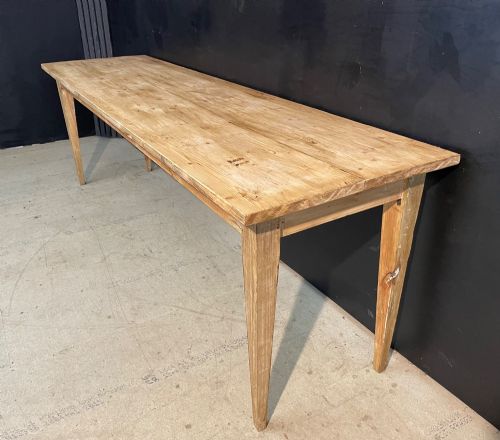
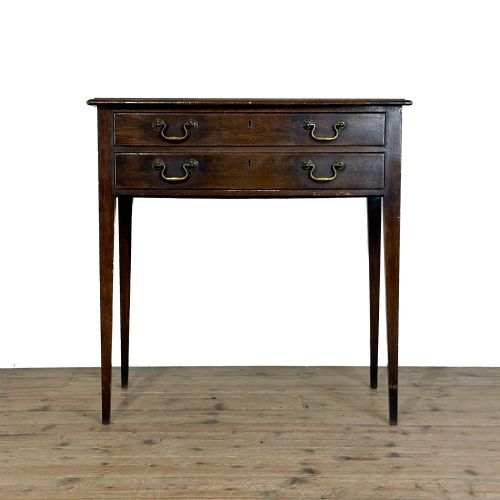
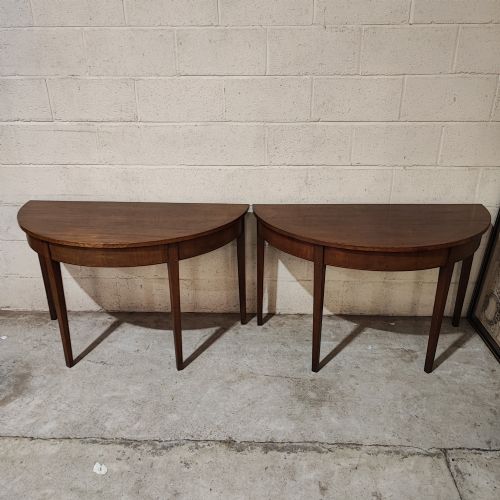
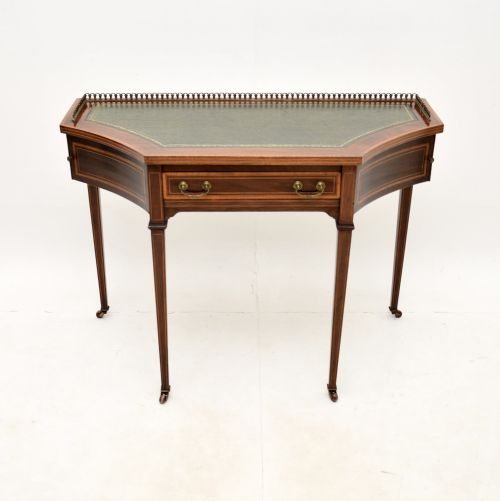
Tapered Leg Console
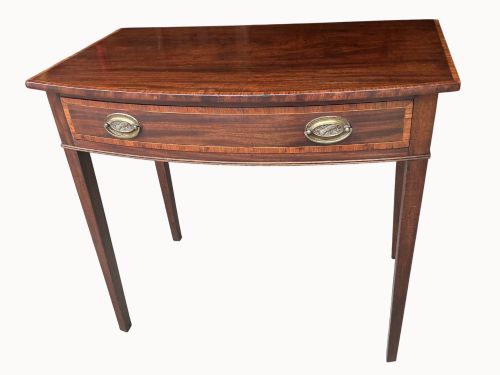
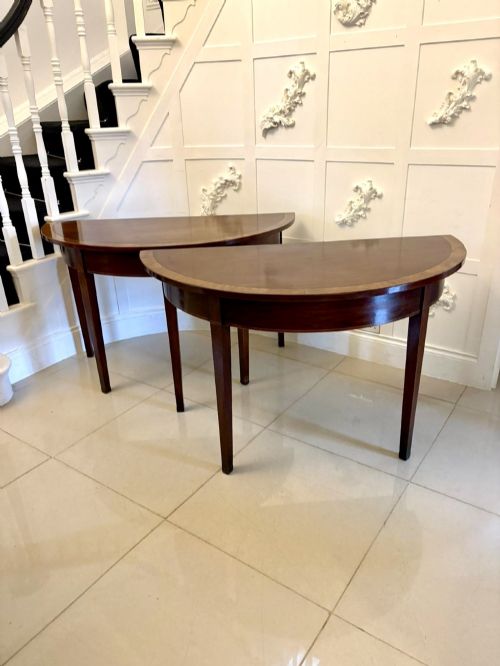
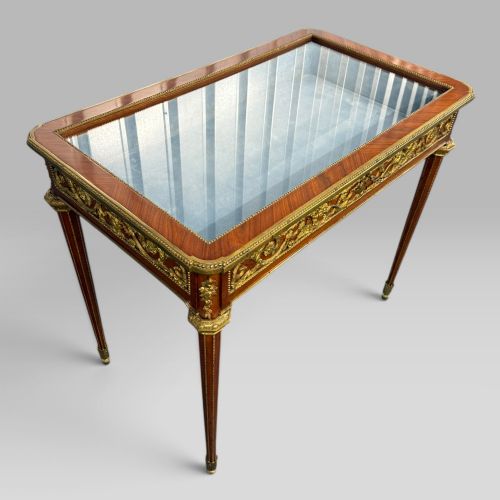
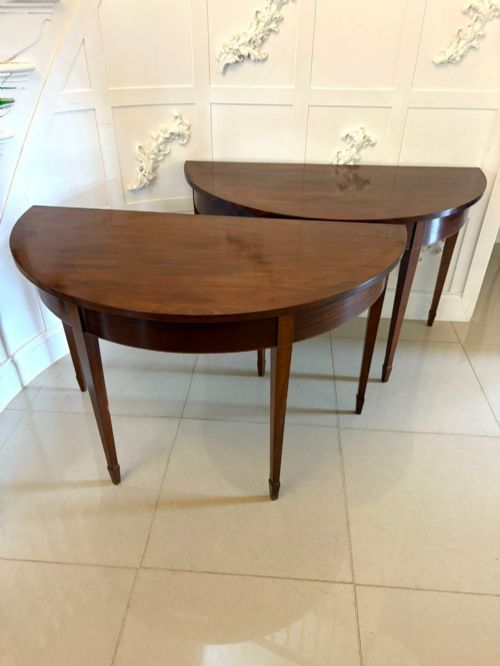
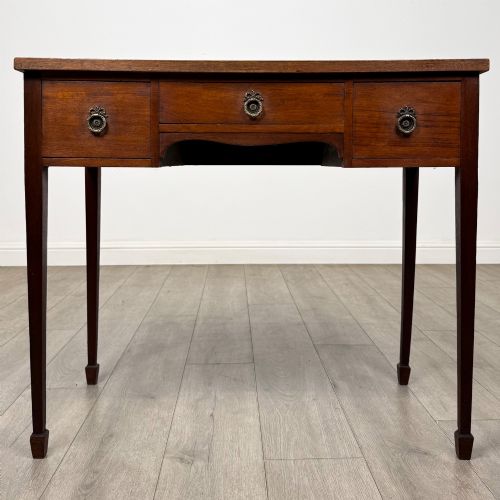
These tapered leg console examples combine practical surfaces with clean upright supports, bringing proportion and elegance to a hallway or reception room.
Tapered Leg Console
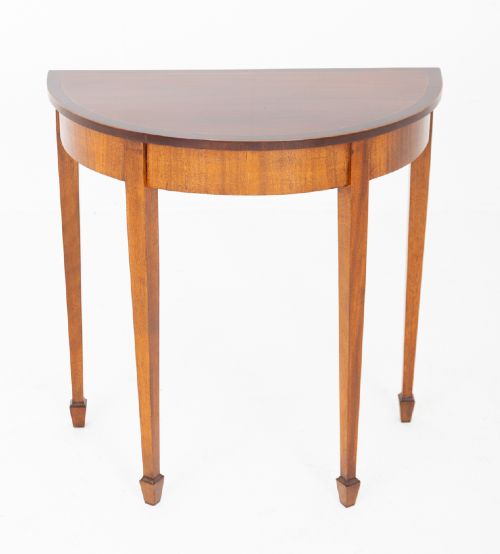
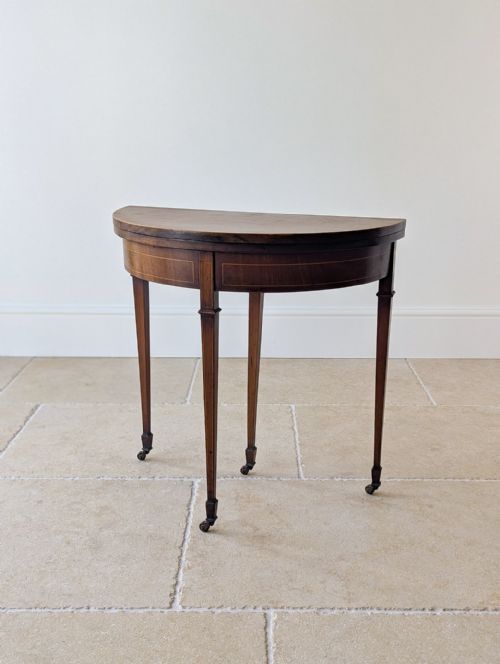
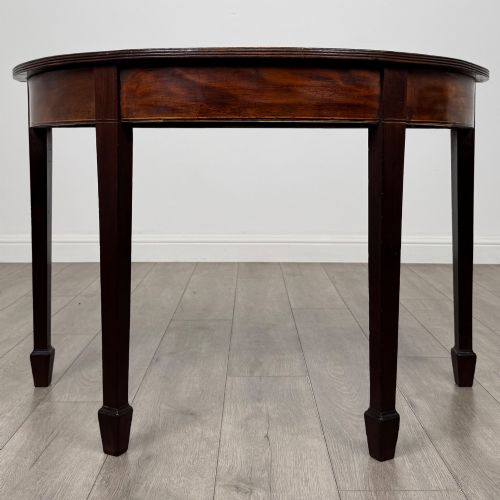
A tapered leg console is a functional surface designed to stand against a wall, frequently taking the form of a semi-circular demi-lune or a rectangular side table. Buyers encounter these pieces across multiple periods including the Georgian era, the nineteenth century, and the Edwardian period.
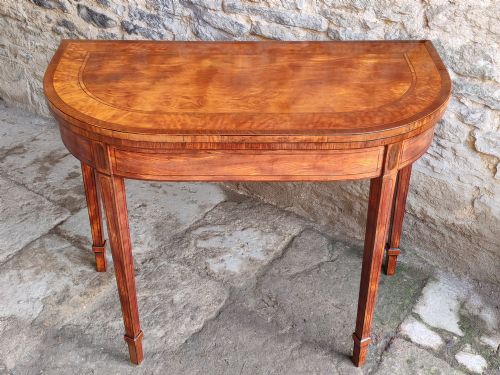
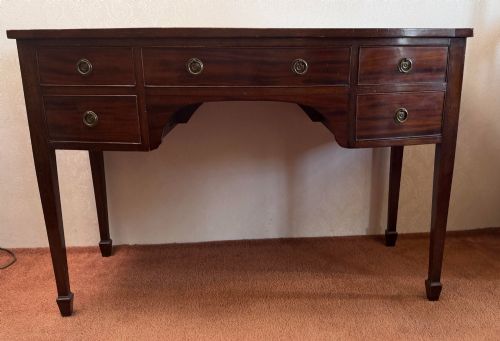
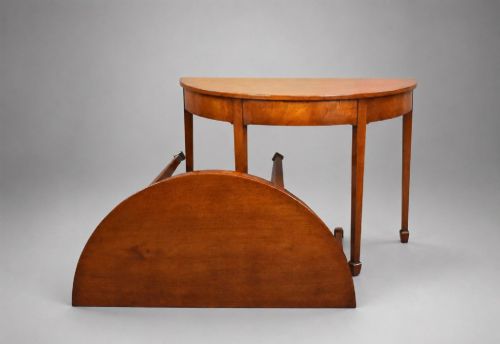
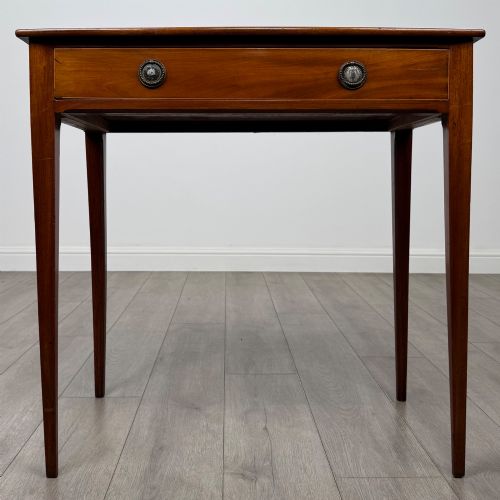
The assortment on this page includes related forms such as card tables, writing desks, and serving tables that share the characteristic slender vertical supports. These range from polished mahogany examples with inlaid details to simpler pine and oak country pieces.
How they were made
Cabinet makers constructed these tables using timbers such as mahogany, oak, and pine, frequently applying decorative veneers to the primary surfaces. Finer examples incorporate contrasting boxwood inlay and satinwood banding to accentuate the edges and top.
Techniques relied on precise joinery to ensure stability despite the slender profile of the uprights. Legs were hand-shaped to taper towards the floor, sometimes terminating in spade feet or subtle brass mounts.
Listings feature woods including mahogany, satinwood, oak, pine, and fruitwood, alongside styles spanning the Georgian period, the Edwardian era, and the nineteenth century.
What varies in quality
The distinction between ordinary and exceptional pieces lies in the selection of timber figures and the crispness of the hand-carved or inlaid details. Superior examples exhibit tightly grained mahogany or carefully matched veneer panels across the top and apron.
Proportion and structural harmony also separate the ranges, where the sweep of a demi-lune curve or the balance of the taper demonstrates the maker's skill.
Bruce and Burns of Edinburgh·François Linke
The Tapered Leg Console Glossary
- Demi-lune
- A half-moon shape popular for console and side tables designed to sit flush against a wall. This form allows the piece to occupy minimal depth while providing a useful display surface.
- Lowboy
- A small occasional table with one or more rows of drawers supported on four relatively tall legs. They originated in the early eighteenth century and serve as compact writing or dressing surfaces.
- Inlay
- A decorative technique where pieces of contrasting wood, such as boxwood or satinwood, are inserted into recessed cavities in the primary timber to create patterns.
- Card table
- A folding table with a hinged top that opens to reveal a baize-lined playing surface. Many examples utilise the slender uprights typical of console furniture.
- Spade foot
- A rectangular foot that tapers slightly toward the base, resembling the shape of a spade. This detail appears frequently on furniture from the late eighteenth and early nineteenth centuries.
Tapered Leg Console: Frequently Asked Questions
Where should I place a console table?
These tables sit comfortably in hallways, entryways, or behind sofas where a shallow surface is required for lamps or decorative objects. Their slim profile prevents them from obstructing walkways.
Because many feature finished backs or graceful curves, they also work well positioned against a living room wall or in a dining space as a serving surface.
How do I identify a Georgian console?
Georgian pieces generally display dense mahogany timbers, restrained classical proportions, and often incorporate hand-cut dovetails within the drawer construction. Look for subtle period characteristics such as hand-turned legs or simple stringing.
Later revival pieces from the Edwardian period or the twentieth century often copy these forms but typically show machine-cut joints and different secondary woods underneath.
What is the difference between a console and a side table?
Console tables are traditionally designed to stand against a wall, sometimes anchored to it for stability, and frequently feature decorative treatment primarily on the front and sides. Side tables are generally freestanding pieces finished on all sides.
In modern usage, the terms overlap considerably, especially when describing eighteenth and nineteenth century examples with slender uprights.
How do I care for antique wood surfaces?
Maintain the timber by keeping it away from direct heat sources and strong sunlight, which can dry out the wood and fade polished finishes. Dust regularly with a dry, soft cloth.
Apply a traditional beeswax polish occasionally to nourish the grain and protect the surface without building up synthetic residues.