
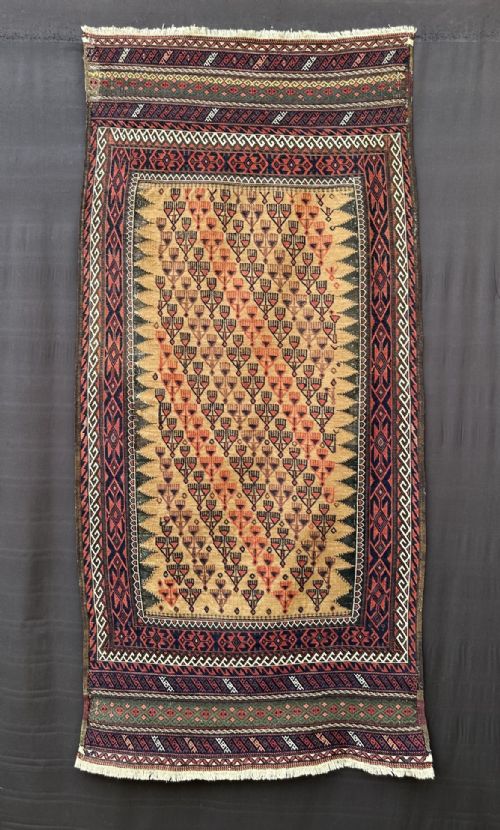


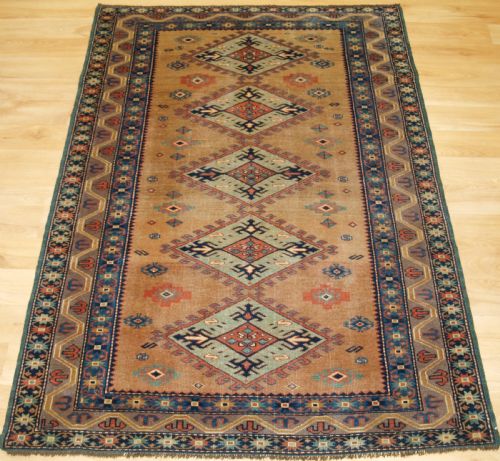
Tan Wool Runner
These tan wool runner examples bring distinct tribal warmth and earthy tones to narrow corridors.

Tan Wool Runner
A tan wool runner serves as a narrow floor covering defined by natural camel hair and wool fibres, echoing traditional tribal aesthetics from Persian, Anatolian, and Caucasian origins. These pieces bring neutral yet earthy palettes into domestic spaces, drawing from nomadic weaving traditions spanning the nineteenth and early twentieth centuries.
Materials and Construction
The construction relies heavily on handspun wool and camel hair, paired with cotton foundations in specific village and tribal productions. These natural materials provide the staple durability and varied tactile weight observed across the regional pieces.
Weavers employed traditional knotting and flatweave techniques, often combining mixed techniques to achieve structured pile or flat surfaces. The application of handspun fibres ensures variable tension and organic textural irregularities inherent to tribal workshop output.
Listings span from the mid-nineteenth century to the 1930s, featuring wool, cotton, and camel hair across Persian and Anatolian tribal forms.
Assessing Quality and Execution
Quality reveals itself through the handling of the handspun wool and the precision of the tribal motifs executed across the narrow format. Finer weaves demonstrate tighter knot density and more controlled structural integrity along the margins.
The depth and consistency of the natural camel hair and wool tones contribute significantly to the visual success of the piece. Superior examples maintain harmonious transitions of colour and resilient pile despite the passage of time.
The Tan Wool Runner Glossary
- Sofreh
- A dining kilim or spread used by nomadic tribes for communal meals and food preparation. These flatweaves often display geometric tribal iconography.
- Prayer Rug
- A small rug featuring a mihrab or niche design used historically for ritual daily prayers. The orientation guides the user during placement.
- Flatweave
- A textile produced without a pile by interweaving warp and weft threads directly. Examples include kilims and certain nomadic tribal coverings.
- Camel Hair
- Un-dyed or natural fibres sourced from camels, valued for durability and warm golden-tan hues. It appears frequently in tribal and nomadic weaving.
- Hand-Spun Wool
- Wool yarn processed manually using a drop spindle or wheel, resulting in irregular thickness and varied absorption of natural dyes.
Tan Wool Runner: Frequently Asked Questions
How do I care for antique wool runners?
Maintenance requires gentle vacuuming without a rotating brush bar and professional cleaning when necessary to protect the fragile handspun fibres.
Positioning the runner away from direct, harsh sunlight prevents the natural dyes and camel hair tones from fading prematurely.
Where were these tribal runners made?
The pieces originate from nomadic and village groups across Persia, Anatolian regions, and the Caucasus, reflecting distinct regional weaving traditions.
Tribes such as the Baluch, Sarab, and various Kurdish or Lur groups produced these specific runners and flatweaves.
How do I date an antique runner?
Dating relies on assessing the structural materials, the organic character of the handspun wool, and the specific palette of natural dyes used.
Stylistic markers such as tribal geometric symbols and traditional weaving structures help place pieces within the nineteenth and early twentieth centuries.