


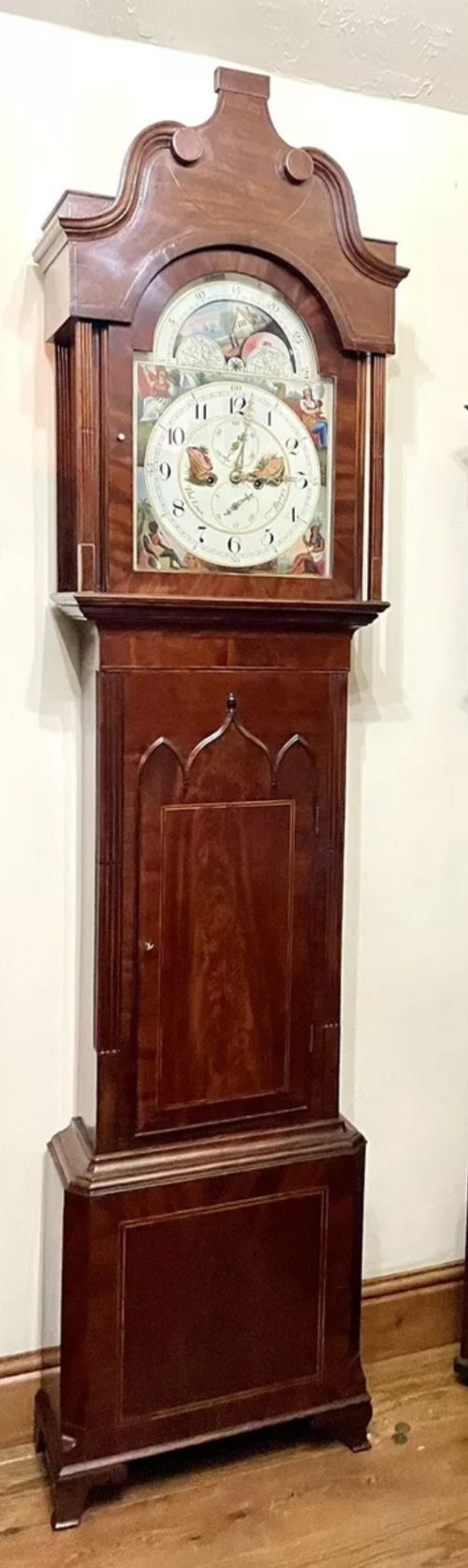


Tallcase Clock Moon Phase
These tallcase clock moon phase pieces combine practical timekeeping with complex mechanical lunar displays housed in substantial wooden cases.
Tallcase Clock Moon Phase
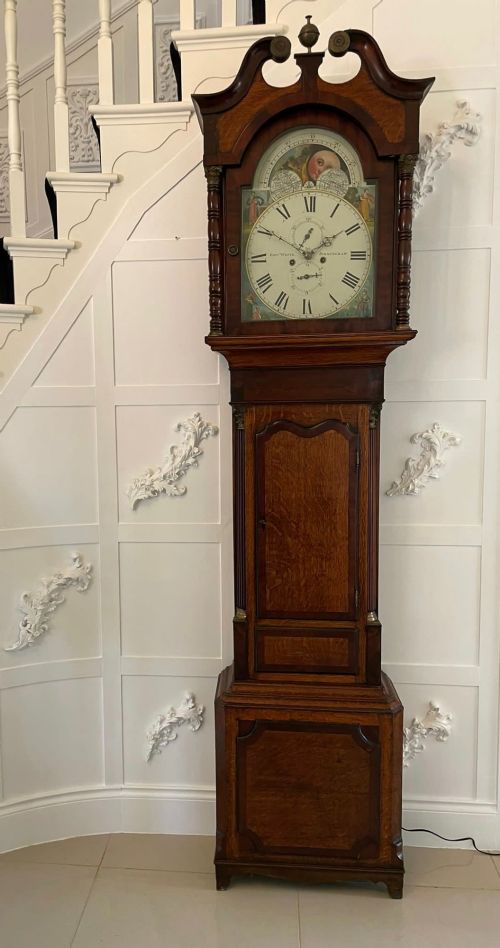
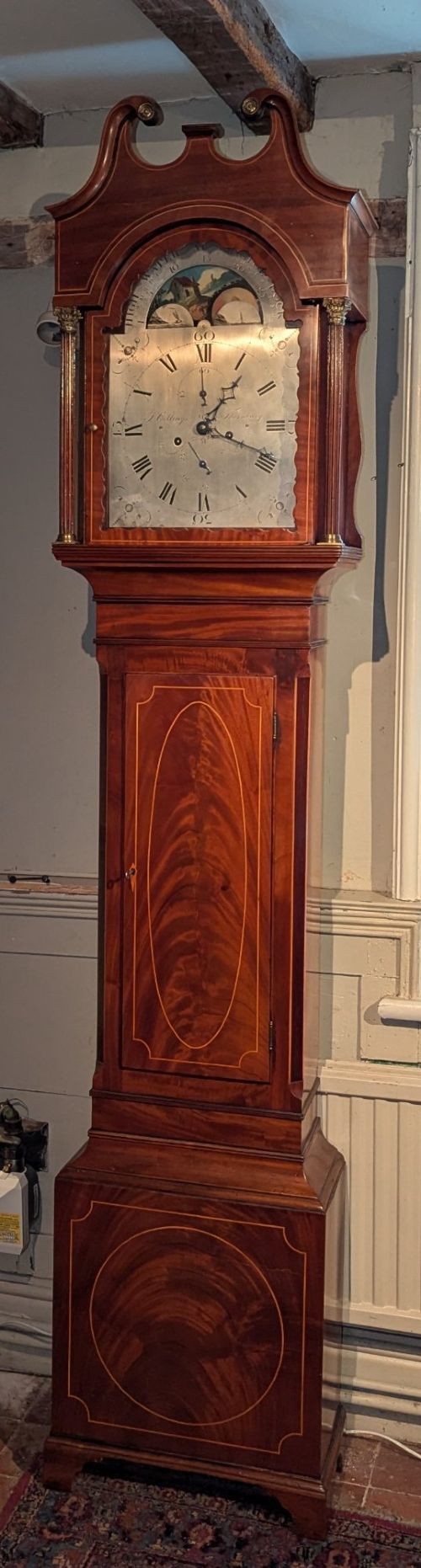
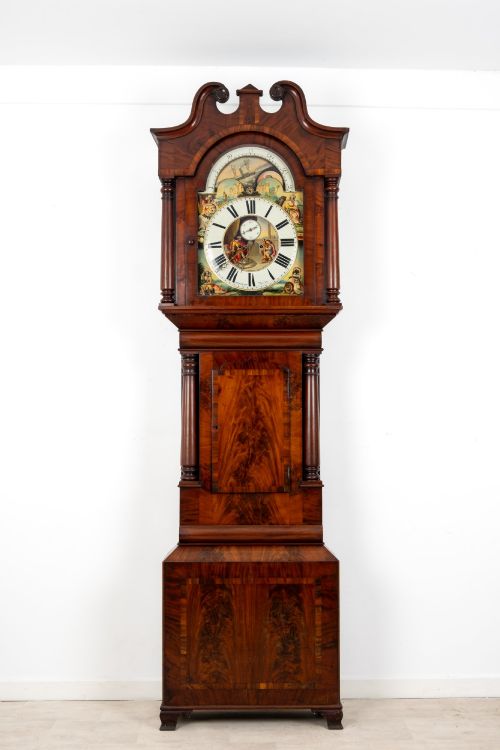
A tallcase clock moon phase piece is a floor-standing timepiece featuring an arched dial equipped with a mechanical disc that tracks the lunar cycle. These grand items appear primarily in mahogany, flame mahogany veneer, and oak, reflecting Georgian, Regency, and Victorian periods.
The versions most common on this page date from the eighteenth and nineteenth centuries, often housing eight-day movements behind painted iron dials and glass doors. Makers from regional workshops across Britain constructed these standing clocks to dominate domestic hallways and living spaces.
Materials and construction methods
Cabinetmakers constructed the tall enclosures using solid timbers and decorative veneers such as flame mahogany and oak, applying glass to protect the delicate face. Brass and steel formed the intricate gear trains and escapements hidden within the trunk.
Dial faces combined painted iron with brass hands and rolling moon mechanisms, requiring precise hand-fitting by skilled horologists. Regional clockmakers engraved their names directly onto these dials alongside intricate floral or maritime painted scenes.
Penny moon dials use a small circular disc that peeks through a humble cutout, giving the illusion of a coin rising across the night sky.
Factors of quality and execution
Quality rests upon the crispness of the cabinetwork, the depth of the timber figuring, and the complexity of the internal movement. Superior examples display finely carved details, robust eight-day movements, and sophisticated chiming or musical mechanisms.
The artistry on the painted dial distinguishes standard production from finer work, as skilled miniaturists rendered the lunar phases and decorative corners. Original matching brass hardware and well-preserved maker signatures further elevate the standing of a piece.
Parkinson Bros Batley·Edward Shepley·Edward White Birmingham·Thomas Lees Bury·Thos Russell Lancaster·Furnival Oldham·Thomas Dean of Leigh·Edward Glase of Bridgnorth·Henry Smith·William Mercer of Liverpool
The Tallcase Clock Moon Phase Glossary
- Moon roller
- A rotating disc behind an arched dial that tracks the phases of the moon over a twenty-nine and a half day cycle. This mechanical feature uses two identical lunar representations to display the passage from new moon to full and back again.
- Longcase clock
- A tall, weight-driven pendulum clock housed in a protective wooden case comprising a hood, trunk, and base. These pieces are frequently called grandfather clocks in common parlance.
- Flame mahogany
- A distinct wood grain pattern produced by cutting veneers from the fork of the mahogany tree where branches join the trunk. Cabinetmakers prized this figured timber for its fiery, swirling appearance on cabinet doors and bases.
- Arched dial
- A clock face featuring a curved top section specifically designed to accommodate auxiliary displays such as a moon roller or tidal indicator. This shape became standard on many eighteenth and nineteenth century tall clocks.
- Eight day movement
- A mechanical gear train powered by weights that requires winding only once a week rather than every thirty hours. This heavier mechanism generally demands a taller case to allow adequate drop for the driving weights.
Tallcase Clock Moon Phase: Frequently Asked Questions
How does a moon phase dial work?
A gear train linked to the clock movement rotates a painted disc behind a double-arched opening on the dial. This mechanism advances the moon illustration steadily through its twenty-nine and a half day cycle.
Owners typically set the moon roller manually using instructions provided in period manuals when the clock is first started or after a prolonged stop.
Where were these clocks placed in a home?
Tallcase clocks stood primarily in hallways, stair landings, or principal reception rooms where their height and chime could command attention. Their substantial wooden cases also protected the pendulum and hanging weights from drafts.
Placing these floor-standing items against a solid interior wall ensured the pendulum swung freely without interference from uneven floorboards.
How do I wind an eight-day clock?
Winding involves inserting a crank key into the winding holes on the dial face and turning it slowly until the internal weights reach their upper limit. Care must be taken not to overwind the mainspring or pull the weights up too abruptly.
Most eight-day movements require this attention at weekly intervals to maintain accurate timekeeping and keep the rolling moon synchronized.
What is the difference between oak and mahogany cases?
Oak cases typically date from earlier Georgian production periods, displaying prominent grain patterns and robust, heavy construction. Mahogany and flame mahogany variants emerged later, offering a smoother, reddish-brown surface suited to formal parlours.
Cabinetmakers selected oak for regional strength and durability, while selecting mahogany for its superior response to fine carving and decorative veneering.