
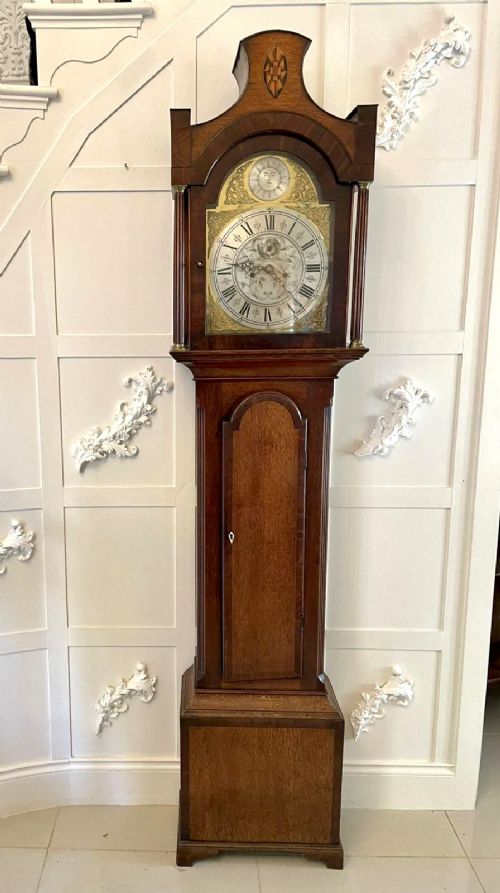
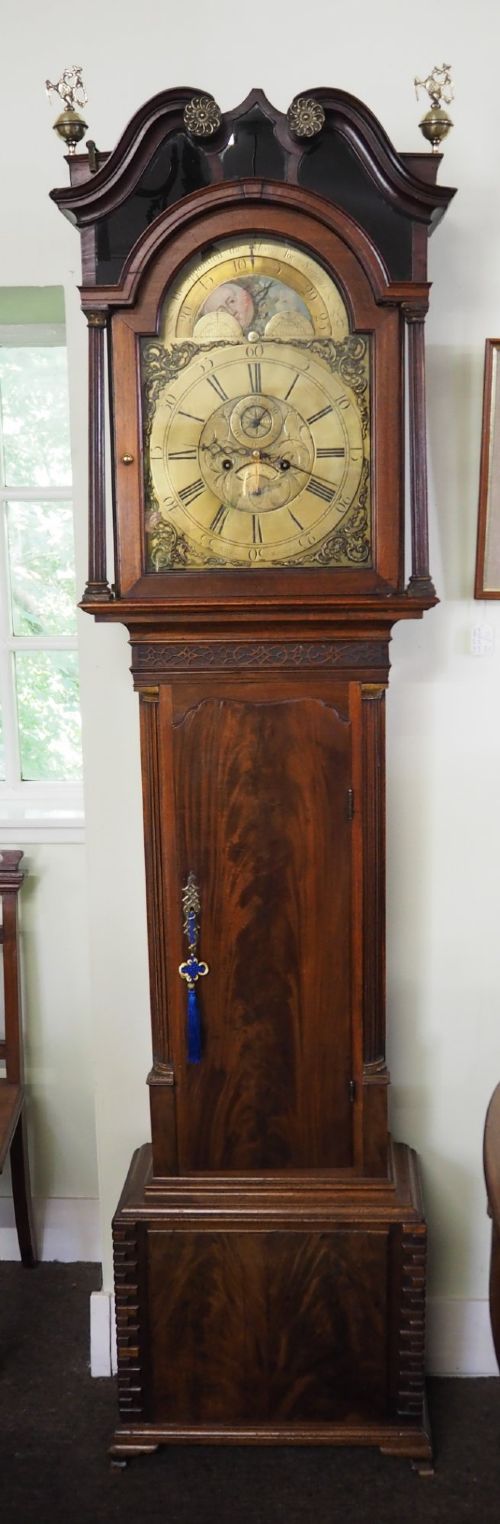
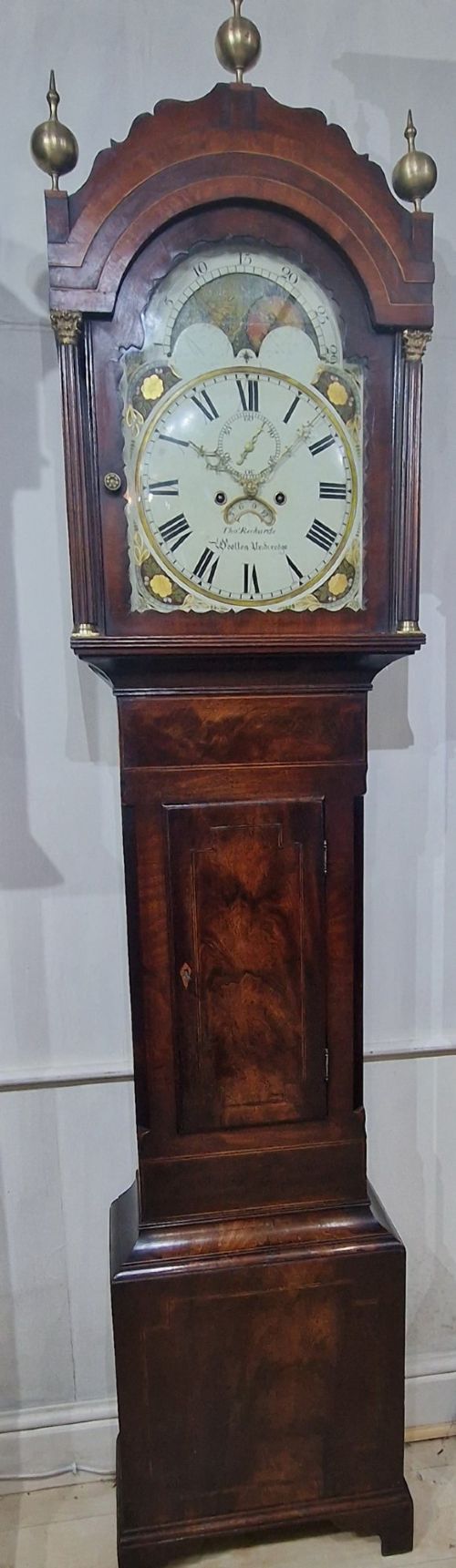
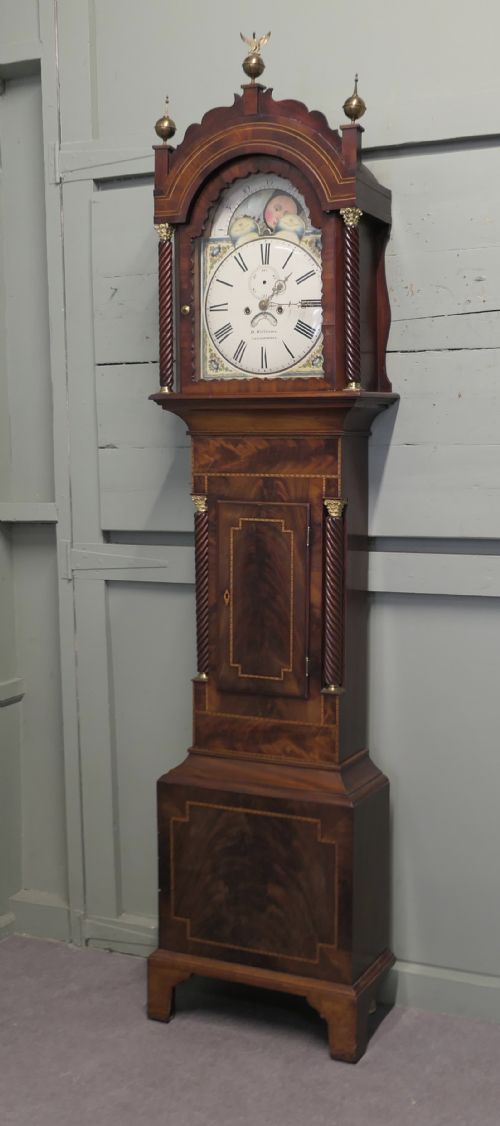


Georgian Moonphase Clock
A georgian moonphase clock marks time and lunar cycles alike, combining mechanical precision with the painted poetry of the moving sky.
Georgian Moonphase Clock
A georgian moonphase clock is a tall floor-standing timekeeper, most frequently encountered in mahogany, oak, or walnut cabinetry enclosing an eight-day movement and a painted iron or brass dial.
These pieces primarily date from the eighteenth and early nineteenth centuries, manifesting in regional British styles that range from simple provincial oak cases to richly figured flame mahogany examples.
The distinguishing mechanical feature is the revolving lunar disc positioned within the arch of the dial, tracking the phases of the moon alongside standard hour and minute indications.
Materials and Construction
Cabinetmakers utilised solid timbers and veneers of mahogany, oak, and walnut, often selecting figured woods such as flame mahogany for principal visual surfaces.
Clockmakers constructed the internal movements from brass and steel, pairing them with painted iron or brass dials inscribed with maker details and lunar indicators behind glazed apertures.
Standards of Workmanship
Quality rests in the depth of figure within the timber case and the crispness of the brass and iron dial work executed by regional and metropolitan makers.
The sophistication of the movement and the artistry found in the hand-painted moon discs separate standard timepieces from the finest examples.
Rickards Wotton Under Edge·D Williams of Crickhowell·Thomas Vernon London·Charles Dowsett Of Canterbury·John BANKS OLDHAM·FURNIVAL OLDHAM·THOMAS DEAN of LEIGH·Wilshire & Link of Bristol·Nicholas of Birmingham·RICHARDSON OF MANCHESTER·James Rayner of Hull·THOS. BURCHALL of NANTWICH·ROBERT DARLING MELROSE·THOMAS HALL ROMSEY·Thomas Hutchison of Leeds·Iames Richards Liverpool
The Georgian Moonphase Clock Glossary
- Moonphase
- A mechanical display utilising a rotating disc behind a shaped aperture to show the phases of the moon. This mechanism requires two lunar teeth for every single day of the standard gear train.
- Longcase clock
- A tall pendulum clock housed in a wooden floor-standing case designed to protect the weights and pendulum. They are commonly known as grandfather clocks.
- Dial
- The visible face of the clock where hours, minutes, and subsidiary functions are read. Georgian dials are constructed from brass or painted iron.
- Eight day
- A movement type requiring winding once every eight days rather than daily. This demanded heavier driving weights and robust gear cutting.
Georgian Moonphase Clock: Frequently Asked Questions
How do I set the moon phase?
The moon disc advances independently via a small pusher or directly through the dial aperture using your fingers. Consult a lunar calendar to match the current phase before adjusting.
Ensure you move the disc in the direction indicated by the maker's instructions to avoid catching the internal mechanism behind the painted iron plate.
Why do some clocks have painted iron dials?
Painted iron dials replaced traditional brass faces toward the latter half of the eighteenth century. They provided a smooth canvas for intricate floral decoration and detailed lunar artwork.
Regional makers adopted this new technology rapidly, allowing for greater customisation across different British workshops.
Where should I place my longcase clock?
Position your clock against a solid interior wall away from direct sunlight, central heating vents, and damp exterior stone. Stable temperatures preserve the wooden case and prevent timber movement.
Ensure the floor beneath the base is completely level so the pendulum swings evenly and the eight-day gear train maintains consistent timekeeping.
What is the difference between oak and mahogany cases?
Oak cases generally represent earlier provincial production or regional preferences, displaying visible grain patterns and robust construction. Mahogany and walnut cases often signify finer urban cabinetmaking.
Makers frequently utilised flame mahogany veneers on higher-end pieces to create striking visual patterns across the trunk door and base plinth.