

Tall Open Bookshelves
Tall open bookshelves bring vertical presence and instant accessibility to a room, offering immediate storage for extensive libraries.
Tall Open Bookshelves
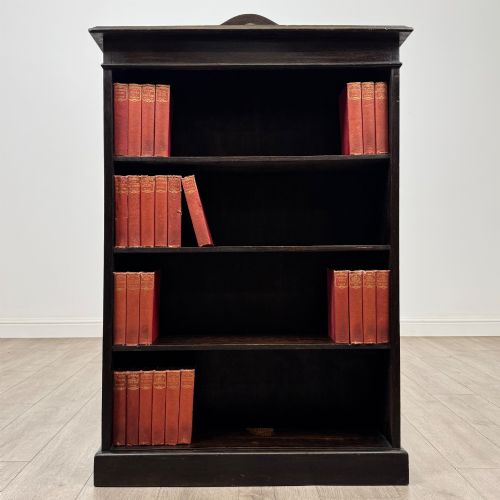
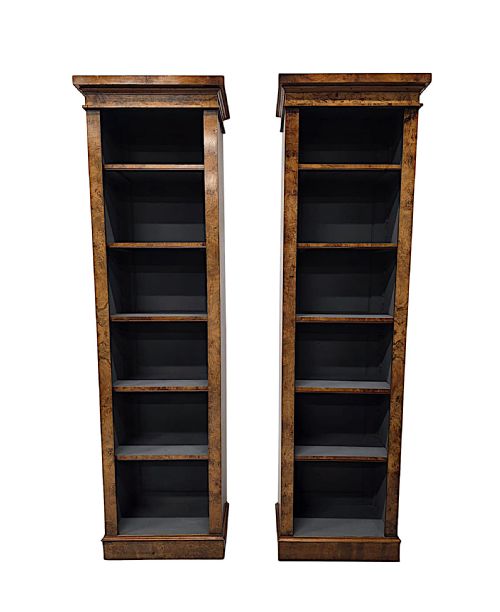
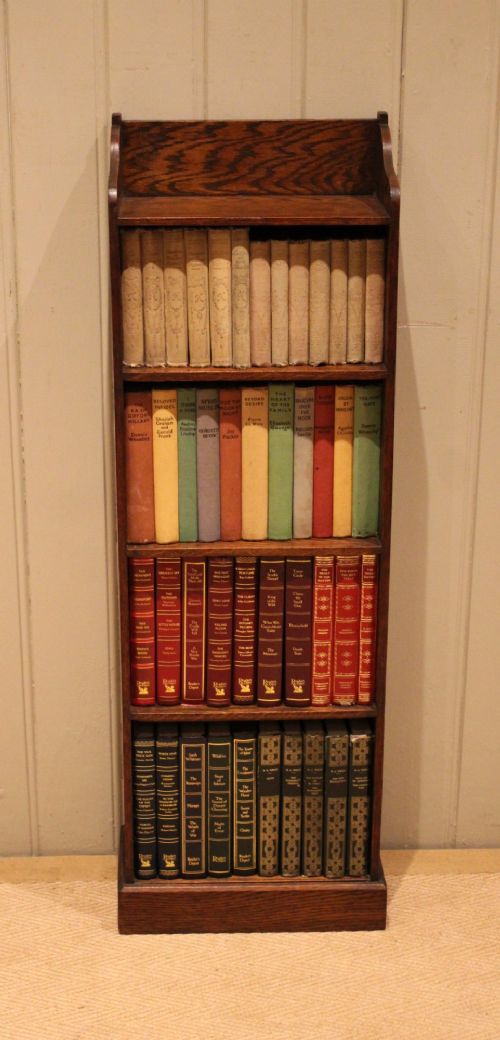
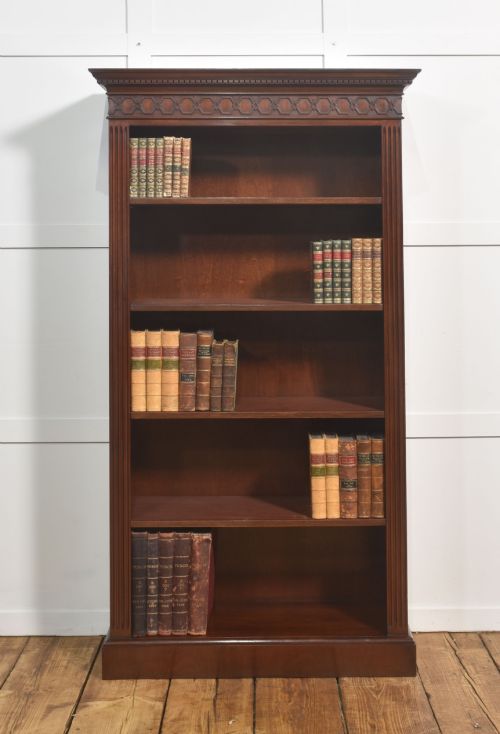
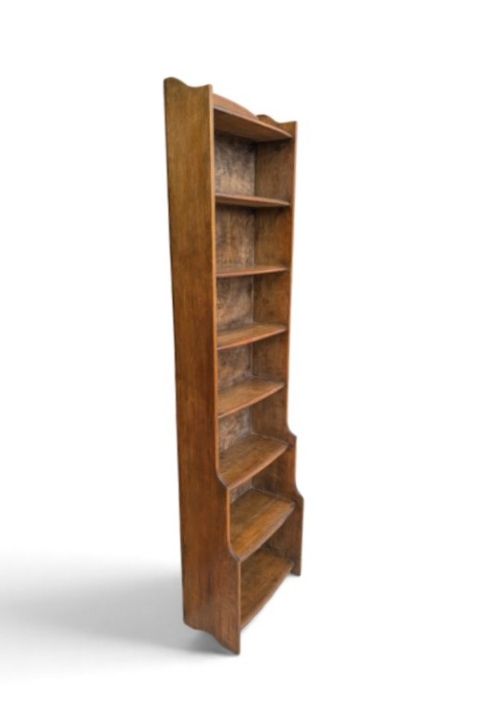
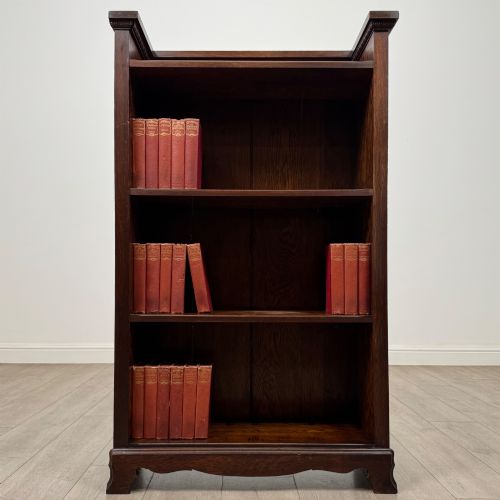
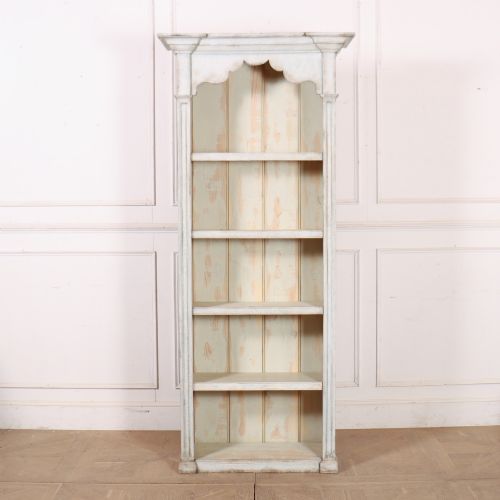
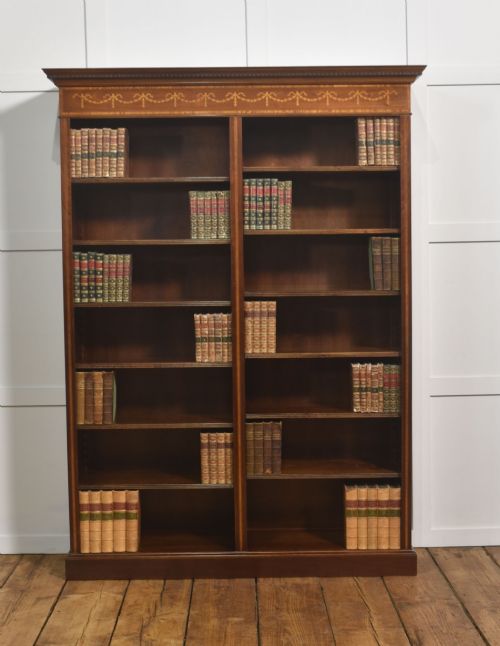
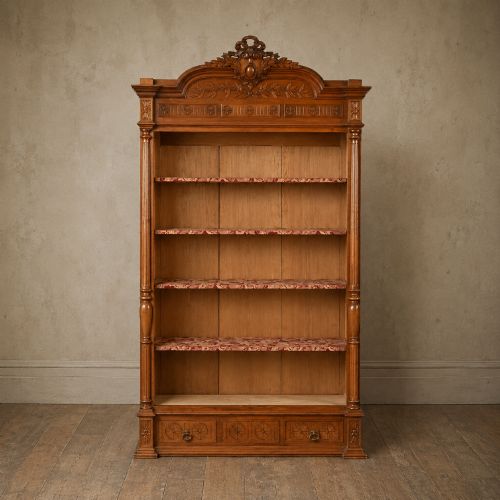
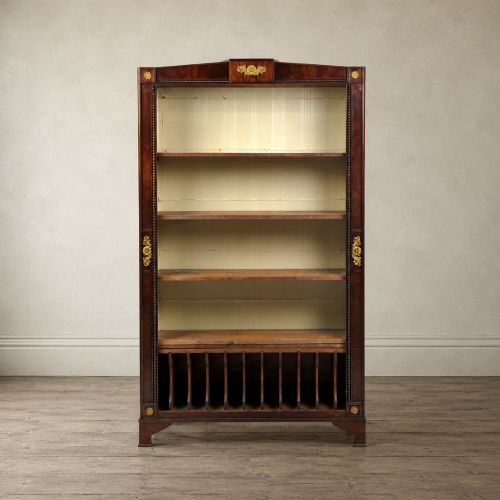
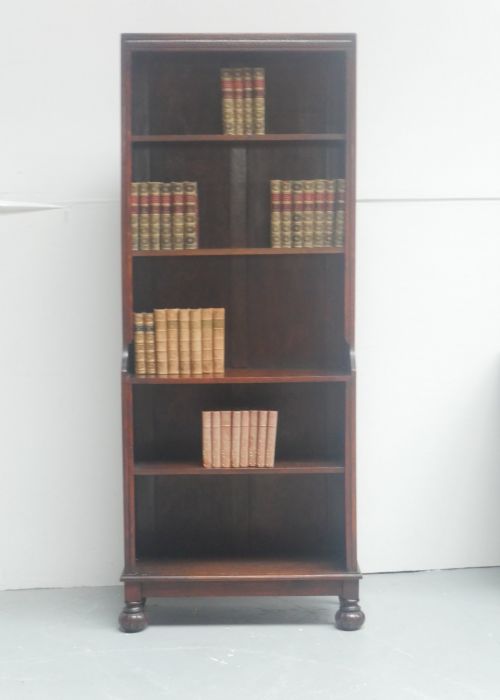
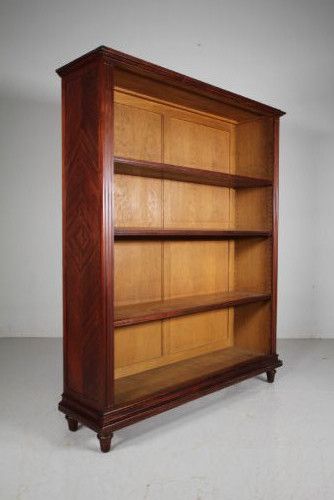
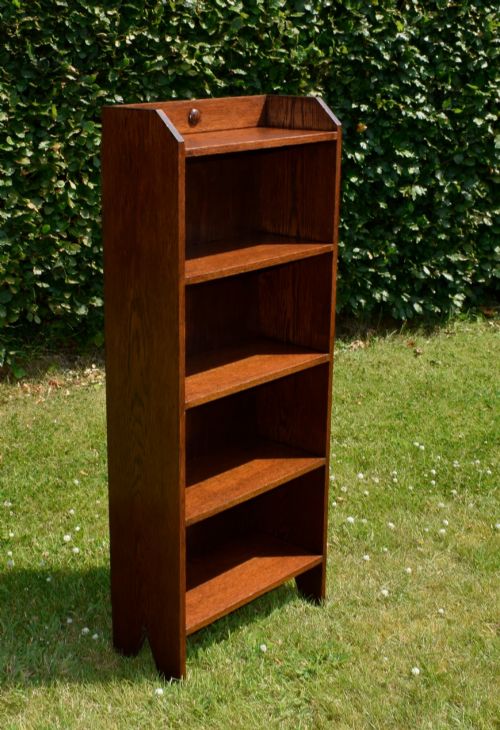
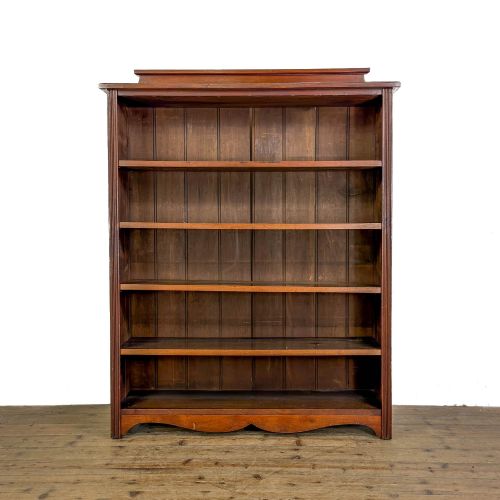
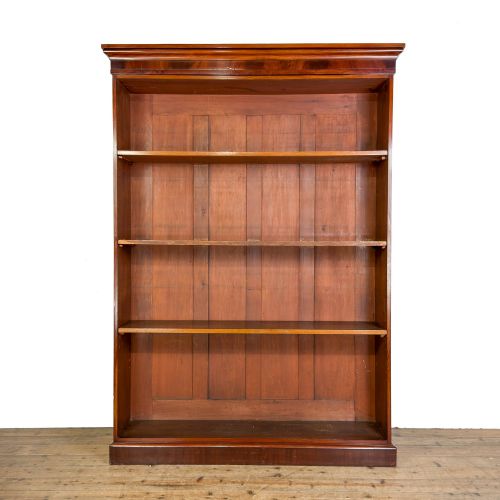
Tall open bookshelves provide substantial vertical timber storage without the visual weight of glazed doors, making them practical for everyday rooms. You will frequently encounter examples dating from the nineteenth and early twentieth centuries, spanning Victorian, Edwardian and Arts and Crafts periods. The selection runs from narrow oak standing units to large mahogany library bookcases designed to house considerable collections.
Makers and workshops of the nineteenth and early twentieth centuries constructed these pieces primarily in proportions suited to high ceilings and generous domestic spaces. Common forms include plain upright shelving, inlaid mahogany variations following Sheraton or Georgian revivals, and sturdy oak designs from the Arts and Crafts movement. These items serve the same functional purpose today as they did over a century ago, holding volumes openly for easy selection.
Materials and construction
Cabinet makers relied heavily on timber such as mahogany, oak, walnut and pine, often selecting solid planks for uprights and shelves to support heavy loads of books. Mahogany and walnut frequently received fine inlay work or polishing to enhance the grain, whilst oak and pine appeared in both plain utilitarian forms and carved revival styles.
Many surviving examples incorporate adjustable shelves supported by brass pegs, wooden ratchets or traditional vertical grooves, allowing the interior layout to adapt to different book sizes. Joinery methods typically involved solid tongue-and-groove backs, robust carcases, and applied mouldings or beaded edges that added structural stability.
Listings feature woods spanning mahogany, oak, walnut, pine, rosewood, satinwood, and teak across Victorian, Edwardian, and Arts and Crafts periods.
Judging quality
Quality rests in the selection of timber and the integrity of the structural carcass, where dense hardwoods like mahogany and figured walnut outlast softer deal or pine. Superior pieces display thoughtful grain matching, clean joints, and well-executed decorative elements such as subtle carving or geometric inlay.
The sophistication of the shelving mechanism also dictates standard, with adjustable systems demonstrating greater utility than fixed partitions. Well-balanced proportions and heavy, stable plinths distinguish finely made library furniture from simpler utilitarian shelving.
Wylie Lochhead of Glasgow·E.A. Taylor
The Tall Open Bookshelves Glossary
- Adjustable shelves
- Shelves that can be moved to different heights within the bookcase using wooden tracks, brass studs or metal ratchets. This system allows the owner to alter shelf spacing for varying book formats.
- Inlay
- A decorative technique where contrasting woods, brass or shell are inserted into recesses carved into the primary timber surface. Sheraton Revival pieces frequently utilise this method to create fine border lines.
- Carcase
- The main structural body or shell of the bookcase, excluding doors or removable shelves. A solid carcase ensures the tall frame remains square and stable under heavy loads.
- Plinth
- The heavy horizontal base block at the bottom of the bookcase that elevates the unit and distributes weight evenly across the floor.
Tall Open Bookshelves: Frequently Asked Questions
How do I secure tall bookshelves to a wall?
Tall open bookshelves carry significant weight and height, making wall attachment essential for safety, particularly on uneven older floors. Most antique units feature discreet fixing points near the top cornice or can be secured using sympathetic brackets attached directly to the wall studs.
Ensuring the piece sits level on its plinth before anchoring prevents undue strain on the upright carcase joints. This simple precaution protects both the antique structure and the books stored upon the upper tiers.
Are shelves usually adjustable in these bookcases?
Many period examples provide adjustable shelving systems, utilising traditional wooden saw-tooth ratchets, brass pegs or vertical slots cut into the interior sides. This adaptability distinguishes finer library furniture from simpler utility shelving.
When inspecting a piece, check that the supporting pins or brackets match the period and allow smooth repositioning of the boards. Fixed shelves do appear, particularly in simpler pine or country workshops, but adjustable variants offer greater versatility for modern collections.
What woods were commonly used?
Cabinet makers utilised a range of domestic and imported timbers, with mahogany, oak and walnut forming the backbone of formal nineteenth-century production. Softer woods like pine and deal appeared frequently in provincial pieces and utilitarian library rooms.
Exotic veneers such as rosewood and satinwood also feature on decorative revival pieces from the late Victorian and Edwardian eras. Each wood responds differently to polish and wax, influencing the overall tone and presence of the furniture in a room.
How do I date an open bookcase?
Dating relies on a combination of timber choice, construction techniques, and stylistic clues borrowed from prevailing architectural movements. For instance, heavy carved oak points toward nineteenth-century Renaissance Revival or Arts and Crafts workshops, whilst lighter inlaid mahogany often signals Edwardian Sheraton Revival work.
Examining the backboards, screw types, and shelf support mechanisms provides further evidence of the manufacturing decade. Comparing these details against known period styles helps narrow the origin down to specific eras like the Victorian or Edwardian periods.