




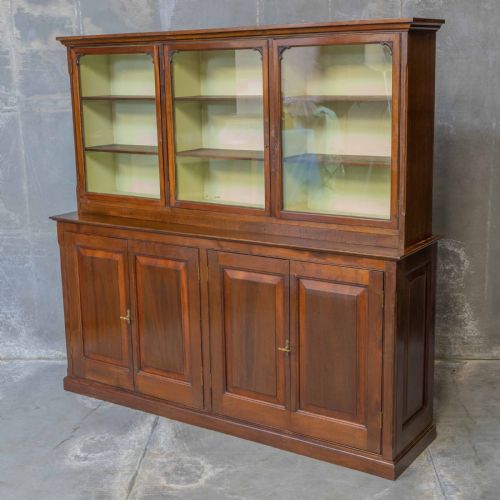
Large Timber Bookcase
A large timber bookcase offers substantial capacity and architectural presence, anchoring a room with deep shelves and period character.
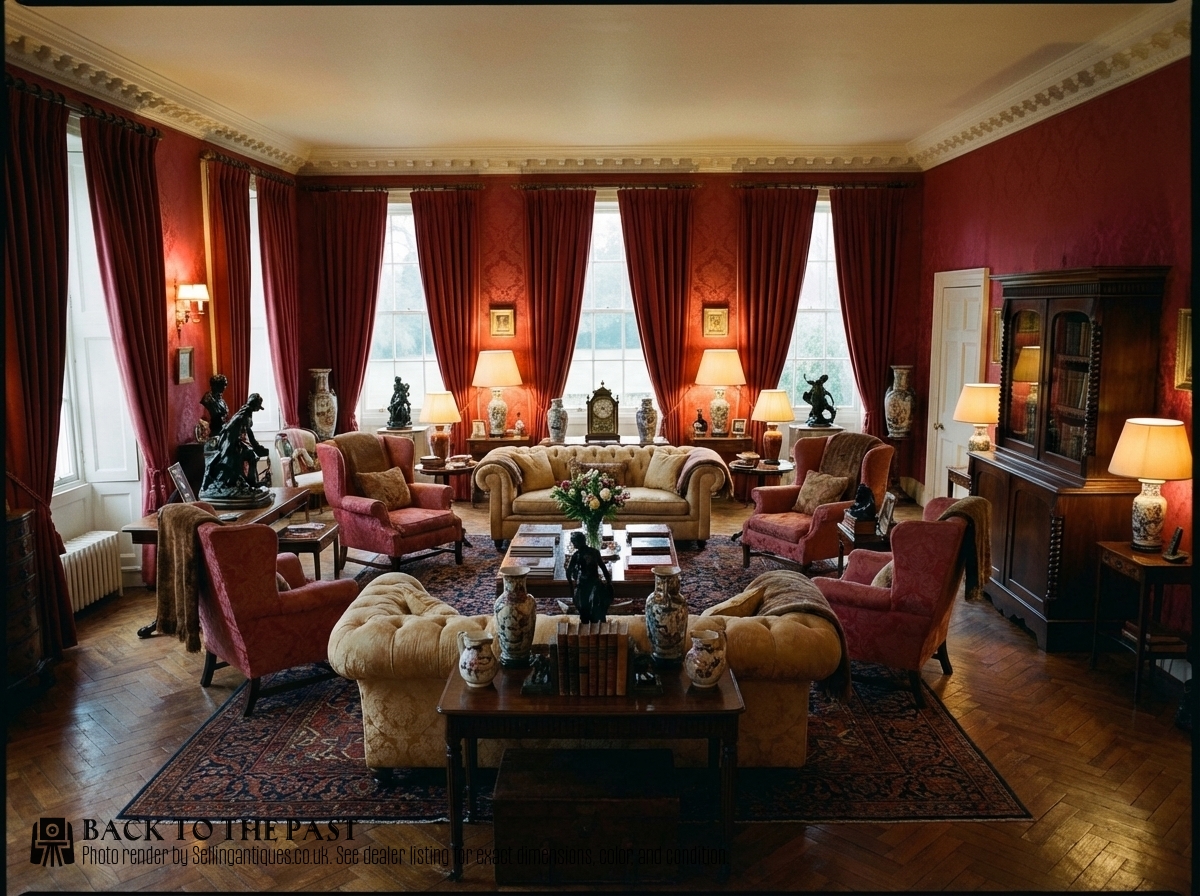
Large Timber Bookcase
A large timber bookcase provides serious storage capacity for substantial libraries while anchoring a room with strong architectural presence. When searching for a large timber bookcase, buyers encounter robust examples spanning the eighteenth, nineteenth, and early twentieth centuries.
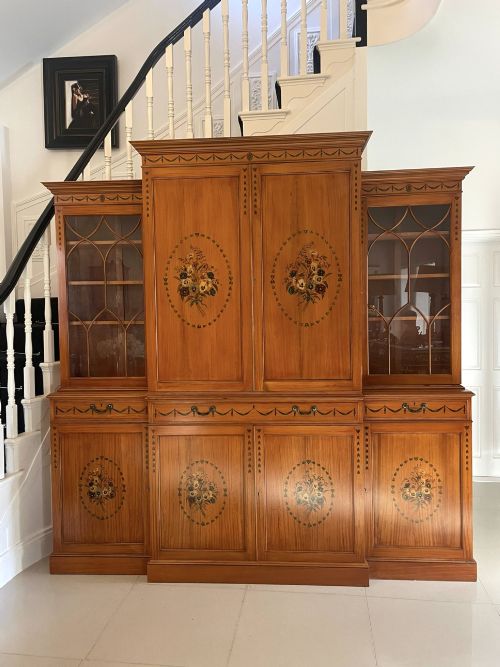
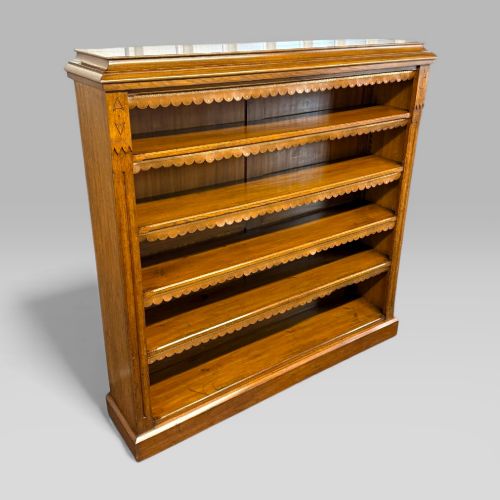
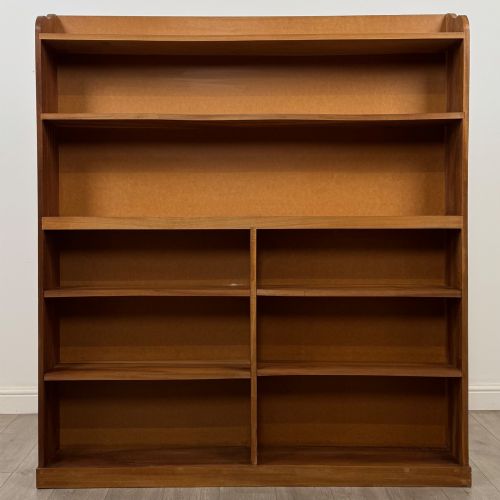
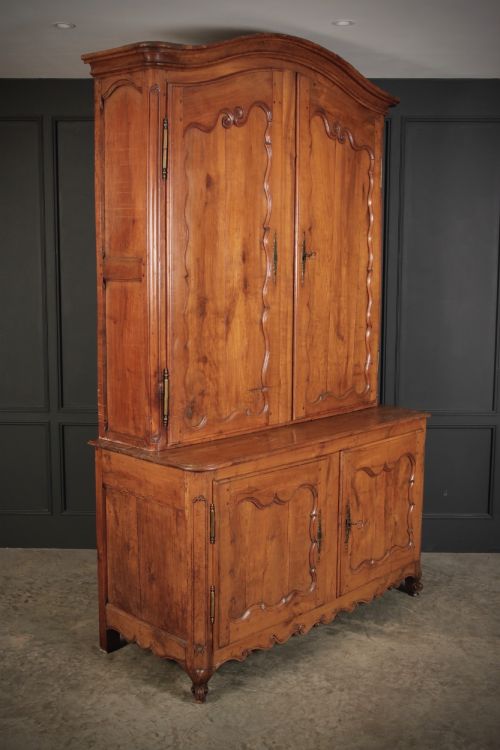
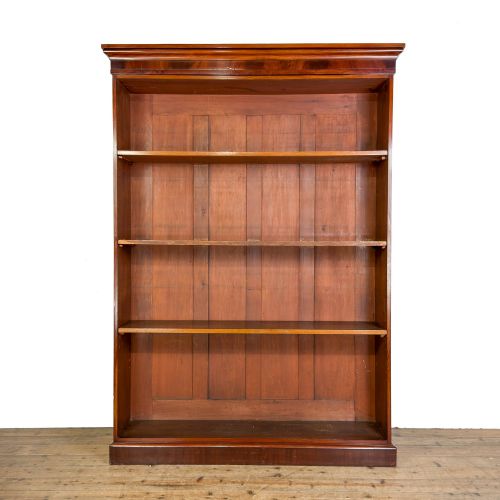
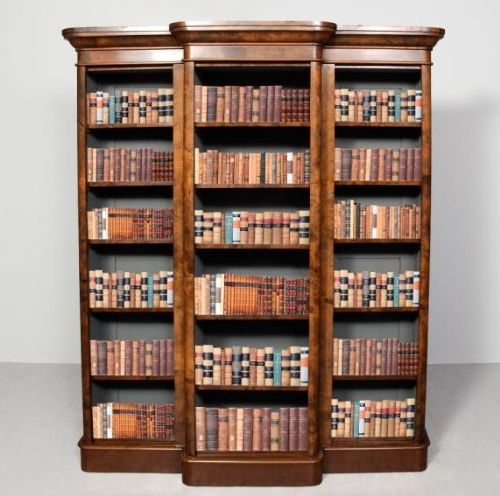
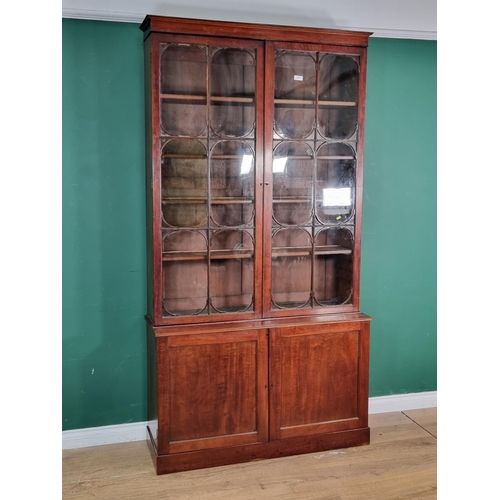
The selection ranges from open shelving units and glazed display cabinets to breakfront designs and shop fittings. Oak, mahogany, walnut, and padauk appear frequently alongside painted finishes and exotic woods like satinwood and cherry.
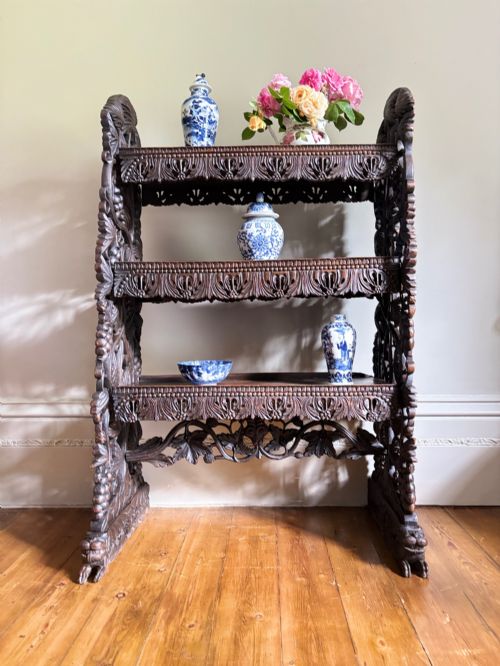
Victorian and Edwardian pieces dominate the offerings, accompanied by earlier eighteenth-century examples and specific regional styles such as Anglo-Indian and French Provincial. These pieces serve both domestic studies and grand library settings with equal authority.
How they were made
Cabinet makers utilised dense hardwoods including mahogany, oak, walnut, and padauk to support heavy volumes without sagging. Fine joinery techniques ensured stable frames, often incorporating adjustable shelving supported by wooden racks or brass fittings.
Surface treatments varied from polished mahogany and golden oak to painted decoration and burr walnut veneers. Glazed doors utilised timber framing to house glass panes safely, protecting contents while maintaining visibility.
Listings feature woods including oak, mahogany, walnut, padauk, cherry, and satinwood across eighteenth and nineteenth-century periods.
What varies in quality
The distinction between standard utility furniture and superior library pieces rests upon timber selection and decorative ambition. Finer examples display figured veneers like burr walnut or satinwood, alongside hand-carved details and balanced breakfront proportions.
Construction methods also reveal gradation in quality, from straightforward open shelving to complex breakfront multi-section configurations with original brass hardware and painted decoration.
Gillows
The Large Timber Bookcase Glossary
- Breakfront
- A cabinet design where the central section projects forward from the flanking wings. This configuration adds depth and visual rhythm to large library furniture.
- Padauk
- A dense tropical timber valued for its rich reddish colour and durability. It appears in nineteenth-century pieces with distinct regional craftsmanship.
- Satinwood
- A luminous timber with a golden sheen utilised for fine cabinetwork. It takes a high polish and suits decorative painted highlights.
- Aesthetic Movement
- A late nineteenth-century design style emphasising visual beauty over narrative function. Pieces in this idiom often feature simplified lines and exposed grain.
Large Timber Bookcase: Frequently Asked Questions
How do I style a large timber bookcase?
Balance heavy volumes with decorative objects, ceramics, and framed prints across the adjustable shelves. Group books by height or colour to create visual order within the substantial frame.
Allow some open space around objects to prevent the display from feeling overcrowded. The rich grain of mahogany, oak, or walnut provides a natural backdrop for collections.
Are the shelves adjustable on these bookcases?
Many period bookcases feature adjustable shelving supported by wooden racks or brass pins. This allows you to accommodate volumes of varying heights.
Check individual listings to confirm whether the shelving mechanism is fixed or movable. Breakfront and open configurations frequently offer this flexibility.
How do I identify Victorian bookcases?
Victorian pieces often utilise dense timbers like mahogany and oak with substantial proportions and deep mouldings. Stylistic markers range from plain open shelving to elaborate carved library cupboards.
Look for structural solidity and period joinery techniques. Burr walnut veneers and glazed doors also characterise many mid-nineteenth-century examples.