


Floor Standing Bookcase
A floor standing bookcase brings order to a room, offering sturdy shelves for volumes while anchoring the walls with timber grain.
Floor Standing Bookcase
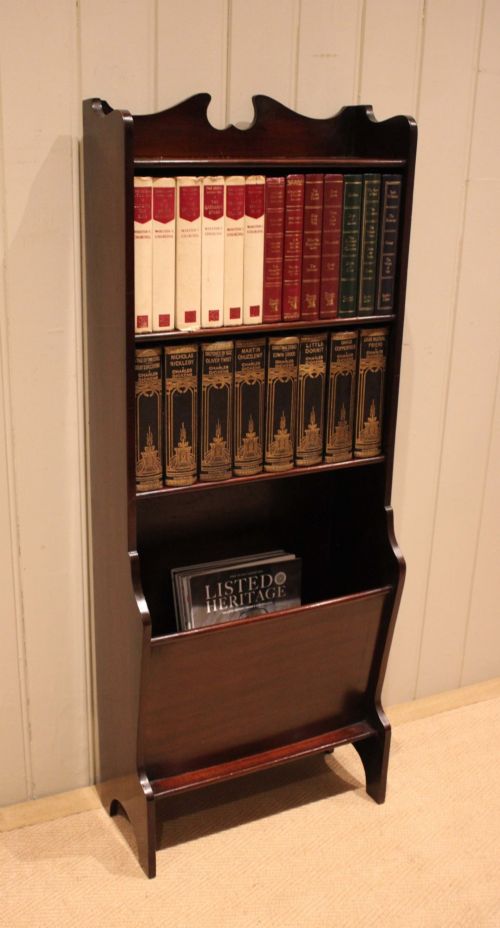
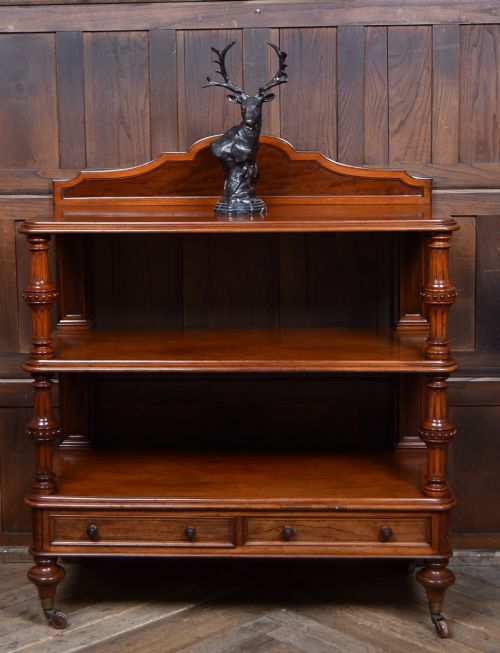
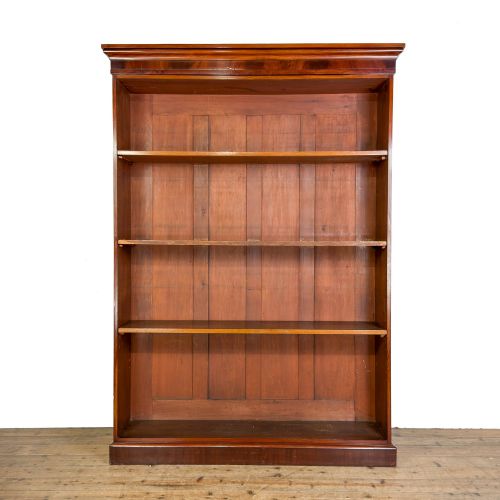
A floor standing bookcase provides vertical storage for books and display items directly on the ground, ranging from compact open shelves to tall glazed cabinets. When searching for a floor standing bookcase, buyers encounter diverse forms such as revolving stands, tiered waterfall shelves, dwarf bookcases, and corner cupboards.
The pieces on this page span the Georgian, Victorian, Edwardian, and early twentieth-century periods, alongside revival styles. Mahogany and oak dominate the selection, accompanied by walnut, pine, rosewood, and painted finishes.
Open formats predominate, though many examples include glazed doors, brass fittings, galleries, and integrated magazine racks or drawers. These furnishings served libraries, studies, and parlours, evolving from formal storage to accessible domestic shelving.
Materials and construction
Carpenters built these pieces primarily using solid and veneered hardwoods, notably mahogany, oak, and walnut, complemented by secondary softwoods like pine. Timber choice dictated the weight and presence of the furniture, ranging from heavy golden oak to rich, dark mahogany.
Makers incorporated functional hardware such as brass stands, hinges, and revolving mechanisms to support movement and secure doors. Glazed panels, inlaid decoration, paint, and parcel gilt finishes added decorative refinement to structural shelving.
The listings on this site include mahogany, oak, walnut, pine, and rosewood across Georgian, Victorian, and Edwardian periods.
Judging quality in standing bookcases
The standard of timber selection and joinery separates robust examples from simpler utility pieces. Dense grain, thoughtful proportion, and clean integration of inlaid details or glazed doors indicate higher execution.
Original hardware, sound revolving mechanisms, and intact galleries or tiers preserve the structural integrity and historical character of the furniture.
The Floor Standing Bookcase Glossary
- Waterfall bookcase
- A set of open shelves that descends in stepped tiers from top to bottom, often featuring an open gallery at the crest.
- Revolving bookcase
- A rotating stand designed to hold books accessibly within a compact footprint, frequently mounted on a brass base.
- Dwarf bookcase
- A low standing bookcase designed to sit beneath dado height, keeping the upper wall space clear.
- Book trough
- A portable or standing trough shape intended to display books with their titles visible from above.
- Whatnot
- A multi-tiered shelving unit used for displaying ornaments, books, and small possessions in a room.
Floor Standing Bookcase: Frequently Asked Questions
Where should I place a floor standing bookcase?
These bookcases anchor living rooms, studies, and hallways, providing accessible storage without requiring wall mounting. Taller glazed versions protect delicate volumes, while open dwarf shelves suit living areas.
Ensure the timber avoids direct heat sources and strong sunlight to protect the polish and wood grain over time.
How do I distinguish Victorian from Edwardian bookcases?
Victorian examples often employ dense, dark mahogany with heavier proportions and sometimes elaborate carved detailing or glazed doors. Edwardian pieces frequently lean towards lighter inlaid mahogany, satinwood touches, or simpler oak forms.
Reviewing the timber choice, hardware style, and secondary woods helps clarify the period of manufacture.
What is the difference between open and glazed bookcases?
Open bookcases provide immediate access to volumes and display the books directly against the backboards. Glazed bookcases use glass doors to protect contents from dust and light while maintaining visibility.
Both forms appear across the Victorian and Edwardian eras, serving different domestic storage needs.
Are revolving bookcases stable?
Revolving bookcases rely on internal pivot mechanisms and sturdy timber or brass bases to distribute weight evenly. They rotate smoothly when balanced correctly with books on opposing sides.
Placing heavier books on the lower tiers maintains stability during rotation.