
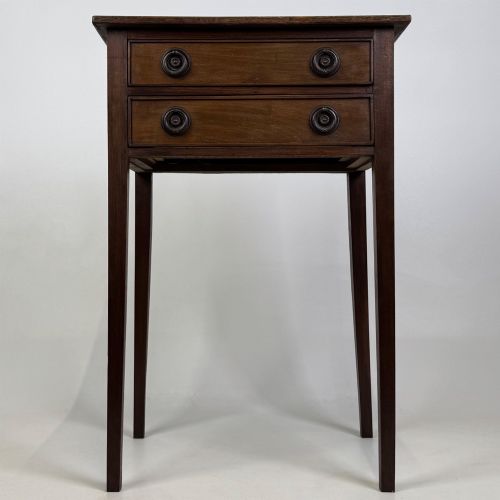
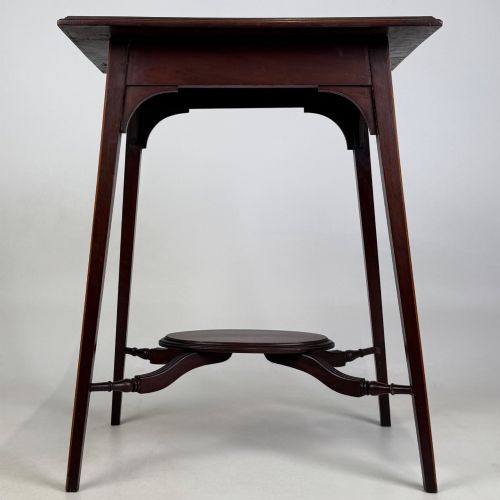

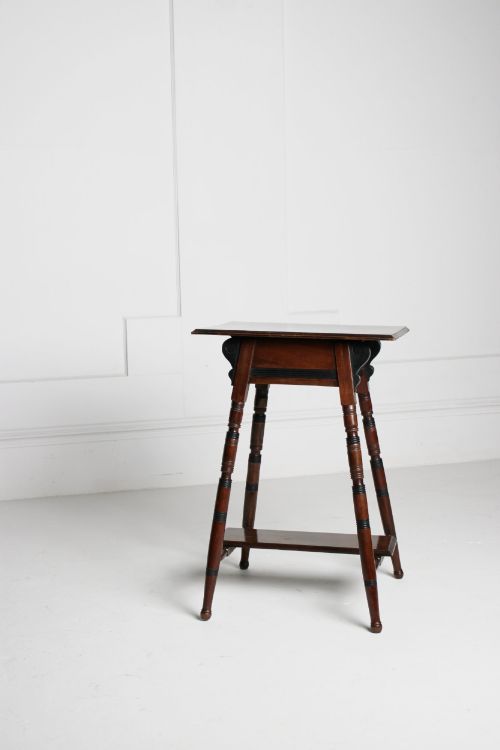
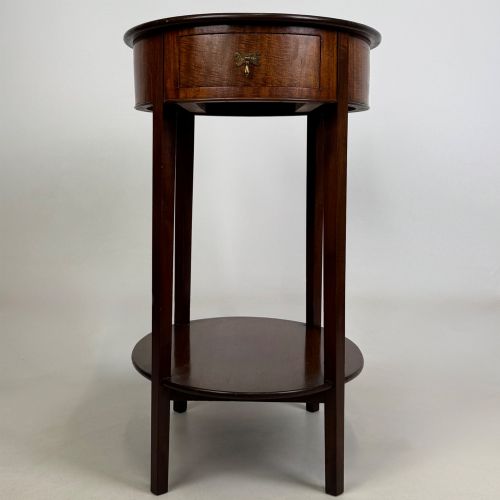


Tall Mahogany Occasional Table
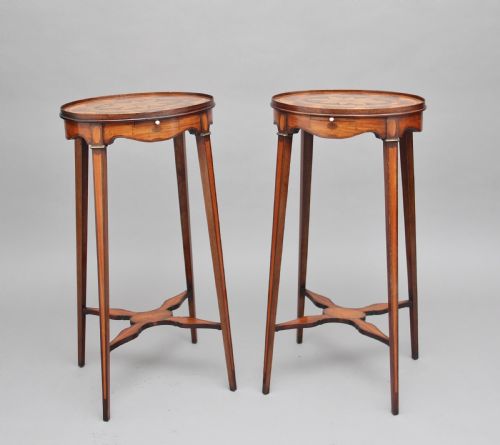
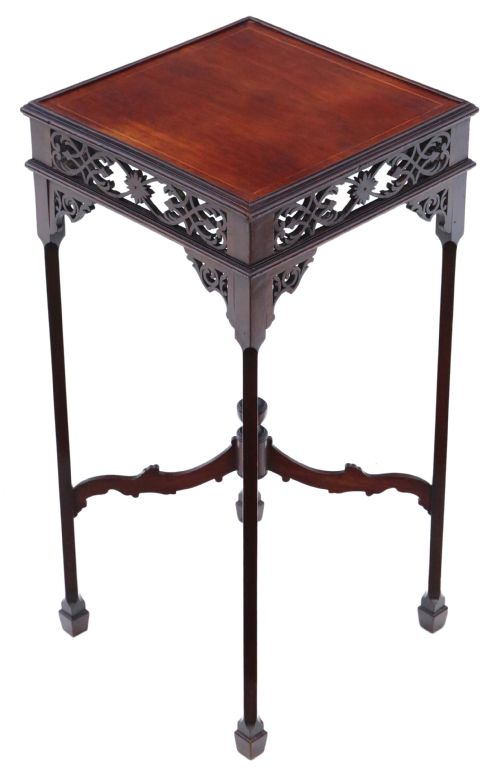
A tall mahogany occasional table brings compact warmth to a corner, offering a slender stage for a lamp or a plant.
Tall Mahogany Occasional Table
A tall mahogany occasional table encompasses versatile side pieces, plant stands, urn stands, and bedside cabinets spanning the eighteenth century through to the Edwardian period and the early twentieth century. These adaptable items serve multiple rooms, functioning as lamp tables, nightstands, and small side surfaces.
The Edwardian era heavily populates this selection alongside nineteenth-century examples and George III pieces. Forms vary from simple oval and heart shapes to dropleaf cabinets and tall wine tables.
Origin points range from English workshops to French chateaux and London makers such as Druce & Co. Buyers regularly encounter pairs as well as singular stands finished with inlaid details.
Materials and construction
Solid and veneered mahogany forms the primary body of these tables, chosen for its rich grain and deep colour. Artisans frequently integrated secondary timbers alongside boxwood, satinwood, and ebonised wood for contrast.
Decorative surfaces often incorporate wood inlay and delicate brass detail to accentuate the classical proportions. Selected pieces also feature bone elements to enrich the ornamental marquetry work.
Materials paired with mahogany across these tables include satinwood, boxwood, bone, brass, and ebonised wood.
Distinctions in quality
The refinement of the timber and the crispness of the inlay separate standard production from superior examples. Finely figured mahogany grain and precise contrasting wood banding indicate careful selection by the cabinetmaker.
Structural integrity relies on the snugness of joints and the stability of slender legs designed to support height without wobble. Integrated brass fittings and well-fitted drawers display a higher tier of workshop execution.
Druce & Co London
The Tall Mahogany Occasional Table Glossary
- Mahogany
- A durable tropical hardwood valued for its reddish-brown colour and smooth polishing capabilities. It serves as the principal material across eighteenth and nineteenth-century furniture.
- Inlay
- A decorative technique where contrasting materials are set into the surface wood to form patterns. Satinwood and boxwood frequently provide this visual contrast.
- Urn Stand
- A tall, slender small table originally designed to hold a tea urn. These elevated pieces now function effectively as plant or lamp stands.
- Sheraton Revival
- A late nineteenth and early twentieth-century style inspired by the designs of Thomas Sheraton. It relies on graceful neoclassical lines and delicate inlay.
- Dropleaf
- A table design featuring hinged flaps that fold down to save space. This mechanism offers flexibility in smaller rooms.
Tall Mahogany Occasional Table: Frequently Asked Questions
Where should I place a tall occasional table?
These compact tables fit naturally beside seating or in neglected corners where floor space is limited. Their elevated surface makes them practical choices next to a bed or a reading chair.
They also function well as display points for table lamps, small sculptures, or potted plants. Their narrow footprint allows them to occupy hallways and landings without obstructing movement.
How do I date an Edwardian mahogany table?
Edwardian pieces, dating from roughly 1901 to 1910, frequently exhibit Sheraton Revival influences with light satinwood inlay. Construction methods from this era often combine machine precision with traditional hand finishing.
Examining the underside and interior drawer components helps reveal period-specific manufacturing traits. The use of ebonised wood accents and brass detailing also points toward this turn-of-the-century aesthetic.
Can these tables support heavy lamps?
Most occasional tables and plant stands are built to hold modest weights such as table lamps, books, or decorative vessels. Tall, slender forms require sensible placement on even flooring to maintain stability.
Heavier items are best suited to sturdier, lower base tables with broader footprints. Checking the rigidity of the leg joints ensures the piece handles everyday items securely.
What is the difference between an urn stand and a side table?
Urn stands are traditionally taller and narrower, originally engineered to support heavy vessels during tea service. Their elevated platforms make them ideal today for displaying trailing plants or singular decorative objects.
Side tables generally offer a broader surface area suited for holding multiple daily items or reading materials. Both share similar mahogany construction methods but serve distinct spatial functions.