




Chippendale Revival Display Stand
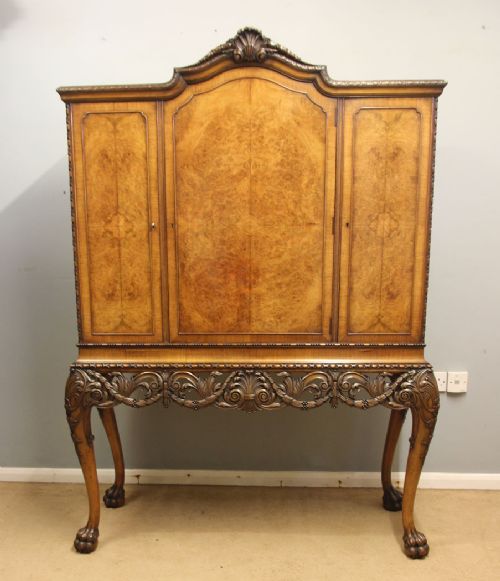
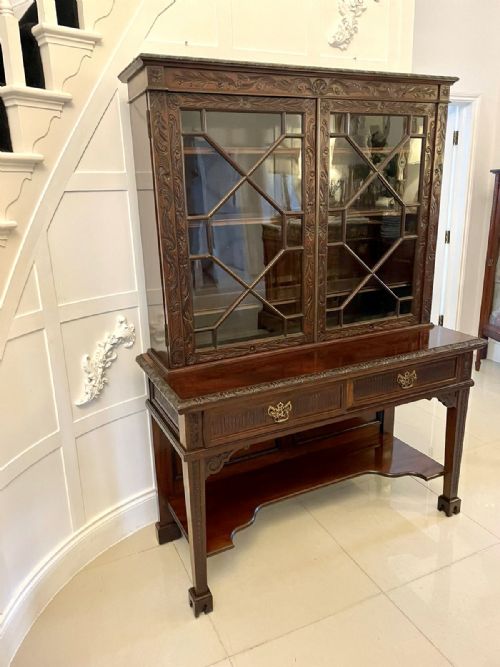
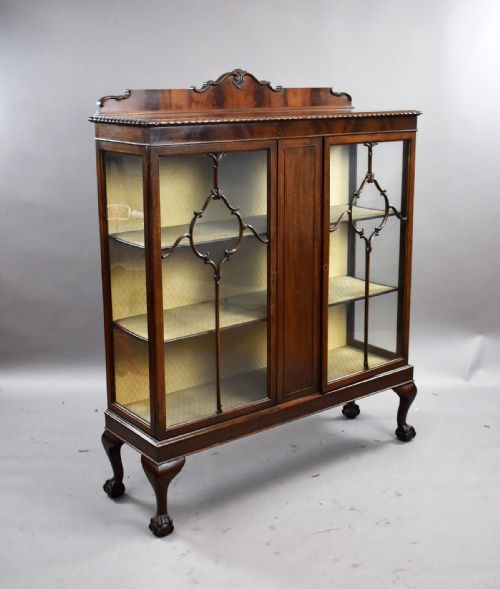
These chippendale revival display stand pieces combine classic cabinet-making with glazed framing, offering a refined way to exhibit silver and china.
Chippendale Revival Display Stand
A chippendale revival display stand takes inspiration from eighteenth-century design, appearing across the nineteenth century, the Victorian era, and into the Edwardian period. Buyers encounter forms ranging from dedicated display cabinets and silver cabinets to glazed cabinets on stand and gallery stands.
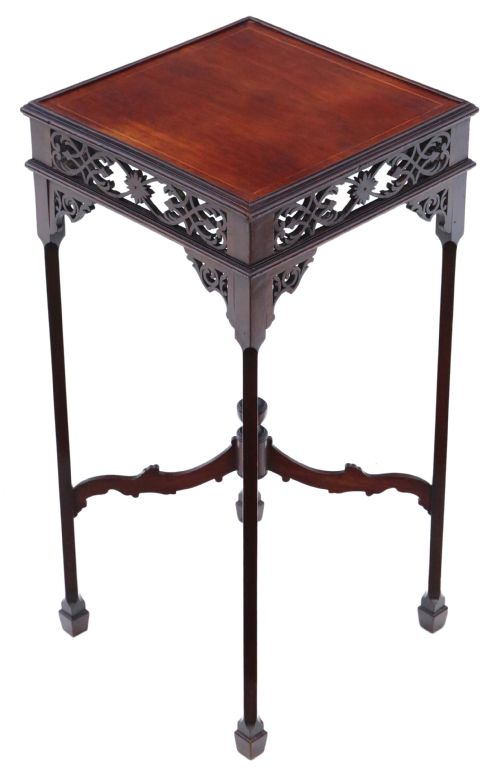
The selections on this page draw predominantly from nineteenth-century origins, 1890, 1900, and 1920 productions. Makers utilised mahogany, burr walnut veneer, and walnut to construct these side cabinets, bookcases, and occasional tables.
Stylistic influences stretch from standard Chippendale revival and Edwardian Chippendale revival to Chinoiserie, Queen Anne revival, and Georgian revival interpretations. These variations provide distinct silhouettes for modern interiors while maintaining period character.
Materials and technique
Makers constructed these stands using solid mahogany and walnut, frequently applying burr walnut veneer to prominent exterior surfaces for added visual depth. Glass panels and astragal glazing bars frame the upper sections to showcase contents securely.
Carved wooden details define the revival aesthetic, often incorporating brass hardware such as hinges, handles, and gallery rails. Secondary materials like fabric and velvet line interior shelves and backing boards to cushion displayed items.
A solitary silver cabinet waits quietly for your heirloom teaspoons.
Variations in quality
Quality rests on the precision of the timber selection and the crispness of the carved ornamentation applied to the frame. Pieces produced by documented workshops demonstrate superior joinery and more ambitious proportions than standard commercial alternatives.
The integration of secondary materials, such as finely fitted glass panels, well-cast brass elements, and intact interior fabric linings, distinguishes the finer examples within this group.
James Winter & Sons·Edwards & Roberts·Warings
The Chippendale Revival Display Stand Glossary
- Astragal glazed
- A method of dividing glass windows or cabinet doors into smaller panes using narrow wooden moulding strips known as astragals. This technique reinforces the structure while creating a geometric grid pattern across the display front.
- Chinoiserie
- European decorative style incorporating Chinese motifs, landscapes, and figures, popular during revival periods. This aesthetic appears on select mahogany frames to introduce elaborate ornamentation.
- Burr walnut veneer
- Thin slices of decorative wood cut from walnut tree growths, displaying complex swirling grain patterns. Cabinet-makers applied these veneers to primary surfaces to elevate the visual richness of the piece.
- Gallery stand
- An elevated tabletop or display surface featuring a low decorative railing around its perimeter. This design prevented items from sliding off the edge while on display.
Chippendale Revival Display Stand: Frequently Asked Questions
What periods do these display stands date from?
The pieces span the Victorian era, the late nineteenth century, and the early twentieth century, including Edwardian production dates.
Designs reflect revivals of earlier eighteenth-century styles, utilising period-appropriate construction methods and materials.
What woods were used in these cabinets?
Makers primarily utilised mahogany and walnut for the structural frames and primary surfaces.
Burr walnut veneer also appears on select examples to provide decorative grain patterns across the cabinet body.
How were these stands utilised historically?
These pieces served to exhibit valuable ceramics, silver, and collection items within domestic interiors. Glazed doors and enclosed stands protected the contents while keeping them visible.
Some variants incorporated open tables or lower stands for additional surface placement.
What styles influence these display stands?
The primary aesthetic is Chippendale revival, alongside specific variants like Chinese Chippendale revival.
Other related styles present in the record include Queen Anne revival, Georgian revival, and Chinoiserie.