




Tall Glazed Showcase
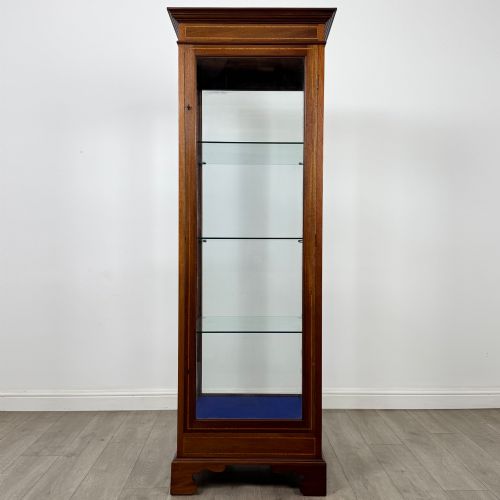
These tall glazed showcase pieces bring upright display into rooms, combining extensive glass panels with timber frames for clear visibility.
Tall Glazed Showcase
A tall glazed showcase stands as an upright vertical cabinet designed primarily for the display of items, drawing on forms seen across Edwardian, Victorian, and early twentieth century periods. Buyers searching this phrase encounter substantial freestanding furniture built to showcase contents through extensive glass panels.
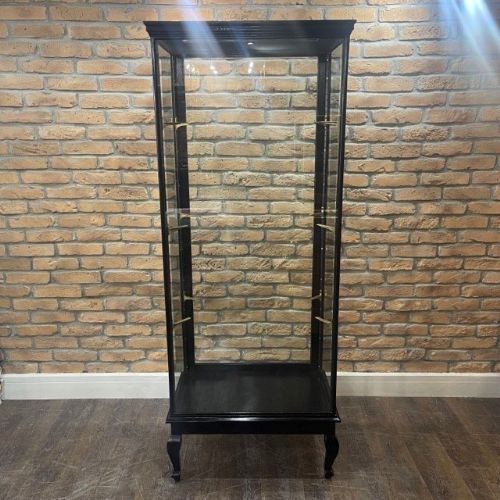
The domestic and commercial origins of these pieces span shop display cabinets, tower cabinets, china display cabinets, and two-part gun cabinets. Edwardian mahogany examples and 1920s ebonised tower cabinets represent the primary forms encountered on this page.
Construction varies from commercial haberdashery and apothecary pieces to domestic inlaid bijouterie and china cabinets. Materials range from mahogany and oak to ebonised wood, satinwood, steel, and leather.
Materials and construction
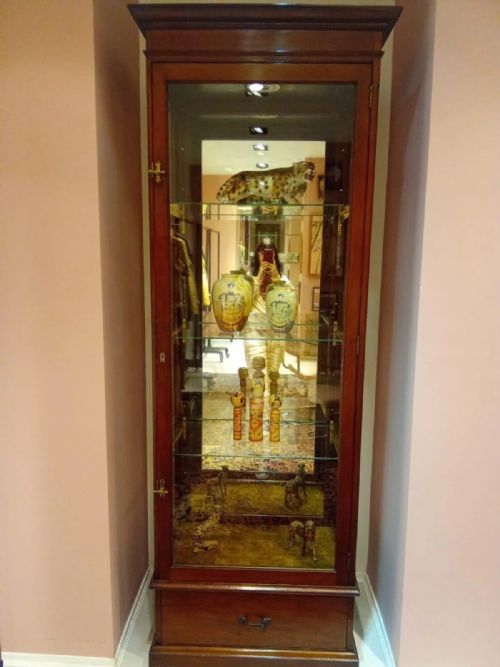
Makers utilised solid timbers and veneers including mahogany, oak, satinwood, and ebonised wood to build the structural frames of these showcases. Brass fittings frequently secure doors and internal components, while mirrored glass often lines the back panels to reflect light through the interior.
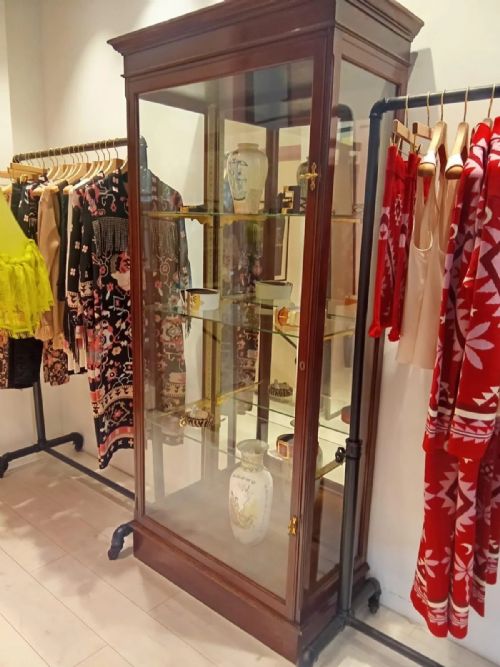
Glass forms the defining element of each showcase, fitted into doors and side panels to enclose the display space. Internal arrangements incorporate adjustable glass shelves supported within tall upright housings.
Listings feature mahogany as the predominant timber, accompanied by oak, satinwood, pine, and ebonised wood across Edwardian and Victorian examples.
Evaluating the range
The distinction between commercial utility and refined domestic reception defines the variation across these pieces. Standard commercial shop display units focus on robust structural framing for retail use, whereas domestic Edwardian and Art Nouveau variants incorporate decorative crossbanding, satinwood inlay, and shaped woodwork.
Materials and detailing dictate the tier of craftsmanship, ranging from utilitarian pine and standard oak carcasses to polished mahogany with complex crossbanding, brass hardware, and integrated mirror backs. Ebonised finishes and steel elements introduce stylistic variety that alters the visual presence of the cabinet.
E. Pollard & Co. Ltd.
The Tall Glazed Showcase Glossary
- Bijouterie cabinet
- A display cabinet designed specifically for small valuable items, jewellery, or curiosities, typically featuring a glazed top or upper section for downward viewing.
- Crossbanding
- A decorative technique where a strip of veneer is laid across the grain of the main timber panel, often seen framing drawer fronts or cabinet doors on Edwardian pieces.
- Ebonised
- Wood treated with a dark stain or chemical process to imitate ebony, producing a dense black finish found on twentieth-century tower cabinets.
- Haberdashery cabinet
- A commercial storage and display unit originating from shops, featuring glass doors and numerous compartments or shelves designed for retail merchandise.
- Satinwood
- A pale, lustrous hardwood used for contrasting inlay and banding on mahogany furniture from the Edwardian period.
Tall Glazed Showcase: Frequently Asked Questions
What were tall glazed showcases originally used for?
These tall cabinets served both commercial and domestic environments, functioning as retail display units in shops and haberdasheries or as refined storage for china and curiosities in homes.
Commercial variants housed merchandise behind glass for customers to inspect, while domestic versions protected porcelain and decorative objects from dust while keeping them visible.
How do I distinguish Edwardian pieces from Victorian ones?
Edwardian showcases often feature lighter timbers, satinwood inlay, and slender proportions influenced by neoclassical revivals. Victorian examples tend to display heavier proportions and utilitarian construction associated with shop and apothecary use.
Examining the internal shelving systems and timber selection helps clarify the manufacturing period.
Are the shelves adjustable in these cabinets?
Many tall showcases incorporate adjustable glass shelves supported on internal brackets. This allows the height between tiers to be altered according to the objects placed inside.
Original commercial and domestic cabinets frequently retained this functionality to accommodate varied display items.
How do I care for timber and glass showcases?
Maintenance involves gentle cleaning of the glass panels using standard glass cleaner applied to a cloth rather than sprayed directly near timber frames. Timber surfaces require periodic dusting and occasional treatment with appropriate furniture wax to preserve the finish.
Positioning the cabinet away from direct sunlight protects both the wood veneers and the internal contents from fading.