
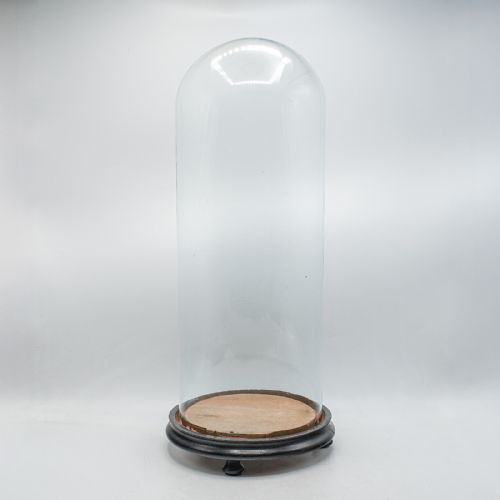


Tall Glass Bell Jar
These tall glass bell jar pieces are clear display covers housing specimens and taxidermy, offering a glimpse into period presentation methods.
Tall Glass Bell Jar
When you search for a tall glass bell jar, you are looking at Victorian, Edwardian, and 1900 display domes and cloches used to protect fragile items. These pieces function primarily as display cases, showcasing specimens, taxidermy, and collectors' items.
You are most likely to meet English examples on this page, originating from the Victorian, Late Victorian, and Edwardian periods. They appear alongside related display items such as dioramas, ornament showcases, and professor's specimen domes.
The form typically comprises a tall glass cover paired with a base. These structures preserve delicate contents from dust while allowing clear visibility from every angle.
How they were made
The construction relies on blown glass shaped into tall domes to cover internal displays. This transparent material allows uninterrupted viewing of the contents housed within.
Bases are constructed from wood, including ebonised timber, providing a sturdy platform for the glass cover. Many interiors feature surfaces lined with fabric, velvet, felt, or baize to cushion and frame the specimens.
The listings span Victorian, Late Victorian, Edwardian, and 1900 periods, constructed from glass, wood, ebonised timber, and fabrics like velvet and baize.
What varies in quality
Quality depends upon the clarity and historic integrity of the glass dome. Superior examples exhibit minimal distortion in the glass and retain their original wooden or ebonised bases.
The interior presentation also distinguishes pieces, particularly the preservation and variety of original linings such as velvet or baize. The craftsmanship of the associated display base and the overall proportions of the dome define the upper tier of these objects.
The Tall Glass Bell Jar Glossary
- Bell jar
- A bell-shaped glass cover used to protect or isolate objects. These pieces rest upon a fitted base to enclose specimens.
- Taxidermy showcase
- A specialised display enclosure designed to house preserved animal specimens. They utilise glass domes to protect the mounts from dust and handling.
- Ebonised wood
- Timber treated to resemble ebony, providing a dark, polished finish. This material frequently forms the base of Victorian and Edwardian display domes.
- Baize
- A coarse woolen material resembling felt, often used to line the interior bases of display cases. It provides a soft, contrasting background for specimens.
Tall Glass Bell Jar: Frequently Asked Questions
What fits under a tall glass bell jar?
These domes house taxidermy specimens, delicate ornaments, and collector's items that require protection from dust and physical contact.
The interior space accommodates vertical arrangements, making them suitable for tall specimens and detailed dioramas.
How do I clean a glass dome?
Maintenance involves lifting the glass cover carefully from its wooden base to clean the interior and exterior surfaces separately.
Using a soft cloth prevents scratching the historic glass while preserving the surrounding wooden and fabric elements.
Are these domes fixed to their bases?
Most examples feature a removable glass cover resting freely within a groove on the wooden base rather than being permanently sealed.
This design allows collectors to access the interior display for rearrangement or cleaning.
How do I date an antique dome?
Dating relies on observing the characteristics of the glass, the type of wood used for the base, and the style of interior lining.
Victorian and Edwardian examples often display distinct manufacturing traits in the glass and base construction that help identify their period.