

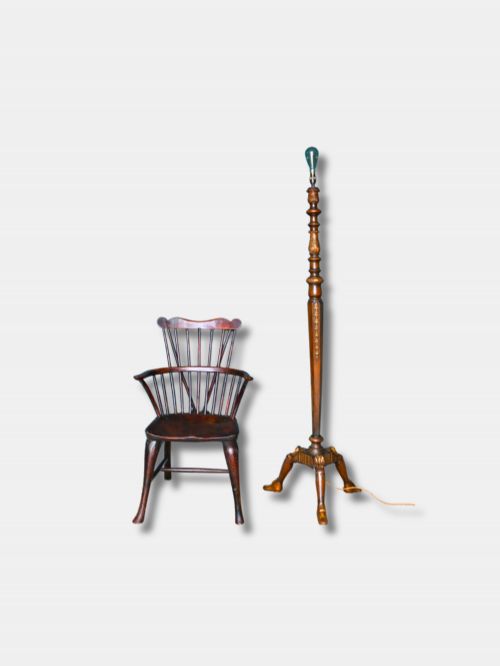

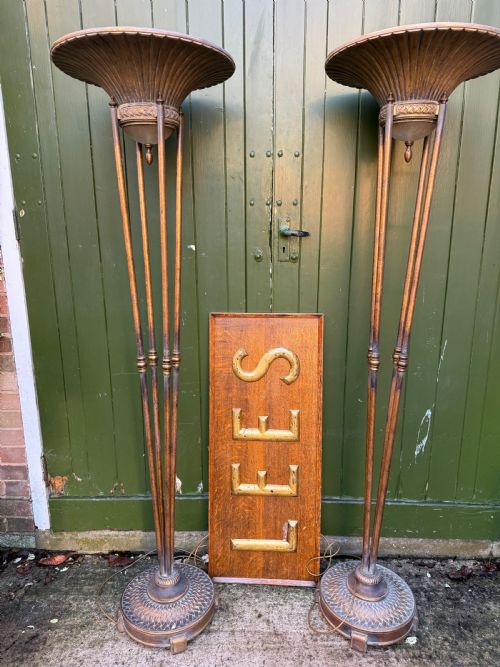


Tall Gilt Standing Lamp
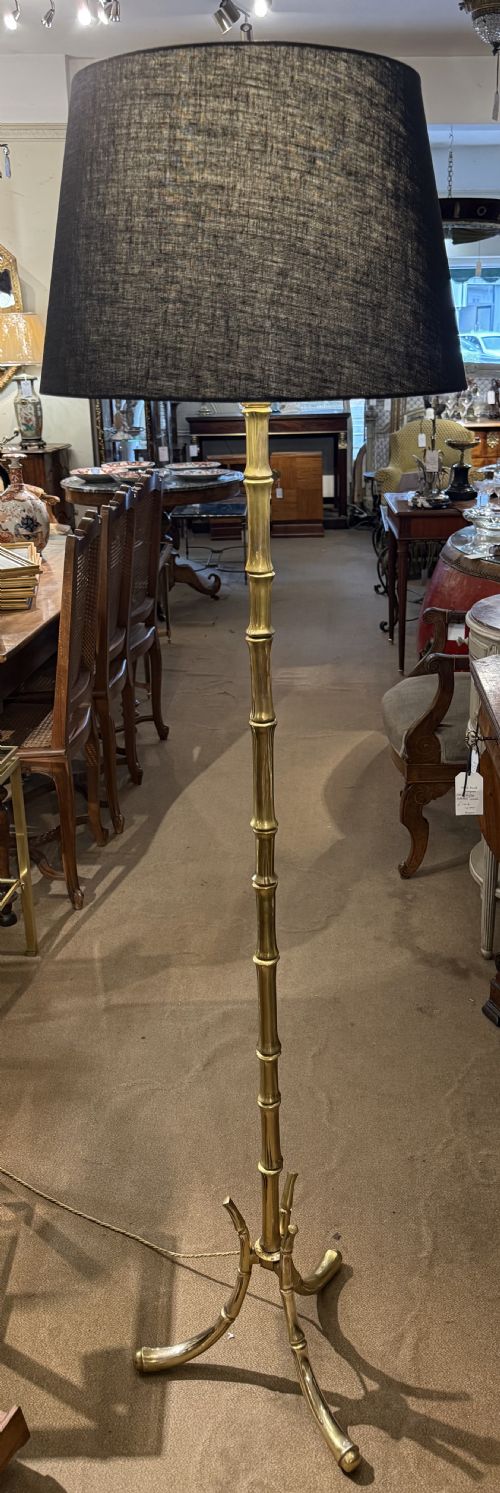
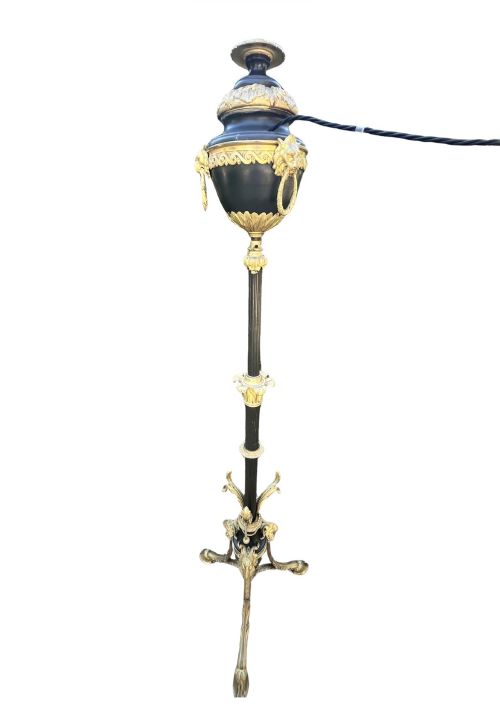
A tall gilt standing lamp brings vertical presence and warmth to a room, drawing the eye upwards with its gilded surface.
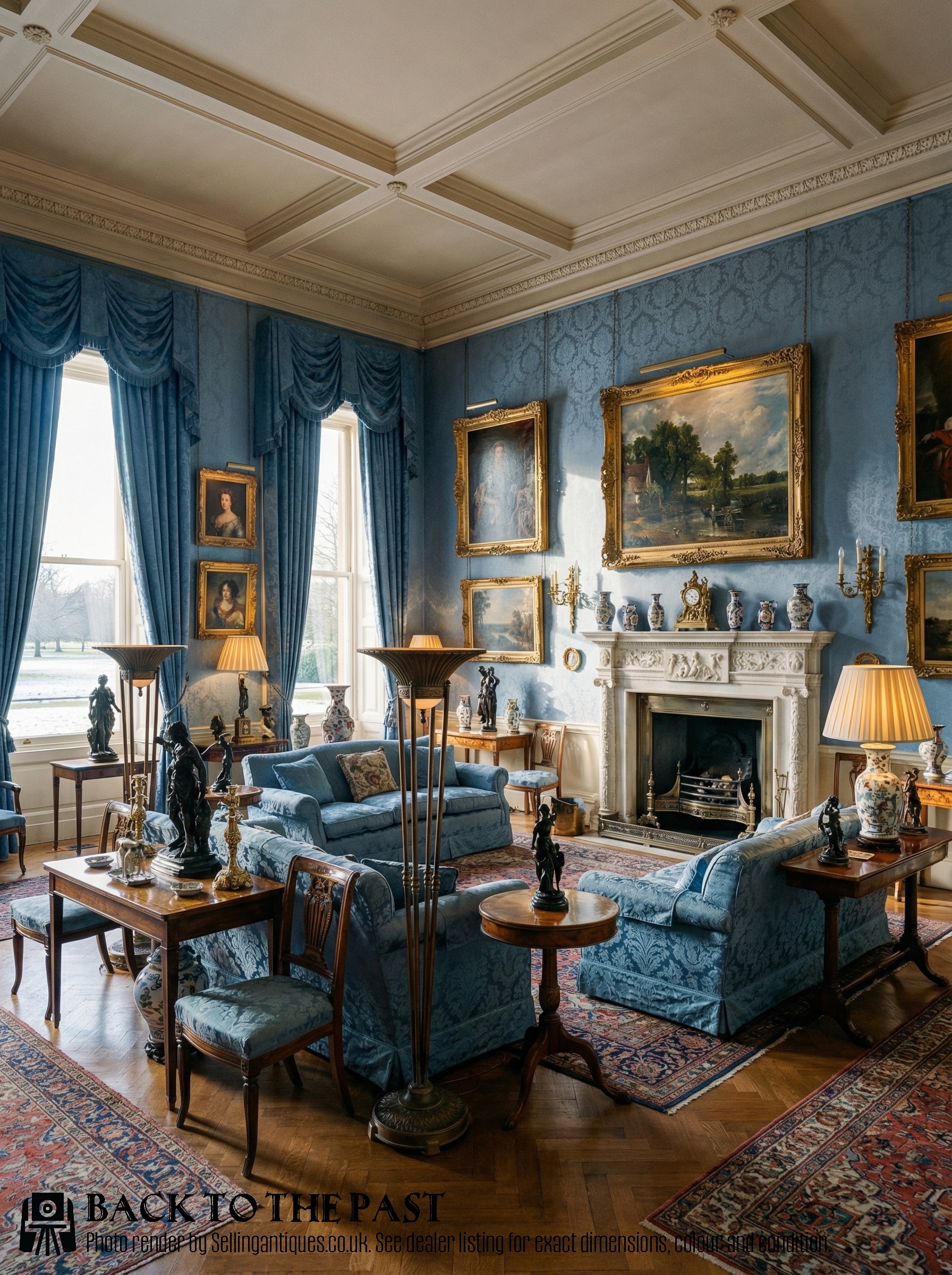
Tall Gilt Standing Lamp
A tall gilt standing lamp provides ambient room lighting through elevated illumination, often standing as a commanding sculptural element within an interior scheme. When exploring a tall gilt standing lamp, buyers encounter pieces that range from slender nineteenth-century standard lamps to mid-century Italian creations.
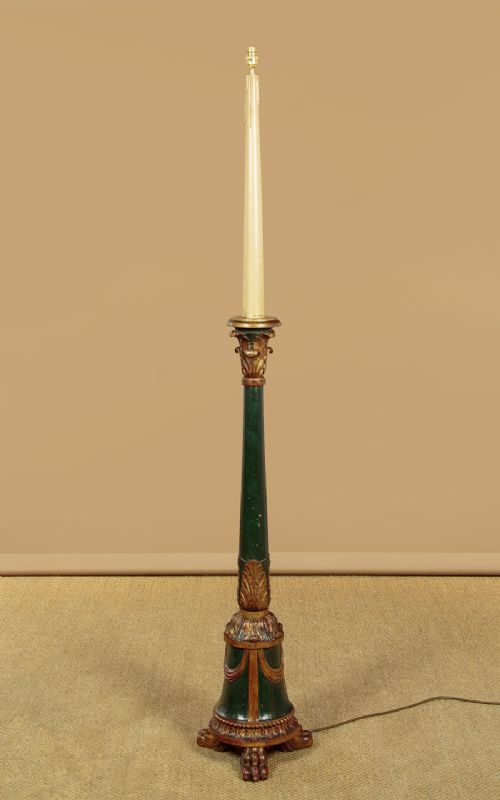
The selections span distinct historical movements, including Victorian, Edwardian, and 1930s designs, alongside revivals of earlier aesthetics like the Italian Baroque and Neoclassical styles. Many examples utilise traditional wooden cores finished with gesso and gold leaf or paint.
Floor lamps and standard lamps dominate the offerings, occasionally supplemented by converted candlesticks or pricket stick lamp bases. These pieces frequently incorporate tripod bases or carved wooden shafts that elevate the light source above furniture height.
How they were made
Makers shaped solid woods such as walnut or general timber bases, turning them on lathes or carving intricate surface details by hand. Gilded finishes were applied using thin sheets of metal leaf laid over prepared gesso surfaces, or through direct painting and parcel gilt techniques.
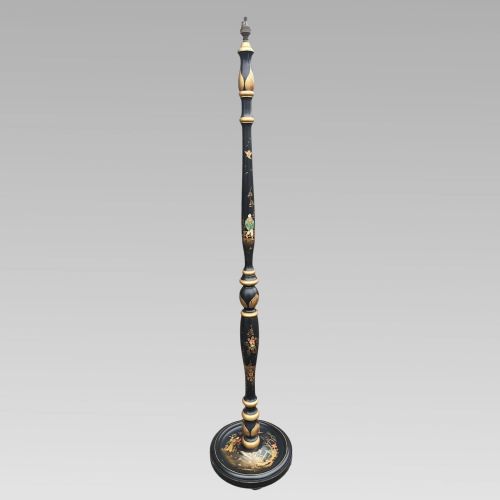
Black lacquer and painted embellishments frequently appear alongside gilt applications, particularly on pieces influenced by Chinoiserie aesthetics. Fabric elements, when present, provide shade and diffuse the light cast from the elevated standard.
Tall Gilt Standing Lamp Retail Price Guide 2026
Typical asking prices for tall gilt standing lamp among the pieces listed under this phrase on Sellingantiques today, from the lower quarter to the upper quarter. They describe what is for sale here now, not the wider market.
The listings show pieces spanning the Victorian and Edwardian eras through to the 1930s, constructed from giltwood, brass, and lacquered wood.
What varies in quality
The refinement of the carved wood and the crispness of the gesso detailing dictate the visual depth of the gilding. Hand-carved Italian Florentine and Baroque-style pieces demonstrate greater sculptural complexity than plain turned shafts.
The integrity of the underlying timber and the preservation of the original gilt or lacquer surface define the historical value. Finer examples maintain their original proportions and structural stability across the tripod or weighted base.
Maison Bagues
The Tall Gilt Standing Lamp Glossary
- Giltwood
- Wood that has been coated with gold leaf or a gold-coloured metallic finish. This technique creates a luminous surface that catches ambient light.
- Standard lamp
- A British term for a tall floor-standing lamp designed to illuminate a room from a raised position. These fixtures usually feature a central vertical shaft supported by a stable base.
- Gesso
- A plaster-like mixture applied to wood surfaces as a smooth base for gilding or painting. It allows craftsmen to model sharp relief details before applying gold leaf.
- Chinoiserie
- European decorative style that reflects Chinese artistic influences, often featuring lacquered surfaces and painted motifs. It enjoyed particular popularity during the Edwardian period and the 1930s.
- Pricket stick
- A candlestick featuring a central spike upon which a candle was traditionally mounted, occasionally adapted into a tall lamp base. These items derive from ecclesiastical lighting forms.
Tall Gilt Standing Lamp: Frequently Asked Questions
How do I identify a 1930s gilt floor lamp?
Pieces from the 1930s often reflect Hollywood Regency aesthetics or feature smooth lacquer and simplified classical forms. They frequently incorporate bold silhouettes that depart from heavily ornate nineteenth-century designs.
Examine the construction methods and surface finishes, as twentieth-century pieces often combine painted wooden elements with parcel gilt details.
What is the difference between standard lamps and floor lamps?
In British antique terminology, standard lamp and floor lamp generally refer to the same tall lighting fixture designed to stand directly on the floor. Both terms describe upright pieces that elevate a light source well above table height.
Historical listings often use these labels interchangeably to denote tall vertical supports wired for electricity or adapted from older candle holders.
How do Italian Baroque style lamps differ from Victorian ones?
Italian Baroque and Florentine style lamps display exuberant carving, scrolling motifs, and heavy gilding inspired by seventeenth-century design. They prioritize dramatic sculptural form and rich surface texture.
Victorian standard lamps tend to rely on turned wooden shafts, parcel gilt accents, or simpler geometric forms that reflect nineteenth-century domestic tastes.