





Art Deco Uplighters
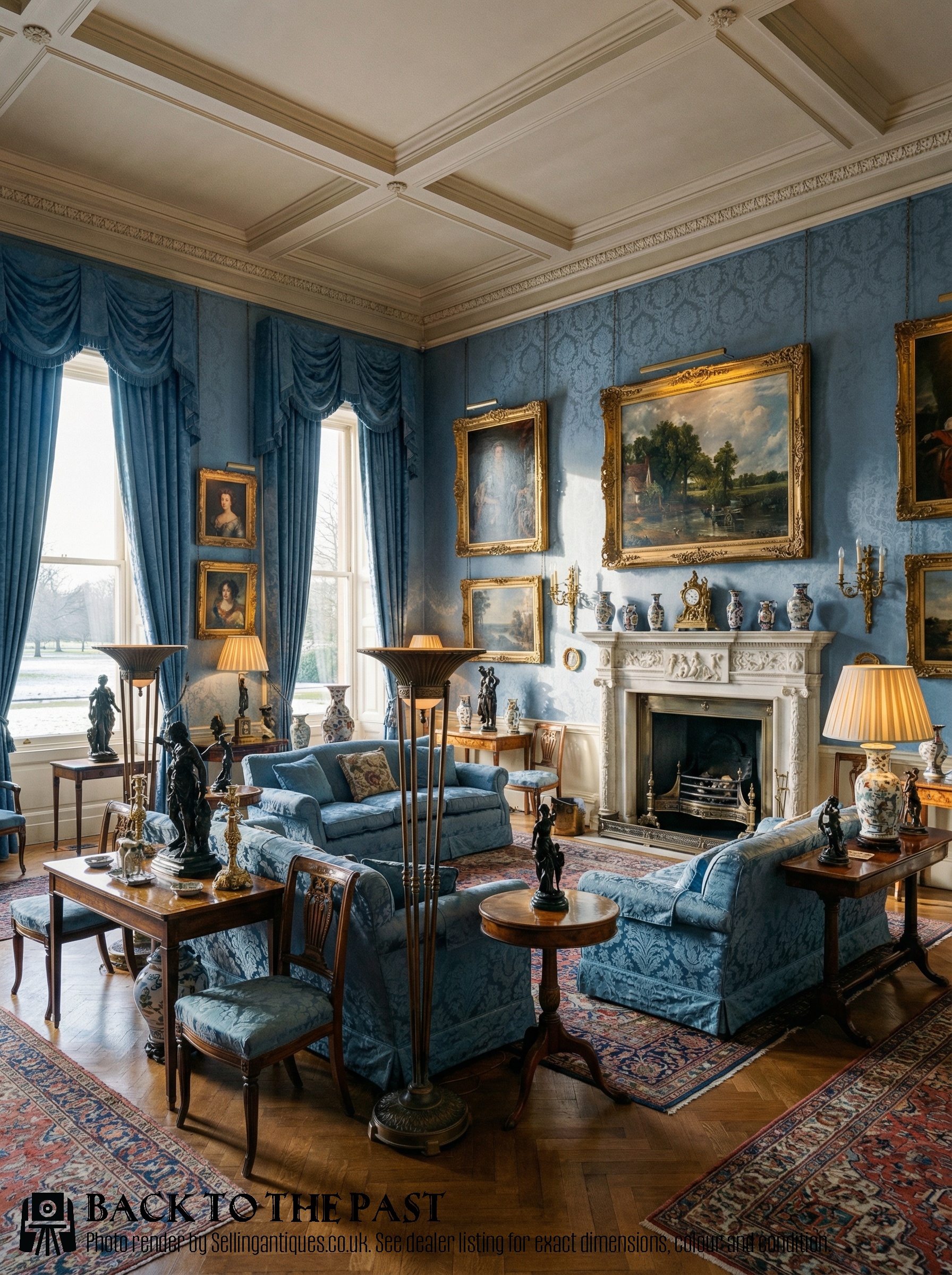
Art deco uplighters are striking directional light fittings designed to bounce illumination off ceilings, bringing both architectural presence and warm glow to a room.
Art Deco Uplighters
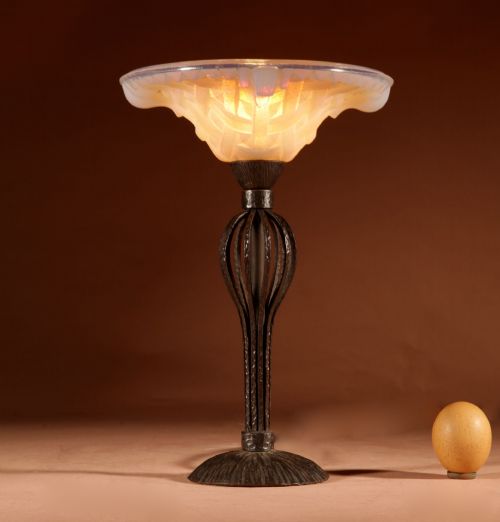
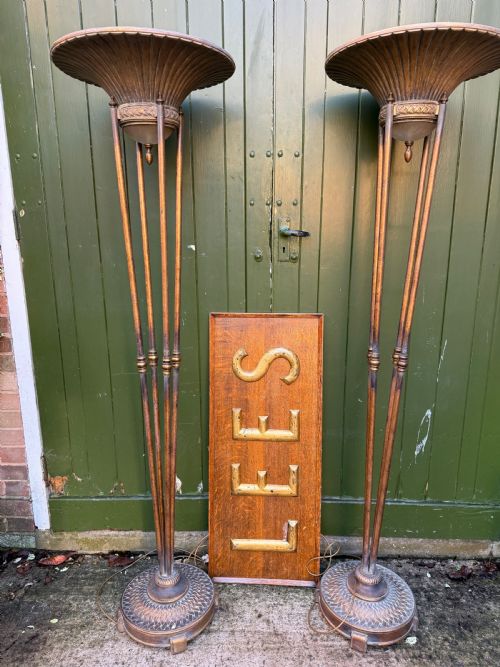
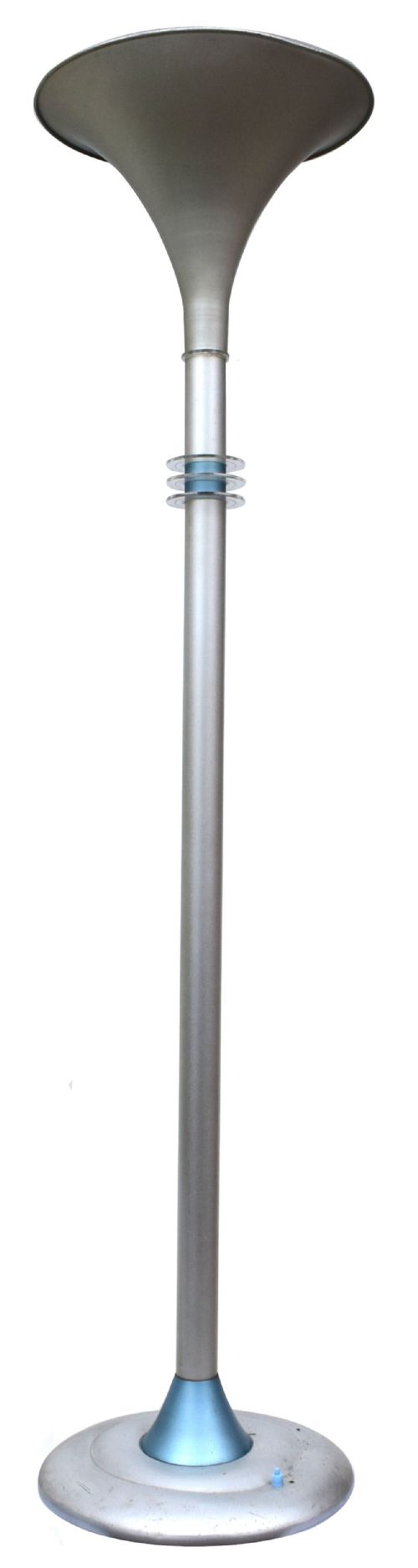
Art deco uplighters encompass wall lights, table lamps and floor-standing torchieres designed during the 1930s and earlier periods. These pieces direct light upwards, often utilising a wide dish or trumpet-shaped shade to cast illumination against ceilings.
The versions most commonly met on this page include pairs of chrome and glass wall sconces alongside floor-standing torchieres. Many originate from France and feature distinct modernist lines paired with utilitarian metals.
Forms range from simple trumpet sconces to elaborate figural designs such as cherub table lamps and tulip uplighters. Metal and glass dominate the selection, creating streamlined silhouettes characteristic of the period.
How they were made
Makers utilised structural metals including chrome, aluminium, and wrought iron to form the upright standards and wall brackets. These metals provided the rigid framework necessary to support heavy glass shades.
Shades and reflectors were cast from frosted, opalescent, or opaline glass, often shaped into large dishes or tulip forms. Bakelite components occasionally appear on electrical fittings and switches of the era.
What varies in quality
Quality rests in the heaviness of the cast metal framework and the purity of the glasswork. Substantial chrome plating and thick, evenly tinted opalescent glass distinguish finer examples from standard production pieces.
Design complexity also separates pieces, with matched pairs and signed French works demonstrating superior artistry compared to simple utilitarian wall lights.
Lacroix·Lalique
The Art Deco Uplighters Glossary
- Torchiere
- A tall floor lamp designed to direct light upwards towards the ceiling. These fixtures often feature a prominent bowl-shaped shade.
- Trumpet sconce
- A wall-mounted light fitting with a shade shaped like a trumpet. This form widens outwards to diffuse the upward light beam.
- Opalescent glass
- Glass that displays a milky, iridescent appearance with milky blue or pink tones. It diffuses light softly across the room.
- Bakelite
- An early form of synthetic plastic used for electrical components and switchgear. Its dark, dense finish is characteristic of the period.
Art Deco Uplighters: Frequently Asked Questions
Are these lamps wired for modern use?
Most antique lighting requires inspection and rewiring by a qualified electrician to meet current safety standards. Original brass or Bakelite lampholders are frequently retained where possible.
Check the internal wiring before installation in a domestic setting.
How do I identify French pieces?
French pieces often incorporate artistic glass elements such as opalescent bowls combined with wrought iron or polished metalwork. The design emphasis leans towards decorative modernist forms.
Signatures or attribution marks may sometimes be found on the glass shades of French examples.
What is the difference between an uplighter and a sconce?
Uplighters specifically direct illumination upwards towards the ceiling, whereas traditional wall sconces may cast light downwards or outwards in all directions. Many wall lights in this selection combine both functions through open trumpet glass.
Floor-standing uplighters are commonly known as torchieres.