
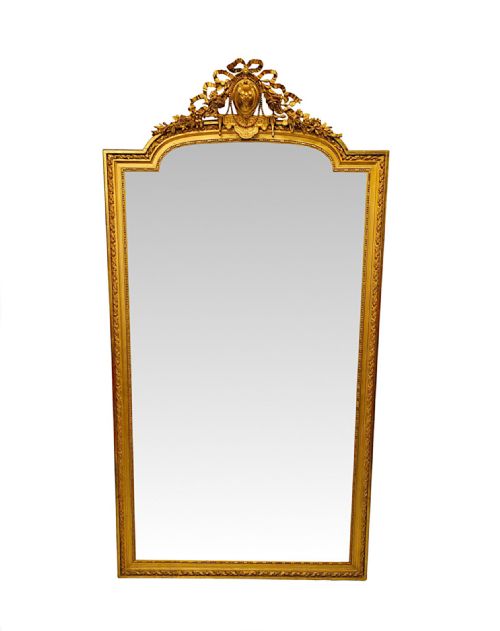
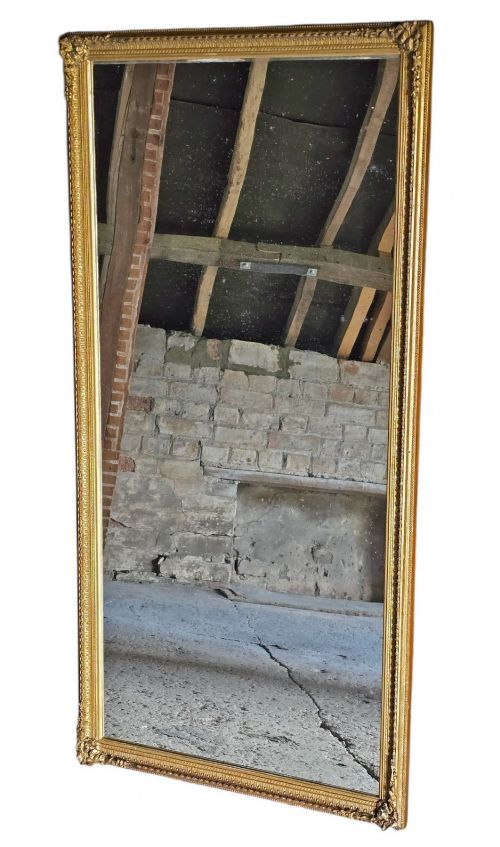
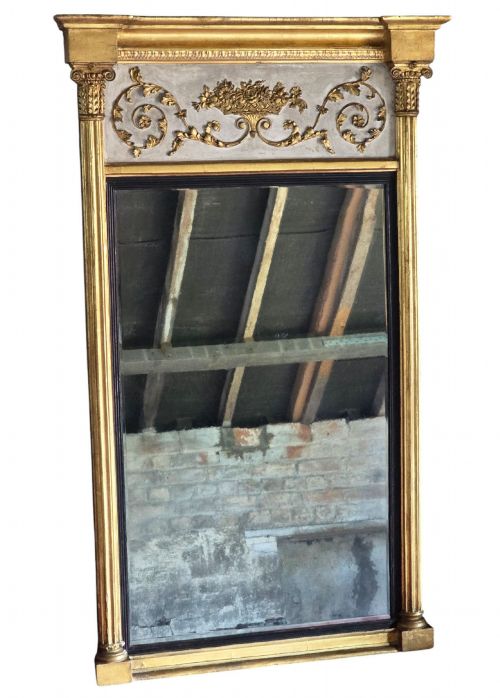
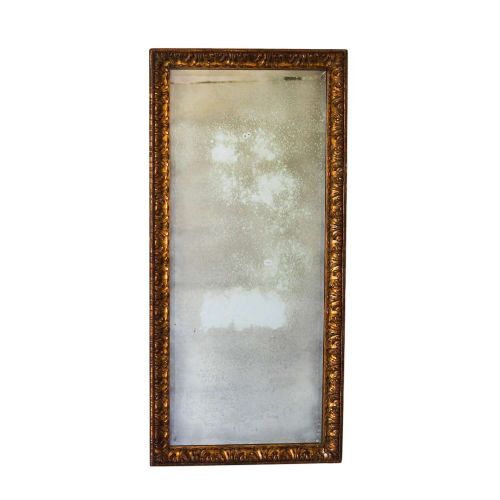
Tall French Mirror
A tall french mirror brings vertical presence to a room, combining large proportions with historic continental decoration.
Tall French Mirror
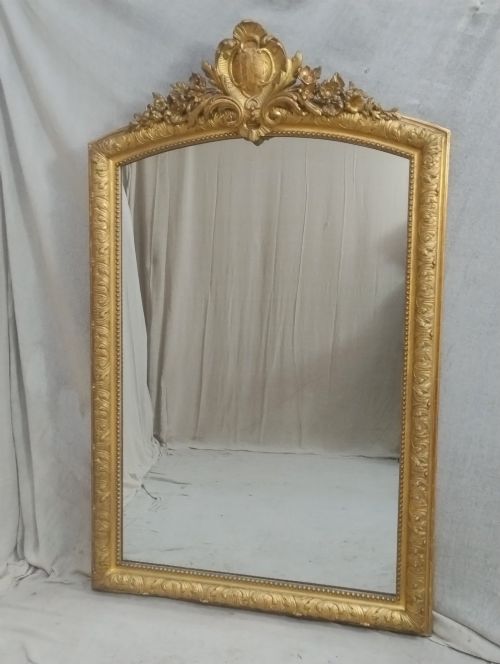
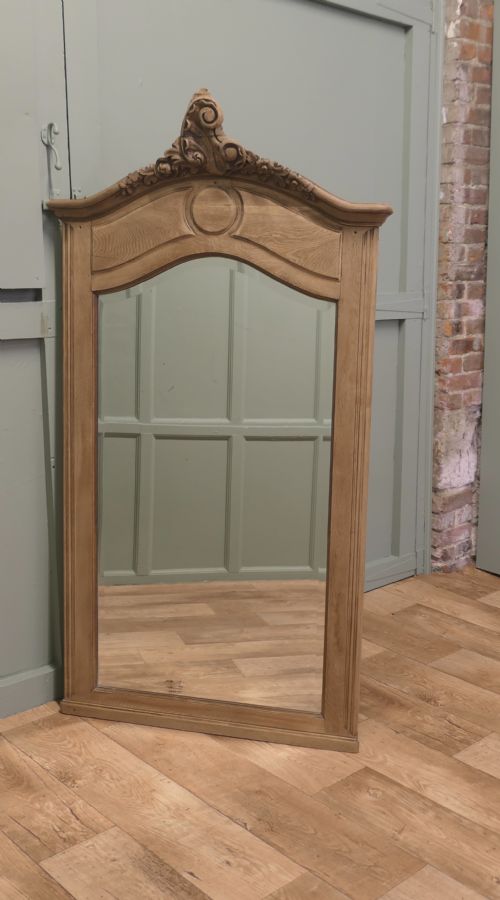
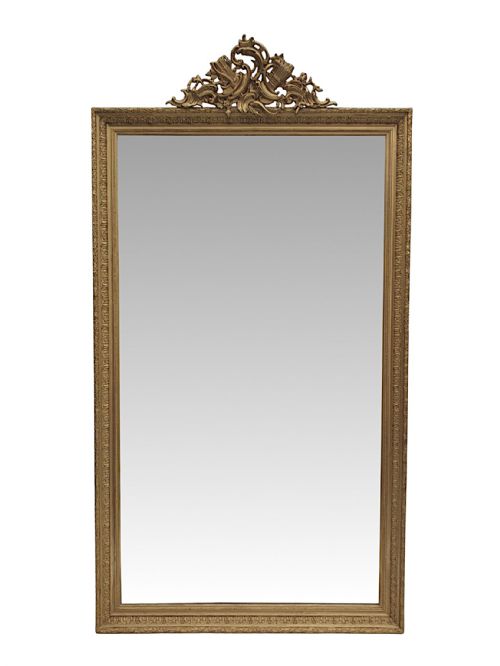
A tall french mirror is a large vertical looking glass designed to reflect light and expand interior space. These pieces serve as commanding focal points in reception rooms, halls and bedrooms.
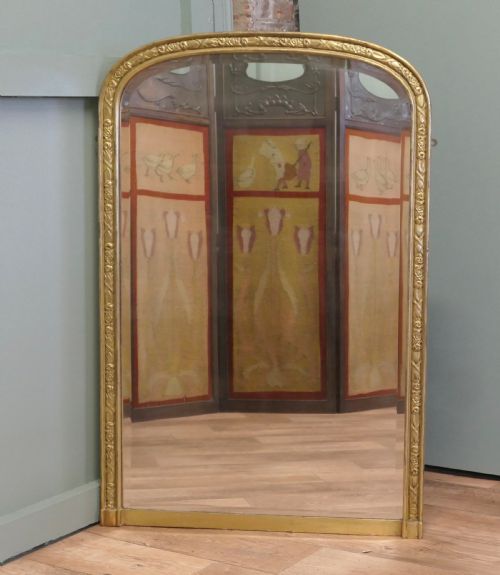
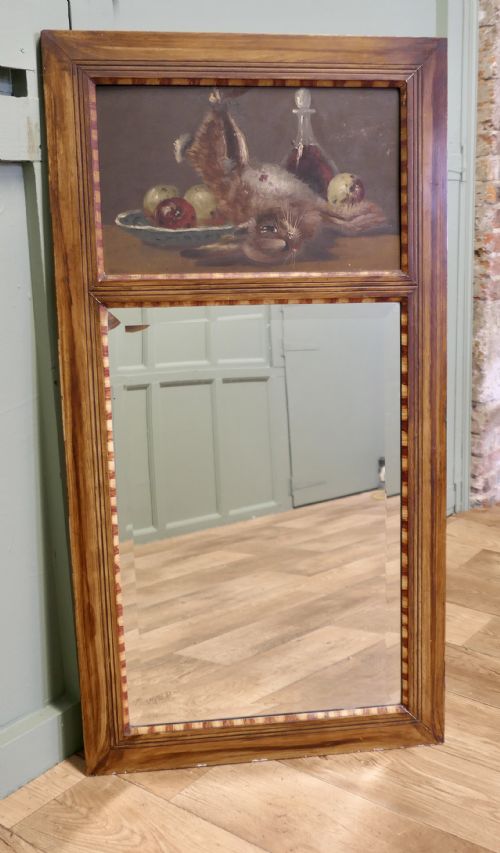
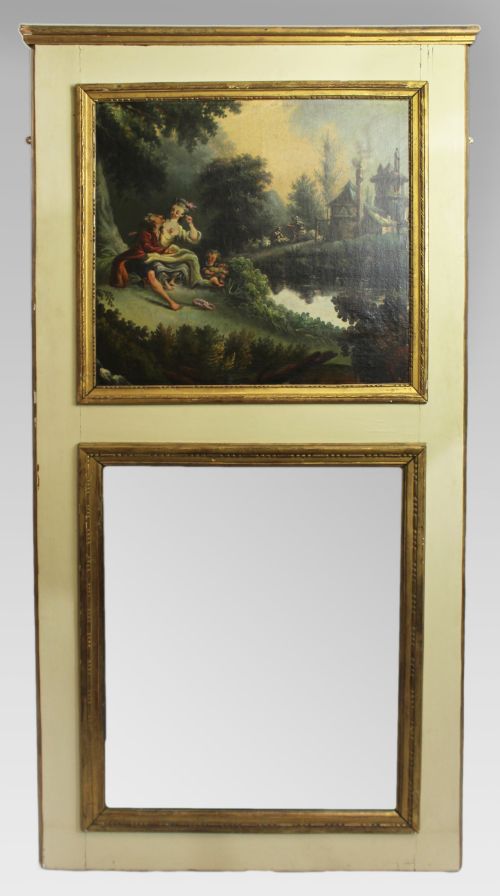
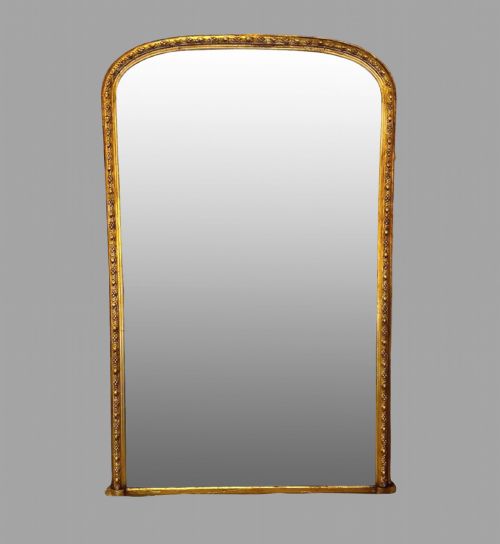
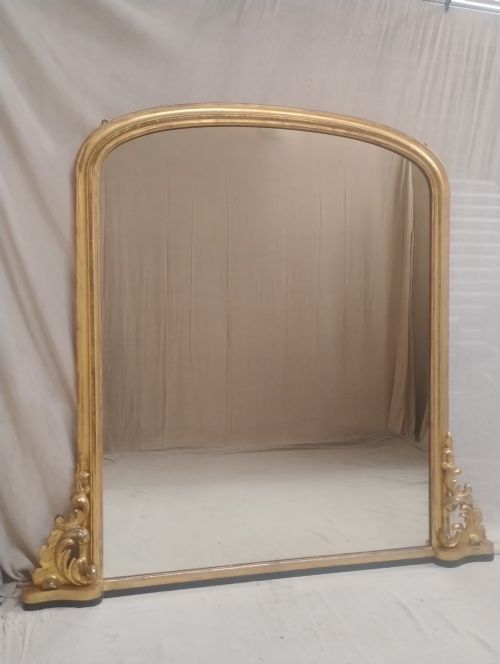
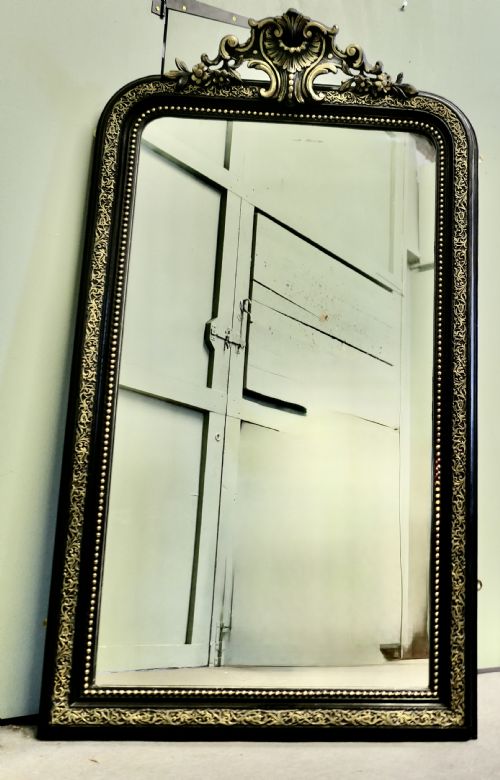
Buyers searching this phrase will find a strong representation of nineteenth-century examples. Louis Philippe frames with rounded upper corners appear frequently alongside overmantels, pier mirrors and trumeaux.
Origins span provincial workshops and grander urban ateliers. Many retain original glass plates, including mercury silvering that shows characteristic mottling and depth.
How They Were Made
Frames combine structural timbers such as oak, walnut or pine with applied ornamentation. Carved wooden details sit alongside moulded gesso to create rich surface relief.
Guilders applied thin leaves of gold or silver to prepare boles, often burnishing the metal to high shine. Painted finishes, sometimes layered over gold leaf, offer softer, muted tones.
Listings feature periods spanning from the eighteenth century through the Edwardian era, with nineteenth-century examples forming the majority.
What Varies in Quality
Depth and crispness of the carving distinguish finer examples from simpler production. Hand-tooled gesso ornament retains sharp undercut details where lesser pieces appear soft and shallow.
The integrity of the glass plate and its backing influences character. Original mercury glass plates with aged foxing command greater interest than later, perfectly clear replacement mirrors.
The Tall French Mirror Glossary
- Louis Philippe
- A mid-nineteenth-century French style characterised by restrained classical proportions and characteristic rounded upper corners. This design avoids excessive ornamentation in favour of clean architectural lines.
- Trumeau
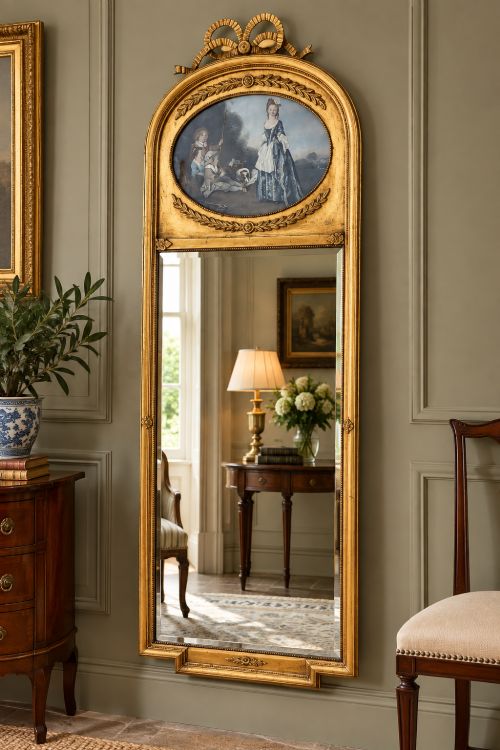
- A decorative wall mirror incorporating a painted panel or oil painting above the glass plate. These panels frequently depict pastoral scenes or floral motifs.
- Pier Mirror
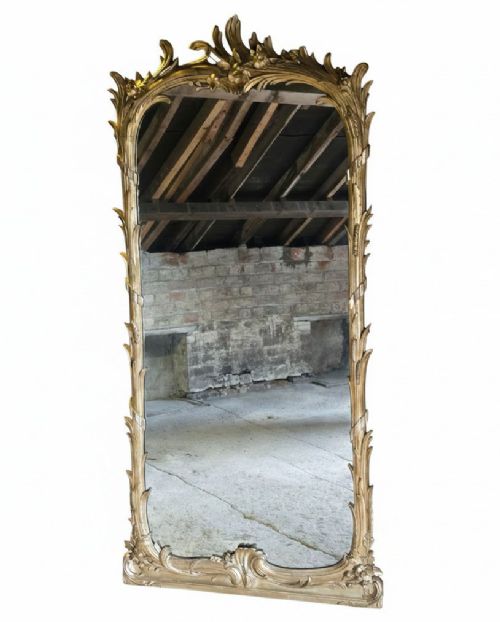
- A tall, narrow looking glass specifically designed to hang on the wall space between two windows. They often sat above matching console tables.
- Gesso
- A plaster-like mixture applied to wooden frames as a base for gilding or paint. Craftsmen carved and moulded this material to create intricate relief decoration before applying gold leaf.
- Mercury Glass
- An earlier silvering technique utilising a tin and mercury amalgam poured behind the glass plate. This process produces a dark, uneven reflection with characteristic spots and foxing.
Tall French Mirror: Frequently Asked Questions
How do I hang a tall french mirror safely?
Large mirrors require secure wall fixings distributed across a sturdy wooden batten or heavy-duty brackets. Professional installation ensures the substantial weight of timber and glass is supported properly.
Leaner mirrors rely on a combination of floor support and wall anchors to prevent tipping. Checking the wall construction beforehand is essential for secure placement.
How should I clean antique mirror glass?
Gentle dusting with a soft, dry cloth prevents the accumulation of grit on fragile surfaces. Avoid using harsh chemical sprays that might seep behind old silvering and cause further degradation.
If moisture is necessary, apply a minimal amount of distilled water to the cloth rather than directly onto the glass. Old mercury plates are particularly sensitive to liquids at the edges.
Can these mirrors be used as floor leaners?
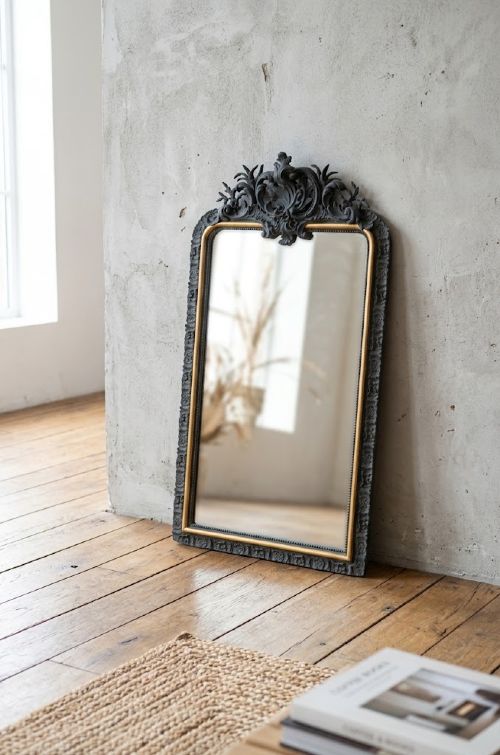
Many tall examples are structurally suited to resting directly on the floor against a wall. This placement creates a relaxed interior atmosphere while reflecting maximum light upward.
Securing the top frame to the wall prevents accidental movement. This approach works especially well with substantial overmantel and pier formats.