


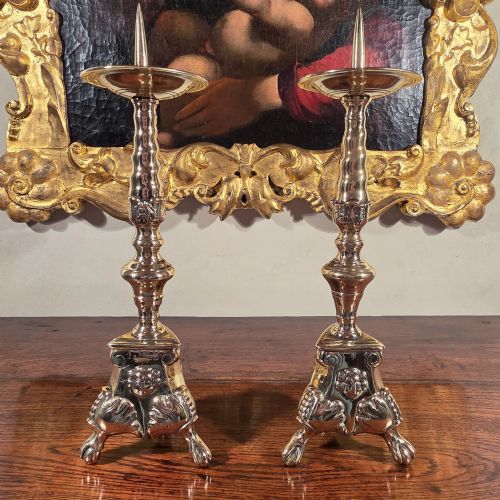
Tall Candle Stands Pair
These tall candle stands pair selections bring vertical presence to a room, offering matched illumination and display heights derived from centuries of domestic and ecclesiastical lighting.
Tall Candle Stands Pair
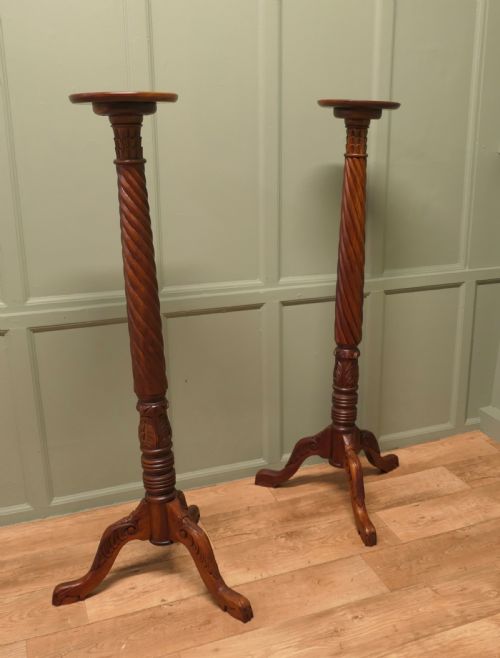
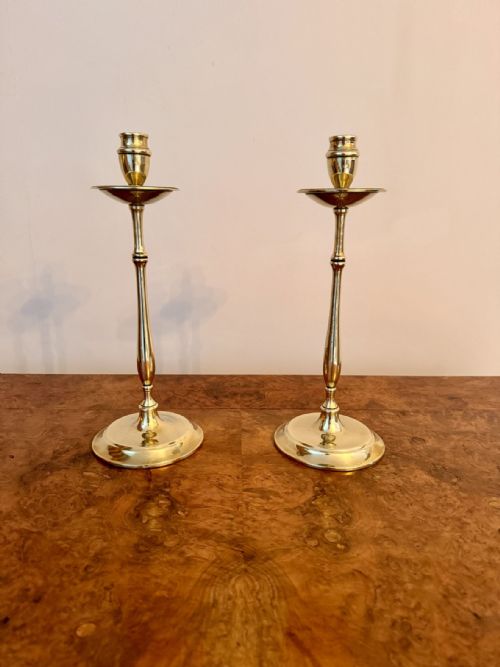
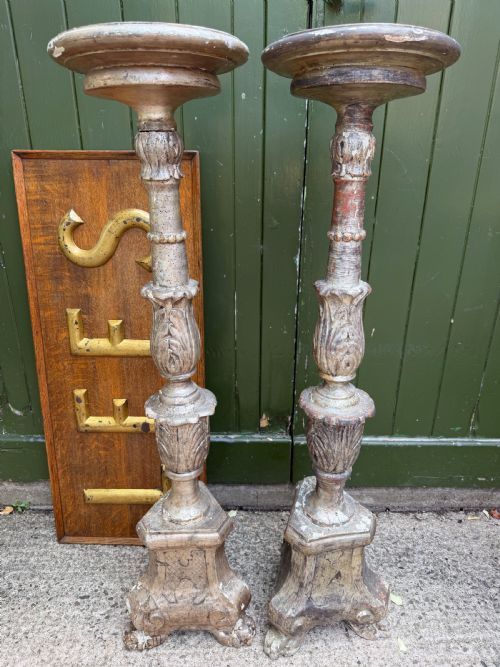
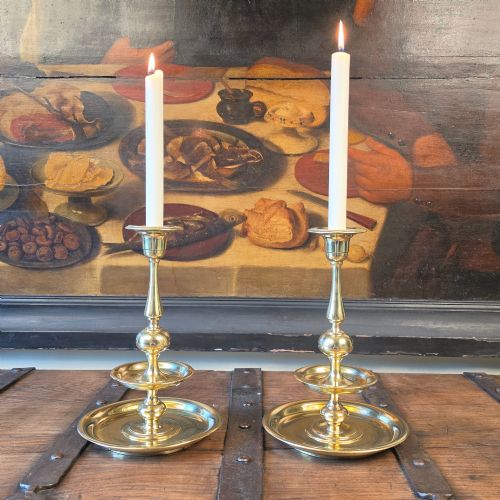
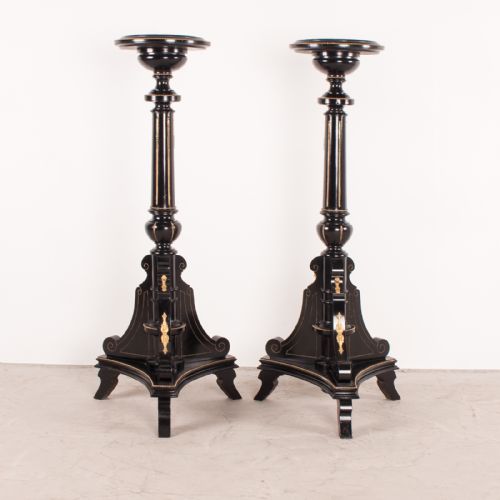
When you search for a tall candle stands pair, you encounter matched pairs designed to elevate light sources or display objects above floor or furniture level. The selection spans domestic table candlesticks, heavy ecclesiastical church pieces, and tall freestanding torcheres or pedestals.
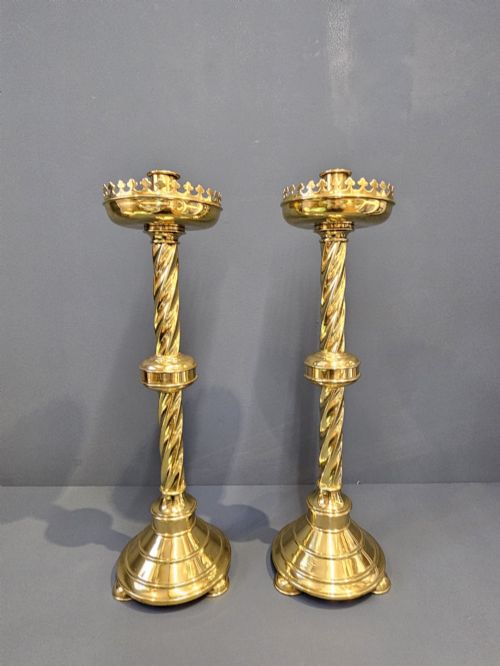
The forms originate across the eighteenth, nineteenth, and early twentieth centuries, drawing on styles from Georgian proportion through Victorian revivalism to Art Deco simplicity. Brass church lights and wooden pedestal torcheres dominate the forms meeting this search phrase.
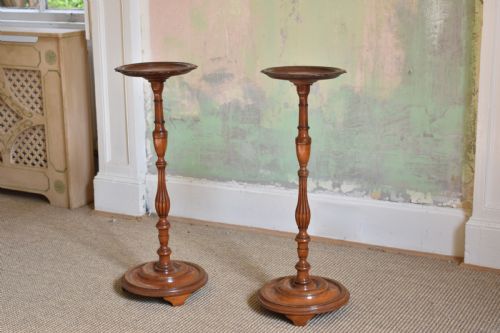
Makers and workshops constructed these pairs for varied settings, from domestic parlours requiring mahogany plant stands to chapels demanding large brass pricket candlesticks. The dual nature of the listings balances utilitarian lighting implements against purely decorative architectural pedestals.
Materials and construction methods
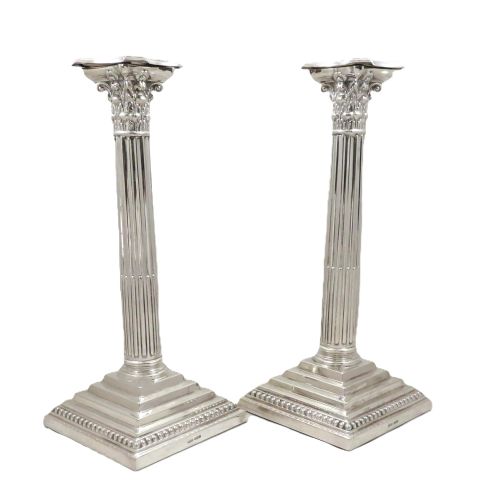
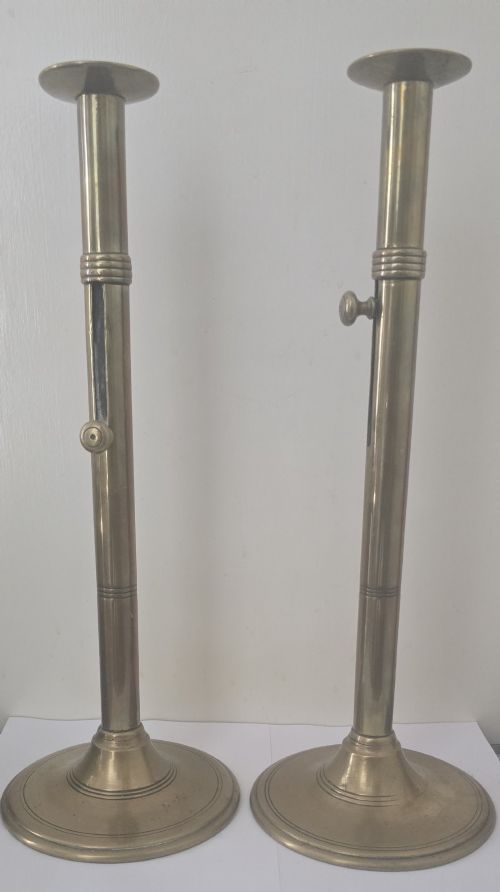
Metals form a significant share of the construction, utilising cast and turned brass, bronze, copper, and silver plate alongside sterling silver. Workshops employed casting, seaming, and column turning to achieve structural integrity in tall shafts.
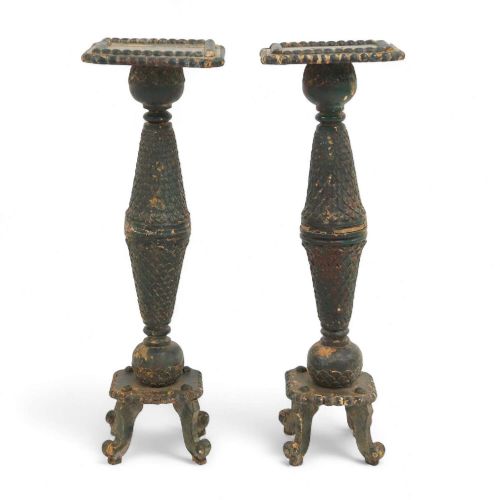
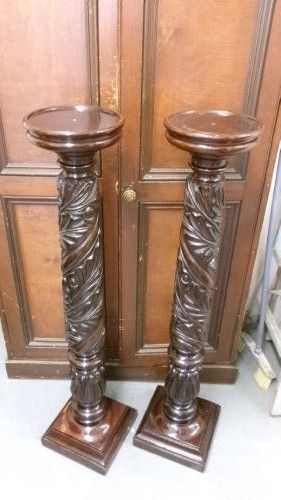
Timbers appear frequently, featuring carved wood, mahogany, satinwood, walnut, and ebonised finishes sometimes enhanced with original green paint or silver leaf. Joinery and turning techniques define these wooden torcheres and urn stands.
Surface treatments range from polished metal columns to carved and silvered altar-style altarware, reflecting the specific functional demands of domestic display or ecclesiastical ceremony.
Some tall stands spent centuries holding chapel candles before retiring to corner positions as nineteenth-century plant holders.
Distinctions in quality and execution
Execution separates standard production from exceptional work through the crispness of casting details, the weight of the metal, and the precision of wood turning. Heavier gauge brass and deeply carved wooden foliage indicate superior workshop standards.
Proportion and matched pairing dictate visual success, as minor discrepancies in height or casting indicate mismatched components rather than an original unified pair. Integrated elements such as side ejectors or original painted surfaces elevate the interest of individual examples.
The Tall Candle Stands Pair Glossary
- Torchiere
- A tall freestanding ornamental stand designed to hold a light or a decorative object. These tall supports often feature carved wooden columns or slender metal shafts.
- Pricket candlestick
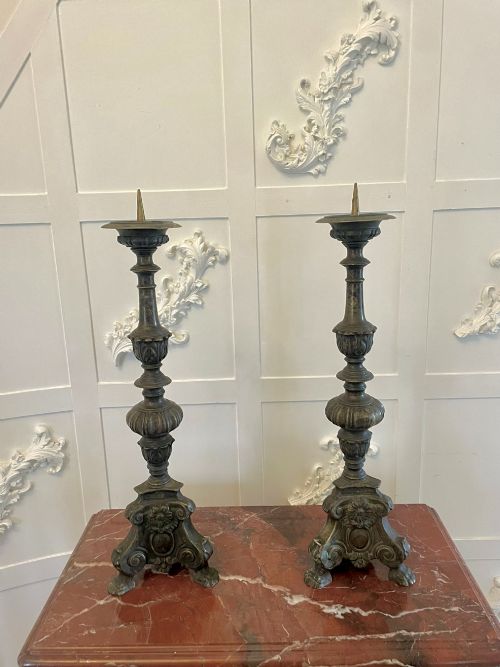
- A candlestick featuring a central metal spike upon which a large wax candle is impaled. This form is common in ecclesiastical metalwork.
- Corinthian column
- A classical architectural order featuring an ornate capital decorated with acanthus leaves. Candlesticks utilising this style mimic ancient stone columns in miniature.
- Side ejector
- A mechanical lever fitted to the side of a socket to raise or expel remaining candle stubs. Georgian and Victorian brass candlesticks frequently incorporate this device.
- Barley twist
- A spiralling shaft carved into wood or cast into metal resembling a twisted rope. This decorative turning technique appears on nineteenth-century stands.
Tall Candle Stands Pair: Frequently Asked Questions
What is a pricket candlestick?
A pricket candlestick uses a sharp metal spike, known as a pricket, to secure a candle rather than employing a conventional raised socket. This design frequently appears on church and altar lighting from the eighteenth and nineteenth centuries.
These pieces typically handle larger wax blocks than standard domestic holders. Their robust construction in brass or iron allowed them to support heavy ecclesiastical candles safely during lengthy ceremonies.
Where were torcheres used?
Torcheres served as tall freestanding display stands in grand reception rooms, hallways, and drawing rooms. They lifted lighting fixtures or decorative urns to eye level before electric illumination became universal.
Later Victorian and Edwardian examples often functioned as plant stands or pedestals for decorative ceramics. Their slim profiles allowed them to occupy corners and empty wall spaces without obstructing traffic.
Are these stands suitable for modern candles?
Many historical candle stands accommodate standard taper candles, though pricket styles require candles with a base hole to fit the spike. Care must be taken with antique sockets to ensure stable placement.
For taller freestanding torcheres, modern use frequently shifts from candles to electric lamps or decorative display surfaces. The sturdy wooden and metal construction supports varied decorative arrangements safely in contemporary interiors.