
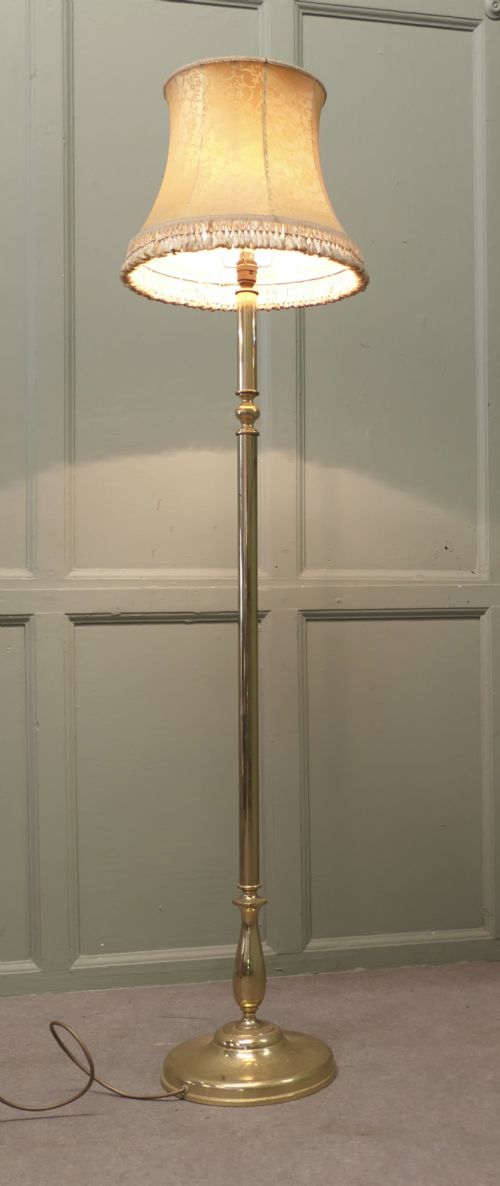

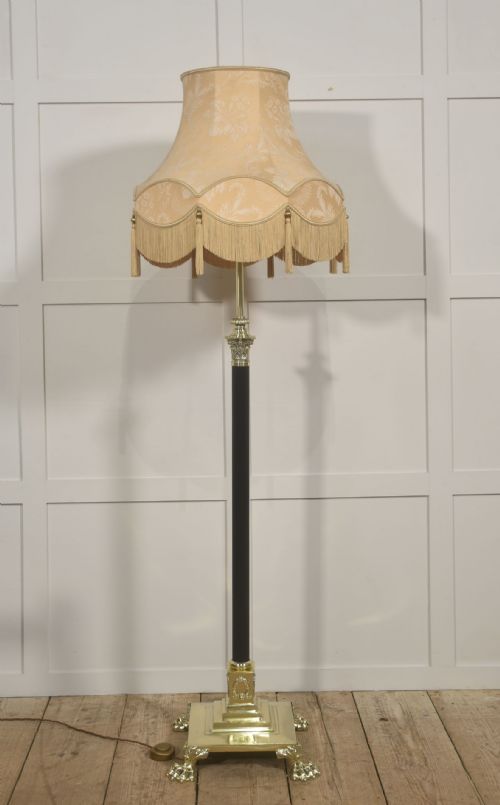


Tall Brass Standard Lamp
A tall brass standard lamp brings reading light to a corner and height to a room, drawing the eye upwards through polished metal and fitted shades.
Tall Brass Standard Lamp
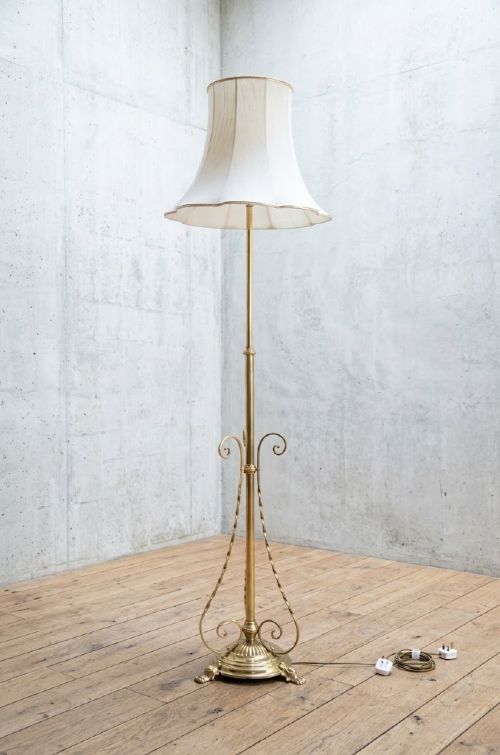
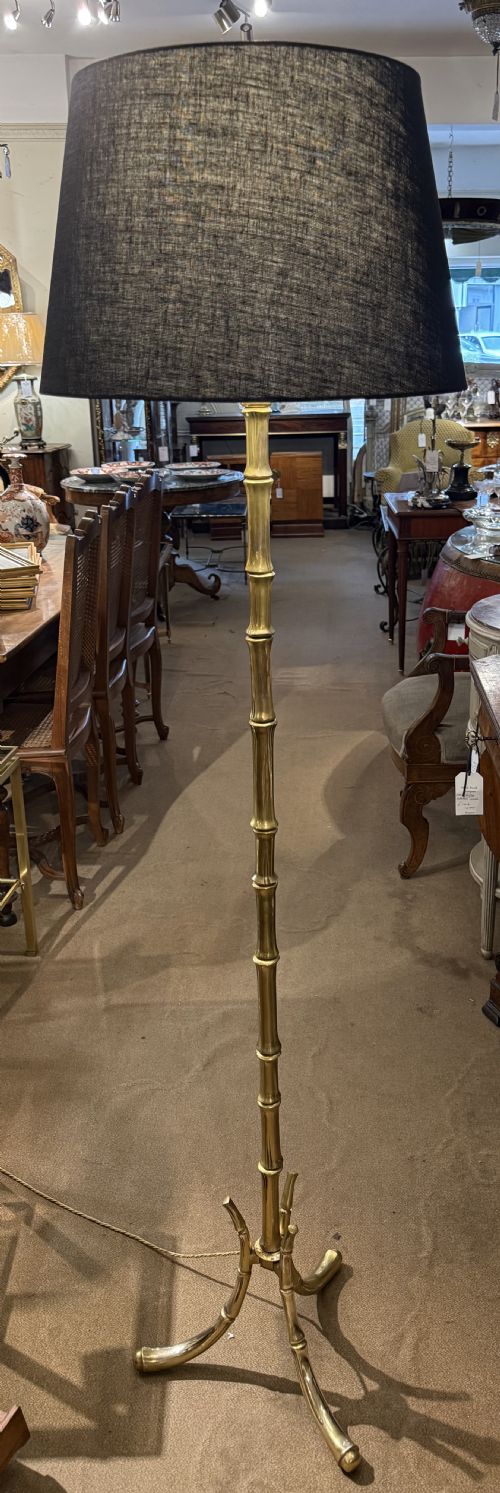
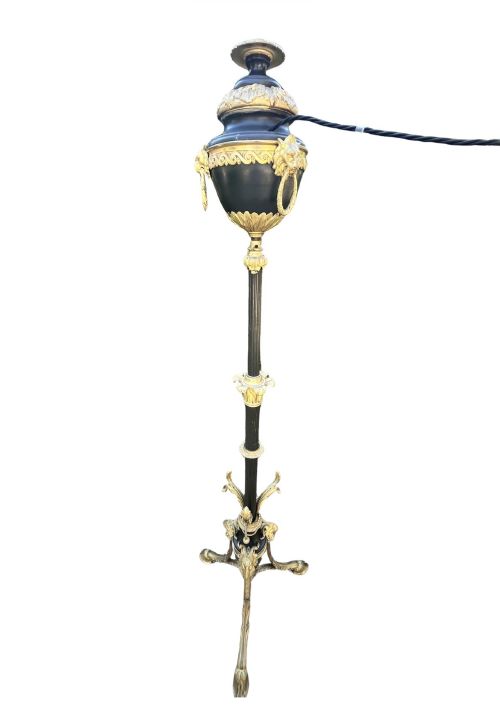
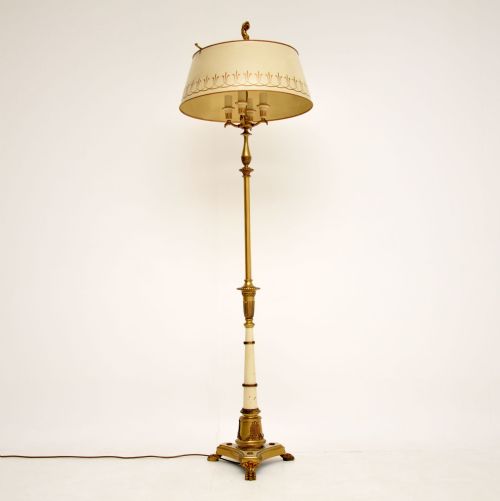
When you search for a tall brass standard lamp, you are looking at floor-standing lighting fixtures designed to illuminate large spaces from an elevated position. The pieces gathered here span from the mid-nineteenth century through the Edwardian era and into the interwar years, encompassing both oil lamp conversions and original electric wiring.
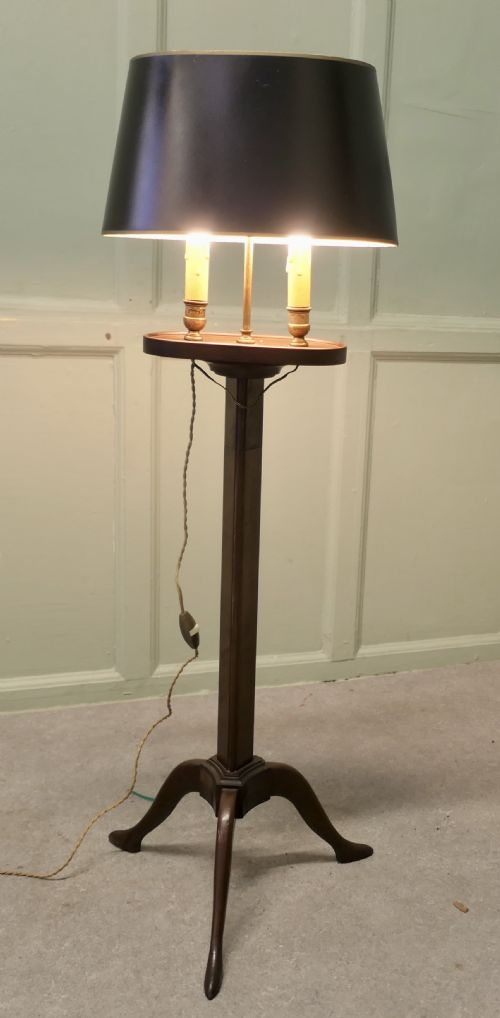
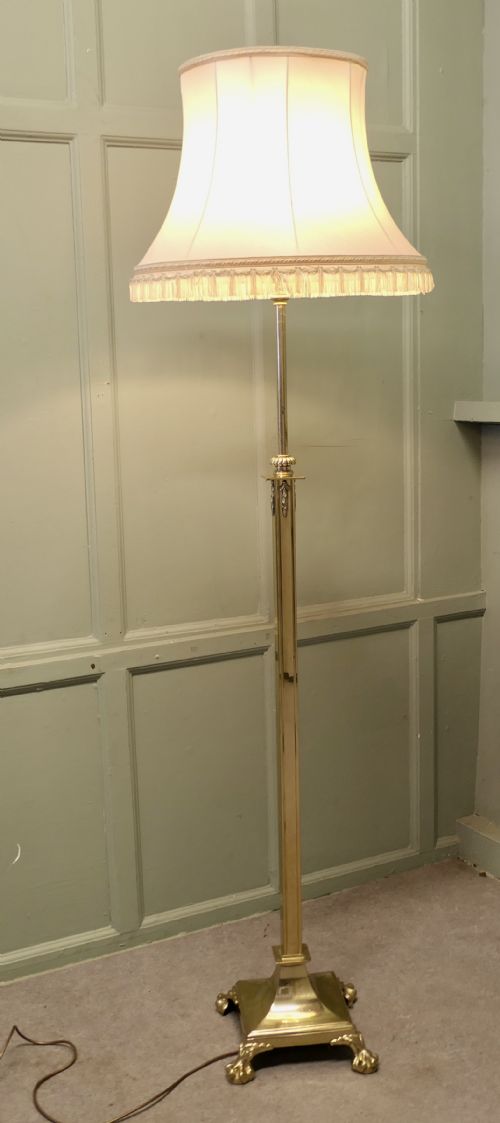
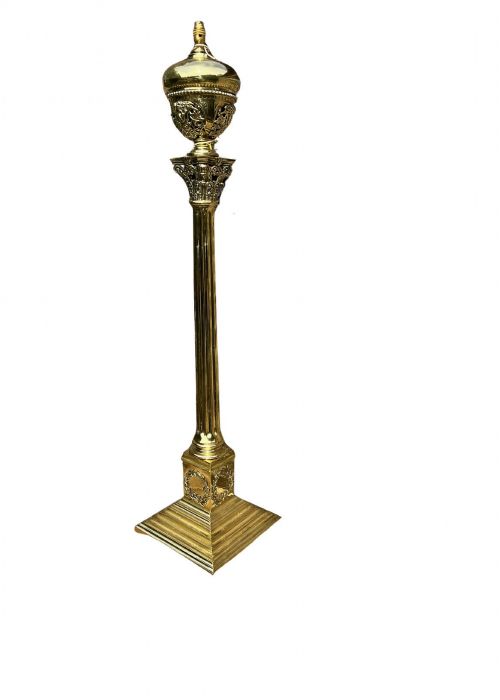
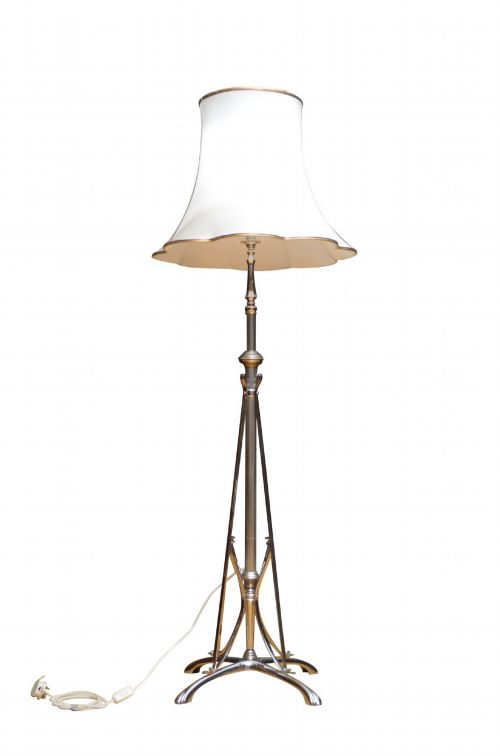
You are most likely to meet Victorian and Edwardian examples on this page, often featuring telescopic stems or heavy Corinthian columns. Alongside these standard vertical forms, the selection includes adjustable reading lamps, wine table combinations, and heavier French or Italianate styles.
Makers and designers worked within distinct idioms, ranging from strict classical revivalism to flowing organic lines. Forms adapt to domestic interiors through weighted bases and adjustable heights, serving both functional illumination and decorative presence.
How they were made
The construction of these lamps relies heavily on brass, frequently combined with bronze, cast iron, copper, onyx, glass, and mahogany to provide structural stability and visual contrast. Heavy cast bases support slender shafts, whilst telescopic mechanisms allow the height of the standard to be adjusted by hand.
Many nineteenth-century examples began life as oil lamps fitted with burners by makers such as Hinks before undergoing later conversion to electricity. Surface decoration involves chased detailing, fluted columns, and applied motifs such as roses and thistles, finished by hand polishing or patination.
Listings feature brass, bronze, copper, cast iron, onyx, glass, and mahogany across Victorian, Edwardian, and 1930s periods.
What varies in quality
The distinction between ordinary production and finer examples rests upon the substance of the metal and the integrity of the mechanical parts. Heavier gauge brass and solid cast components ensure that a tall standard lamp remains stable when fully extended.
Refinements in manufacturing show in smooth telescopic actions, crisp casting details on Corinthian capitals, and the integration of secondary materials like marble or opaline glass. Simpler utilitarian standards contrast with monumental pieces bearing maker attribution or elaborate decorative schemes.
Maison Bagues·Hinks·Whytock & Reid
The Tall Brass Standard Lamp Glossary
- Standard lamp
- A tall floor-standing lamp designed to illuminate a room from a raised position. These pieces utilise weighted bases to support vertical columns.
- Telescopic
- An adjustable stem mechanism allowing the upper section of the lamp to slide upwards and downwards. This feature enables variable height settings for different lighting requirements.
- Corinthian column
- A classical architectural column form featuring ornate acanthus leaf capitals. Victorian standard lamps frequently adopt this motif in brass for formal reception rooms.
- Pole screen conversion
- An antique fire screen or standard adapted to hold a lamp fitting. These conversions utilise existing mahogany and gilt brass poles.
- Opaline
- A type of milky, translucent glass used for shades and reservoirs. It diffuses light softly across Victorian and Edwardian interiors.
Tall Brass Standard Lamp: Frequently Asked Questions
Were these lamps originally oil lamps?
Many nineteenth-century standard lamps on this page began as oil-burning fixtures before being converted to electricity at a later date. This heritage accounts for the heavy weighted bases designed to keep tall oil reservoirs stable.
Converted pieces often retain original burners, galleries, or screw fittings near the top of the column. These historical elements contribute to the character of the floor lamp.
Where should I place a tall standard lamp?
Tall standard lamps work well behind armchairs or in unlit corners where they can cast downward light for reading. Their height allows them to balance large pieces of furniture in a drawing room or study.
Ensure the heavy brass base rests on a flat, stable surface. If the lamp is telescopic, keep it away from heavy footfall areas when fully extended.
How do I identify a Victorian standard lamp?
Victorian examples frequently display heavy cast brass construction, classical revival motifs such as Corinthian columns, and mechanical winding or telescopic adjustments. Their proportions are generous and built for stability.
Look for evidence of period manufacturing techniques, including hand-chased surface details and heavier gauges of metal. Maker marks or burner stamps from firms like Hinks also point to nineteenth-century origins.