


Gilt Brass Floor Light
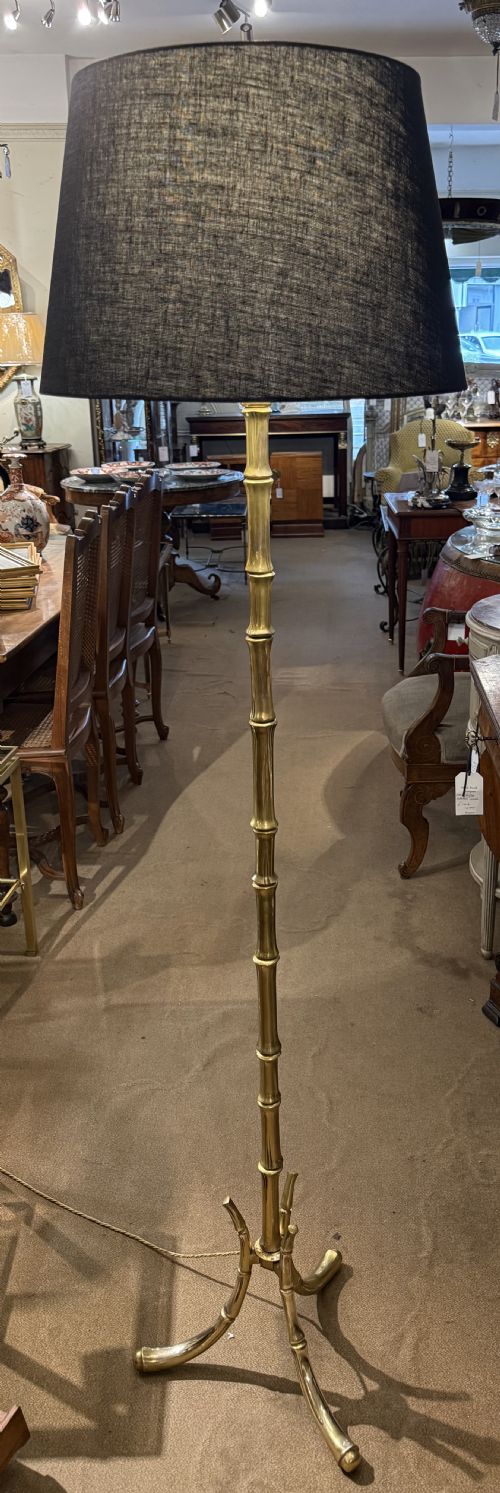
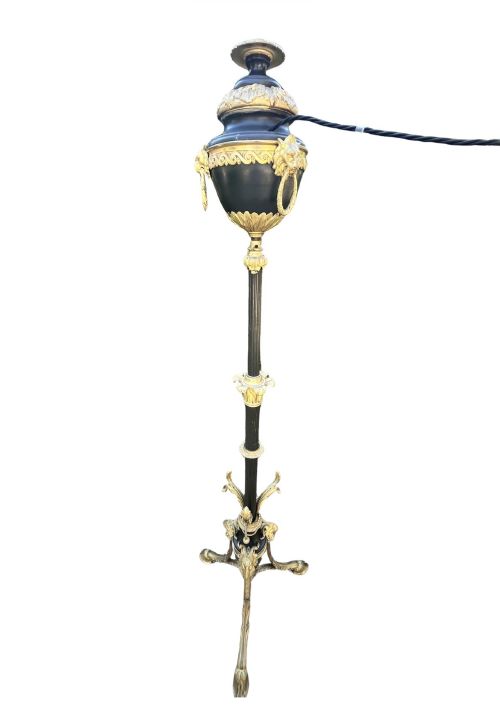
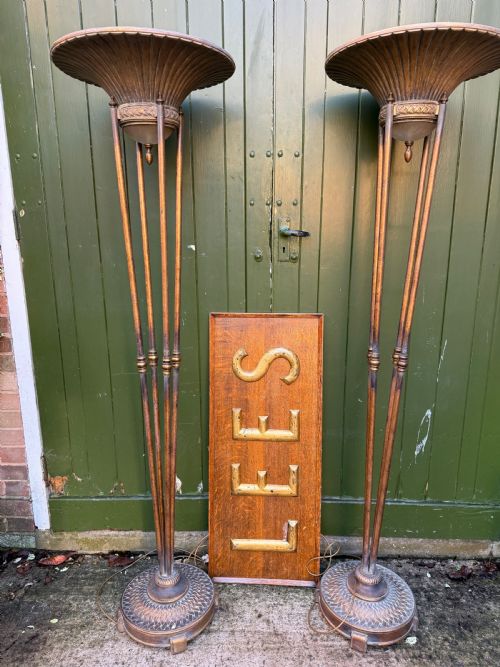
These gilt brass floor lights bring upright illumination and period presence to a room, spanning styles from Victorian to Hollywood Regency.
Gilt Brass Floor Light
A gilt brass floor light sits upright to illuminate a space, drawing on forms like standard lamps and converted candlesticks. When searching for a gilt brass floor light, buyers encounter standard lamps alongside column candlesticks and pole screen lamp conversions from various decades.
The selection ranges across the nineteenth century and into the early twentieth century, taking in Victorian, Neoclassical, and Louis XVI styles. Pieces appear in brass, gilt bronze, and bronze, often paired with fabric shades or configured as adjustable oil-lamps.
Origins stretch from English workshops to French and Italian makers, encompassing boudoir floor lamps and tall church candlesticks. Buyers find both ornate Italianate-Baroque pieces and restrained Swedish Neoclassical designs.
How they were made
Maker construction relies heavily on cast metal, brass, and bronze, shaped into columns and standard lamp bodies. Gilding and ormolu finishes provide the characteristic surface shine across the metalwork.
Secondary materials such as painted metal, fabric, and wood appear in combinations like mahogany poles with gilt brass fittings. Workshops also utilised patinated bronze alongside gilded elements to create contrast.
Assembly techniques accommodate both functional lighting adaptations and decorative floor standing forms, from twin arm configurations to adjustable oil-lamp mechanisms.
Church candlesticks occasionally find a second career indoors, holding electric bulbs instead of wax.
What varies in quality
Quality rests in the crispness of the cast ornamentation, from Corinthian column capitals to elaborate scrolling bases. Heavier gauge metalwork and finer chasing distinguish the superior examples from simpler production.
The integrity of the surface finish dictates visual appeal, separating uniform original gilding from later interventions. Proportions and the balance of the standard shaft relative to the base determine the overall poise of the piece.
Maison Bagues
The Gilt Brass Floor Light Glossary
- Gilt bronze
- Metal coated with a thin layer of gold or gold-coloured alloy. This finish provides a bright surface appearance on nineteenth-century standards.
- Standard lamp
- A tall floor-standing lighting fixture designed to hold a bulb and shade. These pieces elevate illumination above table height.
- Ormolu
- Finely ground gold-mercury amalgam applied to bronze objects. The technique creates a rich decorative surface on French-style pieces.
- Pole screen lamp conversion
- A vertical support originally holding a movable screen that has been adapted to carry a light fitting. Such conversions repurpose older furnishings for modern illumination.
- Corinthian column
- A classical architectural column style featuring acanthus leaves on the capital. This motif frequently decorates tall candlestick shafts.
Gilt Brass Floor Light: Frequently Asked Questions
What is a standard lamp?
A standard lamp is a tall, floor-standing lighting fixture designed to support a shade and illuminate a room from an elevated position.
These pieces function as both functional light sources and decorative architectural elements within an interior scheme.
How do I identify a Louis XVI style light?
Louis XVI style pieces typically display classical symmetry, straight tapering columns, and restrained decorative motifs inspired by ancient Rome and Greece.
They often feature gilt or ormolu surfaces that highlight the geometric clarity of the design.
Where were these floor lights used?
Historically, tall standards and converted candlesticks stood in principal reception rooms, libraries, and boudoirs to provide ambient or task lighting.
Today, they serve a similar purpose in domestic interiors, placing light near seating areas.
What materials are common in these lamps?
Construction relies predominantly on metals such as brass, bronze, and gilt bronze, occasionally supplemented with wood or painted iron elements.
Fabric shades complete the fixture, while older examples incorporate oil-lamp mechanisms.