

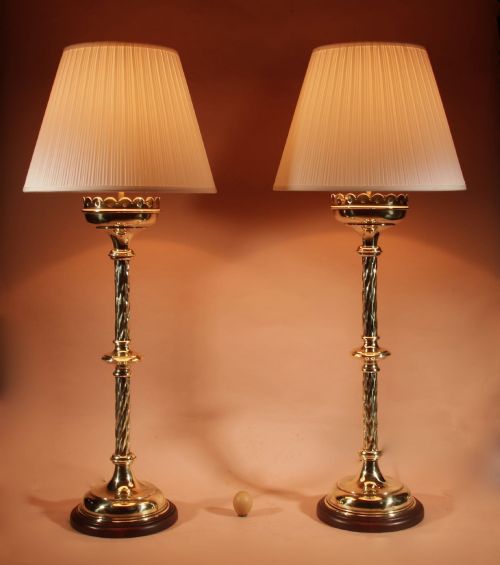
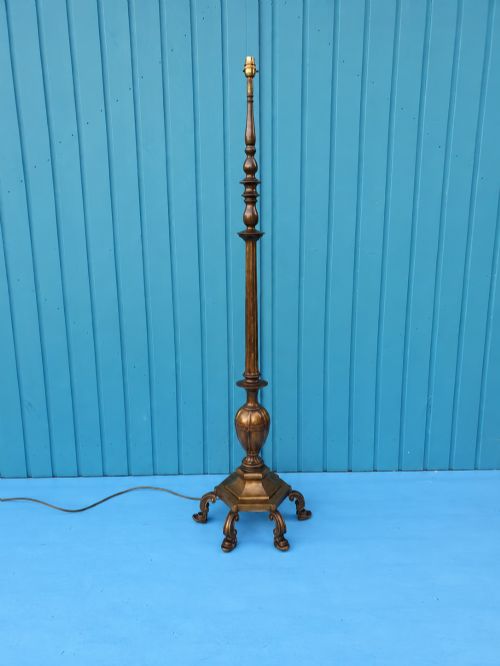
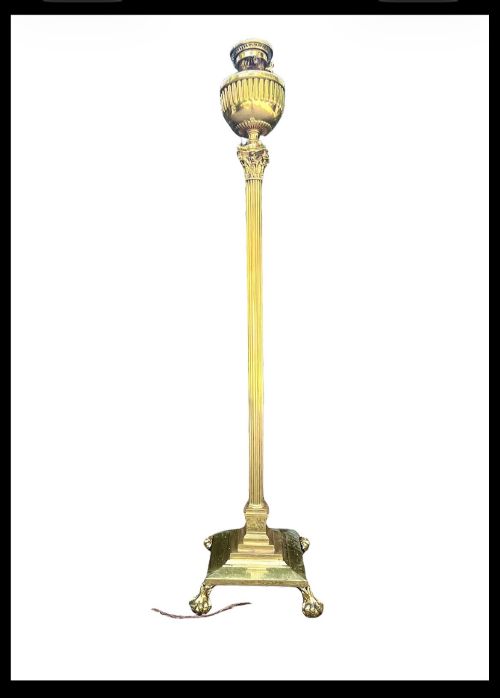
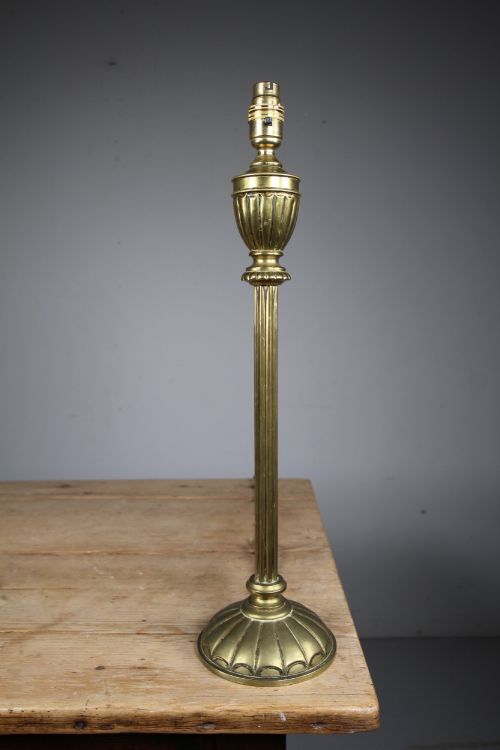
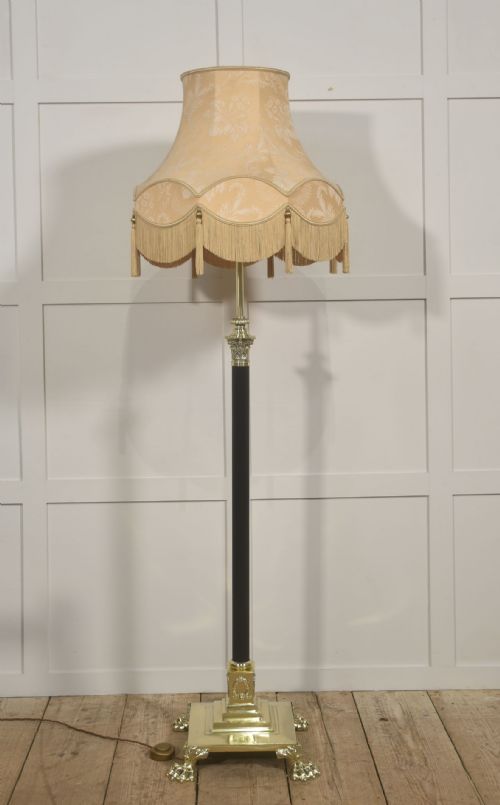


Tall Brass Column Lamp
A tall brass column lamp brings architectural dignity and warm illumination to a room, standing out through classical proportions and substantial metalwork.
Tall Brass Column Lamp
When you search for a tall brass column lamp, you encounter upright vertical light fixtures that borrow their form from ancient architectural orders. These pieces frequently manifest as table lamps or floor-standing standard lamps derived from earlier oil-burning formats or heavy church candle stands. They span the nineteenth century through the interwar years, encompassing Victorian, Edwardian, Neoclassical, and Gothic Revival aesthetics.
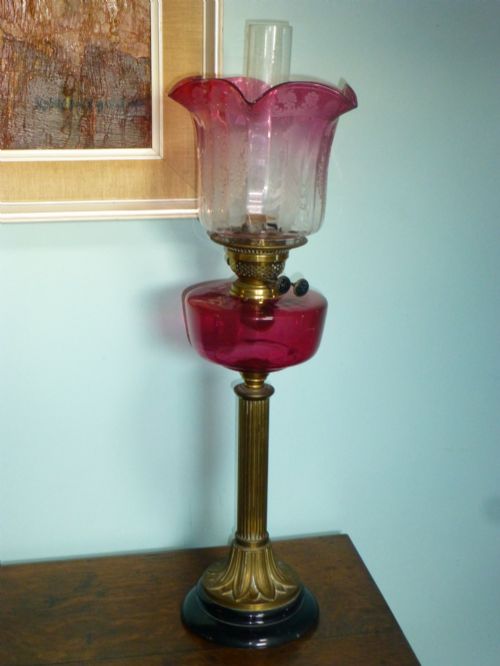
The most common iterations on this page utilise classical architectural capitals, particularly Corinthian and Doric designs, sitting atop fluted or smooth cylindrical metal shafts. You will find them paired with complementary materials like cranberry glass, opaline glass, or black toleware, sometimes configured as adjustable stem units or telescopic standards. Standard floor models and imposing table lamps dominate the selection, often appearing in matching pairs or monumental single formats.
Materials and construction
Construction relies heavily on cast and spun brass, frequently combined with bronze, ormolu, and heavy metal bases to ensure stability for tall vertical structures. Metal components are turned on lathes and assembled with threaded internal rods, supporting secondary elements fashioned from cut glass, crystal, opaline, cranberry glass, and carved wood or marble.
Makers integrated technical adaptations such as duplex double burners in nineteenth-century oil configurations, later converting these heavy metal standards to electricity alongside telescopic height mechanisms and adjustable stems. Surface finishes range from polished or patinated brass to blackened metal and toleware accents.
Tall Brass Column Lamp Retail Price Guide 2026
Typical asking prices for tall brass column lamp among the pieces listed under this phrase on Sellingantiques today, from the lower quarter to the upper quarter. They describe what is for sale here now, not the wider market.
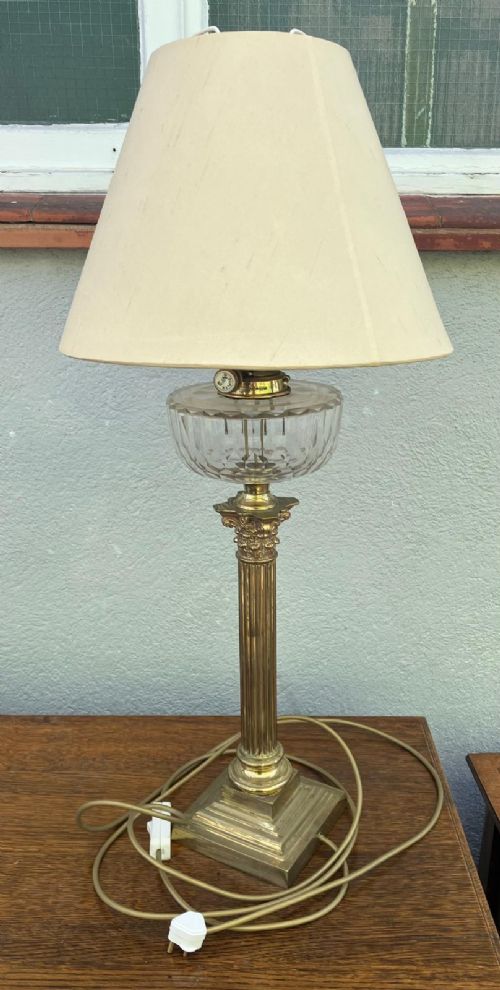
Some tall columns hide their former life as oil burners, carrying brass duplex mechanisms that still gleam beneath modern silk shades.
Distinguishing quality
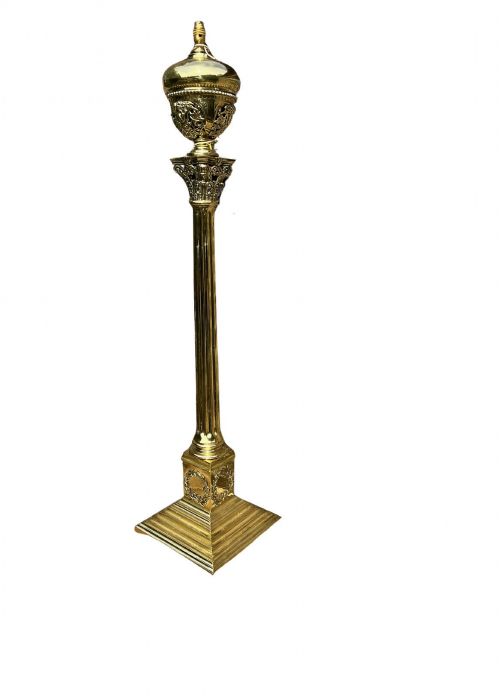
Quality rests upon the crispness of the casting detail in the column capitals and the sheer weight of the metal used in the base. Superior examples display deeply carved acanthus leaves on Corinthian capitals and heavy, stable footings rather than thin, pressed sheet metal.
The integration of secondary materials like hand-cut crystal, flashed cranberry glass, or ormolu mounts elevates the manufacture. Precision in mechanical elements, such as smooth telescopic adjustment and robust structural joints, separates standard utility lighting from exceptional decorative pieces.
Hinks
The Tall Brass Column Lamp Glossary
- Corinthian column
- An architectural column order featuring an ornate capital decorated with carved acanthus leaves. This style appears frequently on nineteenth-century and Edwardian standard lamps.
- Telescopic standard
- A metal floor lamp shaft designed with an inner sliding tube that permits adjustable height. It allows the owner to alter the vertical reach of the light source.
- Ormolu
- Gilded bronze ornamentation applied to decorative metalwork and furniture. French makers utilised this technique on crystal and column table lamps.
- Duplex burner
- A twin-wick mechanism found on nineteenth-century oil lamps designed to produce a brighter flame. Many surviving tall lamps retain these brass burner assemblies alongside later electrification.
- Toleware
- Painted or enamelled sheet metal used for decorative lamp bodies and shades. It provides a dark, contrasting base against polished brass column mountings.
Tall Brass Column Lamp: Frequently Asked Questions
How do I date a brass column lamp?
Dating relies on observing construction methods, burner types, and prevailing decorative styles across the nineteenth and early twentieth centuries. Victorian and Edwardian examples often feature heavy sand-cast brass components and weighted iron bases hidden beneath metal covers.
Later pieces from the interwar period introduce simplified column profiles and alternative switch housings. Patent marks and burner manufacturer names stamped onto the brass collar provide further chronological clues.
Were these always electric lamps?
Most nineteenth-century examples began life as oil lamps or heavy church candlesticks before later conversion to electricity. Manufacturers produced tall standards to hold duplex oil reservoirs or heavy wax candles.
Twentieth-century iterations were frequently manufactured specifically for electric wiring, incorporating internal channels for cords. Telescopic and adjustable floor models often accommodate these conversions smoothly while retaining their original metal stems.
How do I incorporate a tall column lamp into a room?
Floor-standing standard lamps suit placement beside low seating in a corner, where their vertical height draws the eye upward. Table versions require substantial sideboards or pedestals to support their height and weight.
Pairing these fixtures with simple fabric shades allows the detailed brass and glass columns to remain the visual focal point. Their neoclassical and gothic lines blend effectively with both traditional interiors and minimalist modern spaces.
What is the difference between table and standard lamps here?
Table lamps possess shorter shafts designed to sit upon furniture surfaces like sideboards, desks, or occasional tables. Standard lamps represent much taller floor-standing units meant to rest directly on the floor.
Both formats utilise the same architectural column vocabulary, featuring Corinthian capitals and heavy metal bases. Floor standards often include adjustable stems or telescopic mechanisms for height regulation.