




Tall Brass Candlesticks
Tall brass candlesticks bring monumental scale and warm metallic reflection to an interior, drawing the eye upward with period weight and presence.
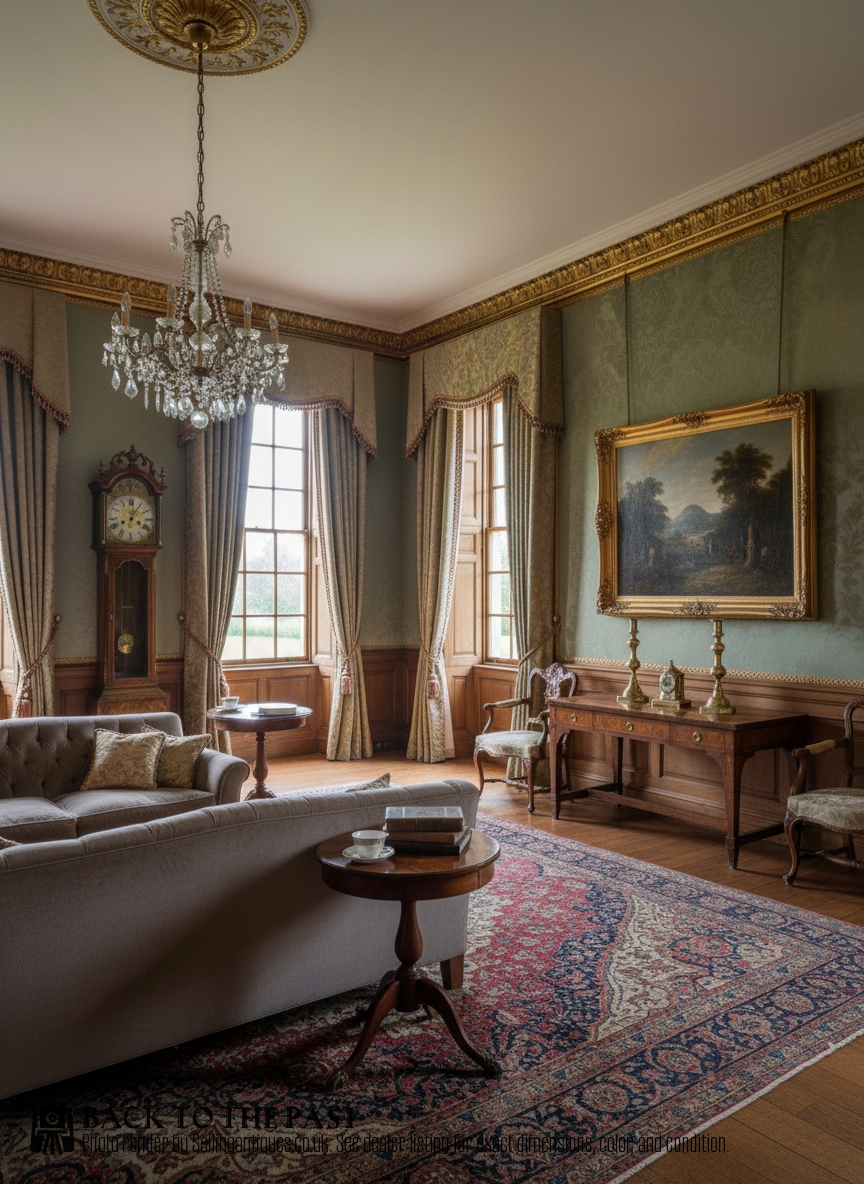
Tall Brass Candlesticks
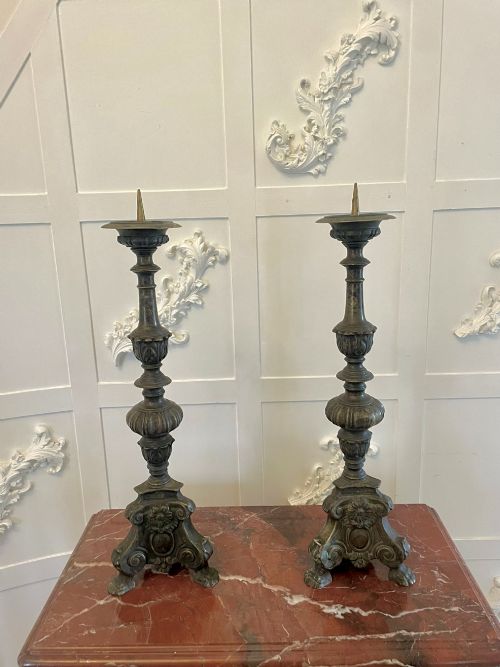
Tall brass candlesticks encompass substantial lighting fixtures designed for domestic parlours, churches, and grand halls across multiple centuries. Buyers encounter domestic Georgian and Victorian shaft designs alongside monumental ecclesiastical pricket forms intended for altars.
Origins stretch across English, French, Dutch, and Indian workshops, with styles spanning Neoclassical, Gothic Revival, and Art Deco interpretations. Pairs dominate the offerings, though single pieces and graduated sets appear.
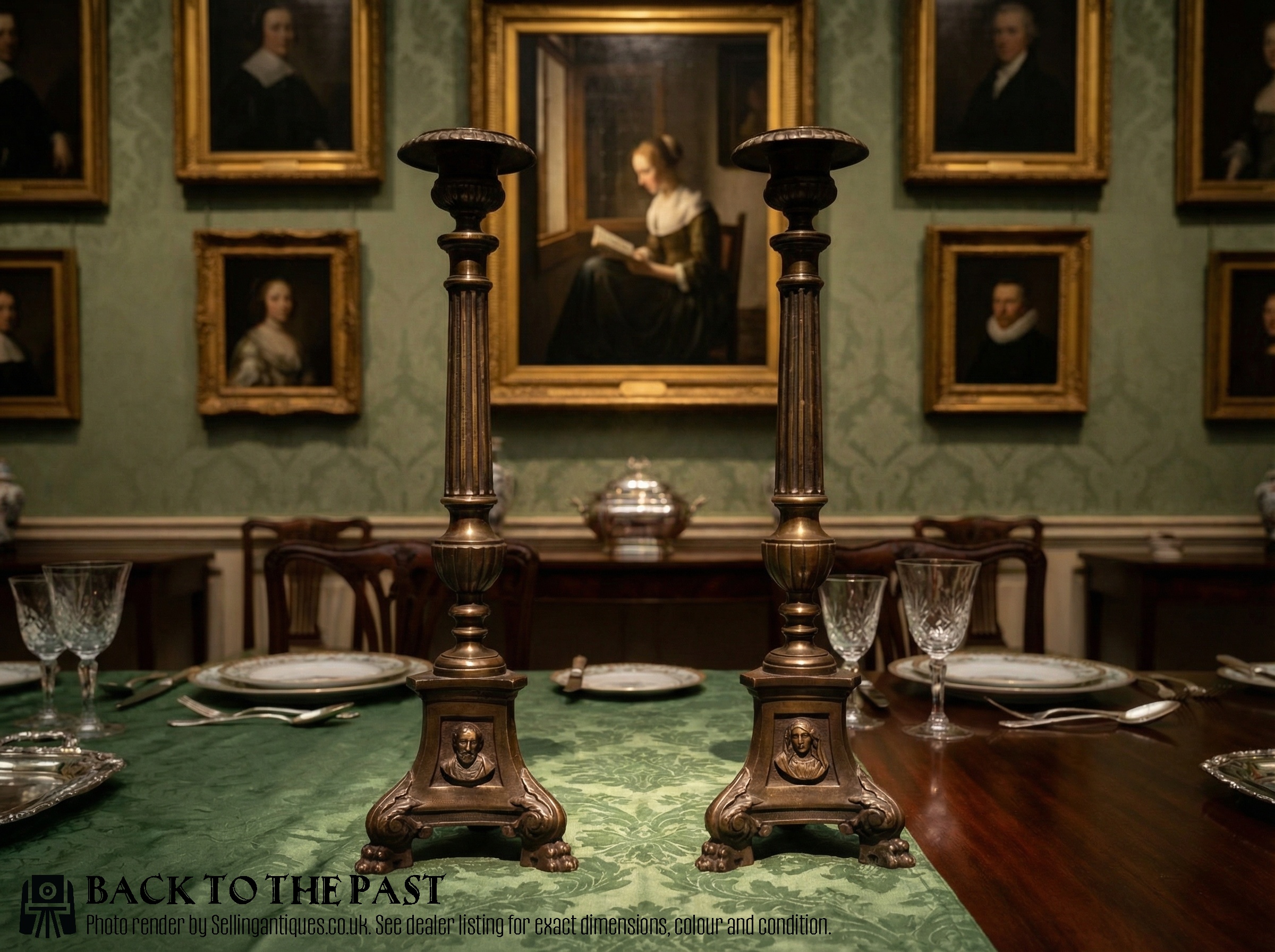
How they were made
Foundry workers cast brass components in sand moulds or utilised historic seaming techniques to join sheet metal cylinders for taller shafts. Heavier items often incorporate solid core weighting or bronze components for stability.
Makers shaped structural profiles on lathes, producing smooth columns or dynamic open twists, before finishing surfaces with chasing or gilding such as ormolu. Secondary materials like oak, mahogany, and iron frequently support the primary brass elements in composite designs.
Tall Brass Candlesticks Retail Price Guide 2026
Typical asking prices for tall brass candlesticks among the pieces listed under this phrase on Sellingantiques today, from the lower quarter to the upper quarter. They describe what is for sale here now, not the wider market.
Some towering church candlesticks stand taller than the domestic tables they eventually retired to.
What varies in quality
Substantial wall thickness and heavy physical heft distinguish superior cast examples from lighter, hollow alternatives. The crispness of the chased detailing, particularly on acanthus leaves, Corinthian capitals, and moulded bases, reveals the hand of a skilled craftsman.
Integrity of construction matters greatly, separating pieces with tight, original joints from those with excessive looseness. Surface preservation also plays a role, with desirable patinas reflecting careful age rather than harsh modern stripping.
James Clews
The Tall Brass Candlesticks Glossary
- Pricket
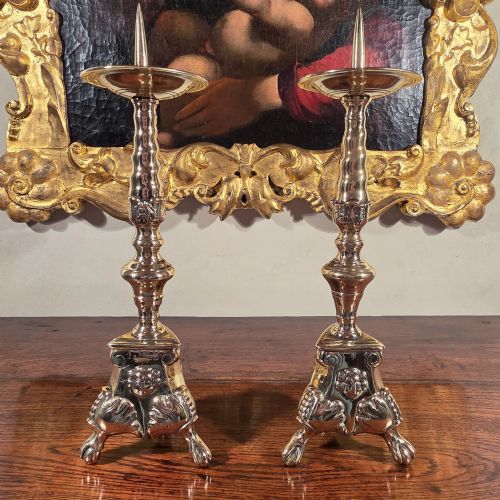
- A sharp spike on a candlestick designed to skewer and hold a large candle securely in place. This form appears frequently on church and altar pieces.
- Barley twist
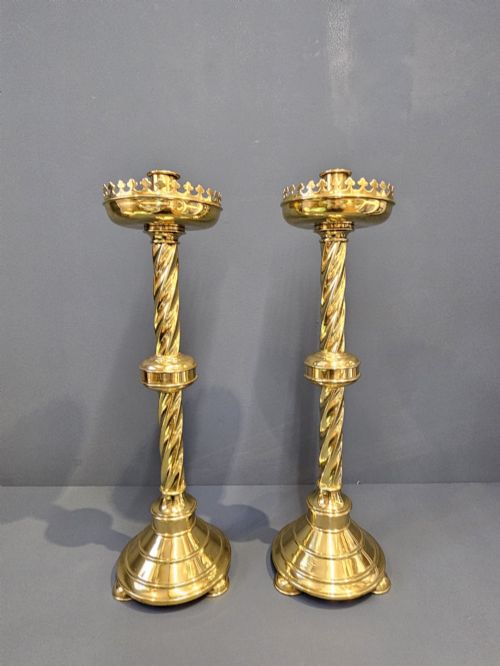
- A spiral carving or turning resembling the twists of barley sugar, popular on columns during the nineteenth century. It adds dynamic movement and catches the light.
- Ejector
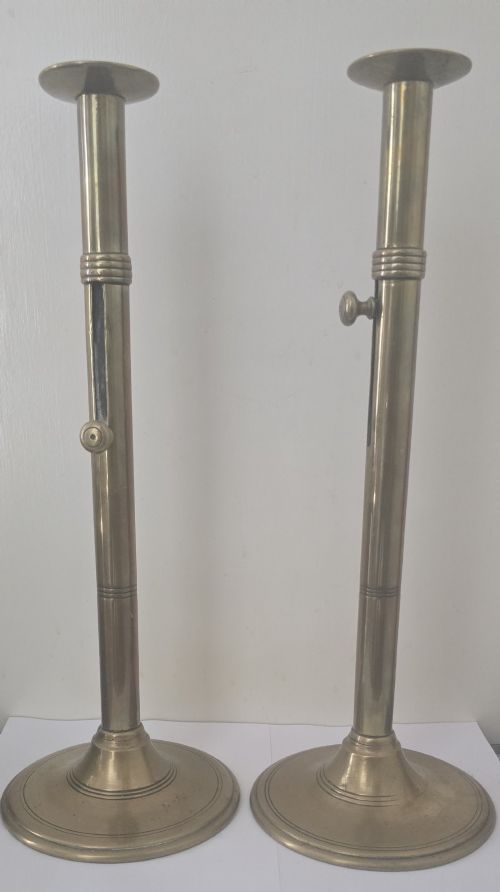
- A concealed internal mechanism operated by a side lever that pushes the remaining candle stub upward for easy removal. Georgian and Victorian examples often include this practical addition.
- Ormolu
- Finely ground high-carat gold applied in a mercury amalgam to a bronze or brass base. This technique creates a rich, enduring golden lustre on luxury items.
- Corinthian column
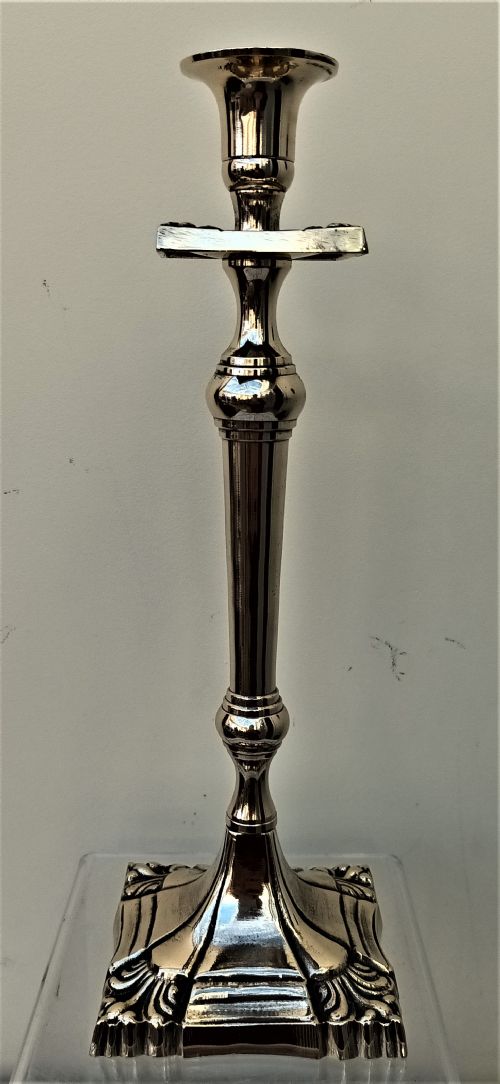
- A classical architectural order featuring an ornate capital decorated with acanthus leaves. Makers frequently adapted this motif for the shafts of formal candlesticks.
Tall Brass Candlesticks: Frequently Asked Questions
How were tall brass candlesticks used?
These tall fixtures provided vital illumination in high-ceilinged rooms, grand halls, and places of worship before the advent of electric lighting. Their elevation allowed light to project further across large spaces.
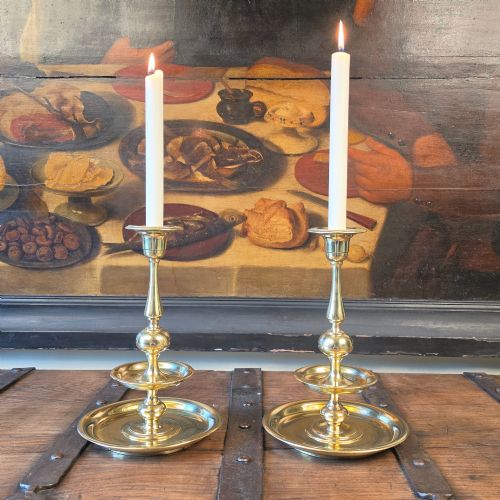
Ecclesiastical pricket versions held massive altar candles for ceremonies, while domestic variants illuminated dinner tables and mantelpieces during the Georgian and Victorian eras.
How do I clean tall brass candlesticks?
Maintenance requires minimal intervention to preserve the historic surface and darker areas of oxidation that collectors value. Gentle dusting with a soft cloth prevents grime accumulation.
Avoid harsh commercial metal polishes that strip away the aged patina and soften crisp cast details. A light application of microcrystalline wax can protect the metal if necessary.
Can I convert them into lamps?
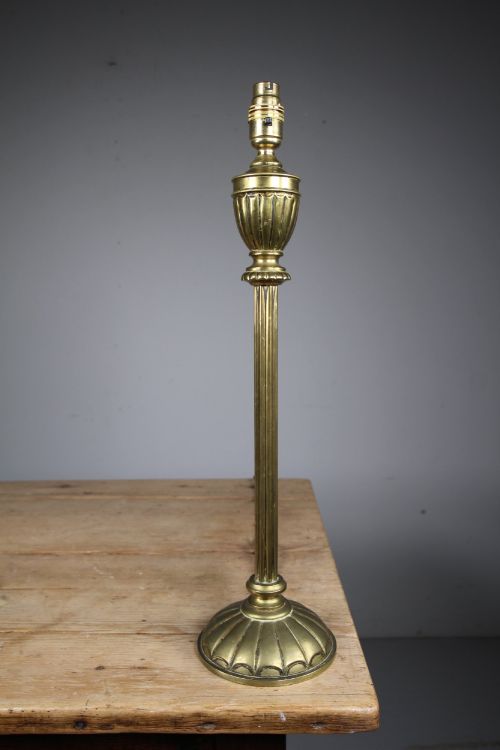
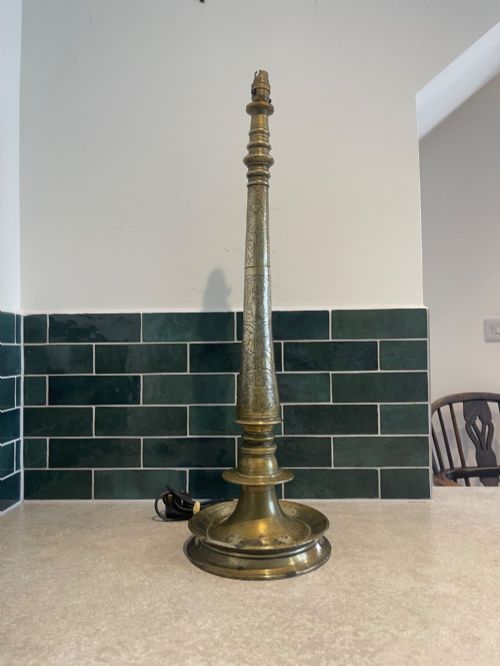
Many tall examples undergo conversion into table lamps to suit modern living requirements while retaining period character. Professional rewiring usually routes the electrical cord discreetly through the central shaft.
Buyers should inspect whether the conversion preserved the original structure or involved irreversible alterations to the metal components.
How do I tell periods apart?
Stylistic clues and construction marks help date pieces, such as the heavier cast proportions typical of Georgian items versus the lighter machined parts of the twentieth century. Neoclassical and Gothic Revival motifs indicate specific nineteenth-century design revivals.
Seamed construction often points toward earlier manufacturing methods, whereas uniform extruded brass suggests later production dates.