
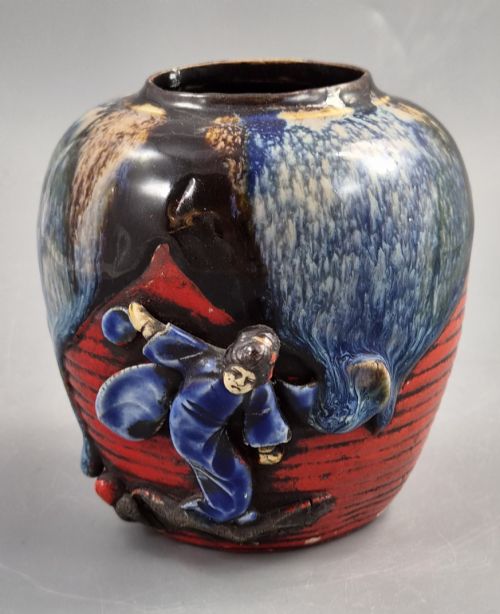
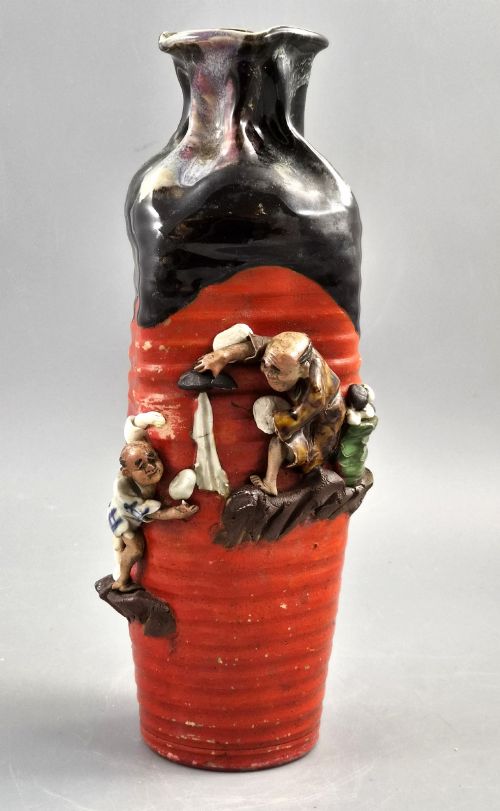
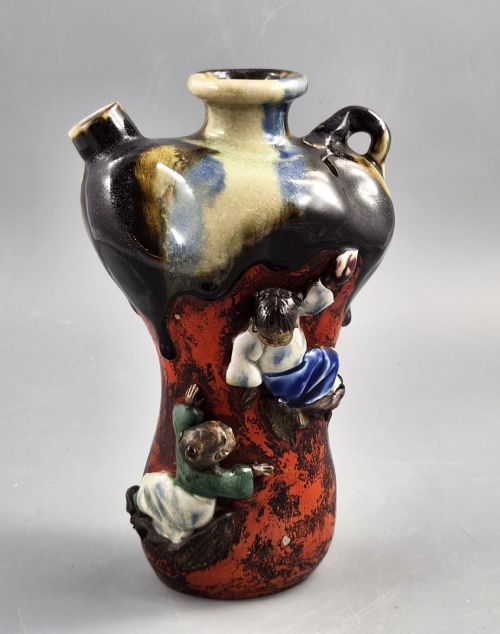
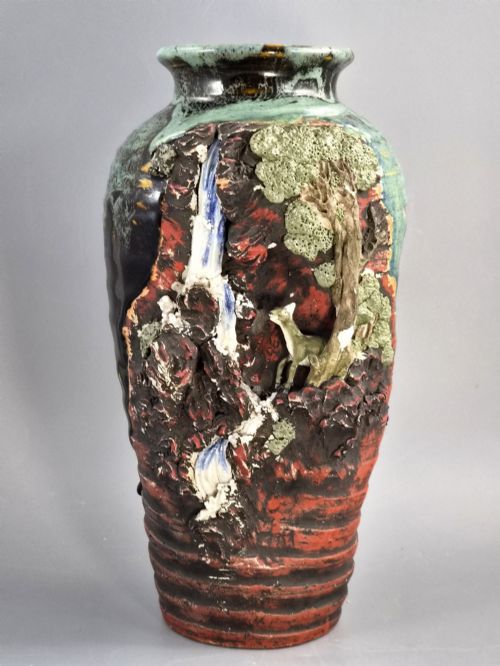
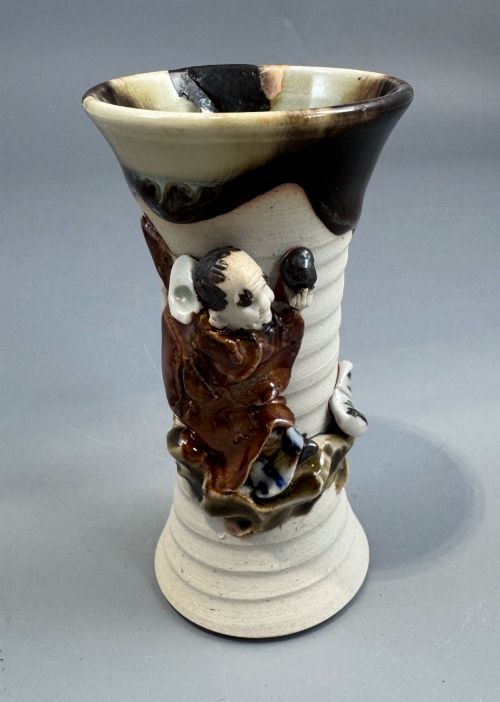


Taisho Pottery Vase
These taisho pottery vase examples bring striking sculptural depth and rich surface glazes to any room.
Taisho Pottery Vase
A taisho pottery vase sits at the intersection of traditional Japanese craftsmanship and early twentieth-century design. Buyers exploring this category encounter distinctive earthenware and stoneware creations spanning the Meiji, Taisho, and early Showa periods.
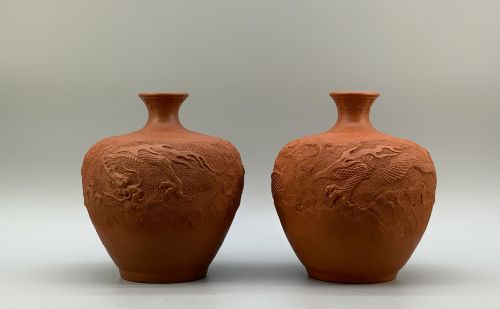
Many items date from around nineteen hundred to the nineteen twenties, reflecting a period of intense artistic output. Collectors often find pieces displaying detailed landscapes, dragons, and narrative scenes moulded directly onto the body.
What varies in quality
Quality rests in the precision of the modeling and the depth of the glaze effects. A strong piece demonstrates confident sculptural relief and controlled application of flambe or enamel work.
The presence of clear signatures from notable makers elevates a piece considerably. Finer examples maintain crisp detail in the applied figures and harmonious colour palettes across the entire surface.
Object forms span standard baluster vases and jars alongside pitchers, jugs, and hexagonal Satsuma shapes.
Inoue Ryosai·Makuzu Kozan II·Tagawa
The Taisho Pottery Vase Glossary
- Sumida Gawa
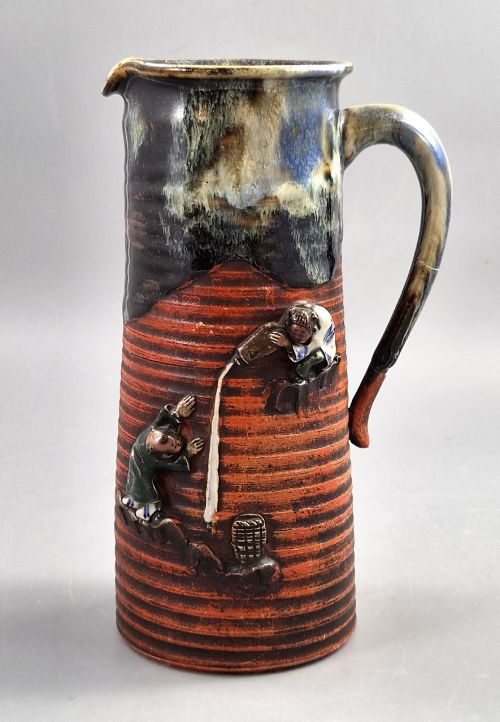
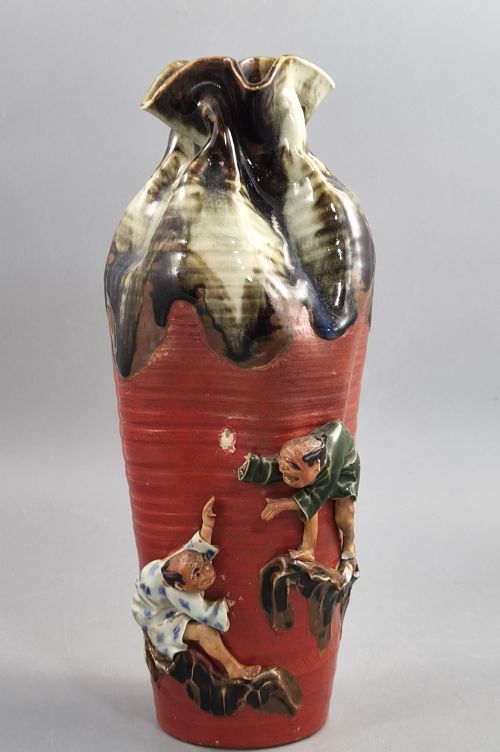
- A distinctive type of Japanese pottery known for heavy glazes and applied clay figures. These pieces originate from the banks of the Sumida River in Tokyo.
- Flambe Glaze
- A richly streaked or mottled glaze that creates unpredictable pools of colour during firing. Potters prized this technique for the unique patterns it produced.
- Tokoname
- A historic centre for Japanese pottery production renowned for its iron-rich red clay. Pieces from this region often showcase natural earth tones.
- Rakan
- A depiction of an enlightened follower of Buddha, frequently modeled in high relief on Japanese ceramics. These figures add narrative depth to sculptural vases.
- Kutani
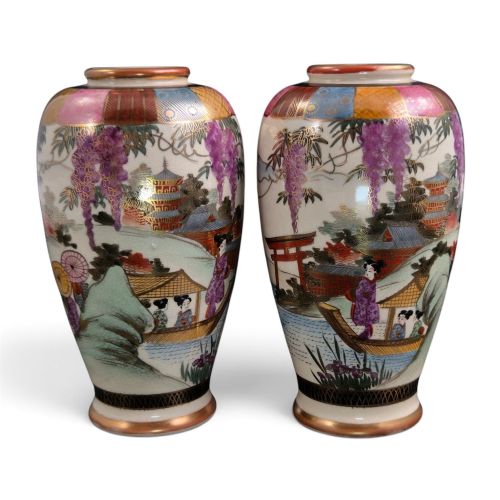
- A style of Japanese painted porcelain and pottery celebrated for vibrant enamel colours. Items from this tradition often feature intricate surface patterns.
Taisho Pottery Vase: Frequently Asked Questions
What is a taisho pottery vase?
A taisho pottery vase is a ceramic vessel produced in Japan during the Taisho period or adjacent transitional years. These objects often display tactile surfaces with heavy glazes and applied elements.
Potters during this era blended traditional regional styles with evolving decorative tastes. The resulting vessels range from sculptural Sumida Gawa jars to finely painted Satsuma and Kutani pieces.
How do I identify Sumida Gawa pottery?
Sumida Gawa pottery is instantly recognisable by its heavy, dripping flambe glazes and three-dimensional applied figures. Artisans sculpted characters, animals, and landscapes directly onto the outer walls of the vase.
These pieces often feature rough, unglazed patches where the body shows through. The sculptural style distinguishes them clearly from smoother, painted ceramic traditions.
How should I display a sculptural vase?
Sculptural vases benefit from placement where adequate lighting can catch their high-relief figures and glaze variations. A neutral background allows the detailed modeling and colour depth to stand out.
Given their tactile nature, keeping these pieces at eye level or on a dedicated stand helps reveal the hand-worked textures. Avoid crowding them with other objects so the individual form remains the focus.