
Tabletop Swing Dressing Mirror
A tabletop swing dressing mirror sits on chest or dressing table, offering a tiltable glass for daily grooming.
Tabletop Swing Dressing Mirror
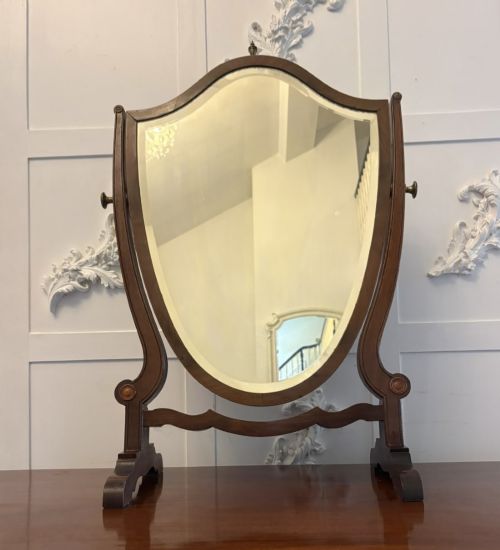
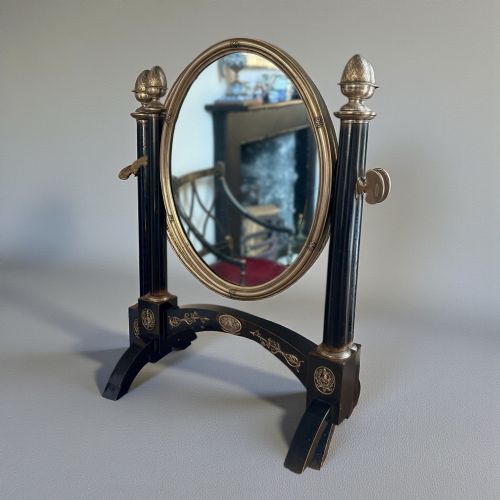
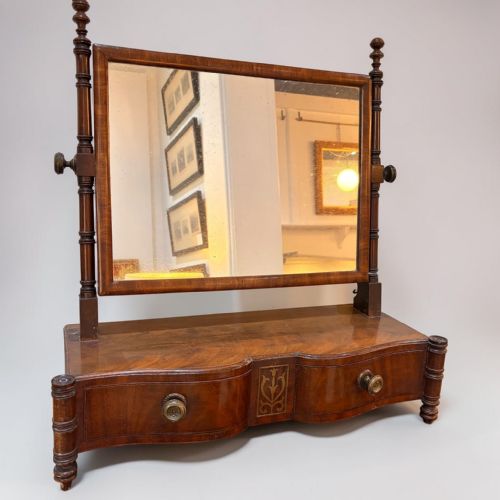
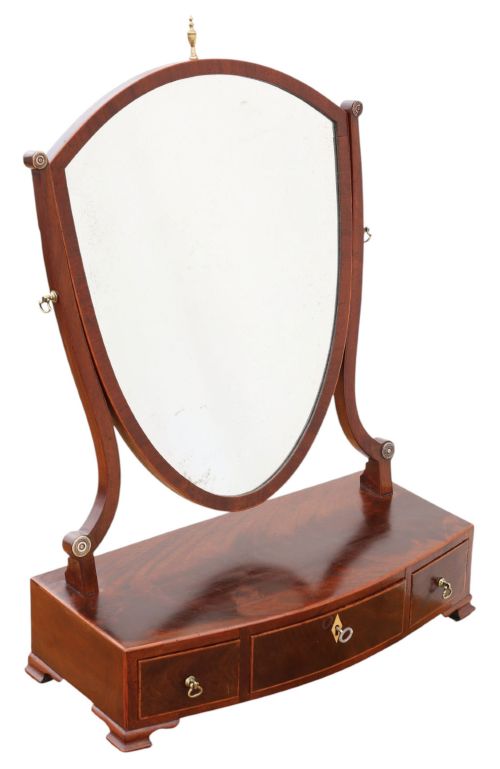
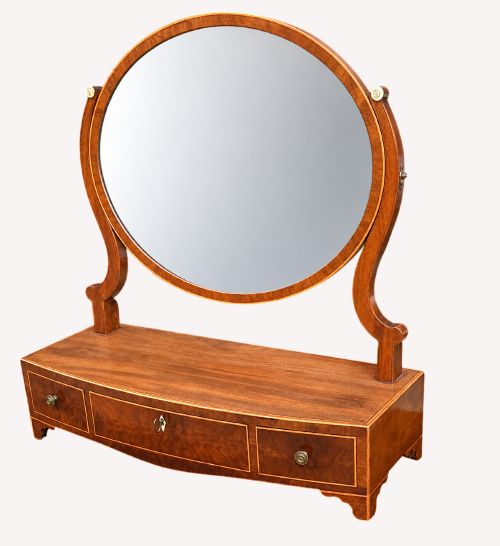
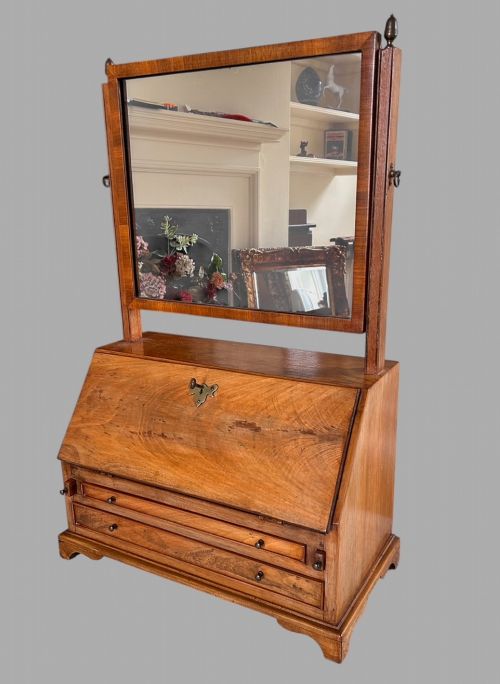
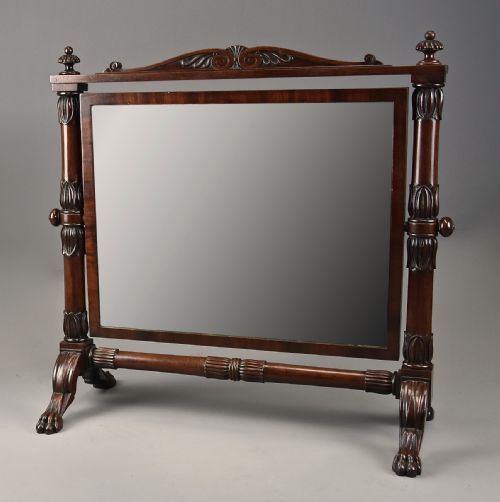
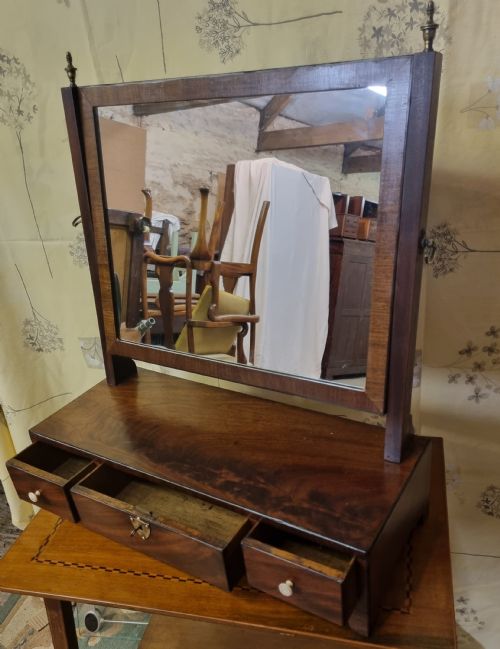
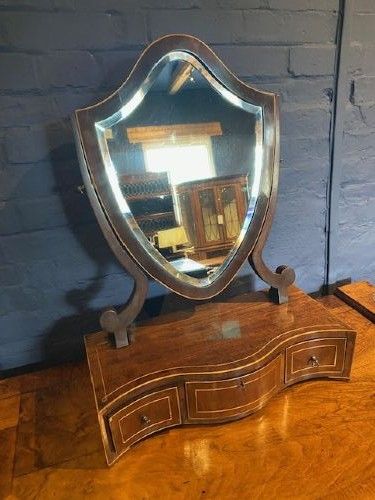
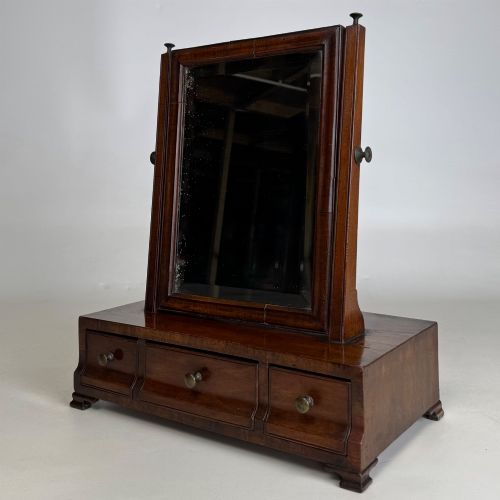
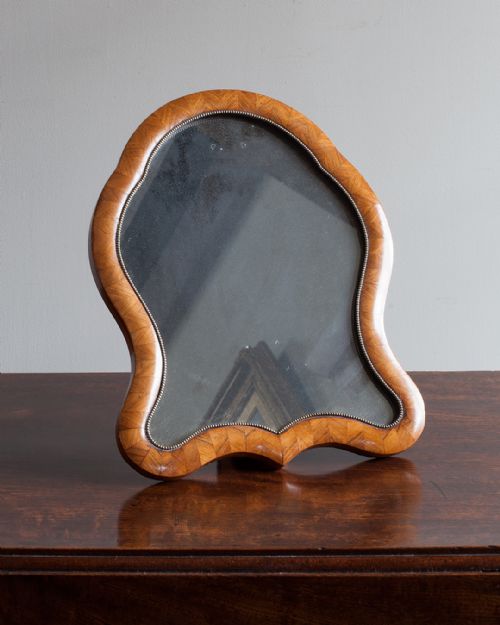
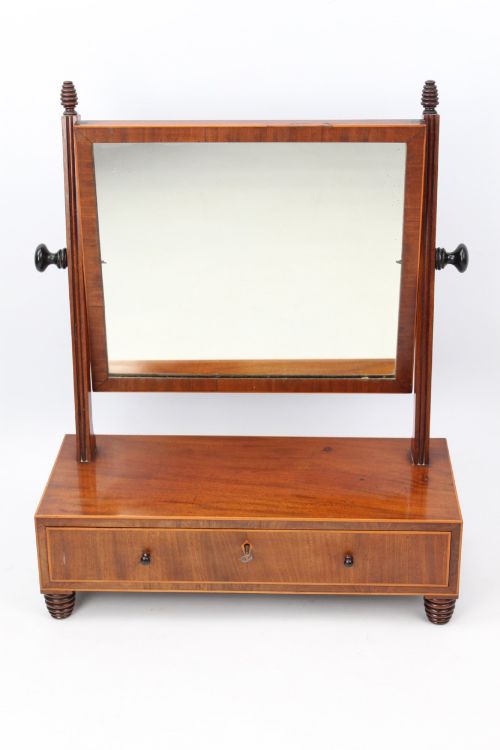
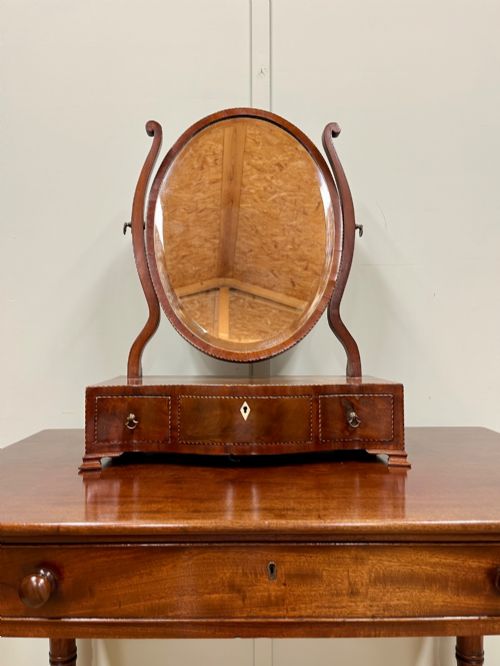
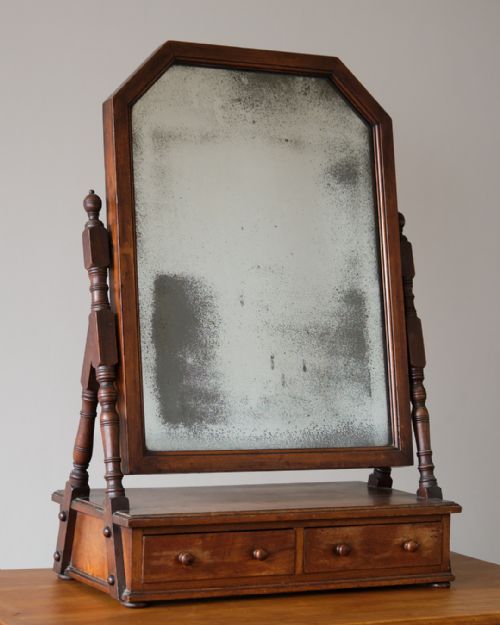
A tabletop swing dressing mirror provides a tilting glass mounted on a frame, designed to sit upon furniture for personal grooming. These pieces take various forms, including simple toilet glasses, oval shapes, shield frames, and versions incorporating small drawers or bureau fitments beneath the glass.
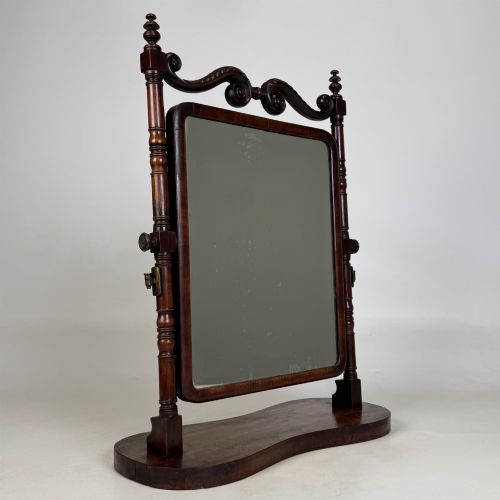
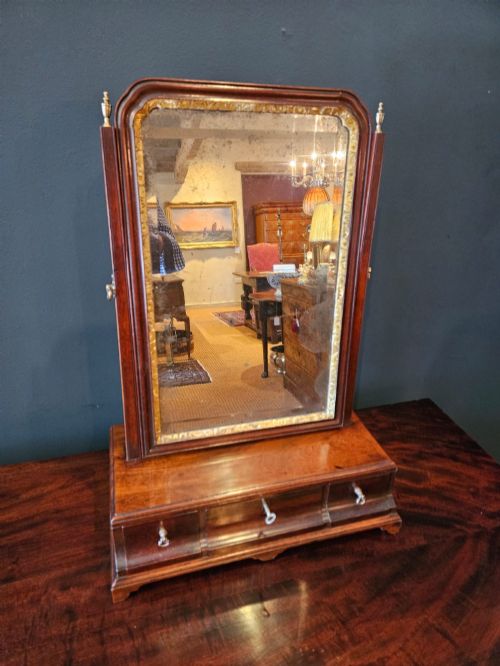
The versions most commonly met on this page belong to the Georgian and 19th Century periods, frequently constructed in mahogany. Buyers encounter rectangular plates, shield-shaped glasses, and mirrors with serpentine bases or multiple small drawers.
Earlier examples extend back to the 18th Century in walnut, while later pieces stretch into the Edwardian era in oak and inlaid satinwood. Object names span toilet mirrors, dressing glasses, and table mirrors, all sharing the central mechanism of a pivoting glass.
Materials and construction methods
Makers utilised solid timbers and veneers such as mahogany, walnut, satinwood, and kingwood for the frames and box bases. Brass fittings, including pivot screws, side arms, and drawer handles, provide the mechanical support for the swinging glass.
Joinery methods involved precise dovetailing for the small drawers housed in the box bases, alongside turned upright supports. Mirror glass is set within rebated frames, sometimes augmented with giltwood, parcel-gilt details, or crossbanding.
Small bone escutcheons and tiny secret drawers remind us that past generations guarded their pins and powder very closely.
Distinctions in quality and execution
Quality separates pieces through the selection of timber figures, such as highly grained Cuban mahogany or figured walnut veneers. Finely executed crossbanding, delicate stringing, and well-proportioned brass work elevate standard examples.
Structural integrity of the pivot mechanism and the retention of original mirror glass and drawer linings influence the standing of an individual piece. Cabinetmaker skill is visible in the crispness of mouldings and the tight dovetailing of the base compartments.
Heal & Sons
The Tabletop Swing Dressing Mirror Glossary
- Toilet mirror
- A smaller dressing mirror designed to stand on a table or chest. These often feature a box base fitted with small drawers for jewellery or cosmetics.
- Shield mirror
- A dressing glass shaped like a heraldic shield. The curved top distinguishes it from rectangular plates common in earlier and later periods.
- Crossbanding
- A strip of veneer applied across the grain of the primary wood surface. This technique creates a contrasting border around drawer fronts or mirror frames.
- Cheval mirror
- A full-length or large tabletop mirror supported by a standing frame. It allows the glass to swing through a full circle on vertical posts.
- Parcel-gilt
- Partially gilded woodwork where gold leaf highlights specific carved details. It appears on Georgian frames alongside dark mahogany or walnut.
Tabletop Swing Dressing Mirror: Frequently Asked Questions
What is a tabletop swing dressing mirror?
A tabletop swing dressing mirror is a portable glass mounted on pivots between two upright posts, allowing the user to adjust the angle. It typically rests on a small box base equipped with drawers.
These pieces served a practical purpose in bedrooms and dressing rooms for centuries, providing a dedicated surface for daily grooming and storing small personal items.
How do I date a dressing mirror?
Dating relies on timber choice, hardware styles, and construction details visible in the frame and drawer joints. Georgian pieces often feature mahogany and fine dovetails, while Victorian and Edwardian examples introduce inlaid satinwood and oak.
Changes in mirror plate thickness and the shape of the frame, from Queen Anne walnut arches to 19th-century shields and rectangles, also indicate the period.
Were these mirrors used for writing?
Standard dressing mirrors were used solely for grooming, but specific hybrid forms exist on this page. Examples with bureau fitments combine a slanted writing flap and interior compartments with the pivoting mirror above.
This dual function suited smaller domestic spaces where individual pieces of furniture needed to serve multiple roles.
How should I place a table mirror?
Position the mirror on a sturdy chest of drawers, sideboard, or dressing table that matches its proportions and wood tone. Ensure the surface is level so the base sits evenly without straining the joints.
Keep the piece away from direct sunlight and damp environments to protect the antique wood finish and the silvering on the glass plate.