
Tabletop Miniature Cabinet
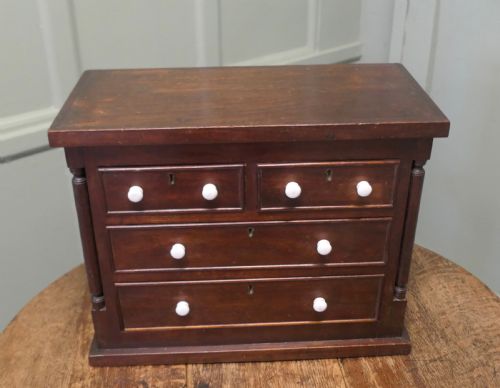
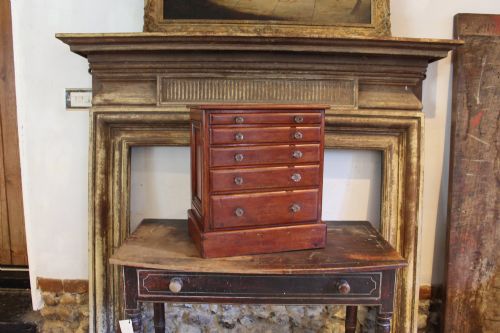
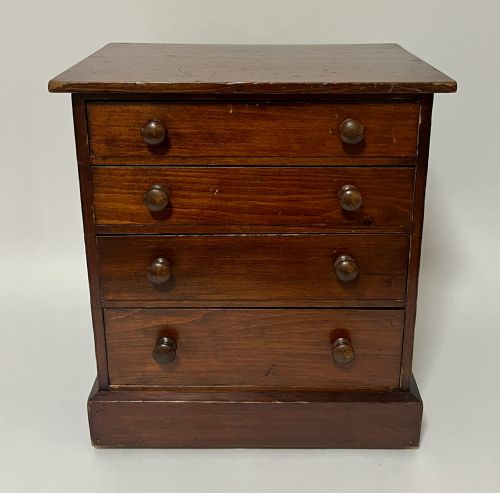
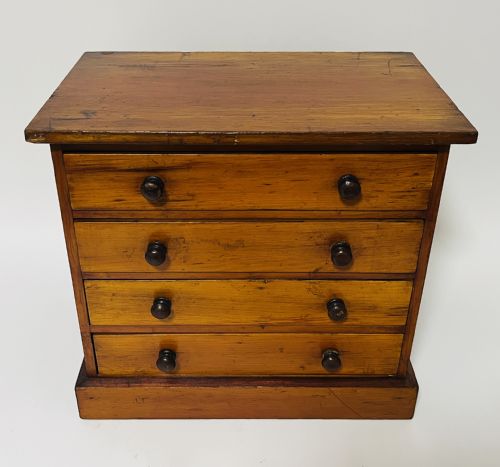
A tabletop miniature cabinet packs the presence of full-scale furniture into a portable scale designed for desk or shelf placement.
Tabletop Miniature Cabinet
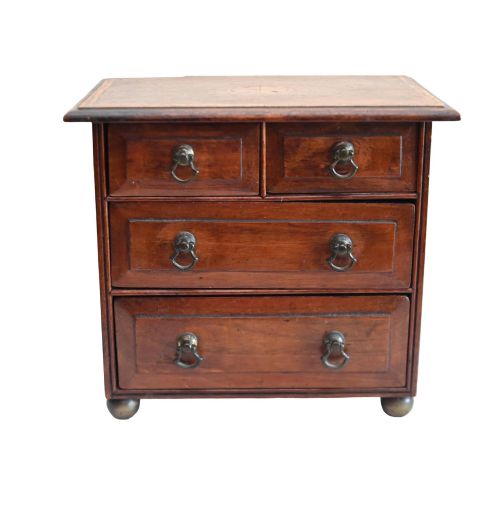
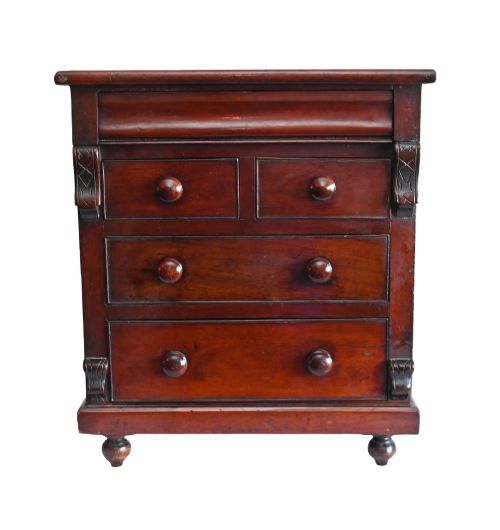
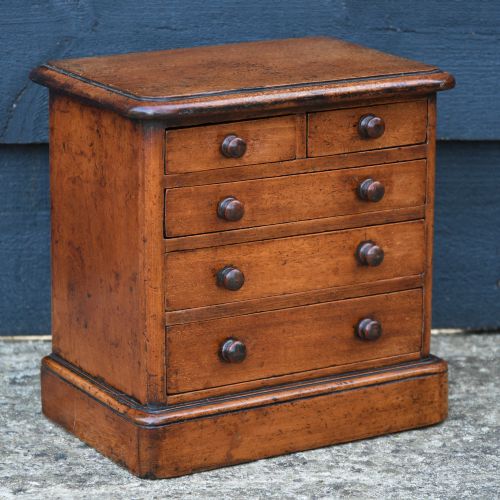
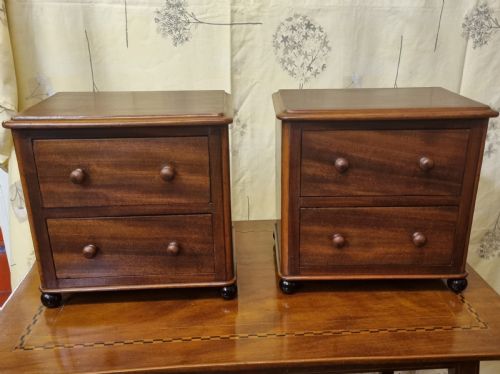
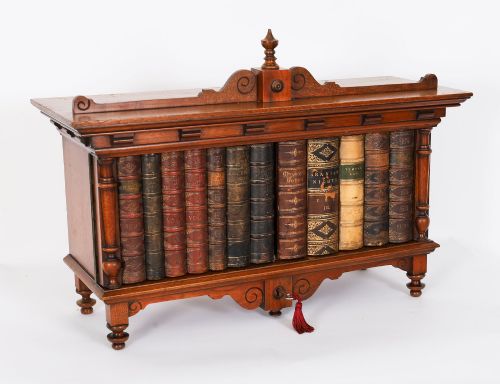
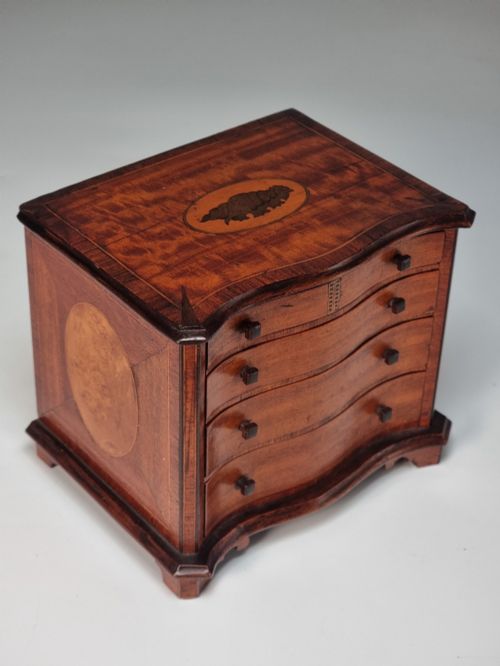
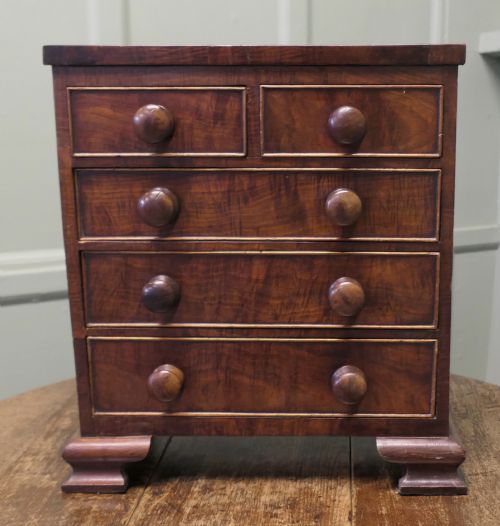
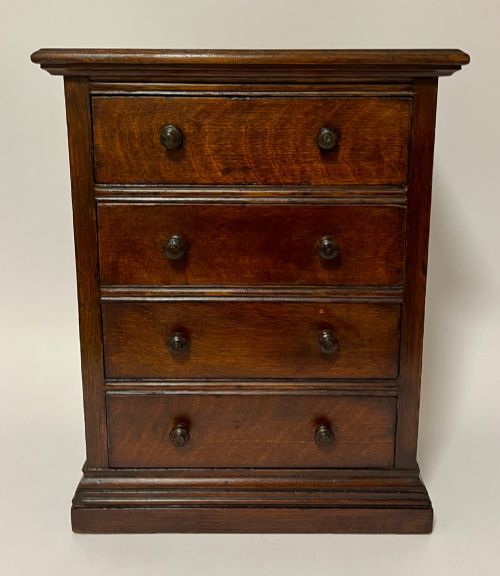
A search for a tabletop miniature cabinet uncovers a diverse array of small-scale furnishings designed to sit on desks, tables, or sideboards. The pieces available span several centuries, including Georgian, Regency, and Victorian periods, alongside later twentieth-century examples.
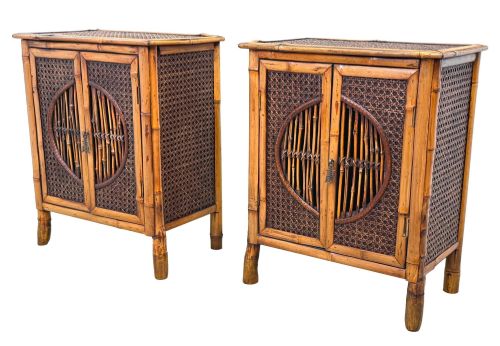
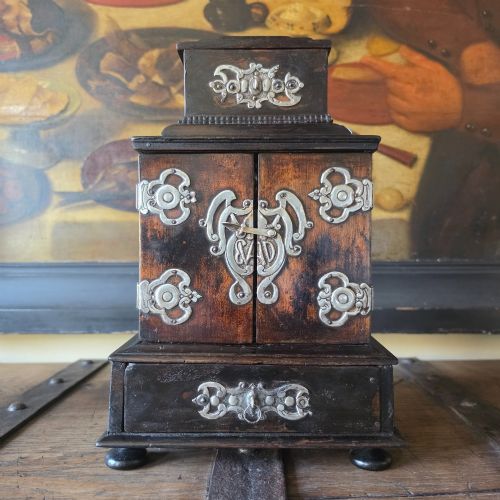
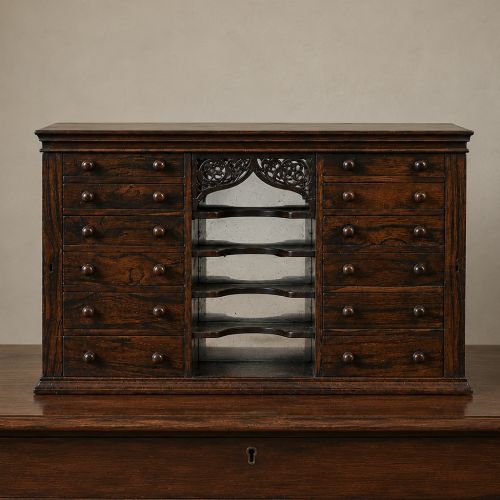
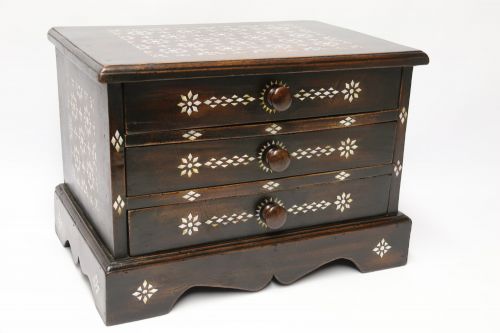
The objects take many forms, from miniature chests of drawers and collectors' cabinets to spice cabinets, jewellery boxes, and small cupboards. Most examples function as desktop storage for small valuables, specimens, or documents, while others reflect the skilled work of cabinet makers demonstrating their proficiency.
Materials vary widely across the selection, featuring timbers such as mahogany, oak, walnut, burr walnut, satinwood, and rosewood, often accented with brass hardware, glass panels, and inlaid details.
Materials and Construction
Cabinet makers constructed these small pieces using traditional joinery methods suited to fine timber, employing solid woods and decorative veneers like burr walnut and satinwood over secondary framing. Many feature hand-cut dovetails on the drawer construction and precise joints designed to maintain stability at a reduced scale.
Surface finishes range from polished French polish on mahogany and walnut surfaces to stained pine, lacquer, and carved ornamentation. Fitted interiors often include brass locks, mirrored doors, or specialised shelving configured for specimen storage or jewellery.
Secret drawers tucked behind main compartments offer a hidden space for the most diminutive treasures.
Quality and Craftsmanship
The standard of a tabletop miniature cabinet depends heavily on the precision of the joinery and the selection of timber veneers. Superior examples display carefully matched grain patterns, tight dovetails, and well-fitted drawers that operate smoothly within their frames.
Hardware choice and interior detailing also separate standard utilitarian boxes from finer display pieces. Original brass handles, locks with working keys, and thoughtful internal layouts elevate the execution of the piece.
A. F. Lloyd, Bideford
The Tabletop Miniature Cabinet Glossary
- Apprentice piece
- A small-scale item created by a craftsman to demonstrate skill and secure master status within a guild. These pieces often mirror full-sized furniture designs with high precision.
- Collectors cabinet
- A specialised piece featuring multiple small drawers or glazed compartments designed to organise natural history specimens, coins, or medals. They frequently include secure locking mechanisms.
- Dovetail
- A traditional wood joint formed by interlocking wedge-shaped fingers, prized for its tensile strength and resistance to being pulled apart. It appears frequently in drawer construction.
- Serpentine
- A furniture front characterised by a wavy contour featuring a convex centre flanked by concave curves. This shape requires advanced woodworking skill to execute properly.
- Specimen cabinet
- A housing unit built specifically for the display and protection of small scientific or natural specimens such as shells, minerals, or insects. These often contain shallow, dust-sealed drawers.
Tabletop Miniature Cabinet: Frequently Asked Questions
What is a tabletop miniature cabinet?
A tabletop miniature cabinet is a scaled-down piece of furniture designed to sit on a desk, table, or chest rather than the floor. These items replicate the style and function of full-sized furniture.
They serve as decorative objects and practical storage units for small valuables, letters, or collections.
How do I care for antique wood cabinets?
Maintaining wooden tabletop cabinets involves keeping them out of direct sunlight and away from rapid temperature changes that can crack timber and veneers. Regular dusting with a soft, dry cloth preserves the finish.
Applying occasional specialist wax helps nourish older polished surfaces without building up heavy residues.
How can I tell the period of a miniature cabinet?
Dating these cabinets requires examining the construction methods, timber choices, and prevailing stylistic details of the era. Georgian pieces often display clean classical lines in oak or mahogany, while Victorian examples frequently feature burr walnut and heavier decorative hardware.
Interior construction details, such as drawer linings and handmade fixings, provide further clues to the manufacturing date.