



Tabletop Brass Candle Holders
Tabletop brass candle holders bring warmth and period character to a room, spanning Georgian elegance through to Arts and Crafts simplicity.
Tabletop Brass Candle Holders
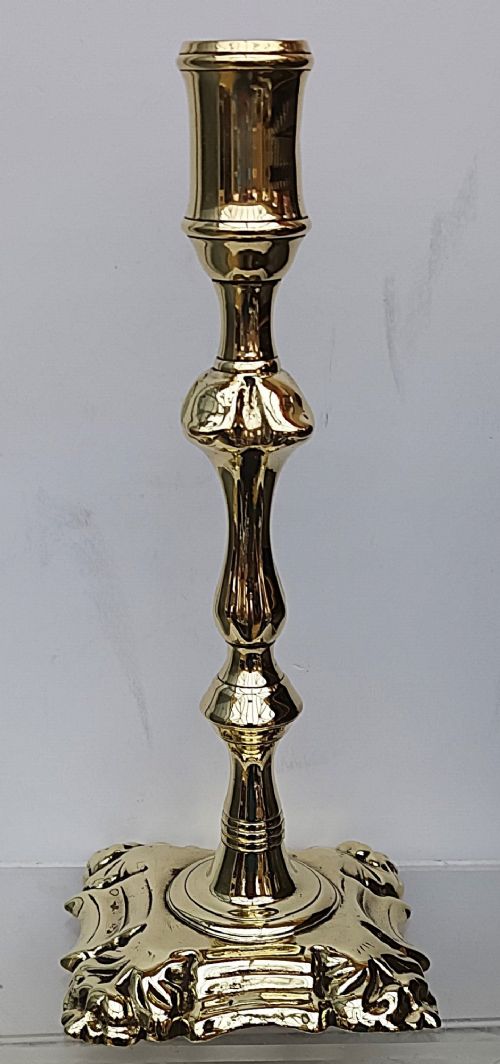
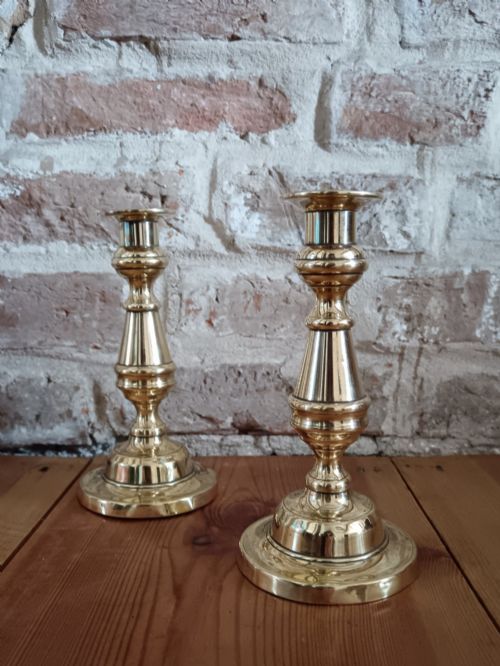
Tabletop brass candle holders encompass single candlesticks and multi-armed candelabra designed for domestic illumination across the eighteenth, nineteenth, and early twentieth centuries. When searching for tabletop brass candle holders, buyers encounter varied iterations ranging from restrained Georgian petal bases to ornate Regency ormolu and later Edwardian pairs.
The selection reflects distinct design movements, incorporating Gothic revival motifs, Arts and Crafts restraint, and nineteenth-century French styling. Most examples appear as matched pairs, though individual pieces and larger candelabra also emerge within the inventory.
Origins span English workshops and continental makers, utilising brass alongside complementary materials like mahogany and marble. Each piece demonstrates the domestic lighting requirements of its respective period, from eighteenth-century domestic spaces to early twentieth-century interiors.
Materials and construction methods
Makers utilised cast and turned brass, often combining fabrication techniques to achieve both structural rigidity and decorative detail. Ormolu and gilt metal surface treatments appear on high-status French and Regency pieces, adding reflective metallic lustre.
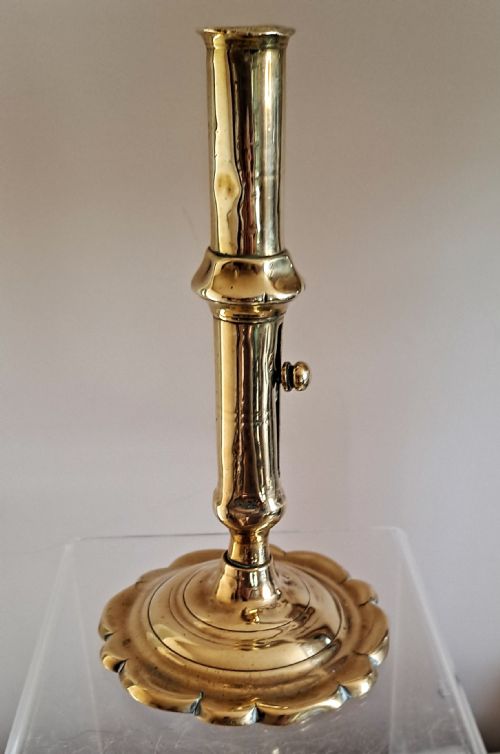
Secondary materials such as mahogany and marble integrate into specific designs, particularly in-turned wooden shafts mounted on brass bases or stone plinths providing weighted support. Ejector mechanisms incorporated into nineteenth-century examples allowed users to raise candle remnants easily.
Ejector candlesticks solved the eternal domestic grievance of digging stubborn tallow stubs out of deep sockets with a butter knife.
Assessing craftsmanship and finish
Quality reveals itself in the crispness of casting detail and the weight of the metal used in the construction. Finer examples display precise turning on the lathe and careful hand-chasing on ormolu surfaces, whereas simpler utilitarian items rely on basic casting with minimal subsequent refinement.
The integrity of construction, such as snug joints between component parts and the stability of the base, distinguishes superior items. Ormolu and gilt finishes show variation in durability and depth of colour, reflecting the original workshop investment in materials and time.
The Tabletop Brass Candle Holders Glossary
- Ormolu
- Gilded bronze or brass applied to decorative arts, providing a bright gold-coloured finish. This technique was widely utilised in French and Regency pieces.
- Ejector
- A mechanical internal slide operated via a side knob that pushes the remaining candle stump out of the socket. This practical addition became common in nineteenth-century designs.
- Petal base
- A distinctive eighteenth-century foot design shaped like overlapping flower petals. It provides a stable weighted foundation for slender stems.
- Candelabra
- A branched lighting fixture holding multiple candles simultaneously. These range from simple two-arm variations to grand six-light examples.
- Gilt metal
- Base metal treated with a thin layer of gold or gold-coloured wash to simulate solid precious metal. It offers decorative appeal at a more accessible production cost.
Tabletop Brass Candle Holders: Frequently Asked Questions
How do I clean old brass?
Gentle dusting with a soft cloth preserves the accumulated patina valued by collectors. Avoid aggressive chemical polishes that strip historical surface character.
Warm soapy water and a soft brush can remove stubborn grime from crevices without harming the metal underneath.
What is an ejector candlestick?
An ejector incorporates an internal mechanism with a small thumb lever on the shaft. Sliding the lever upward raises the remaining wax stump for easy removal.
This ingenious nineteenth-century feature prevented burnt fingers and wax buildup inside the socket.
How can I date a piece?
Stylistic clues such as Georgian petal feet, Regency ormolu, or Arts and Crafts simplicity point toward specific eras. Construction marks, casting seams, and base construction also offer reliable chronological indicators.
Comparing weight, proportion, and manufacturing methods helps place an item within the eighteenth, nineteenth, or early twentieth century.