



Turned Brass Candle Sticks
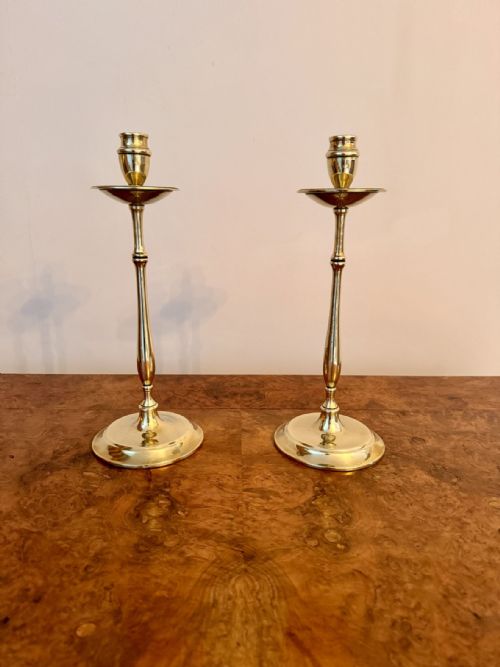
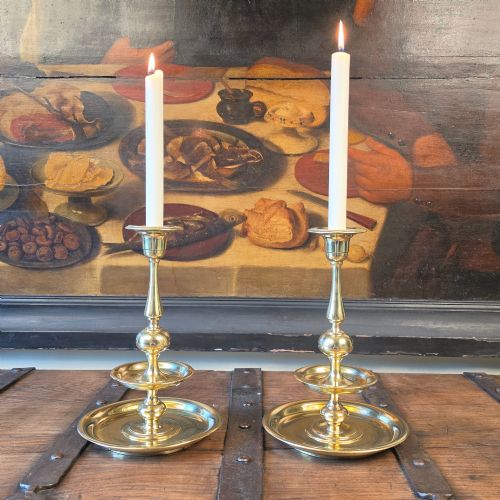
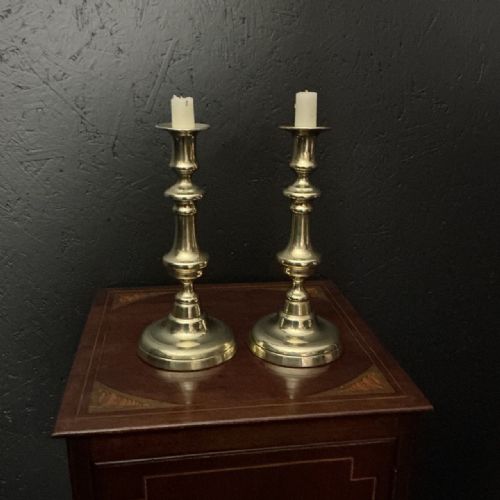
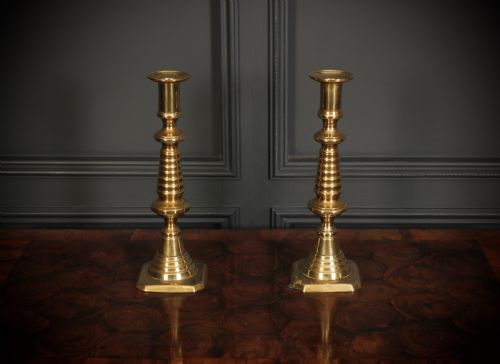
These turned brass candle sticks bring weight and bright reflection to a room, offering the solid construction collectors seek in period metalwork.
Turned Brass Candle Sticks
When you search for turned brass candle sticks, you encounter items designed to hold illumination securely upon tables and desks. These pieces range from compact chamber sticks to tall pairs meant for formal settings.
The selections on this page lean heavily toward the Victorian era and the nineteenth century, alongside earlier Georgian examples and later Edwardian variations. Most survive in pairs, though single items and chamber stick formats appear regularly.
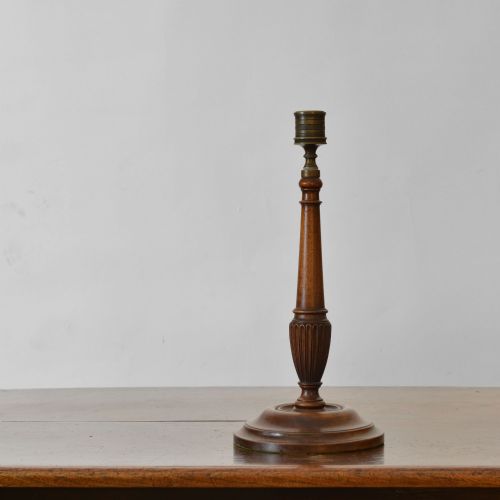
Makers often combined brass with timbers such as mahogany and walnut, creating mixed material objects that display both turned wood shafts and metal sockets. Such variation gives the buyer a choice between pure metal construction and wood-mounted designs.
How they were made
The creation of these pieces relies primarily on brass casting and lathe turning, methods that shape the metal into smooth shafts and flared bases. Founders poured molten brass into moulds before mounting the cooled sections on lathes for precise finishing and detailing.
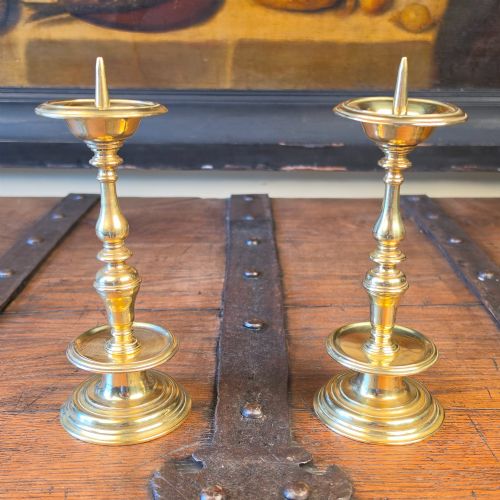
Many items incorporate turned mahogany, walnut, or oak components alongside the brass elements, joined securely to create balanced desk or table accessories. Some examples from the Low Countries and other regions demonstrate distinct historical casting methods like pin or pricket configurations.
Listings feature items spanning from the seventeenth to the twentieth century, combining solid brass with mahogany, walnut, and oak.
What varies in quality
The distinction between average and superior examples rests in the substance and weight of the metal. Heavier castings provide better stability and demonstrate a more substantial use of brass during production.
Proportion and detail separate finer items from standard ones. Well-defined turning rings, crisp edges on hexagonal bases, and harmonious pairings indicate superior craftsmanship and careful workshop execution.
The Turned Brass Candle Sticks Glossary
- Chamber stick
- A low candlestick fitted with a pan to catch dripping wax and a ring handle for carrying from room to room. These portable pieces often include a matching snuffer.
- Pricket
- A sharp metal spike upon which a candle is impaled rather than dropped into a socket. This medieval form appears in early European examples.
- Sconce
- The metal socket at the top of a candlestick designed to receive and hold the base of the candle. It protects the lower shaft from melting wax.
- Turned
- Shaped on a lathe while rotating, creating circular profiles, rings, and baluster forms in metal or wood. This method provides the characteristic silhouette of the shaft.
- George III style
- Design characteristics reflecting the latter half of the eighteenth century, marked by classical restraint and balanced proportions. Items in this style often incorporate rich mahogany and brass mounts.
Turned Brass Candle Sticks: Frequently Asked Questions
How do I date a brass candlestick?
Dating relies on observing base shapes, manufacturing marks, and assembly methods. Earlier eighteenth-century forms often show hexagonal bases and multi-part construction, whereas Victorian examples tend to be heavier and more standardised in production.
Examining the wear patterns and the type of metal finishing helps confirm the period. Comparing the piece against known styles like Georgian or Edwardian provides further chronological context.
Are these candlesticks safe to use with modern candles?
Most antique sockets accommodate standard candle diameters quite well, though slight variations in sizing do occur. Checking the fit before lighting prevents any imbalance during use.
Using dripless candles or inserting a small disc at the base of the socket secures the candle firmly. This protects the historic metal from excessive wax buildup and potential scratching.
How should I clean antique brass?
Gentle dusting with a soft cloth removes everyday dirt without disturbing the aged surface. Avoid harsh chemical polishes that strip away historical patina and diminish the visual depth of the metal.
If cleaning is necessary, warm soapy water applied with a soft brush cleans recessed turned details safely. Thorough drying prevents water spotting and maintains the stable finish.