


Brass Dining Candlesticks
Brass dining candlesticks bring genuine warmth to a table, offering the solid weight and quiet gleam that collectors seek.
Brass Dining Candlesticks
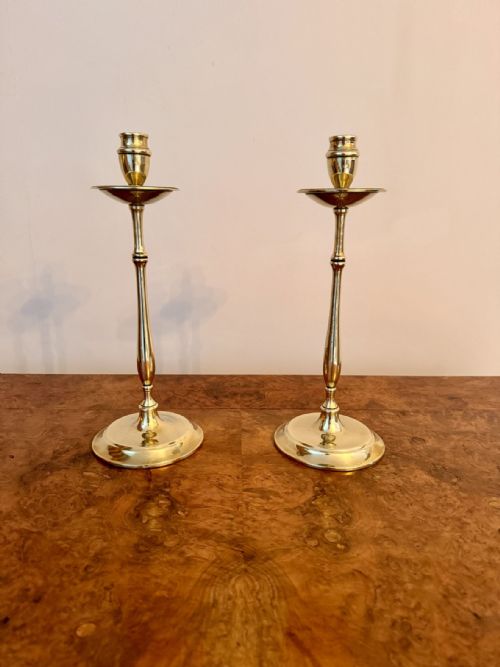
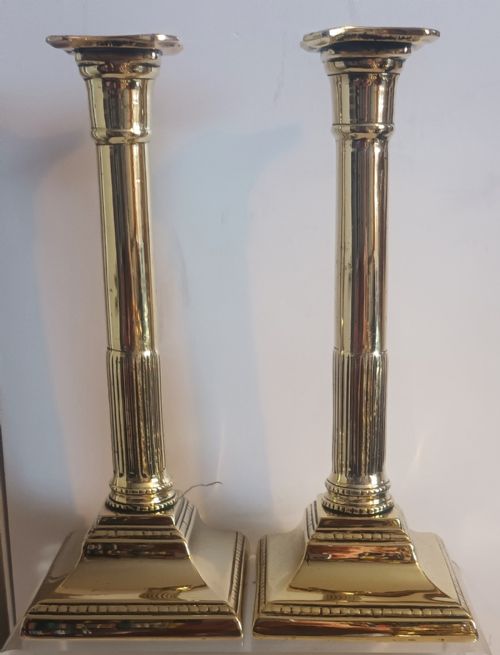
Brass dining candlesticks are sturdy candle holders designed for the table, appearing across Georgian, Victorian, and Edwardian periods. The selection here leans heavily towards matched pairs, spanning simple baluster forms to more ornate designs.
Most examples originate from English workshops, utilising traditional cast and turned methods. Alongside standard brass, the listings include silver plate, copper, glass, and lead crystal pairings.
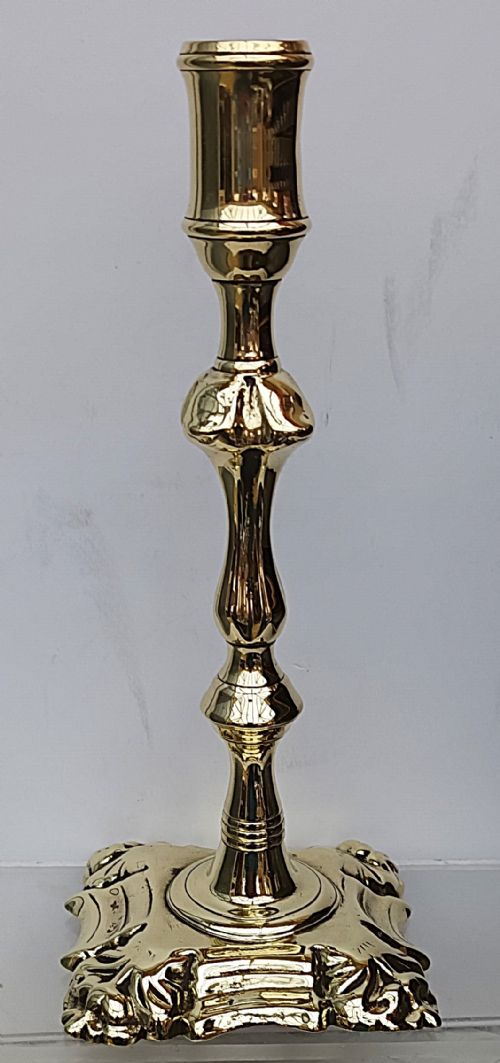
Forms range from straightforward domestic lighting to telescopic and candelabra variants. Buyers encounter styles labelled as Queen Anne, George III, and traditional Georgian alongside Victorian work.
How they were made
Maker's workshops cast these pieces in sections using traditional sand or lost-wax techniques before turning them on lathes for smooth profiles. This construction leaves visible seam lines on older examples and accounts for the solid heft of genuine period brass.
Surface finishing involved hand-polishing and occasionally silver plating over copper or base metals. Glass and lead crystal components appear alongside metal, fixed with pins or collars to hold the sockets securely.
What varies in quality
Quality rests primarily on the crispness of the casting and the thickness of the metal. Finer nineteenth and eighteenth-century examples retain sharp mouldings and well-balanced proportions without excessive wear.
The sophistication of the mechanism matters on specialised forms such as telescopic designs. Heavier castings and substantial base weighting separate ordinary domestic lighting from exceptional collector pieces.
The Brass Dining Candlesticks Glossary
- Baluster
- A turned column form with a swelling lower section that tapers upward. This classic shape appears frequently on Victorian and Georgian examples.
- Telescopic
- An adjustable shaft mechanism allowing the height of the candlestick to extend. Harrison Patent models utilise this clever engineering.
- Old Sheffield Plate
- A technique fusing a thin sheet of silver to a copper core before forming the object. This predates modern electroplating.
- Candelabra
- A branched candle holder designed to hold multiple lights simultaneously. These often combine brass or silver plate with glass drops.
Brass Dining Candlesticks: Frequently Asked Questions
How do I date an older candlestick?
Dating relies on base construction, casting seams, and prevailing style markers. Earlier Georgian pieces often show heavy sand-cast bases with distinct pontil marks or hollow undersides.
Victorian and Edwardian items introduce sharper machine turning and varied alloy colours. Comparing base weights and socket designs helps clarify the period of manufacture.
Are these suitable for daily use?
Most antique metal candlesticks function reliably for dining tables if handled with care. Ensuring candles fit snugly prevents wax from spilling onto the metal.
Gentle cleaning maintains the surface without removing historical patina. Silver plated and glass variants require softer cloths to protect the outer finishes.
Do candlesticks always come in pairs?
Many surviving examples are matched pairs intended for mantelpieces or dining tables. Single pieces do appear from earlier centuries due to dispersal over time.
Pairs offer better decorative balance for room settings. The listings here contain multiple matched pairs alongside individual pieces.