
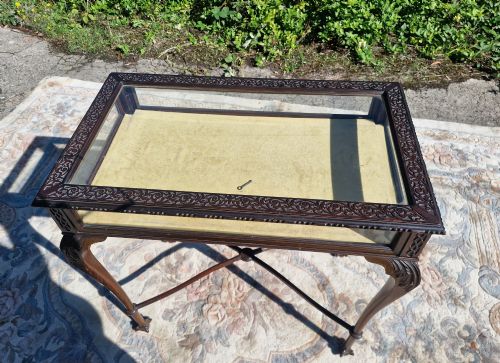
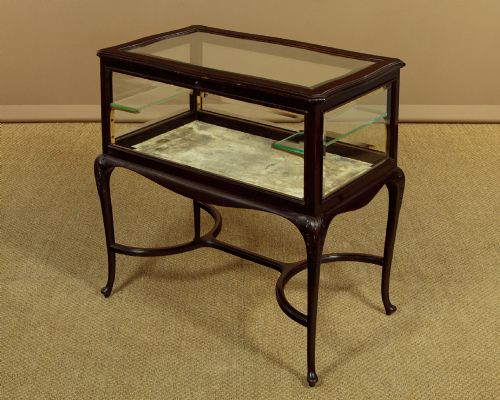


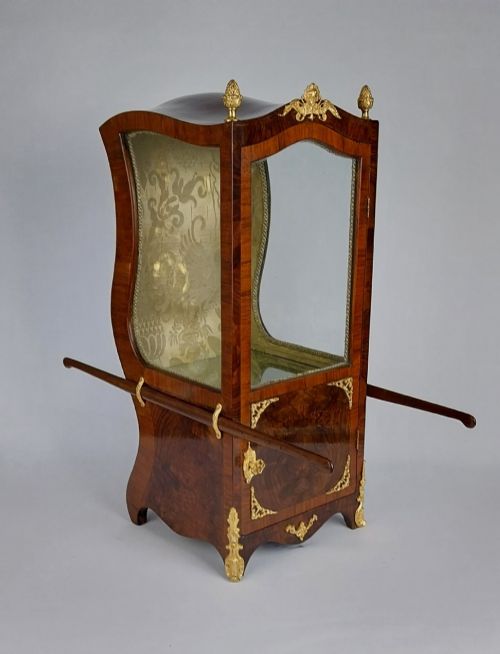


Table Top Display Case
These table top display cases and bijouterie tables let you showcase small collections safely under glass.
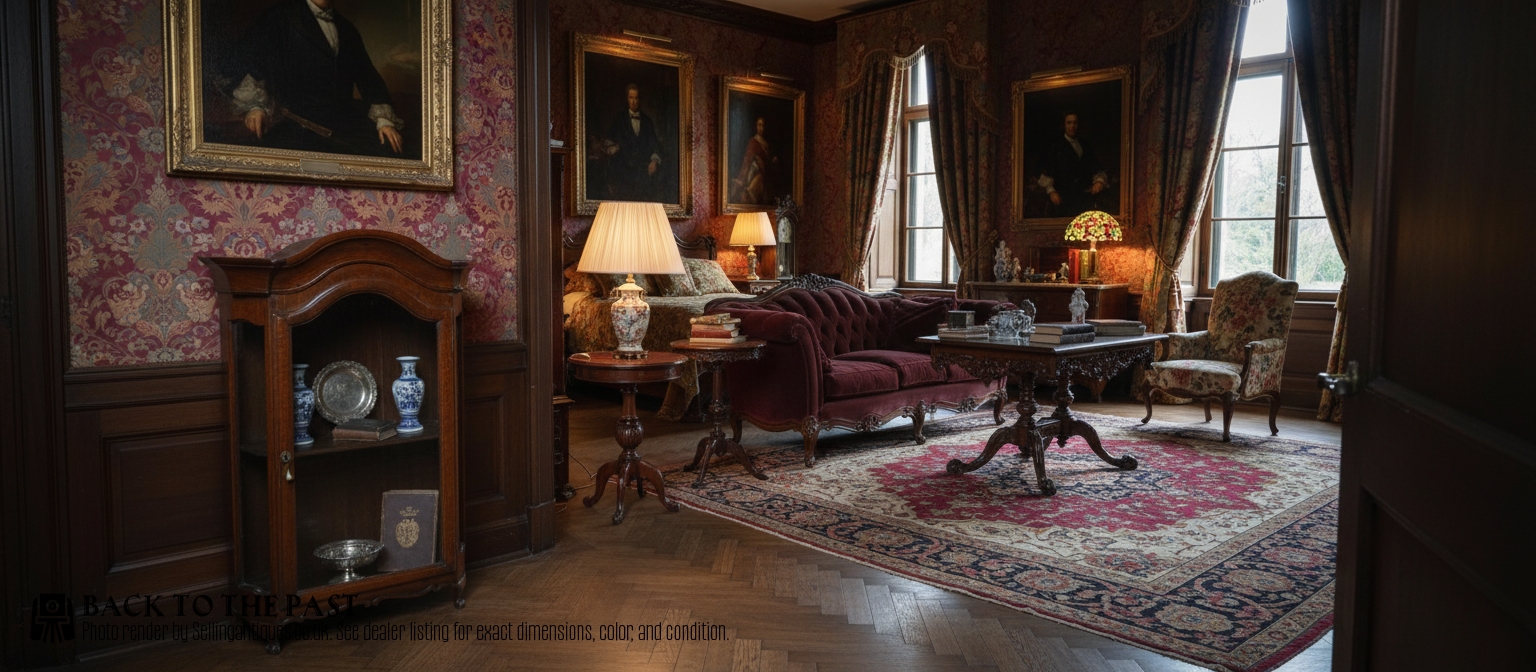
Table Top Display Case
A table top display case is designed to sit on a counter, desk, or another piece of furniture to exhibit small items, jewellery, and curiosities. You will frequently encounter Edwardian and later variations, alongside French examples influenced by Louis XV style and rococo revival.
The form spans various configurations including glazed table top cabinets, bow end shop display counters, and freestanding bijouterie tables with glazed tops. These pieces originate from domestic and commercial settings, ranging from intimate Edwardian drawing rooms to 19th-century retail counters.
Materials commonly include mahogany, rosewood, and kingwood, often mounted with brass and ormolu. Interiors frequently feature fabric, velvet, or silk linings designed to cushion delicate objects placed within the glazed enclosure.
How they were made
Cabinet makers constructed these cases using timbers such as mahogany, rosewood, and oak, frequently incorporating decorative veneers like kingwood. Glass panels are fitted into frames to provide all-around visibility, secured with wooden glazing bars or brass channels.
Metalwork played a significant role in embellishment and structure, utilising cast ormolu and inlaid brass stringing. Interiors were lined with soft textiles including velvet and fabric to create a contrasting background for displayed items.
Commercial shop display counters appear alongside domestic bijouterie tables, reflecting both retail and residential uses.
What varies in quality
The refinement of the timber and veneer selection separates standard commercial pieces from finer domestic furniture. Finely figured mahogany and meticulously matched kingwood veneers indicate a higher grade of craftsmanship.
The quality of the metal mounts, such as gilded bronze ormolu and detailed brass inlay, influences the overall character of the piece. Superior examples feature crisp casting and careful hand-fitting rather than mass-produced uniformity.
Quincy Showcase Works
The Table Top Display Case Glossary
- Bijouterie table
- A glass-topped table specifically designed for displaying small valuables, jewellery, and trinkets. These tables often feature hinged lids for easy access to the lined interior.
- Ormolu
- Gilded bronze applied as a decorative mount to furniture and display cases. This technique was widely utilised in French and English cabinet making during the nineteenth century.
- Kingwood
- A dense, richly figured timber featuring dark violet and brown stripes, frequently used for veneering fine furniture and display tables. It became particularly popular in French-influenced cabinet work.
- Vitrine
- A glass display cabinet intended for exhibiting fine objects and porcelain. The term encompasses both floor-standing cabinets and smaller table top variants.
- Inlay
- A technique where pieces of contrasting timber, brass, or shell are fitted into depressions within a solid wood surface to form decorative patterns.
Table Top Display Case: Frequently Asked Questions
What were table top display cases used for?
These cases were utilised in both homes and shops to exhibit precious items, personal jewellery, and small curiosities while keeping them protected from dust and handling.
Domestic versions typically sat in drawing rooms as bijouterie tables, whereas larger shop display counters served a commercial purpose for merchants.
How do I clean the interior fabric?
Original velvet and fabric linings require gentle dry maintenance, such as very careful surface vacuuming with a soft brush attachment, to avoid disturbing aged textiles.
Introducing moisture or cleaning solvents can cause shrinkage or damage the underlying timber and paper adhesives used during construction.
Can I place these on any surface?
Table top cases and smaller cabinets need a stable, level surface capable of supporting their combined glass and timber weight without shifting.
Heavier examples, particularly those with ormolu mounts and dense hardwood frames, require solid furniture support to prevent door misalignment.
How do I distinguish Edwardian from Victorian examples?
Victorian pieces often display heavier proportions, darker rosewood or mahogany timbers, and elaborate revivalist ornamentation such as ormolu mounts.
Edwardian designs tend to favour lighter mahogany frames, delicate string inlay, and cleaner lines reflecting neoclassical or Edwardian revival aesthetics.