


.JPG)
Table Sugar Sifter
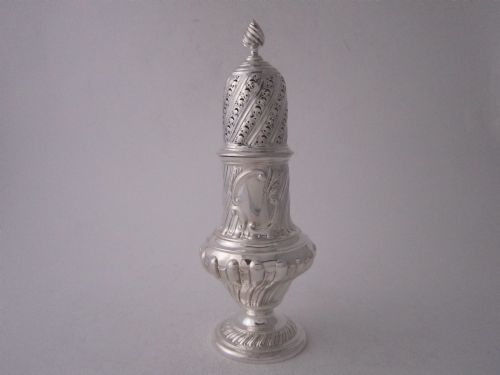
These table sugar sifter pieces bring functional elegance to any dining table, offering refined silver and glass forms designed to dust refined sugar over desserts.
Table Sugar Sifter
A table sugar sifter search reveals a specialised assortment of tableware designed for dispensing powdered or castor sugar during formal dining. The items found here span multiple decades and stylistic revivals, reflecting changing tastes at the dining table.
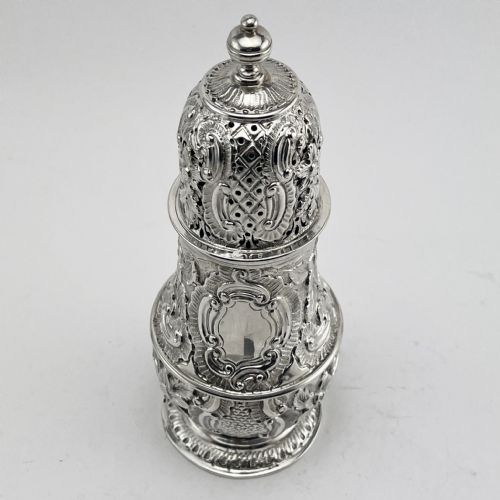
Pieces originate from periods including the Georgian era, Victorian times, Edwardian years, and the Art Deco movement. Styles range from restrained geometric polygon shapes to elaborate Rococo revival designs.
Materials and construction methods
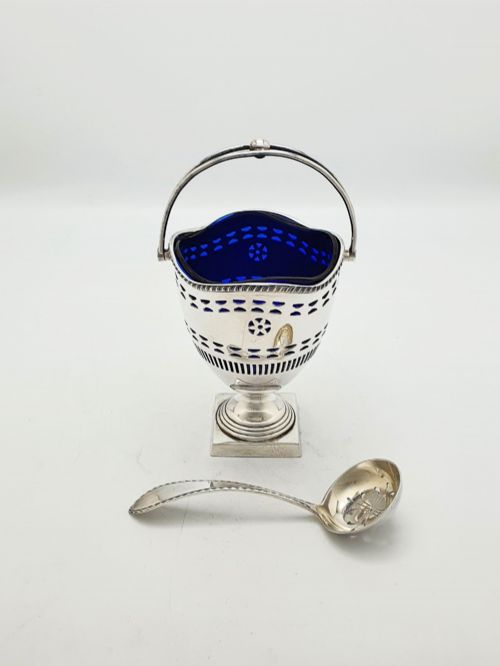
Piercing techniques create the intricate hole patterns on the lids, allowing sugar to shake through evenly. Cobalt glass liners sometimes sit inside pierced bowls, adding deep blue contrast beneath openwork metal.
Brass and silver gilt appear in specific items, whilst fitted cases utilise fabric and leatherette to house delicate sets securely.
Listings feature sterling silver, silver plate, and cut glass across periods from the Georgian era through to the Art Deco movement.
Distinguishing quality across examples
The weight and gauge of the silver distinguish substantial solid pieces from lighter plated alternatives. Thicker metal provides greater durability and a more satisfying heft in the hand during use.
The precision and crispness of the pierced lid pattern separate standard production from finer work. Cleanly cut apertures demonstrate superior craftsmanship in the silversmithing process.
The integration of materials, such as the fit of a silver top onto a heavy cut glass body or the clarity of a cobalt glass liner, indicates the overall standard of manufacture.
Barker Brothers·Horace Woodward and Co Ltd·Roberts and Belk·Berthold Muller Hanau
The Table Sugar Sifter Glossary
- Silver Gilt
- Silver that has been coated with a thin layer of gold on its surface. This technique provides the rich appearance of solid gold while utilising silver as the underlying base metal.
- Pierced
- Metalwork decorated by cutting or piercing holes through the surface to form decorative patterns. In this context, it allows the contents to be shaken out.
- Cobalt Glass
- Deep blue glass often used for liners inside openwork silver vessels. Its intense colour provides a striking visual contrast against polished metal.
- Polygon
- A geometric shape with multiple straight sides, seen in specific Art Deco designs. This form gives the object a faceted profile rather than a traditional rounded contour.
Table Sugar Sifter: Frequently Asked Questions
What is a table sugar sifter used for?
These pieces were employed at the dining table to dust castor sugar or icing sugar over desserts, pastries, and fruit. They allowed diners or servants to dispense fine sugar evenly without clumps.
The perforated lids were engineered specifically to control the flow of sugar onto the plate. Many designs double as decorative centrepiece items when not in active service.
How do I date an antique silver shaker?
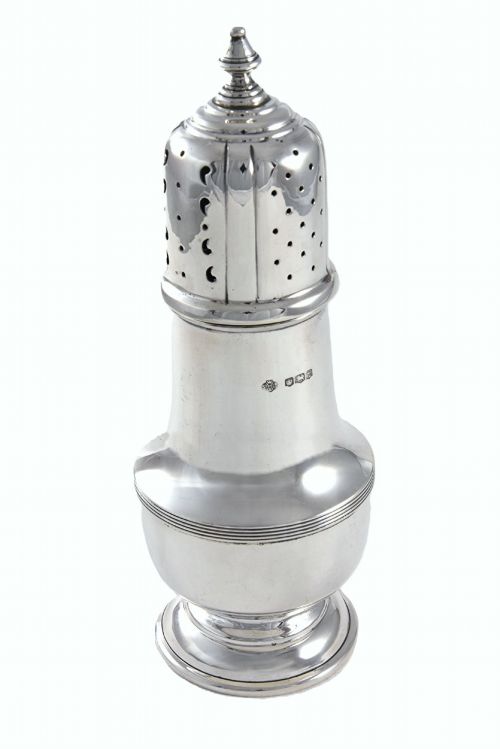
Dating relies heavily on hallmarks stamped into the metal, which indicate the assay office, the year of manufacture, and the silversmith's mark. Stylistic clues such as Art Deco geometric lines or Victorian ornamentation also help narrow the timeframe.
Comparing the manufacturing techniques and any accompanying fitted cases provides further context for the period of origin.
What is the difference between a sifter and a caster?
While the terms are often used interchangeably in historical listings, a caster generally refers to an upright vessel with a pierced dome for shaking. A sifter can also describe flat utensils like berry spoons equipped with perforated bowls for straining.
Both serve the common purpose of separating sugar from larger lumps before it reaches the food.
How should I clean silver sugar shakers?
Silver components require gentle cleaning with a specialised silver cloth or non-abrasive polish to remove tarnish without scratching the metal. Harsh chemical dips should be avoided, particularly on pieces with delicate pierced work.
Glass liners and bodies can be washed separately in warm soapy water, ensuring they are thoroughly dried before reassembly.
Are glass and silver shakers fragile?
Cut glass bodies possess weight and thickness, but the fitted silver tops and delicate pierced areas require careful handling during use and cleaning. Storing them securely prevents accidental chipping of the glass or bending of the metal lids.
Displaying them away from the very edge of a table protects them from knocks in busy environments.