



Vintage Sugar Shaker
A vintage sugar shaker brings silver, cut glass and porcelain onto the dining table to dust pastries and desserts with fine sugar.
Vintage Sugar Shaker
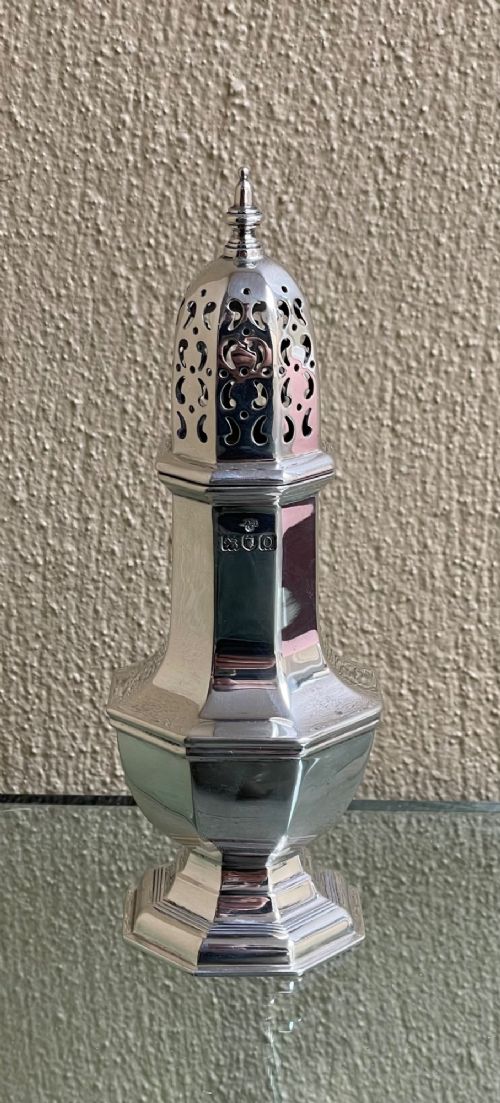
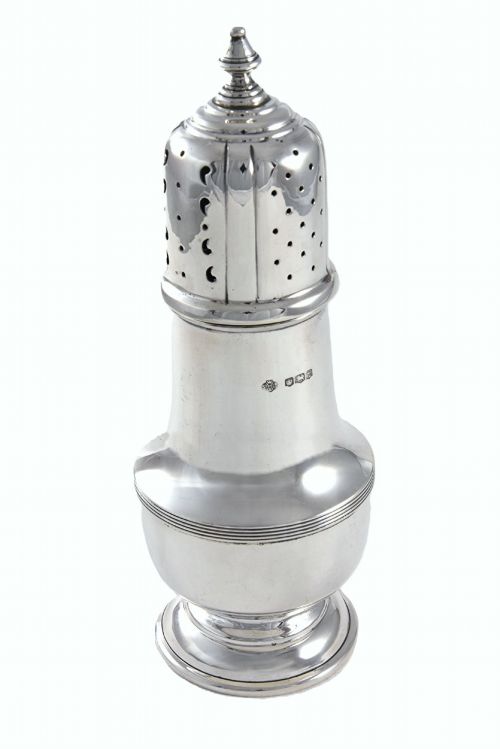
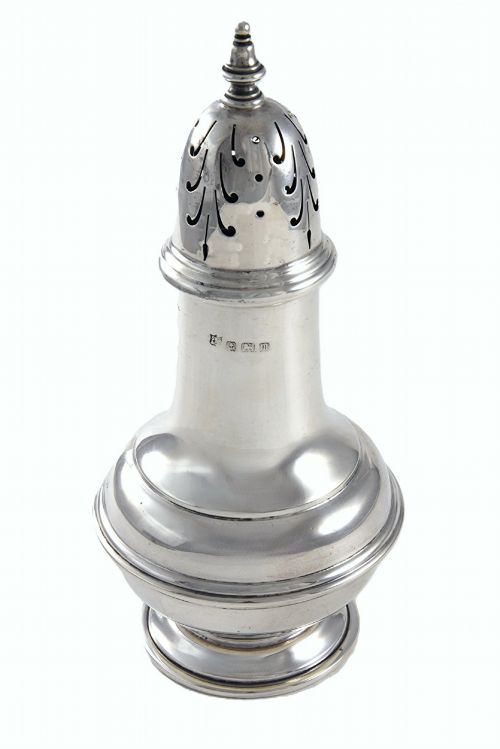
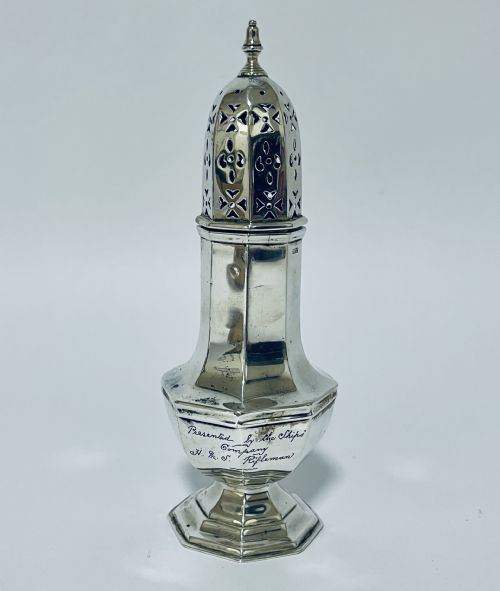
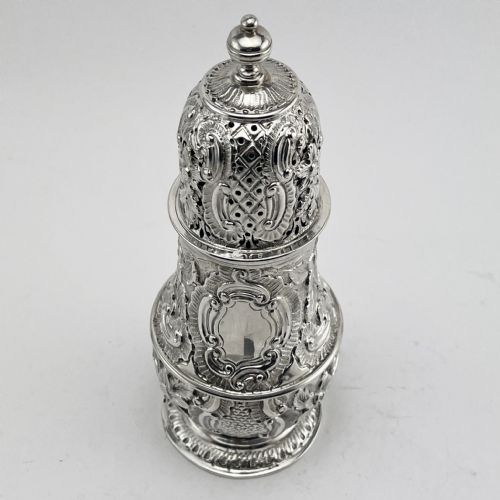
A vintage sugar shaker takes the form of a tall, pierced vessel designed for dispensing sugar onto food at the table. You will frequently encounter solid silver and sterling silver examples dating from the Edwardian period through to the mid-twentieth century.
The selection ranges from classical Georgian revival shapes and Victorian cornucopia designs to clean Art Deco polygon sides. Makers across Birmingham, Sheffield and London produced these domestic table items in various heights and weights.
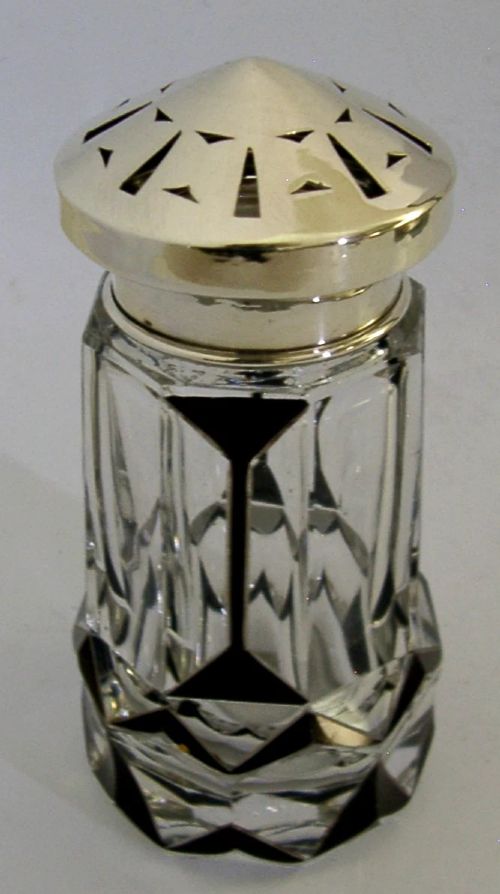
Alongside traditional silver shakers, the evidence includes cut glass bodies with silver tops, hard-paste porcelain pieces, and brass variations used as pounce pots or casters.
How they were made
Silversmiths constructed these vessels using sterling silver sheets shaped by spinning or hammering, often finished with detailed pierced covers that screwed or pushed onto the neck. Cut glass bodies required heavy moulding and wheel-cutting before mounting with silver collars and pierced lids.
Porcelain examples utilised hard-paste ceramic bodies fired at high temperatures and decorated with hand-painted motifs or gilding. Gold leaf and silver gilt finishes provided decorative contrast on select high-end presentation pieces.
Some Victorian shakers doubled as cornucopias, bringing mythological abundance straight to the afternoon tea table.
What varies in quality
Quality rests in the crispness of the piercing on the cover and the weight of the metal in the hand. Thicker gauge silver ensures the body resists denting during everyday handling.
The precision of the maker's hallmarks and the clarity of cut glass facets separate standard production items from finer workshop pieces.
Barker Brothers·James Dixon & Sons Ltd·Evald Nielsen·Horace Woodward & Co Ltd·Roberts & Belk·Berthold Muller Hanau
The Vintage Sugar Shaker Glossary
- Sugar caster
- A tall container with a pierced lid used for sprinkling granulated sugar onto food. This term appears interchangeably with sugar shaker and sifter in historical inventories.
- Sterling silver
- An alloy consisting of 92.5 percent silver and 7.5 percent other metals, usually copper. This standard composition forms the majority of the silver vessels on this page.
- Silver gilt
- Silver objects that have been coated with a thin layer of gold on the interior or exterior surfaces. This technique adds richness and protects the base metal from tarnishing.
- Pounce pot
- A small container with a perforated top used to sprinkle resin powder onto parchment before writing. These domestic desk accessories share a very similar physical form to sugar shakers.
Vintage Sugar Shaker: Frequently Asked Questions
How do I clean a silver sugar shaker?
Wash the silver gently using warm soapy water and a soft cloth to remove residual sugar grains without scratching the metal surface. Avoid harsh abrasive dips that strip away the natural patina accumulated over decades.
Dry the vessel thoroughly with a lint-free cloth immediately after washing to prevent water spots from forming on the polished silver or cut glass body.
Are vintage sugar shakers safe to use?
Most solid silver and glass shakers remain entirely functional for everyday table service provided the interior is clean. Inspect the pierced lid to ensure no historical blockages remain in the small holes.
Verify that the threaded or push-fit collar secures the lid firmly to the body before tipping the vessel to dispense sugar.
How do I date a silver sugar shaker?
British silver pieces typically feature a series of hallmarks stamped directly onto the metal, including a town mark, a standard mark, and a date letter. Consulting standard hallmarking guides allows you to pinpoint the exact year of assay.
Stylistic cues such as geometric Art Deco polygon sides or ornate Victorian revival chasing also indicate the manufacturing era when hallmarks are absent or worn.
What is the difference between a shaker and a sifter?
Shakers generally feature domed tops with small round holes intended for free-flowing granulated sugar. Sifters often incorporate flatter, wider pierced plates designed to distribute powdered or icing sugar evenly.
Both terms describe similar forms within tableware categories, though the internal mechanism or hole size often reflects the specific grade of sugar used.