

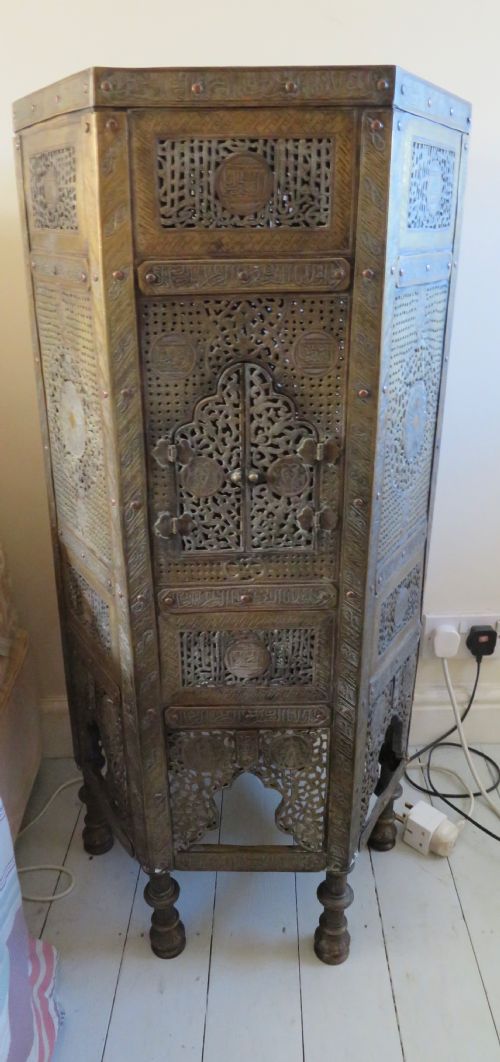


Syrian Inlaid Occasional Table
These syrian inlaid occasional table pieces combine intricate geometric patterns with exotic timbers to anchor a room.
Syrian Inlaid Occasional Table
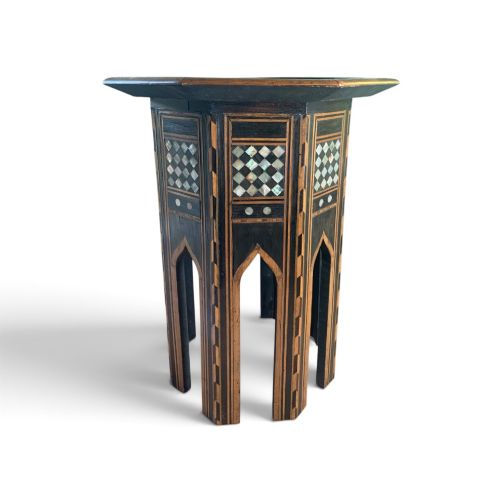
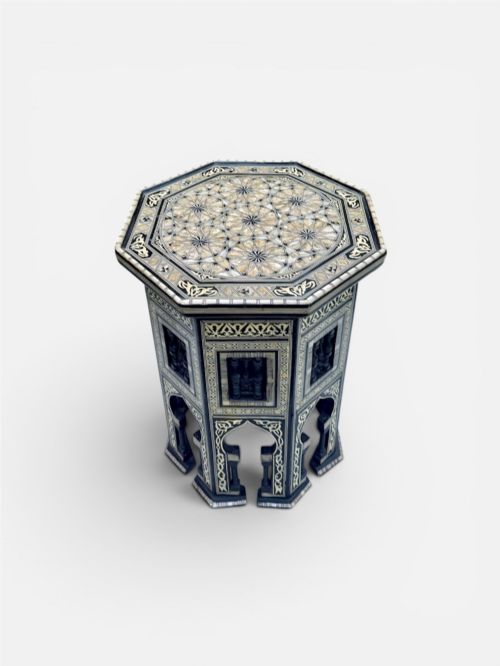
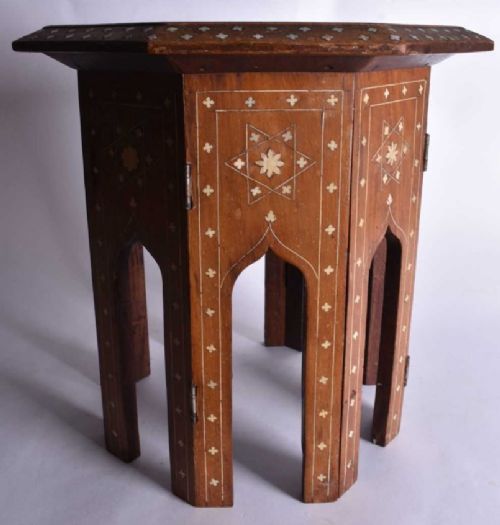
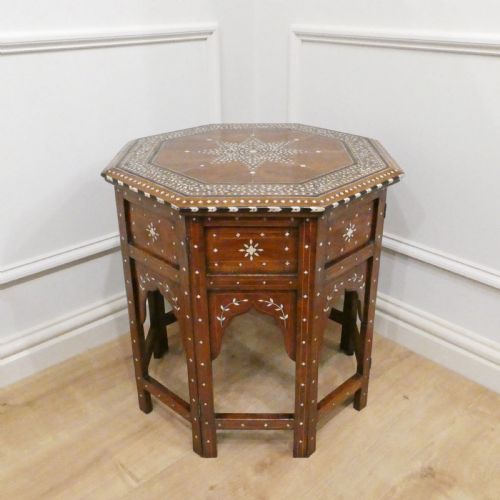
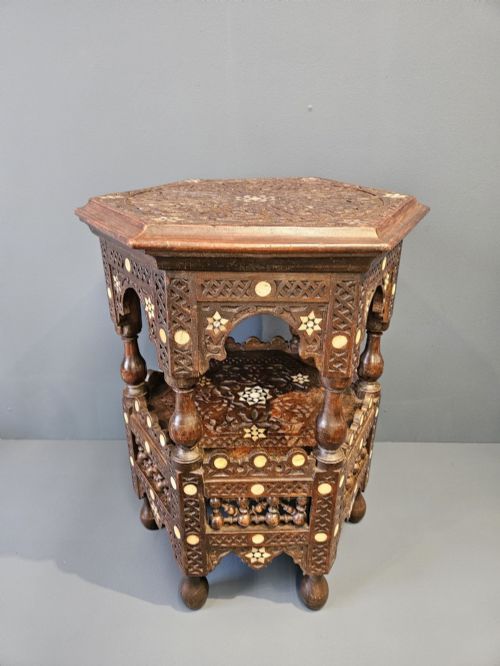
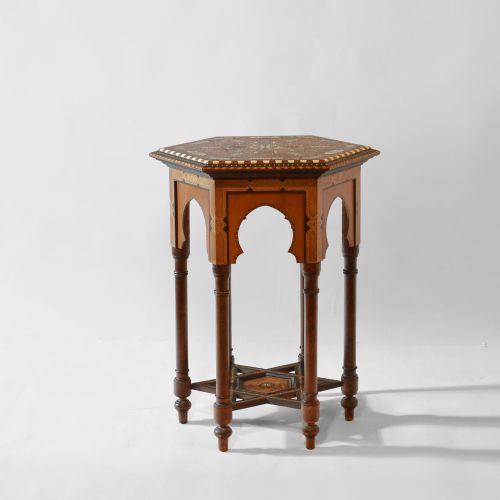
A syrian inlaid occasional table brings distinctive geometric design and intricate craftsmanship into a living space, often appearing as an octagonal or hexagonal form designed for flexible placement.
The pieces on this page span from the late nineteenth century into the early twentieth century, encompassing Moorish revival, Ottoman, and Islamic styles.
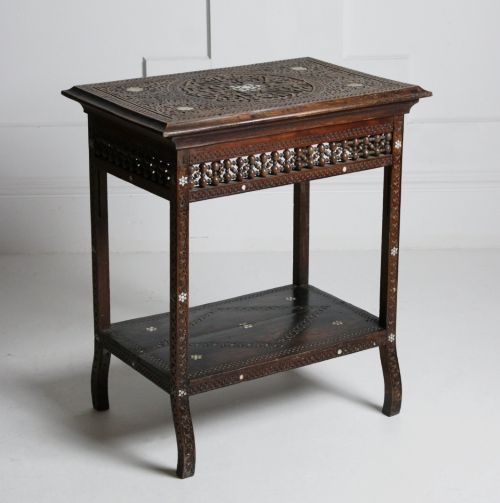
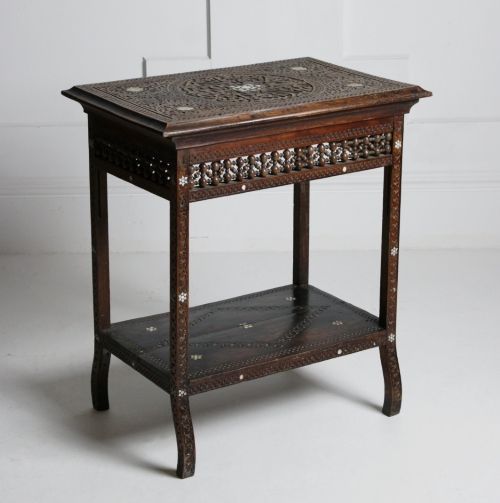
Forms range from compact folding Damascus tables and two-tier side tables to larger centre tables, frequently displaying low profiles suited for intimate corners.
How they were made
Artisans constructed the foundation using timbers such as walnut, rosewood, hardwood, and ebonised wood to build sturdy table frames and folding stands.
Surfaces received dense mosaic decoration through the precise insertion of mother-of-pearl, bone, white-metal, and copper wire into carved wooden channels.
Some folding tables hide clever wooden hinges carved from a single piece of timber that expand like accordions without a single metal screw.
What varies in quality
Quality rests upon the density and precision of the inlay work, where tightly fitted geometric tesserae indicate superior workshop execution compared to sparse decoration.
The integrity of the underlying timber structure and the complexity of the carved openwork or lattice panels further distinguish finer examples.
Liberty & Co
The Syrian Inlaid Occasional Table Glossary
- Moorish Revival
- A nineteenth-century architectural and decorative style that reinterpreted traditional Islamic design elements from Spain and North Africa. It heavily influenced European makers producing exotic domestic furniture.
- Damascus Table
- A low, often octagonal occasional table originating from Syria, characterised by intricate mosaic inlay and folding X-frame supports. These pieces gained immense popularity in British homes during the late Victorian era.
- Octagonal
- Having eight sides and eight angles. This geometry dominates the surface tops of Middle Eastern occasional furniture.
- Mother-of-Pearl
- The iridescent inner layer of mollusc shells, harvested to create luminous white inlay segments. Artisans cut this material into delicate geometric polygons to catch the light.
Syrian Inlaid Occasional Table: Frequently Asked Questions
How do I clean a mother-of-pearl table?
Dust gently with a dry, soft cloth to prevent particulate accumulation within the delicate mosaic crevices. Avoid liquid polishes and harsh chemicals, which can dislodge the bone or shell fragments and damage the underlying wood.
Maintain stable humidity levels in the room to protect the organic inlay materials from expanding or contracting against the timber base.
Are these tables sturdy enough for daily use?
Most occasional and side tables were designed for lighter domestic tasks such as holding a lamp, book, or decorative object. Care should be taken with folding variants to ensure the hinges and support frames remain properly aligned.
Placing them away from direct heat sources and heavy traffic areas helps preserve their historical structural integrity.
How do I identify a Victorian Moorish table?
Look for characteristic nineteenth-century construction methods, typical timber choices such as walnut or fruitwood, and decorative motifs associated with Islamic and Ottoman revival styles. European retail attribution, such as connections to Liberty, often points to late nineteenth-century import trends.
Examine the back and interior surfaces for tool marks and ageing of the bone and mother-of-pearl components.
Why do many tables have octagonal tops?
Octagonal and hexagonal geometries form a cornerstone of traditional Islamic design, allowing artisans to create repeating mosaic patterns with mathematical precision. These multi-sided shapes fit harmoniously into domestic interiors while providing generous surface area.
The shape also facilitates balanced weight distribution across folding leg assemblies.