



Swivelling Dressing Glass
A swivelling dressing glass gives you a clean adjustable reflection, bringing period timber and tilt-action practicality to a chest or floor.
Swivelling Dressing Glass
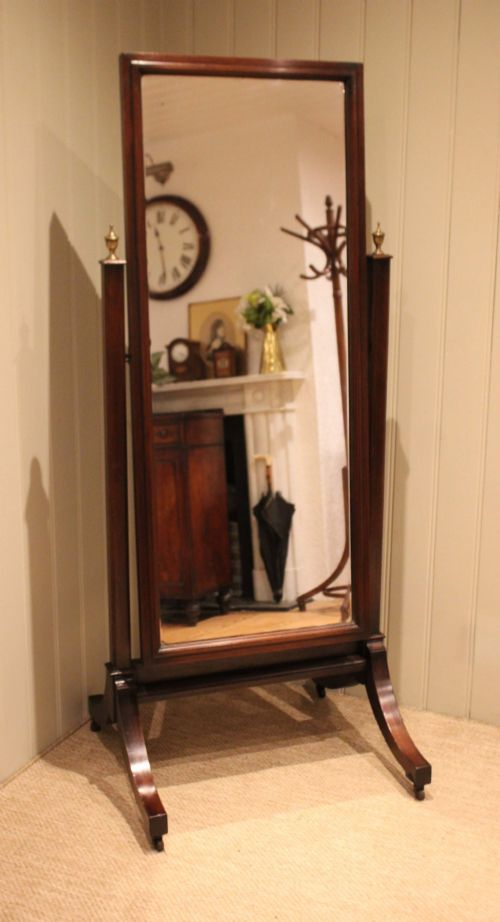
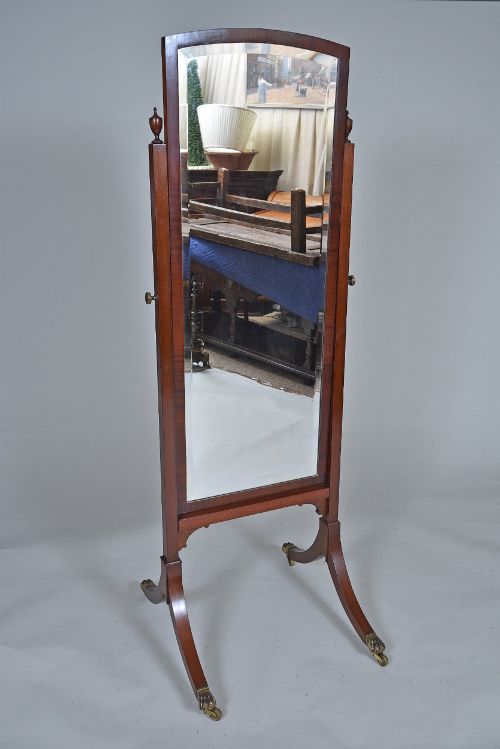
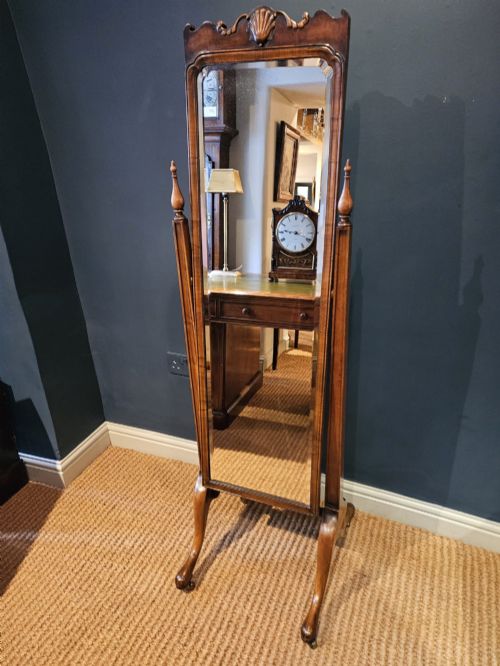
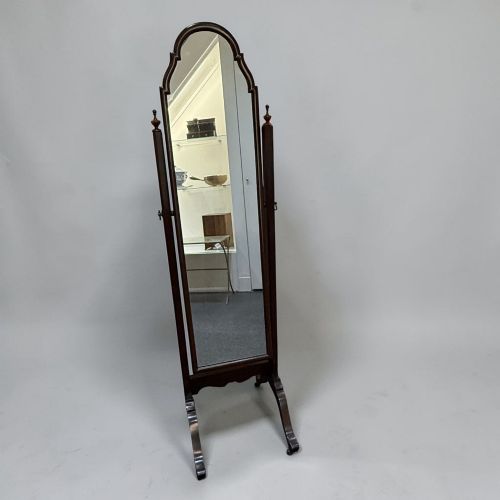
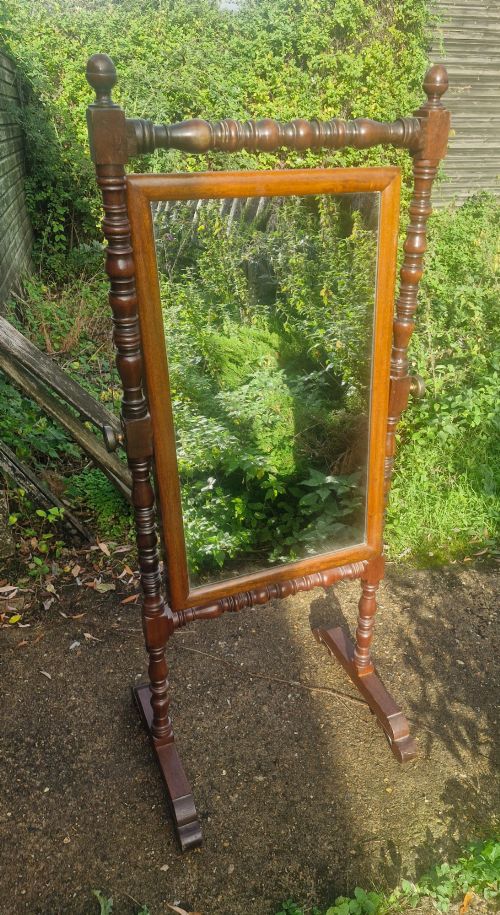
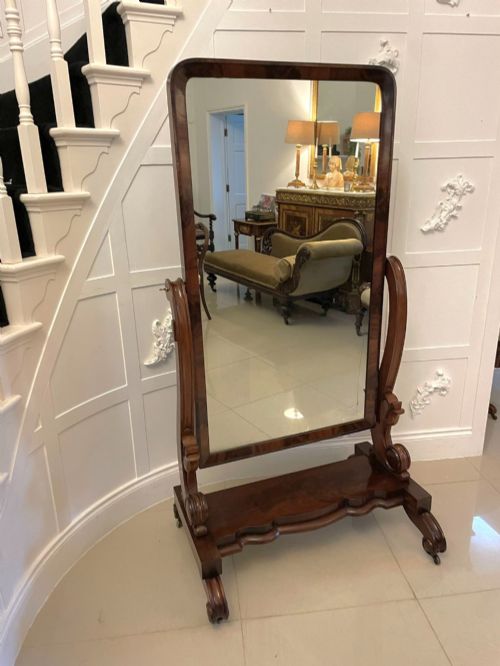
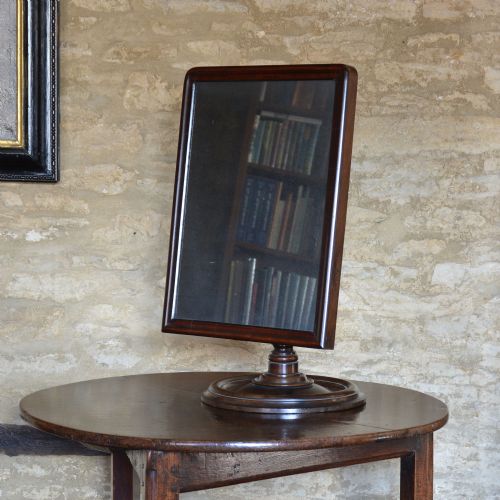
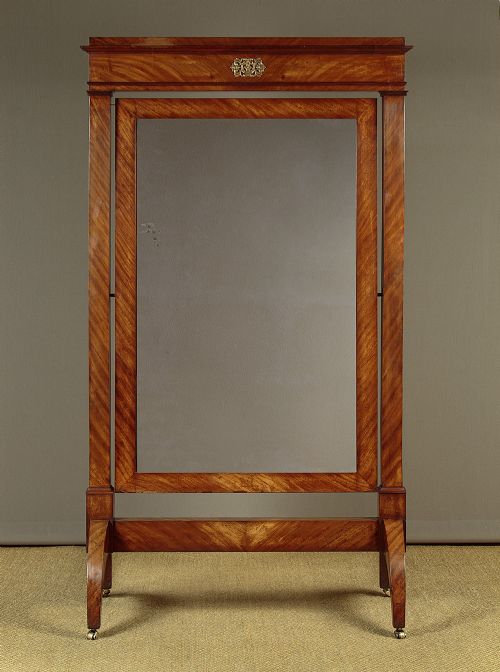
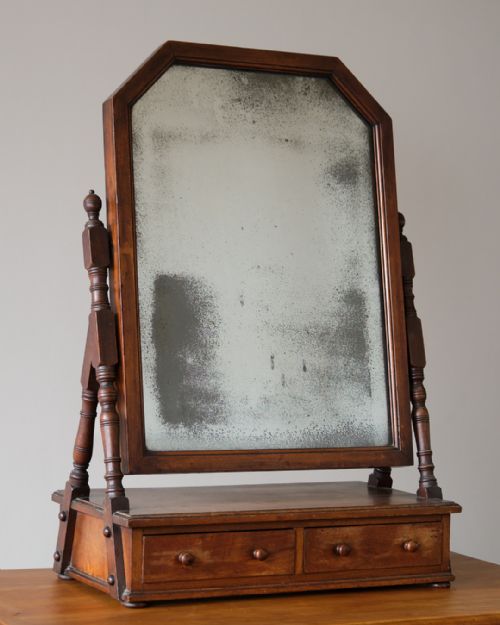
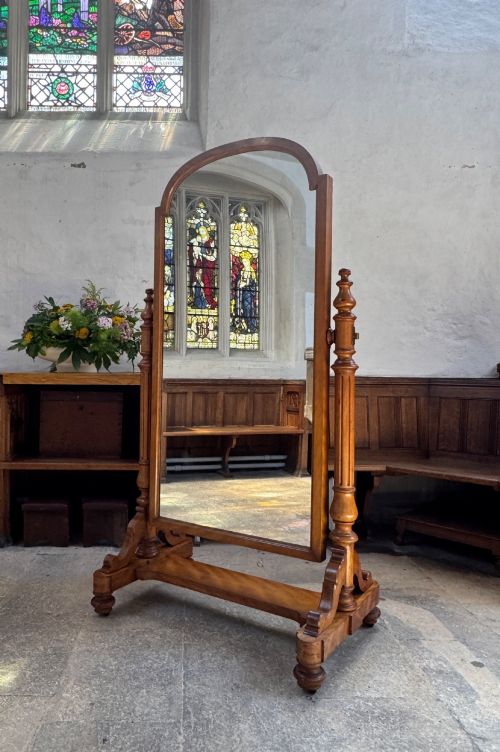
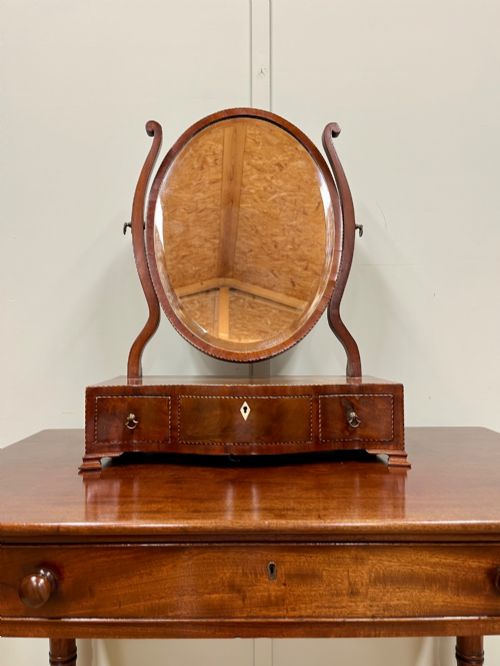
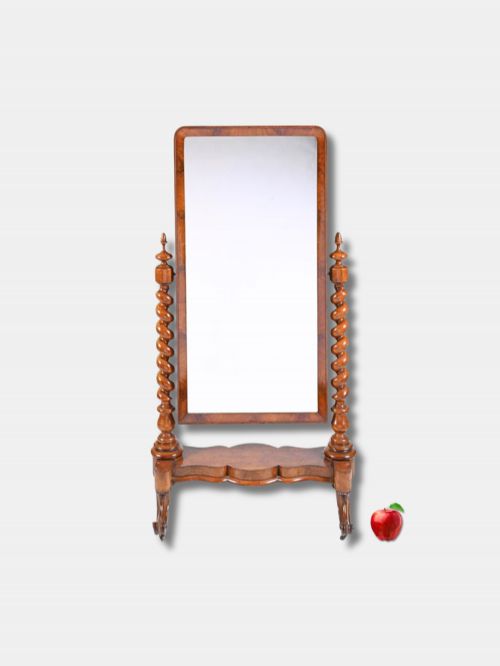
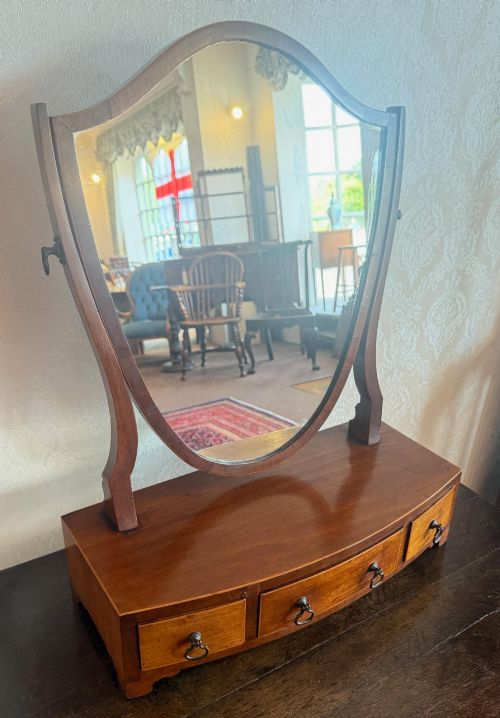
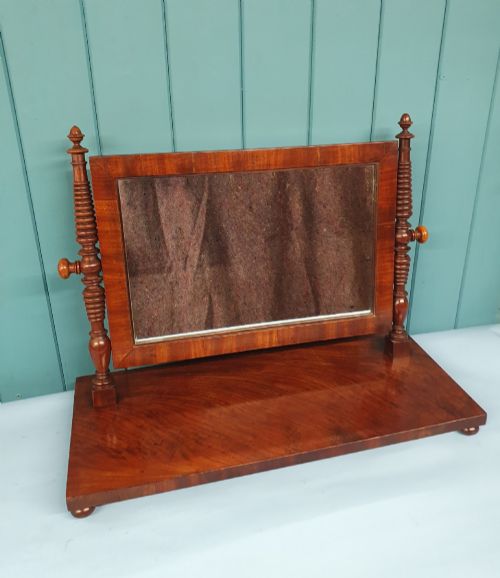
A swivelling dressing glass is an adjustable mirror designed for daily grooming, pivoting on side screws or mounted on a freestanding floor frame known as a cheval. These pieces appear across the Georgian, Victorian, and Edwardian periods, taking the form of table-top toilet mirrors or full-length cheval glasses.
How they were made
Cabinet makers constructed these frames predominantly from timber such as mahogany, walnut, oak, and satin birch, frequently utilising brass for pivot pins, screw caps, and candle sconces. Glass plates were silvered and set into rebated wooden frames designed to tilt smoothly between upright supports.
Detailing often included boxwood stringing, bone inlay, parcel-gilt highlights, and marquetry work, whilst structural support relied on turned columns, barley twist pillars, or curved bow-front bases.
Swivelling Dressing Glass Retail Price Guide 2026
Typical asking prices for swivelling dressing glass among the pieces listed under this phrase on Sellingantiques today, from the lower quarter to the upper quarter. They describe what is for sale here now, not the wider market.
Listings span the 17th century through to the 19th and early 20th centuries, utilising mahogany, walnut, brass, and giltwood.
What varies in quality
Quality rests upon the crispness of the timber carving, the choice of well-figured veneer, and the proportional harmony between the mirror frame and its supporting base. Finer examples display meticulous joinery and original brass hardware that operates smoothly without excessive play in the pivots.
The integrity of the mirror plate itself influences the standard, with older mercury or early silvered glass showing characteristic age spots that distinguish authentic period pieces from later replacements.
Heal And Sons
The Swivelling Dressing Glass Glossary
- Cheval mirror
- A large freestanding dressing mirror supported by a vertical frame and four legs, allowing it to tilt completely. This form became popular in the Regency and Victorian periods for full-length viewing.
- Toilet mirror
- A small mirror designed to sit upon a dressing table or chest of drawers, usually incorporating a box base with small drawers. These are also frequently referred to as swing mirrors.
- Parcel-gilt
- Partially gilded with gold leaf applied to specific carved details or mouldings against a dark wood background. This technique highlights decorative elements on Georgian frames.
- Barley twist
- A spiral turning carved into wooden upright supports or columns. This style appears on mid-Victorian frames.
- Boxwood stringing
- A narrow inlay of pale contrasting wood set flush into the darker surrounding veneer. It frames drawer fronts and mirror surrounds on Edwardian and Georgian pieces.
Swivelling Dressing Glass: Frequently Asked Questions
What is a cheval mirror?
A cheval mirror is a floor-standing dressing glass held within a vertical frame that permits the entire plate to tilt. These pieces offer a full-length view and require adequate floor space in a bedroom.
They emerged in various period styles including Regency and Victorian, often featuring heavy timber uprights and stable foot designs to support the weight of the swivelling frame.
How do I date a dressing glass?
Dating relies on observing the timber species, construction joints, and decorative motifs used in the frame and base. Georgian pieces often show fine mahogany proportions, while Victorian examples introduce heavy turnings and mahogany or satin birch.
Hardware such as brass pivot screws and the condition of the glass plate also provide clues to the age of manufacture, distinguishing 18th-century work from later 19th-century reproductions.
Where should I place a toilet mirror?
A toilet mirror sits securely on top of a dressing table, chest of drawers, or sideboard to provide a convenient face-level reflection. Ensure the supporting surface is deep enough to bear the footprint of the box base.
Position the piece near a natural light source to make best use of the tilting mechanism, which angles the glass to catch the light.
Are the mirror plates original?
Many period dressing glasses retain their original glass plates, which often display subtle foxing, minor distortion, or silvering loss due to age. Replacement plates are sometimes fitted when older glass has deteriorated beyond utility.
Examining the depth of the glass and how it is secured in the rebate helps determine whether the plate has survived from the date of manufacture.