
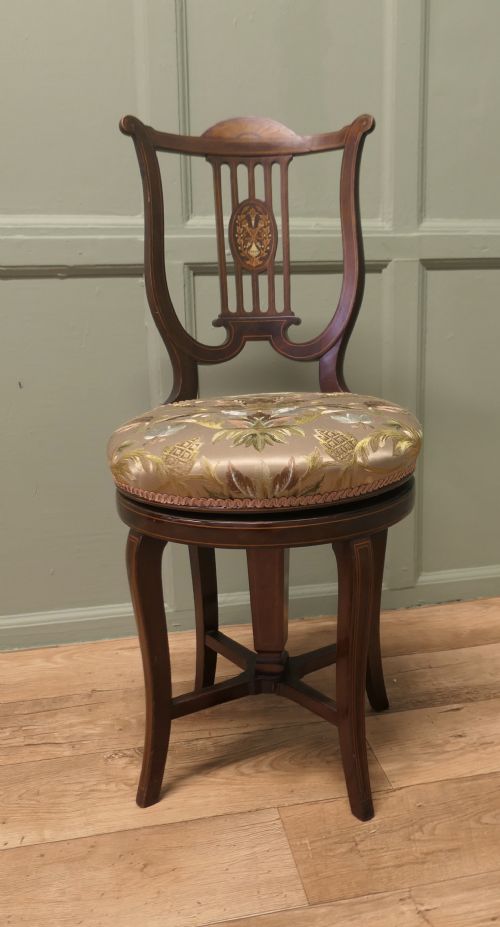
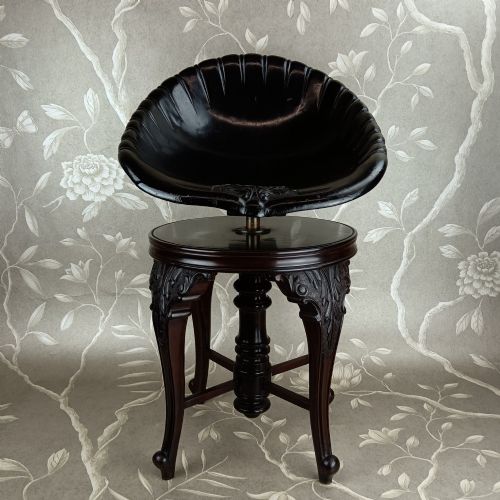
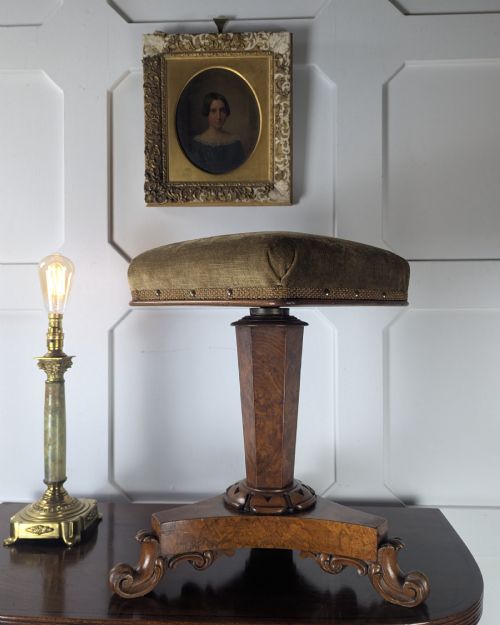
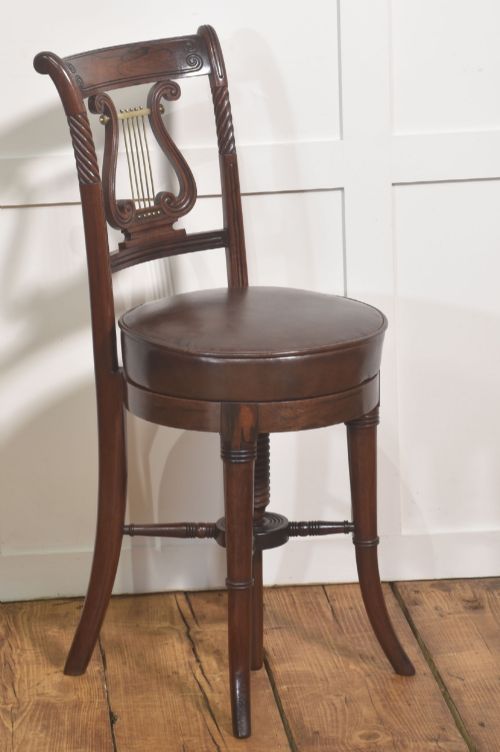



Swivel Stool Seat
A swivel stool seat gives you adjustable height and rotation, spanning Victorian music stools to industrial workshop chairs.
Swivel Stool Seat
When you search for a swivel stool seat, you find adjustable seating designed for musicians, dressing tables and workspaces. The forms range from piano stools and music chairs to industrial workshop seating and dressing table chairs.
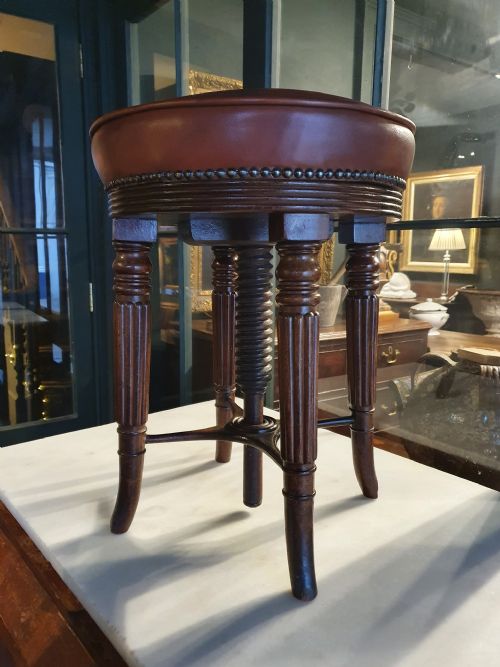
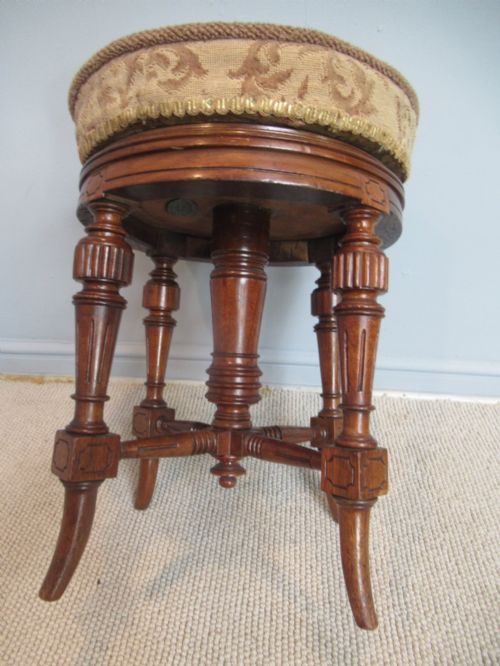
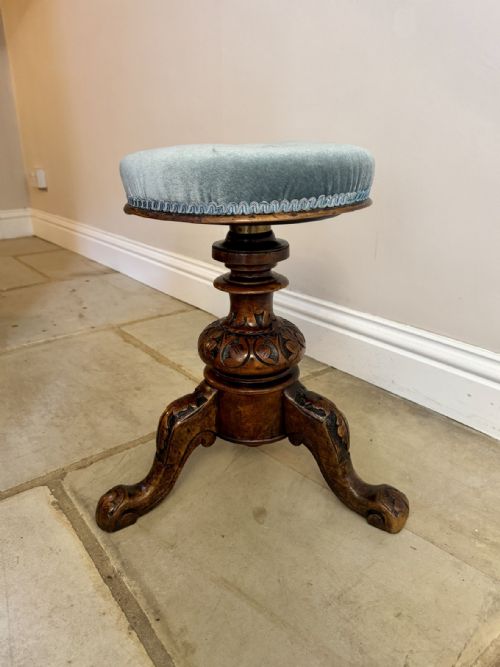
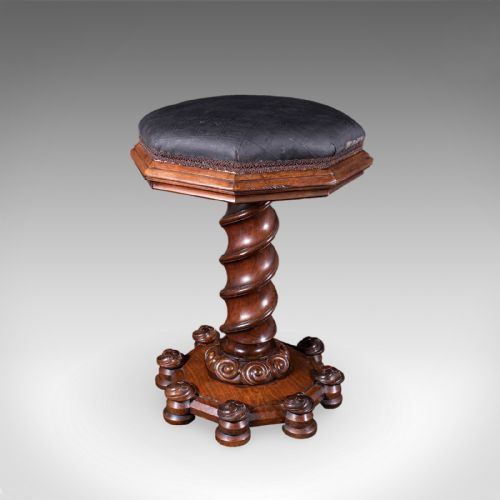
You are most likely to meet Victorian and 19th-century examples in mahogany, walnut and rosewood, often featuring revolving mechanisms for height adjustment. Industrial cast iron and wood workshop chairs from the early 20th century also appear frequently.
The styles span Regency, William IV, Victorian and Edwardian periods, alongside Art Deco and industrial designs. These pieces served practical functions in homes, studios and factories.
Materials and construction
Cabinet makers utilised dense hardwoods including mahogany, walnut and rosewood, sometimes employing brass inlays or papier-mâché for decorative effect. Industrial makers combined cast iron bases with elm or hardwood tops.
Revolving and rise-and-fall mechanisms utilise central wooden screws or metal threads to alter the height of the seat. Upholstery materials include leather, velvet and original fabric over padded seat foundations.
Chapel organists required sturdy walnut risers to endure enthusiastic Sunday hymn accompaniments.
Quality variations
Quality rests in the rigidity of the revolving mechanism and the precision of the carved woodwork. Fine examples display robust joinery in the legs and smooth rotation without excessive wobble in the screw thread.
The choice of timber and the fineness of the carving define the upper tier of pieces. Secondary elements like brass inlay and the integrity of the original upholstery further separate standard workshop items from superior parlour seating.
Jennens and Bettridge·Gillows·James Shoolbred·Singer·Evertaut
The Swivel Stool Seat Glossary
- Revolving stool
- A seat built with a mechanism that turns a full circle. This allows the user to rotate while seated at a piano or desk.
- Rise and fall
- An adjustable height mechanism operated by turning the seat top. The central screw ascends or descends within the base.
- Music stool
- Specialised seating designed for pianists, harpist or cellists. They often incorporate lyre backs or adjustable platforms.
- Papier-mâché
- A composite material made from paper pulp mixed with glue and resin. Makers pressed it into moulds and lacquered it for decorative furniture panels.
Swivel Stool Seat: Frequently Asked Questions
How do I adjust the height?
Most seats turn on a central wooden screw or metal thread. Rotating the top clockwise or anti-clockwise raises or lowers the sitting position.
Some industrial examples use a side lever or pin to secure the stem at the desired level.
Were these made only for pianos?
While piano stools form a large portion of the pieces, makers also produced them for dressing tables, libraries and music rooms. Harpist and cello chairs feature specialised backs to accommodate musicians.
Later examples served as workshop and office seating for industrial workers.
How do I date a Victorian piece?
Examine the timber, turning style and joinery methods. Early Victorian pieces often feature rosewood or mahogany with heavy carved details, while late 19th-century examples show simpler walnut frames.
Maker marks or stamps underneath can also narrow down the decade of production.
Can I use them with modern desks?
Many adjustable stools fit well at modern dressing tables or writing desks. The swivel action provides practical mobility in smaller spaces.
Check the maximum and minimum height measurements against your desk clearance before use.